
Safety
General information, not medical advice
Your prescriber and the leaflet in your pack know your situation. This page does not.
- Follow your prescriber and the leaflet
- Don't start, stop, or change a dose on your own
- Doses and warnings differ by country and product
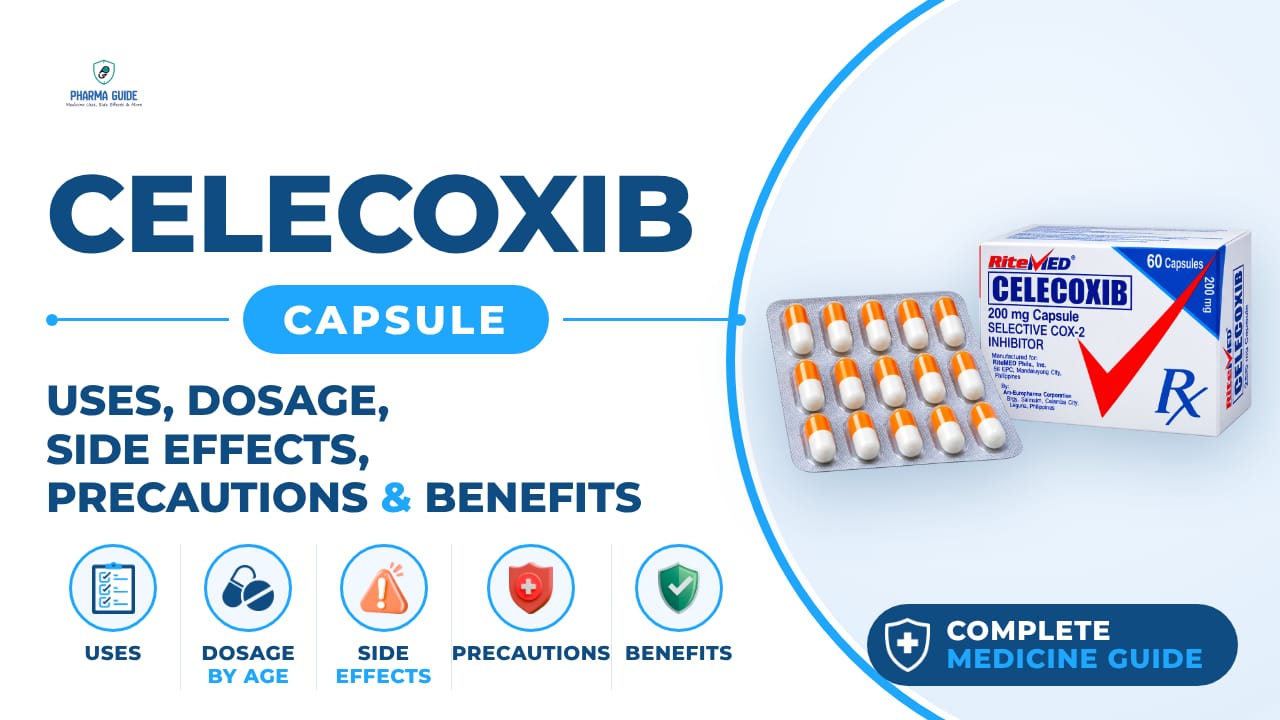
Celecoxib Capsule: Uses, Dosage, Side Effects, Precautions and Alternates
| Generic name | Celecoxib |
|---|---|
| Drug class | Nonsteroidal anti-inflammatory drug (NSAID) - COX-2 selective inhibitor |
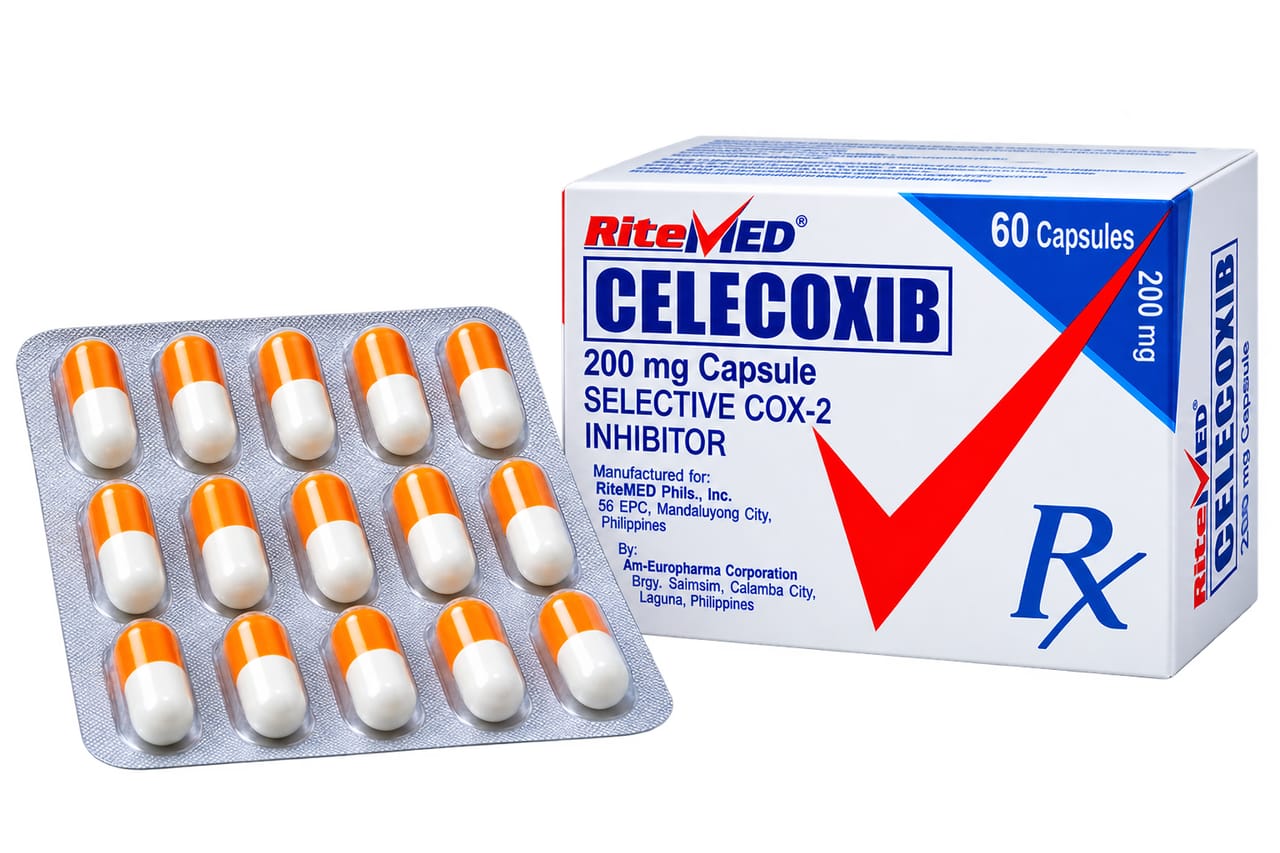
| Forms | Capsule 50 mg, Capsule 100 mg, Capsule 200 mg, Capsule 400 mg |
Quick overview
Celecoxib Capsule contains celecoxib, a nonsteroidal anti-inflammatory drug (NSAID) that works as a COX-2 selective inhibitor. It relieves pain, reduces inflammation, and can lower fever, and is used for conditions such as osteoarthritis, rheumatoid arthritis, and acute pain. It relieves symptoms and reduces inflammation but does not cure the underlying illness or stop it from getting worse, and it only works for as long as you keep taking it.
What is Celecoxib Capsule
Celecoxib is a nonsteroidal anti-inflammatory drug (NSAID) available as capsules for oral use. It has pain-relieving, anti-inflammatory, and fever-reducing properties. It relieves symptoms and reduces inflammation but does not cure the underlying illness or stop it from getting worse; it only works for as long as you keep taking it.
Celecoxib Capsule uses
- Managing the signs and symptoms of osteoarthritis
- Managing the signs and symptoms of rheumatoid arthritis
- Managing the signs and symptoms of juvenile rheumatoid arthritis in patients 2 years and older
- Managing the signs and symptoms of ankylosing spondylitis
- Managing acute pain in adults
- Treating primary dysmenorrhea (menstrual cramps)
- Short-term management of moderate to severe acute pain such as sprains, pain after orthopaedic surgery, and pain after dental extraction
Benefits of Celecoxib Capsule
- Reduces joint pain, stiffness, tenderness, and swelling
- Improves physical function and quality of life in people with arthritis
- Relieves moderate to severe short-term pain
- At recommended doses does not affect the prostaglandins that protect the stomach lining and does not appear to reduce platelet clotting
How Celecoxib Capsule works
Celecoxib works by blocking the production of prostaglandins, chemicals in the body that cause pain, swelling, redness, and inflammation. It does this mainly by inhibiting an enzyme called COX-2.
Celecoxib Capsule dosage
Celecoxib can be taken with or without food. For patients who have difficulty swallowing capsules, the contents can be emptied onto a level teaspoon of cool or room temperature applesauce and taken immediately with water. When sprinkled on applesauce, the capsule contents stay stable for a limited time when refrigerated. Higher doses should be taken with food to improve absorption. Use the lowest effective dose for the shortest possible time. Do not take more than one NSAID at a time.
If you miss a dose, take it as soon as you remember, then take your next dose at the scheduled time; do not double up to make up for a missed dose.
| Age group | Dose |
|---|---|
| Under 2 years | Not routinely recommended |
| 2–17 years | For juvenile rheumatoid arthritis, dosing is weight-based and must be prescribed |
| 18–64 years | 100 mg twice daily or 200 mg once daily, depending on indication |
| 65+ years | Usually the lowest effective dose; same standard doses may be used with medical assessment |
Available forms and strengths
- Capsule 50 mg
- Capsule 100 mg
- Capsule 200 mg
- Capsule 400 mg
Side effects of Celecoxib Capsule
Common
- Abdominal (stomach) pain
- Diarrhea
- Indigestion (dyspepsia)
- Gas (flatulence)
- Nausea
- Headache
- Dizziness
- Back pain
- Swelling of the arms, legs, hands or feet (peripheral edema)
- Insomnia
- Sore throat, runny nose, sinus infection, upper respiratory infection
- Skin rash
- Vomiting
- Constipation
Serious
- Heart attack, stroke, or blood clots (cardiovascular thrombotic events), which can be fatal
- Stomach or intestinal bleeding, ulcers, or tears (perforation), which can be fatal
- Liver problems including liver failure, hepatitis, and jaundice
- New or worsening high blood pressure
- Heart failure and fluid retention
- Kidney problems including kidney failure
- Increased potassium in the blood (hyperkalemia)
- Life-threatening allergic (anaphylactic) reactions
- Worsening of asthma in aspirin-sensitive people
- Life-threatening skin reactions such as Stevens-Johnson Syndrome and toxic epidermal necrolysis
- Low red blood cell count (anemia)
- Serious bleeding events
- Aseptic meningitis (stiff neck, severe headache, nausea, vomiting, fever)
- Pneumonitis
Warnings and precautions
- NSAIDs including celecoxib can increase the risk of heart attack or stroke that can lead to death. This risk may occur early in treatment and increases with higher doses and longer use.
- Do not take celecoxib right before or after heart bypass (CABG) surgery.
- NSAIDs including celecoxib can cause serious stomach and intestinal bleeding, ulcers, and tears that can happen at any time, without warning, and can be fatal.
- Taking celecoxib together with low-dose aspirin increases the risk of stomach bleeding and is not generally recommended without your doctor's advice.
- Do not take celecoxib if you have had asthma, hives, or other allergic reactions to aspirin or other NSAIDs, or if you are allergic to sulfonamide medicines.
- Stop taking celecoxib and seek help right away if you develop any skin rash or other sign of an allergic reaction, as serious skin reactions can be fatal.
- Avoid using celecoxib from 30 weeks of pregnancy onward because it may cause premature closure of a blood vessel in the developing baby's heart. It is contraindicated in the third trimester. Use caution in the first and second trimesters and talk to your doctor before use.
- Low levels of celecoxib pass into breast milk. Caution should be used when taking celecoxib while breastfeeding. One source lists breastfeeding as a contraindication.
- Celecoxib is not recommended in people with severe or advanced kidney disease. Kidney function should be monitored in at-risk patients. It is contraindicated in severe renal impairment.
- In people with moderate liver impairment, the dose should be reduced by 50%. Celecoxib is not recommended in people with severe liver impairment.
- Do not drink alcohol while taking this medicine because it makes stomach problems more likely. Drinking alcohol also increases the risk of stomach bleeding.
- Celecoxib may cause drowsiness, dizziness, blurred vision, or light-headedness. If this happens, do not drive or operate machinery and use caution with activities that need alertness.
Storage
- Store at 20° to 25°C (68° to 77°F); short-term exposure permitted to 15° to 30°C (59° to 86°F).
- Store below 30°C.
- Keep in a safe place out of reach of children and pets.
- Do not keep outdated or unused medicine; return any outdated or unused medicine to your pharmacist.
When to see a doctor
- Get emergency help right away if you have chest pain, shortness of breath or trouble breathing, weakness in one part or side of your body, or slurred speech.
- Seek immediate emergency help for signs of a severe allergic reaction such as difficulty breathing or swelling of the face or throat.
- Stop taking celecoxib and get medical care right away if you have signs of stomach bleeding such as stomach pain, vomiting blood, or black sticky (tar-like) stools.
- Stop taking celecoxib and seek medical care if you have signs of liver problems such as nausea, tiredness, itching, yellowing of the skin or eyes, right upper stomach tenderness, or flu-like symptoms.
- Contact your doctor if you have signs of heart failure such as shortness of breath, unexplained weight gain, or swelling.
- If you take too much celecoxib, contact your healthcare provider, hospital emergency department, or your local poison control center right away, even if there are no symptoms.
Alternatives
- Naproxen
- Ibuprofen
- Diclofenac
- Etoricoxib
- Meloxicam
- Aceclofenac
- Etodolac
ACT CELECOXIB is a brand of celecoxib capsules found to be bioequivalent to CELEBREX.
Watch the video
FAQs
What is Celecoxib Capsule used for?
It is used to manage signs and symptoms of osteoarthritis, rheumatoid arthritis, juvenile rheumatoid arthritis (2 years and older), ankylosing spondylitis, acute pain in adults, primary dysmenorrhea, and short-term moderate to severe pain such as sprains, pain after orthopaedic surgery, and pain after dental extraction.
How does Celecoxib Capsule work?
Celecoxib works by blocking the production of prostaglandins, chemicals in the body that cause pain, swelling, redness, and inflammation, mainly by inhibiting an enzyme called COX-2.
What is the usual dose of Celecoxib Capsule for adults?
For adults aged 18–64 years, the typical dose is 100 mg twice daily or 200 mg once daily, depending on the condition being treated. The lowest effective dose should be used for the shortest possible time.
What are the serious side effects of Celecoxib Capsule?
Serious side effects include heart attack, stroke, or blood clots; stomach or intestinal bleeding, ulcers, or perforation; liver problems; high blood pressure; heart failure and fluid retention; kidney problems; severe allergic reactions; and life-threatening skin reactions such as Stevens-Johnson Syndrome.
Can I drink alcohol while taking Celecoxib Capsule?
No, alcohol should be avoided while taking celecoxib because it increases the risk of stomach problems and stomach bleeding.
General information, not medical advice
Your prescriber and the leaflet in your pack know your situation. This page does not.
- Follow your prescriber and the leaflet
- Don't start, stop, or change a dose on your own
- Doses and warnings differ by country and product
Sources
- DailyMed - CELECOXIB celecoxib capsule (Advanced Rx of Tennessee, LLC), Revision Date June 2019 / Revised December 2024
- ACT CELECOXIB Product Monograph, Teva Canada Limited, Date of Revision January 10, 2020
- CELEBREX (Celecoxib Capsules) Prescribing Information, Pfizer, LPDCELEB082019
Video
Related medicines

Injectafer Injection: Uses, Dosage, Side Effects, Precautions and Alternates
Iron products
Injectafer (ferric carboxymaltose) treats iron deficiency anemia and heart failure-related iron deficiency via IV. Learn uses, dosage, side effects, and

Gliclazide Tablet: Uses, Dosage, Side Effects, Precautions and Alternates
Sulfonylurea (hypoglycemic/antidiabetic agent)
Gliclazide Tablet is a sulfonylurea for type 2 diabetes that boosts insulin release. Learn about dosage, side effects, warnings, and precautions.