
Safety
General information, not medical advice
Your prescriber and the leaflet in your pack know your situation. This page does not.
- Follow your prescriber and the leaflet
- Don't start, stop, or change a dose on your own
- Doses and warnings differ by country and product
Cephalexin Capsule: Uses, Dosage, Side Effects, Precautions and Alternates
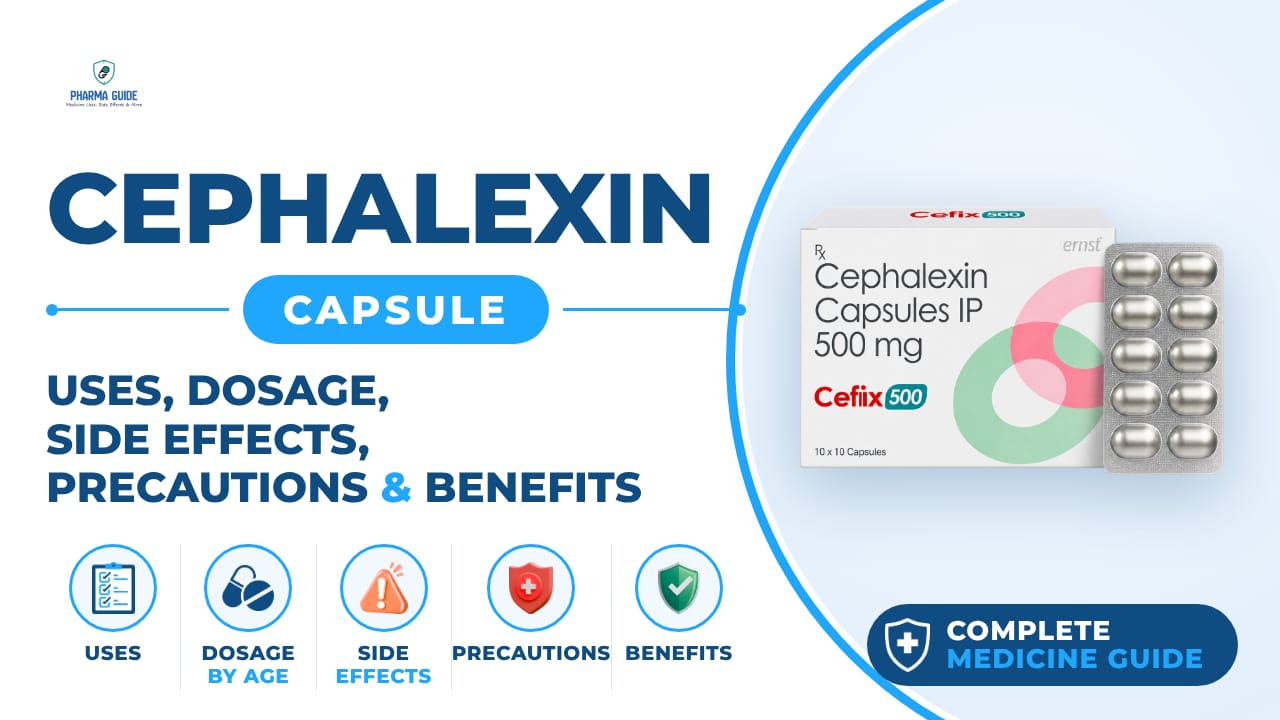
| Generic name | Cefalexin (Cephalexin) |
|---|---|
| Drug class | Cephalosporin antibiotic |
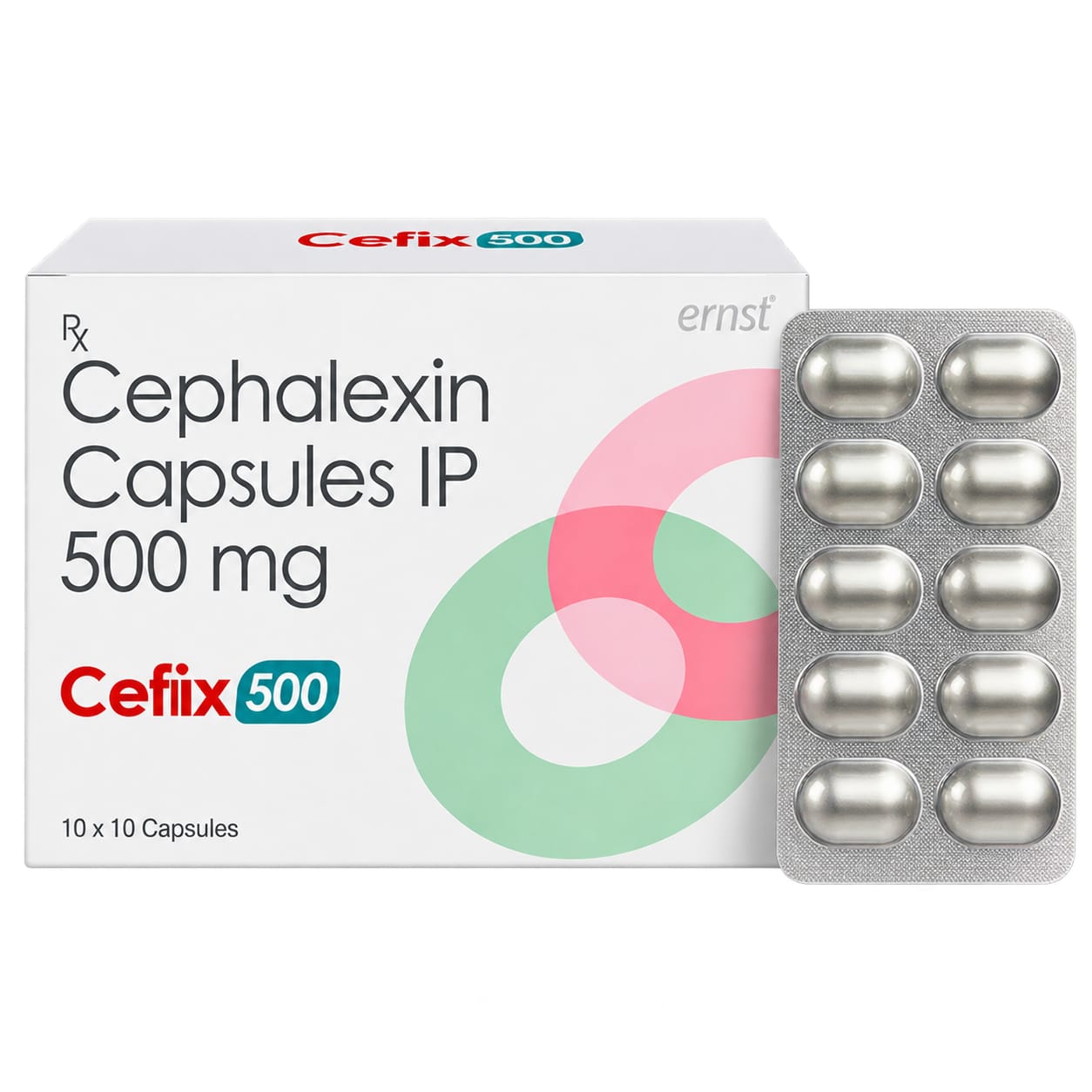
| Forms | Capsule, Tablet, Oral liquid / suspension |
Quick overview
Cephalexin Capsule is a prescription cephalosporin antibiotic used to treat infections caused by bacteria, such as chest, throat, ear, skin, bone, and urinary tract infections. It will not work against colds, the flu, or other viral infections. It can be used in adults and children 1 year and older. It works by damaging bacterial cell walls, which kills the bacteria causing the infection.
What is Cephalexin Capsule
Cephalexin is a prescription antibiotic in a group of medicines called cephalosporins. It treats infections caused by bacteria. It will not treat colds, the flu, or other infections caused by viruses.
Cephalexin Capsule uses
- Chest and lung infections (respiratory tract infections)
- Throat and sinus infections
- Ear infections (middle ear infections)
- Skin and soft tissue infections
- Bone infections
- Kidney and bladder infections (urinary tract infections)
Benefits of Cephalexin Capsule
- Kills certain types of bacteria that cause infections
- Can be used in adults and children 1 year and older
How Cephalexin Capsule works
Cephalexin works by damaging the walls that surround the bacteria. This breaks open the walls and kills the bacteria causing the infection.
Cephalexin Capsule dosage
Take this medicine by mouth as directed on the prescription label. You can take it with or without food. If it upsets your stomach, take it with food. If you are prescribed capsules or tablets, swallow with a glass of water. If you are prescribed the liquid form, shake the bottle before taking it.
Try to take it at the same time every day so it works effectively. Finish the full course of treatment, even if you feel better, unless your care team tells you to stop early.
If you miss a dose, take it as soon as you remember. If it is almost time for your next dose, skip the missed dose. Do not take a double dose.
Talk to your care team about using this medicine in children, as precautions apply.
| Age group | Dose |
|---|---|
| Under 1 year | Dose is weight-based and should be prescribed by a doctor |
| 1–11 years | Usually 25–50 mg/kg/day, divided into 2–4 doses; severe infections may require higher doses |
| 12–17 years | If adult-sized, commonly 250–500 mg every 6 hours, depending on the infection |
| 18–64 years | Commonly 250–500 mg every 6 hours; some infections may require different dosing |
| 65+ years | Generally the adult dose, but kidney function should be assessed and the dose adjusted when necessary |
Available forms and strengths
- Capsule
- Tablet
- Oral liquid / suspension
Side effects of Cephalexin Capsule
Common
- Diarrhea
- Nausea and/or vomiting
- Indigestion
- Irritation or inflammation of the stomach lining
- Abdominal pain
- Headache
- Dizziness
- Tiredness or weakness
- Oral or vaginal thrush (a yeast infection)
Serious
- Allergic reaction with swelling of the face, lips, tongue, or throat
- Trouble breathing, shortness of breath or wheezing
- Rash, itching or hives on the skin
- Severe skin reactions with blistering, peeling or loosening of the skin
- Confusion, seizures or memory loss
- Severe or watery diarrhea, fever
- Unusual vaginal discharge, itching, or odor
Warnings and precautions
- Do not take this medicine if you are allergic to it or to other cephalosporin or beta-lactam antibiotics. If you are allergic to penicillin, check with your doctor or pharmacist first, as some people may also react to cephalosporins.
- Almost all antibiotics, including cephalexin, can cause diarrhea and severe inflammation of the colon. Severe cases can be fatal. Do not treat diarrhea with over-the-counter products without speaking to your doctor.
- This medicine may cause serious skin reactions that can happen weeks to months after starting it. Contact your care team right away if you notice a fever or flu-like symptoms with a rash, or a rash that blisters or peels.
- Finish the full course of treatment. If you do not finish it, your infection may not improve and could get worse. If you miss doses, the medicine may not work as well.
- This medicine is only for you. Do not share it with others.
- If you are pregnant or planning to become pregnant, talk with your doctor about whether cephalexin is safe for you. Animal studies have not shown harm, but there are not enough studies in pregnant people.
- Cephalexin passes into breast milk and may cause side effects in a breastfed child. Talk with your doctor if you are breastfeeding.
- If you have kidney problems or a history of kidney disease, your body may not clear this drug as well, which can raise the levels in your body and cause more side effects. Your doctor may adjust your dose.
- Tell your care team before taking this medicine if you have liver disease.
- Tell your care team if you drink alcohol, as some items may interact with your medicine.
Storage
- Store the capsules at room temperature, between 15°C and 30°C (59°F and 86°F).
- Do not store this medicine in moist or damp areas, such as bathrooms.
- Keep out of the reach of children and pets.
- Throw away any unused medication after the expiration date.
When to see a doctor
- Stop taking the medicine and go to your nearest emergency department if you have sudden, severe signs of an allergy such as swelling of the face, lips, tongue or throat, or trouble breathing.
- Contact your doctor right away if you develop severe stomach pain, or severe watery or bloody diarrhea with a fever, especially if this happens weeks after stopping treatment. Do not take diarrhea medicine in this situation without talking to your doctor.
- If you think you have taken too much, contact your doctor or a poison control center. If symptoms are severe, go to the nearest emergency room. Overdose symptoms may include nausea, vomiting, stomach aches, diarrhea, and blood in your urine.
Alternatives
- Cefuroxime
- Cefixime
- Cefpodoxime
- Cefdinir
- Amoxicillin
- Amoxicillin-Clavulanate
Watch the video
FAQs
What is Cephalexin Capsule used for?
It treats bacterial infections such as chest and lung infections, throat and sinus infections, ear infections, skin and soft tissue infections, bone infections, and urinary tract infections. It will not work against colds, the flu, or other viral infections.
How does Cephalexin Capsule work?
It works by damaging the walls that surround the bacteria, which breaks open the walls and kills the bacteria causing the infection.
Can children take Cephalexin Capsule?
Yes, it can be used in adults and children 1 year and older, with dosing based on age and weight. Precautions apply, so talk to your care team about using it in children.
What should I do if I miss a dose of Cephalexin Capsule?
If you miss a dose, take it as soon as you remember. If it is almost time for your next dose, skip the missed dose. Do not take a double dose.
What are the serious side effects of Cephalexin Capsule?
Serious side effects include an allergic reaction with swelling of the face, lips, tongue, or throat, trouble breathing, severe skin reactions with blistering or peeling, confusion, seizures or memory loss, and severe or watery diarrhea with fever.
General information, not medical advice
Your prescriber and the leaflet in your pack know your situation. This page does not.
- Follow your prescriber and the leaflet
- Don't start, stop, or change a dose on your own
- Doses and warnings differ by country and product
Sources
Video
Related medicines
Duricef Capsule: Uses, Dosage, Side Effects, Precautions and Alternates
Cephalosporin antibiotic
Duricef Capsule (cefadroxil) treats UTIs, skin infections, and strep throat. Learn uses, dosage, side effects, warnings, and precautions before taking it.
Ancef Injection: Uses, Dosage, Side Effects, Precautions and Alternates
cephalosporin antibiotic
Ancef Injection (cefazolin) is a cephalosporin antibiotic used to treat infections and prevent surgical infections. Learn uses, dosage, and side effects.