
Safety
General information, not medical advice
Your prescriber and the leaflet in your pack know your situation. This page does not.
- Follow your prescriber and the leaflet
- Don't start, stop, or change a dose on your own
- Doses and warnings differ by country and product
Cepodem Tablet: Uses, Dosage, Side Effects, Precautions and Alternates
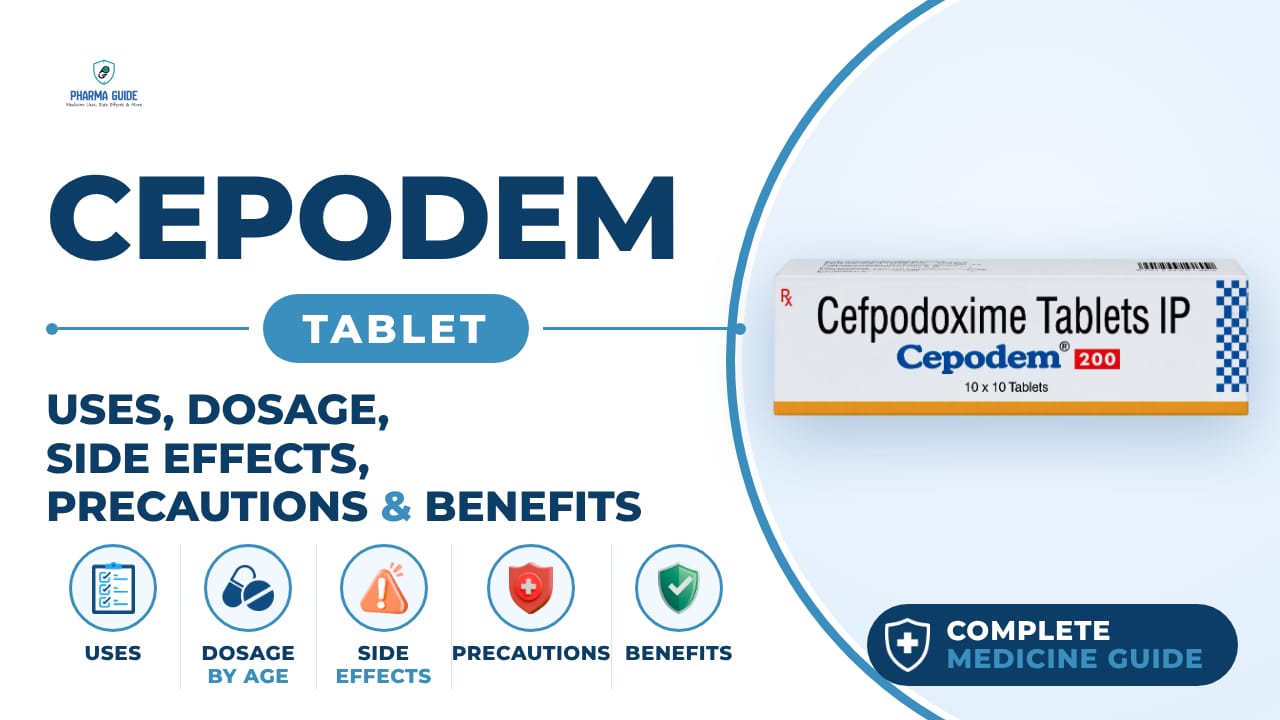
| Generic name | Cefpodoxime Proxetil |
|---|---|
| Drug class | Cephalosporin antibiotic (Cell Wall Synthesis Inhibitor) |
| Forms | Tablet, Suspension, Tablet DT |
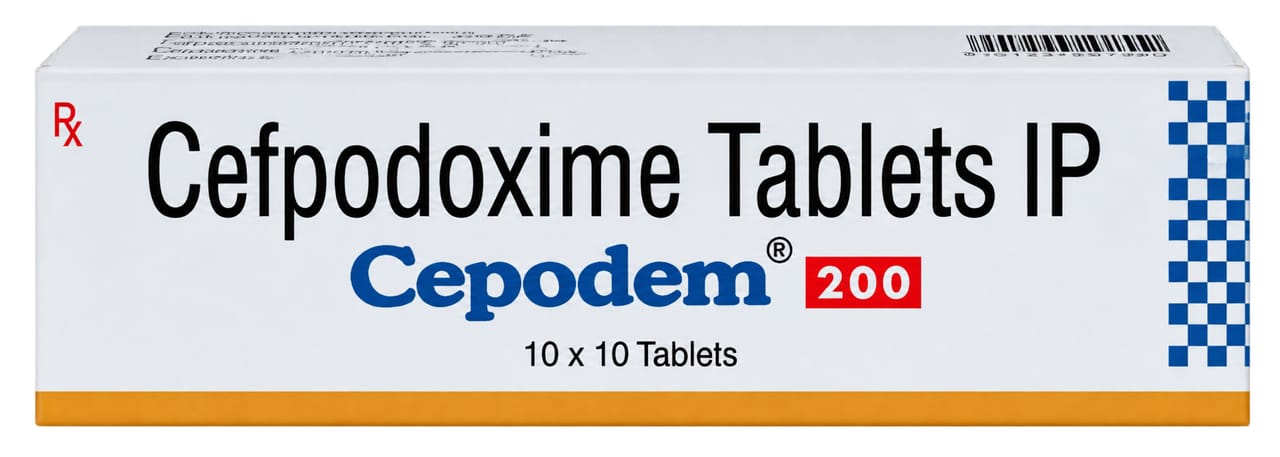
Quick overview
Cepodem Tablet contains cefpodoxime proxetil, a cephalosporin antibiotic that works by stopping bacteria from building their cell walls. It is used to treat various bacterial infections affecting the lungs, throat, sinuses, skin, ears, and urinary tract. It does not work against infections caused by viruses. The tablet is not recommended for children under 12 years of age.
What is Cepodem Tablet
Cepodem Tablet is an antibiotic medicine that contains cefpodoxime. It is used to treat bacterial infections and does not work against infections caused by viruses.
Cepodem Tablet uses
- Bronchitis
- Community-acquired pneumonia
- Sinusitis
- Pharyngitis/Tonsillitis
- Skin and soft tissue infections
- Cystitis (bladder infections)
- Pyelonephritis (kidney infections)
- Urinary tract infections
- Ear infections (otitis media)
- Throat infections
Benefits of Cepodem Tablet
- Kills bacteria and stops the infection from spreading
- Helps relieve fever, pain, and discomfort caused by bacterial infections
How Cepodem Tablet works
The medicine works by blocking bacteria from building the protective cell wall they need to survive. Without a stable cell wall, the bacteria die, which clears the infection.
Cepodem Tablet dosage
Cepodem Tablet can be taken with food for better absorption. For ease of remembering, take it at the same time every day. Once the antibiotic is started, ensure that the entire course of treatment is completed. Avoid unnecessary use, as excessive use may cause the bacteria to become resistant to antibiotics.
Swallow the tablet whole with a meal or snack. Avoid chewing or crushing the tablet, and take it at evenly spaced intervals. Do not stop taking this medicine without consulting your doctor first, even if you feel better.
Take Cepodem Tablet at least 1 hour before or 2 hours after taking antacids, since acid-reducing medicines can delay its effects. Also take the tablet 2 hours before or after consuming dairy products, since dairy may reduce how well the medicine is absorbed. This medicine is not recommended for use in children below 12 years of age.
| Age group | Dose |
|---|---|
| Under 12 Years | Dose based on body weight and infection type, as prescribed |
| 12 Years and Above | 100–200 mg twice daily depending on infection |
| Adults (18–64 Years) | 100–400 mg daily in divided doses, depending on infection |
| Older Adults (65+ Years) | Adult dose; adjustment may be needed with kidney problems |
Available forms and strengths
- Tablet
- Suspension
- Tablet DT
Side effects of Cepodem Tablet
Common
- Diarrhoea
- Stomach pain
- Dark or clay coloured stools
- Decreased appetite
- Acid or sour stomach
- Joint pain
- Change in taste
- Headache
- Excessive air or gas in stomach
- Nausea and vomiting
- Mild fatigue or tiredness
Serious
- Severe or persistent loose motions (diarrhoea) during or after treatment
- Signs of allergic reaction in people with a history of allergies to penicillin or cephalosporin antibiotics
Warnings and precautions
- Do not take this medicine if you have previously had an allergic reaction to it, or to other cephalosporin antibiotics, and tell your doctor about any penicillin allergy.
- This medicine should not be given to children under 18 without medical supervision.
- Older patients, especially those over 70, should use this medicine under medical supervision because they may be more prone to side effects.
- People with a history of colitis should be careful with this medicine because it can cause severe diarrhoea.
- This medicine can interact with acid-reducing medicines, gout medicines like probenecid, and blood thinners like warfarin.
- This medicine is generally considered safe to use in pregnancy to treat bacterial infections, but it should only be used after consulting a doctor.
- This medicine is generally considered safe during breastfeeding and passes into breast milk at low levels, but a doctor should weigh the benefits and risks first, and the baby should be watched for diarrhoea or yeast infection.
- People with kidney problems should use this medicine with caution and may need a doctor's guidance, since the drug is removed from the body by the kidneys.
- People with mild to moderate liver problems should use this medicine with caution, and it is not recommended for those with severe liver disease.
- Alcohol should be avoided while taking this medicine, as it may worsen side effects like dizziness, nausea, and vomiting.
- This medicine may cause dizziness and blurred vision, so avoid driving or operating heavy machinery if these symptoms occur.
Storage
- Store Cepodem 200 Tablet 10 at room temperature in a cool, dry place.
- Keep away from direct light and moisture.
- Keep this medicine out of reach of children.
- Always check the expiration date on the package and ensure that you use the medicine before this date.
- Store Below 30° C
When to see a doctor
- Speak to your doctor right away if side effects do not improve or become serious.
- Tell your doctor if you experience severe or persistent diarrhoea during or after treatment.
- If you suspect you have taken too much of this medicine, tell your doctor about your symptoms.
Alternatives
- Amoxicillin + Clavulanate
- Cefdinir
- Cefixime
- Azithromycin
Watch the video
FAQs
What is Cepodem Tablet used for?
It is used to treat bacterial infections such as bronchitis, pneumonia, sinusitis, pharyngitis/tonsillitis, skin and soft tissue infections, urinary tract infections, kidney infections, and ear infections.
How does Cepodem Tablet work?
It works by blocking bacteria from building the protective cell wall they need to survive. Without a stable cell wall, the bacteria die, clearing the infection.
Can Cepodem Tablet be given to children?
No, it is not recommended for children under 12 years of age.
How should Cepodem Tablet be taken?
It should be swallowed whole with a meal or snack at evenly spaced intervals, without chewing or crushing. It should be taken at least 1 hour before or 2 hours after antacids, and 2 hours before or after dairy products, since these can reduce its effectiveness.
Is Cepodem Tablet safe during pregnancy and breastfeeding?
It is generally considered safe in pregnancy and breastfeeding when used after consulting a doctor, though a doctor should weigh the benefits and risks and watch the baby for diarrhoea or yeast infection during breastfeeding.
General information, not medical advice
Your prescriber and the leaflet in your pack know your situation. This page does not.
- Follow your prescriber and the leaflet
- Don't start, stop, or change a dose on your own
- Doses and warnings differ by country and product
Sources
Video
Related medicines

Injectafer Injection: Uses, Dosage, Side Effects, Precautions and Alternates
Iron products
Injectafer (ferric carboxymaltose) treats iron deficiency anemia and heart failure-related iron deficiency via IV. Learn uses, dosage, side effects, and

Gliclazide Tablet: Uses, Dosage, Side Effects, Precautions and Alternates
Sulfonylurea (hypoglycemic/antidiabetic agent)
Gliclazide Tablet is a sulfonylurea for type 2 diabetes that boosts insulin release. Learn about dosage, side effects, warnings, and precautions.