
Safety
General information, not medical advice
Your prescriber and the leaflet in your pack know your situation. This page does not.
- Follow your prescriber and the leaflet
- Don't start, stop, or change a dose on your own
- Doses and warnings differ by country and product
Cequa Eye Drops: Uses, Dosage, Side Effects, Precautions and Alternates
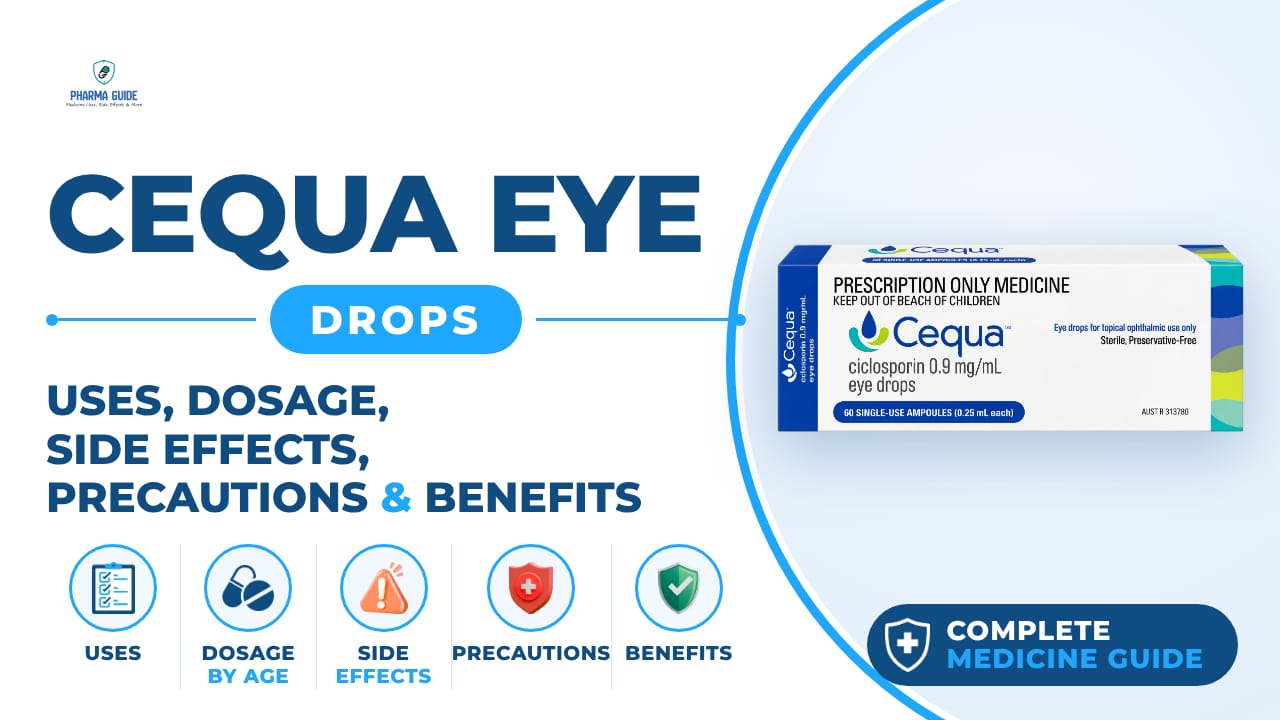
| Generic name | cyclosporine ophthalmic (ciclosporin) |
|---|---|
| Drug class | Miscellaneous ophthalmic agents / immunosuppressant |
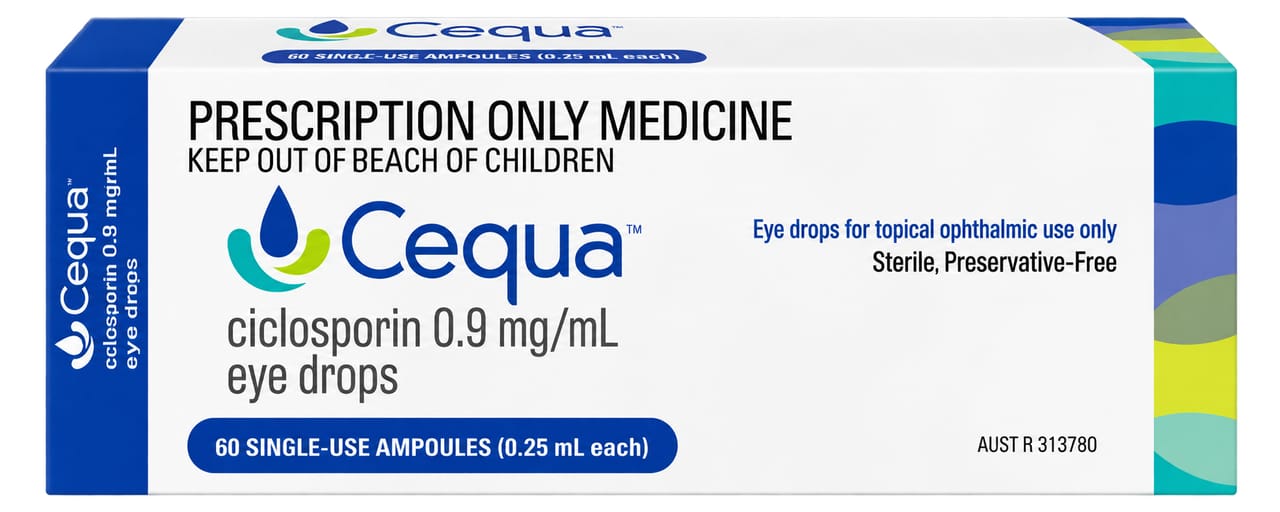
| Forms | Eye drops, solution, in single-dose (single-use) containers |
Quick overview
Cequa Eye Drops contain cyclosporine (ciclosporin), an immunosuppressant medicine used to treat chronic dry eye disease caused by inflammation in the eye. It is prescribed for adults who have not responded well enough to artificial tears. Cequa is used about every 12 hours and may be combined with artificial tears as part of ongoing dry eye management.
What is Cequa Eye Drops
Cequa is a prescription eye drop that contains cyclosporine, an immunosuppressant medicine. It is used to treat chronic (long-term) dry eye that may be caused by inflammation in the eye.
Cequa Eye Drops uses
- Treats chronic dry eye disease (keratoconjunctivitis sicca) caused by eye inflammation
- Used in adults who have not responded well enough to artificial tears
Benefits of Cequa Eye Drops
- Increases tear production that has been reduced by inflammation in the eye
- Can be used along with artificial tears
How Cequa Eye Drops works
Cequa blocks a protein called calcineurin that raises inflammation in the eye. By stopping calcineurin from working, Cequa reduces inflammation, which helps the eyes make more tears.
Cequa Eye Drops dosage
Use the eye drops about every 12 hours, roughly twice a day. Remove contact lenses before using the drops, and wait at least 15 minutes after using them before putting lenses back in. Wash your hands before using the eye medicine.
Tilt your head back slightly, pull down the lower eyelid to make a small pocket, and squeeze a drop into the pocket without letting the dropper tip touch your eye. Close your eyes for 1 to 2 minutes after applying the drop, and press a finger into the corner of the eye near the nose to help keep the medicine in the eye. If a drop misses the eye, try again.
Wait at least 15 minutes before using artificial tears or any other eye drops after using Cequa. Each single-use vial is for one use only, in both eyes, then thrown away even if some liquid is left. Cequa is not approved for use in children or teenagers.
Cequa works best when used every day for at least 3 months. It may take about 2 weeks to start working, up to 2 months to notice better vision, and up to 3 months to notice more tears.
| Age group | Dose |
|---|---|
| Under 18 years | Safety and effectiveness not established |
| 18–64 years | 1 drop in each eye twice daily, approximately 12 hours apart |
| 65 years and older | 1 drop in each eye twice daily, approximately 12 hours apart |
Available forms and strengths
- Eye drops, solution, in single-dose (single-use) containers
Side effects of Cequa Eye Drops
Common
- Mild eye pain, redness, or other irritation
- Watery eyes
- Blurred vision
- Feeling like something is in your eye
- Eyelid inflammation
- Conjunctivitis (pink eye)
- Headache
Serious
- Severe eye pain, burning, or stinging after putting in the drops
- Swollen eyelids
- Signs of eye infection such as swelling, redness, severe discomfort, crusting, or drainage
- Urinary tract infection (burning when urinating, blood in urine, frequent urination)
- Signs of an allergic reaction: hives, difficulty breathing, swelling of the face, lips, tongue, or throat
Warnings and precautions
- Do not let the tip of the dropper touch your eye or any other surface, as this could contaminate the medicine and cause a serious eye infection or vision problems.
- Do not use Cequa if you have had or currently have cancer in or around the eye, or if you have an eye infection.
- Do not use Cequa while wearing contact lenses; remove them first and wait 15 minutes after using the drops before putting them back in.
- Cequa is not approved for use in children and teenagers under 18 years old (or under 16, per another source).
- Tell your doctor if you are using steroid eye drops or medicines for glaucoma, as these may affect how Cequa works or increase side effect risk.
- Cequa should not be used if you are pregnant. Tell your doctor if you are pregnant or planning to become pregnant, since safety has not been established.
- Cequa is likely to pass into breast milk in very small amounts. Talk to your doctor before using this medicine if you are breastfeeding.
- There are no known interactions between Cequa and alcohol, so it is likely safe to drink alcohol while using this medicine, but check with your doctor or pharmacist if you have concerns.
- Your vision may be blurred right after using Cequa eye drops. If this happens, wait until your vision clears before driving or using machines.
Storage
- Store at room temperature
- Store Cequa single-use vials in their original foil pouch
- Do not store above 25°C
- Do not freeze
- After opening the aluminium pouch, keep the single-dose containers in the pouch to avoid evaporation
- Shelf life after first opening of the aluminium pouch is 5 days
- Discard any opened single-dose container with any remaining solution immediately after use
- Do not use after the expiry date
- Do not use if you notice visible particles
- Do not throw away medicines via wastewater or household waste; ask your pharmacist how to dispose of unused medicine
- Keep out of the sight and reach of children
When to see a doctor
- Get emergency medical help if you have signs of an allergic reaction such as hives, difficulty breathing, or swelling of your face, lips, tongue, or throat.
- Stop using Cequa and call your doctor right away if you have severe eye pain, burning, or stinging after using the drops, swollen eyelids, or signs of an eye infection like swelling, redness, severe discomfort, crusting, or drainage.
- If you accidentally swallow the medication, seek emergency medical attention or contact your local poison control center.
Alternatives
- Restasis
- Vevye
- Verkazia
- Xiidra
Watch the video
FAQs
What is Cequa Eye Drops used for?
Cequa is used to treat chronic dry eye disease caused by inflammation in the eye, in adults who have not responded well enough to artificial tears.
How often should Cequa Eye Drops be used?
Cequa is used about every 12 hours, roughly twice a day, with one drop in each eye.
How long does Cequa take to work?
Cequa works best when used every day for at least 3 months. It may take about 2 weeks to start working, up to 2 months to notice better vision, and up to 3 months to notice more tears.
Can I wear contact lenses while using Cequa?
No, you should remove contact lenses before using Cequa and wait at least 15 minutes after using the drops before putting lenses back in.
What are the common side effects of Cequa Eye Drops?
Common side effects include mild eye pain, redness or irritation, watery eyes, blurred vision, a feeling of something in the eye, eyelid inflammation, conjunctivitis, and headache.
General information, not medical advice
Your prescriber and the leaflet in your pack know your situation. This page does not.
- Follow your prescriber and the leaflet
- Don't start, stop, or change a dose on your own
- Doses and warnings differ by country and product
Sources
Video
Related medicines

Injectafer Injection: Uses, Dosage, Side Effects, Precautions and Alternates
Iron products
Injectafer (ferric carboxymaltose) treats iron deficiency anemia and heart failure-related iron deficiency via IV. Learn uses, dosage, side effects, and

Gliclazide Tablet: Uses, Dosage, Side Effects, Precautions and Alternates
Sulfonylurea (hypoglycemic/antidiabetic agent)
Gliclazide Tablet is a sulfonylurea for type 2 diabetes that boosts insulin release. Learn about dosage, side effects, warnings, and precautions.