
Safety
General information, not medical advice
Your prescriber and the leaflet in your pack know your situation. This page does not.
- Follow your prescriber and the leaflet
- Don't start, stop, or change a dose on your own
- Doses and warnings differ by country and product
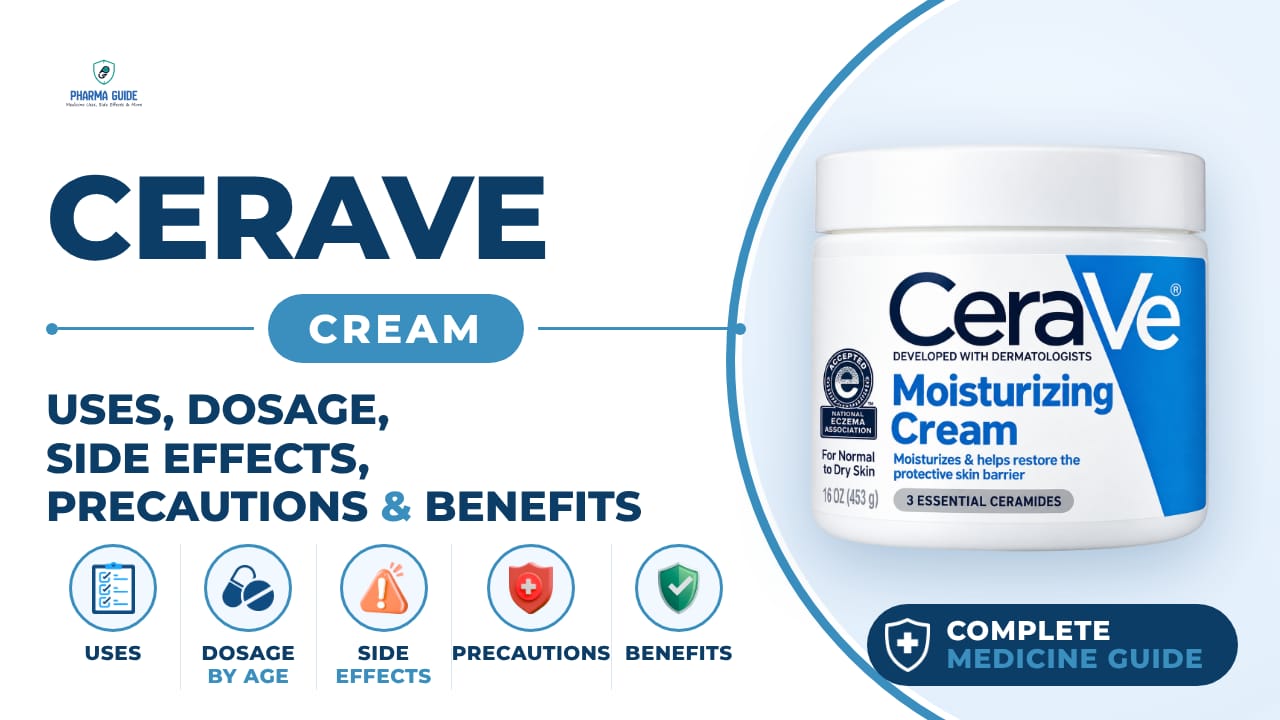
Cerave Cream: Uses, Dosage, Side Effects, Precautions and Alternates
| Generic name | topical emollients |
|---|---|
| Drug class | Topical emollients |
| Forms | Cream, Lotion, Gel, Ointment, Oil, Cleanser/wash |
Quick overview
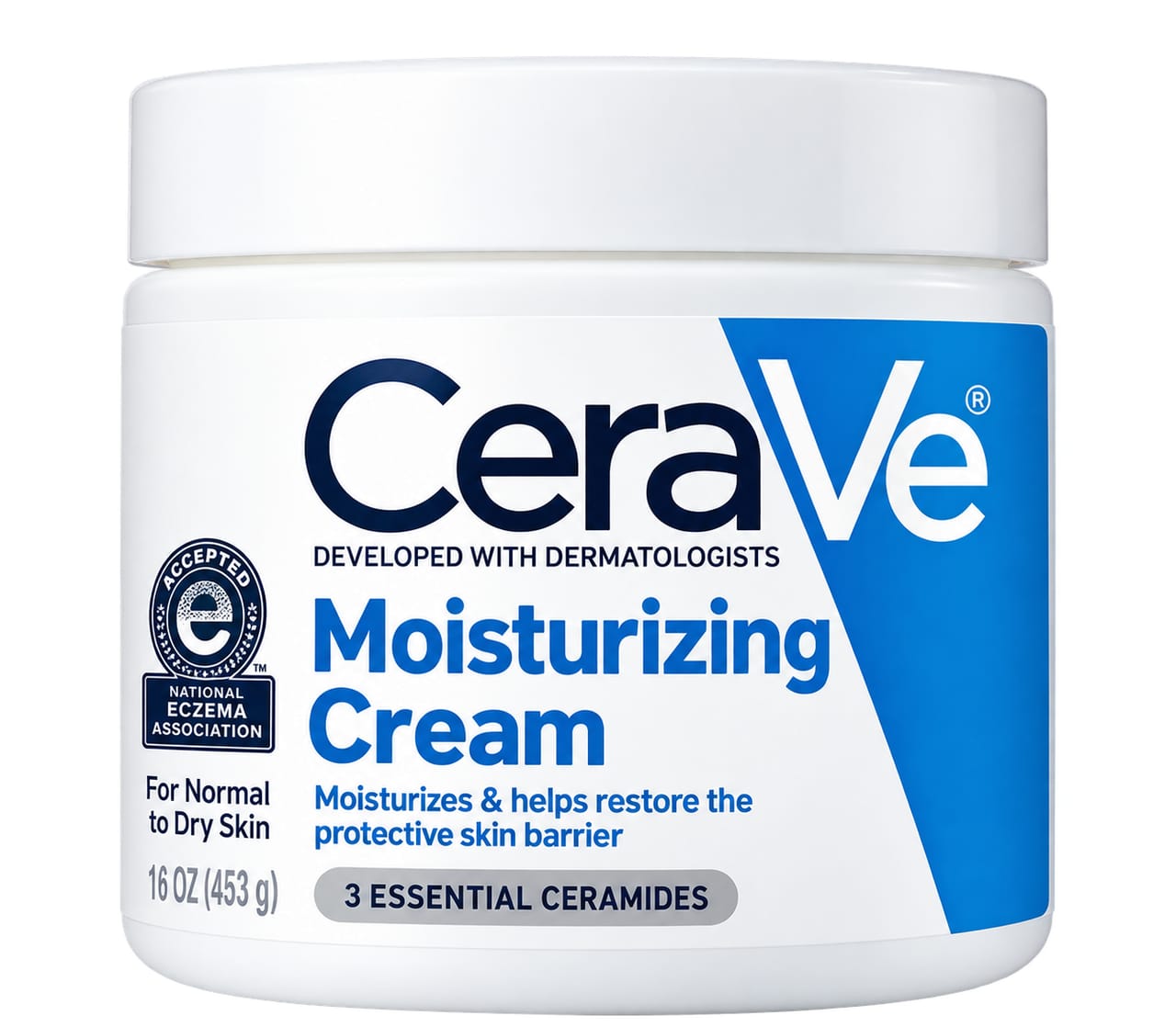
CeraVe Cream is a topical emollient from the CeraVe skincare range, which includes creams, lotions, cleansers, and ointments. It is a skincare brand rather than a prescription medicine, used to support dry, chapped, or irritated skin and to help restore the skin's protective barrier. It contains ceramides and other ingredients that help the skin hold onto moisture and keep out irritants.
What is Cerave Cream
CeraVe is a range of skincare and emollient products, including creams, lotions, cleansers, and ointments, designed for different skin types and skin concerns. It is a skincare brand rather than a prescription medicine.
Cerave Cream uses
- Chapped, chafed, cracked, or dry skin
- Minor cuts, scrapes, and burns
- Itching
- Eczema
- Psoriasis
- Diaper rash
Benefits of Cerave Cream
- Restores natural moisture and reduces water loss
- Supports repair of the skin's protective barrier
- Suitable for sensitive, fragrance-free, non-comedogenic use
How Cerave Cream works
CeraVe products contain ceramides, which are lipids naturally found in skin. They help maintain the skin's barrier by holding onto moisture and keeping out irritants. Some products also contain ingredients that form a protective barrier on the skin, block itch or pain signals, reduce inflammation, or help exfoliate the skin.
Cerave Cream dosage
Use exactly as directed on the product label, and do not use more or for longer than recommended. Moisturizing creams and lotions can be applied to the face twice daily, in the morning and at night, or as needed when skin feels dry. For the body, apply liberally as often as needed. Foaming facial cleanser should be applied to wet skin in gentle circular motions, then rinsed off. Hydrating facial cleanser should be applied in gentle circular motions, then rinsed and patted dry with a clean towel.
Avoid getting the product in your eyes, nose, or mouth; rinse with water if this happens. Avoid sun exposure or tanning beds, since some products can make skin more sensitive to sunlight. Stop using the product if your condition gets worse, if symptoms last seven days or more, or if symptoms clear up and then come back within a few days.
| Age group | Dose |
|---|---|
| Under 3 years | For infants and very young children, CeraVe recommends using an age-appropriate baby moisturizer rather than the standard Moisturizing Cream |
| 3–11 years | Apply liberally as often as needed to dry skin on the face or body |
| 18–64 years | Apply to the face and body as often as needed, day or night |
| 65 years and older | Same general use; apply as often as needed, especially to dry areas |
Available forms and strengths
- Cream
- Lotion
- Gel
- Ointment
- Oil
- Cleanser/wash
Side effects of Cerave Cream
Common
- Redness, irritation, stinging, itching, or burning where the product is applied
- Dry skin in the treated area, especially with products containing salicylic acid or hydrocortisone
- Mild stinging or burning right after application
Serious
- Breathing problems or wheezing
- Racing heart
- Fever or general ill feeling
- Swollen lymph nodes
- Swelling of the face, lips, mouth, tongue, or throat
- Trouble swallowing or throat tightness
- Itching, skin rash, or hives
- Nausea or vomiting
- Dizziness, feeling lightheaded, or fainting
- Stomach cramps
- Joint pain
- Severe burning, stinging, redness, or irritation where the product was applied
Warnings and precautions
- Only use CeraVe products on the skin, and avoid getting them in your eyes.
- Some products should not be used on animal bites, deep wounds, puncture wounds, or serious burns.
- Stop using the product if your condition gets worse, your symptoms last seven days or more, or your symptoms clear up and come back within a few days.
- Ask a doctor or pharmacist before use if you have deep wounds or open sores, swelling, warmth, redness, oozing, or bleeding, large areas of skin irritation, or any type of allergy.
- Avoid sun exposure or tanning beds, since some topical emollients can make skin more sensitive to sunlight or UV rays.
- Ask a doctor or pharmacist if it is safe to use a CeraVe product if you are pregnant or breastfeeding.
- No specific kidney-related precautions are generally required for normal topical use because systemic absorption is minimal. If you have severe kidney disease or are using the cream over very large or damaged skin areas, ask a clinician.
- No specific liver-related precautions are generally required for normal topical use.
- No known direct interaction with alcohol.
- CeraVe Cream does not normally affect driving or alertness.
Storage
- Store as directed away from moisture, heat, and light
- Keep the bottle, tube, or other container tightly closed when not in use
When to see a doctor
- Get emergency medical help right away if you notice signs of an allergic reaction, such as breathing problems, wheezing, a racing heart, fever, swollen lymph nodes, swelling of the face, lips, mouth, tongue, or throat, trouble swallowing, hives, nausea, vomiting, dizziness, fainting, stomach cramps, or joint pain.
- Get emergency medical help if you have hives, difficulty breathing, or swelling of your face, lips, tongue, or throat.
- Stop using the product and call your doctor if you have severe burning, stinging, redness, or irritation where it was applied.
- If the product gets into your eyes, nose, or mouth, rinse with water.
Alternatives
- Cetaphil Moisturizing Cream
- Vanicream Moisturizing Cream
- Eucerin Advanced Repair Cream
- Aveeno Eczema Therapy Moisturizing Cream
Watch the video
FAQs
What is CeraVe Cream used for?
CeraVe Cream is used for chapped, chafed, cracked, or dry skin, minor cuts, scrapes and burns, itching, eczema, psoriasis, and diaper rash.
How does CeraVe Cream work?
It contains ceramides, lipids naturally found in skin, which help maintain the skin's barrier by holding onto moisture and keeping out irritants. Some products also form a protective barrier, block itch or pain signals, reduce inflammation, or help exfoliate.
How often should I apply CeraVe Cream?
Moisturizing creams and lotions can be applied to the face twice daily, morning and night, or as needed when skin feels dry. For the body, apply liberally as often as needed.
What are the side effects of CeraVe Cream?
Common side effects include redness, irritation, stinging, itching, or burning where applied, and dry skin in the treated area. Serious reactions can include breathing problems, swelling of the face or throat, hives, and severe irritation, which require medical attention.
Can CeraVe Cream be used during pregnancy?
You should ask a doctor or pharmacist if it is safe to use a CeraVe product if you are pregnant or breastfeeding.
General information, not medical advice
Your prescriber and the leaflet in your pack know your situation. This page does not.
- Follow your prescriber and the leaflet
- Don't start, stop, or change a dose on your own
- Doses and warnings differ by country and product
Sources
- https://www.webmd.com/drugs/otc-brands/cerave-dry-irritated-skin-products
- https://www.drugs.com/cerave.html
- https://www.pearlchemistgroup.co.uk/blog/post/cerave-moisturising-cream-review-benefits-ingredients-and-is-it-right-for-your-skin?srsltid=AU7gw4XHdFtpwsin7b6bcFRWTnBEkMn5tsSad8U6Nnds-Bh_e2J7tybC
Video
Related medicines
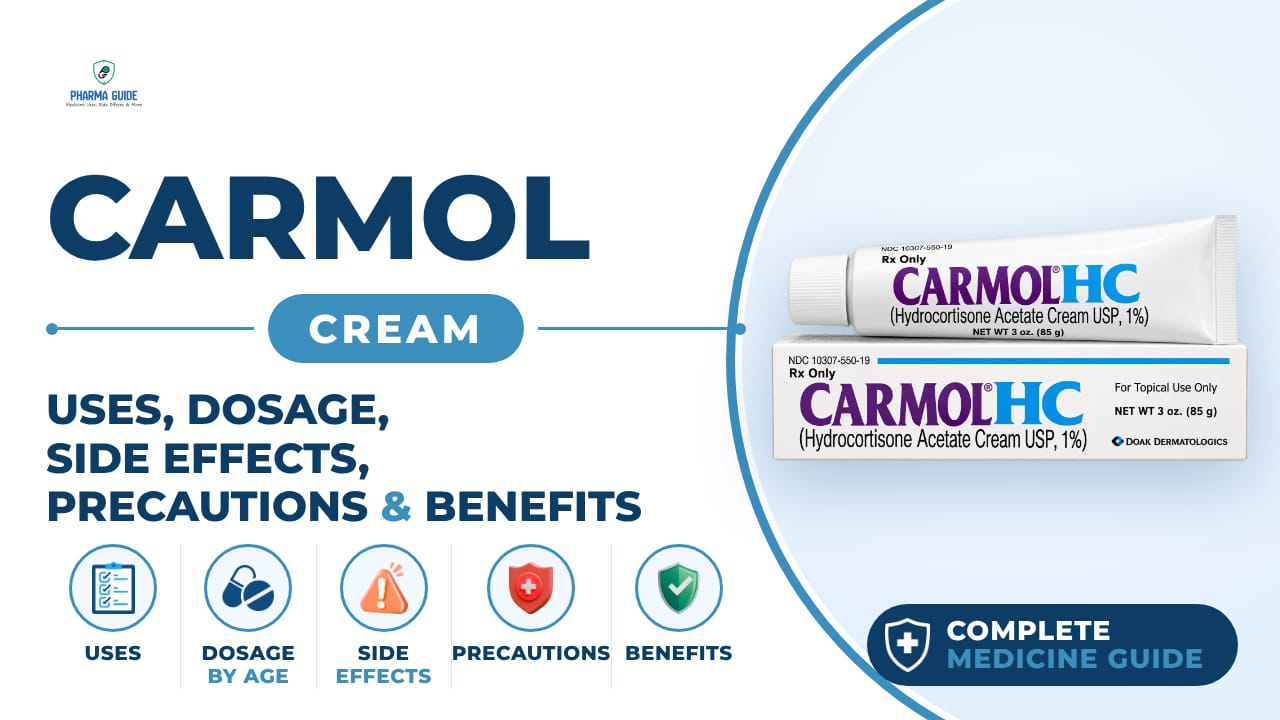
Carmol Cream: Uses, Dosage, Side Effects, Precautions and Alternates
Topical emollients
Carmol Cream contains urea to soften dry skin and remove dead skin buildup. Learn its uses, dosage, side effects, and precautions before use.
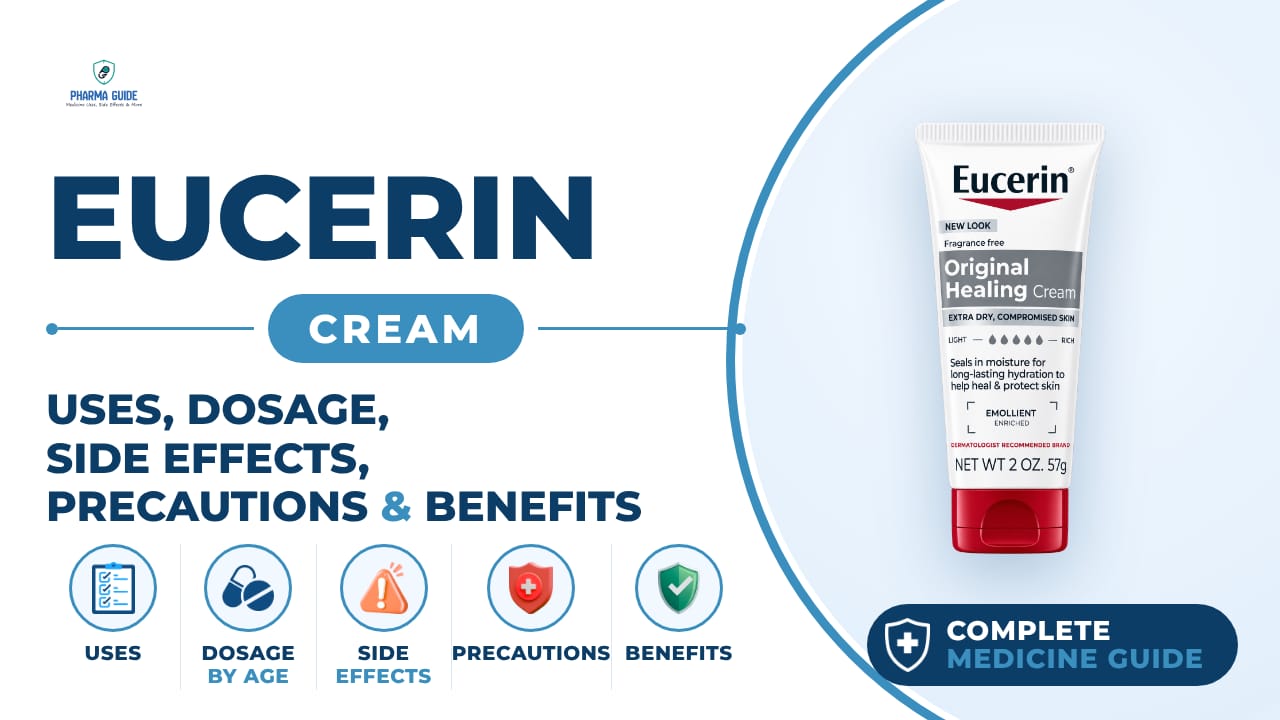
Eucerin Cream: Uses, Dosage, Side Effects, Precautions and Alternates
topical emollients
Eucerin Cream is a topical emollient that hydrates dry skin, soothes eczema and psoriasis, and supports skin recovery. Learn uses, dosage, and side effects.