
Safety
General information, not medical advice
Your prescriber and the leaflet in your pack know your situation. This page does not.
- Follow your prescriber and the leaflet
- Don't start, stop, or change a dose on your own
- Doses and warnings differ by country and product
Cerebyx Injection: Uses, Dosage, Side Effects, Precautions and Alternates
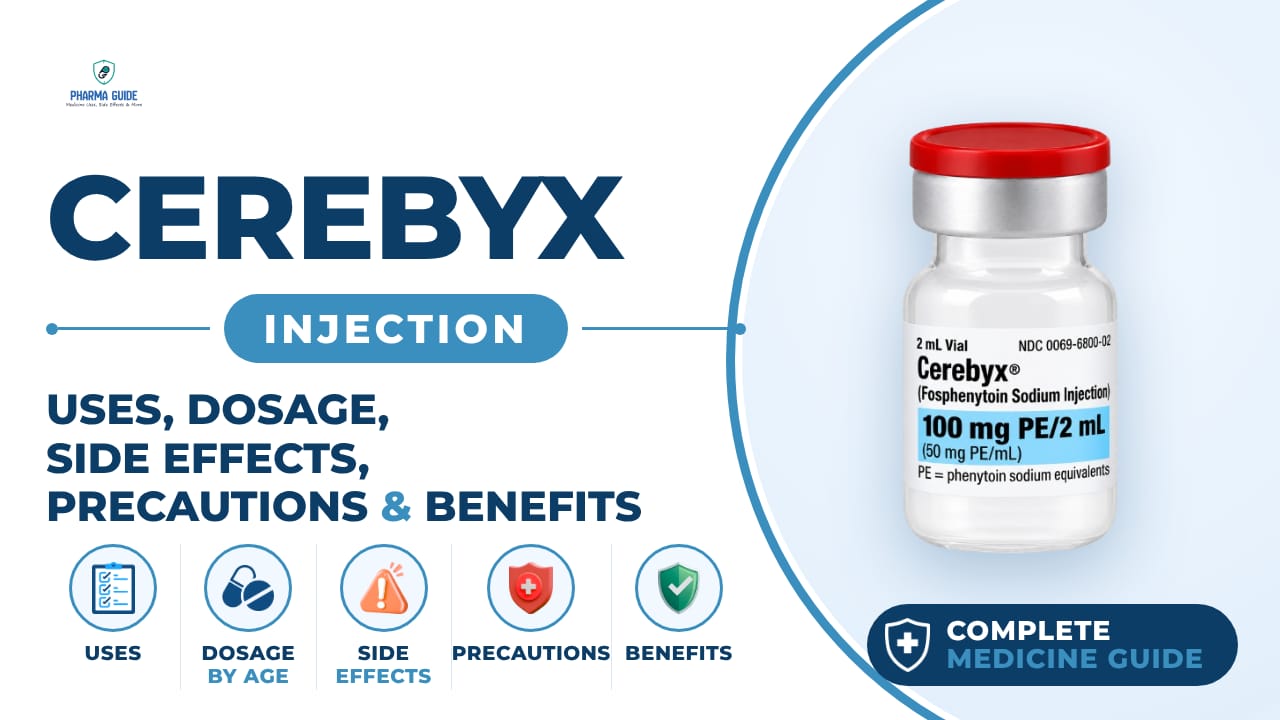
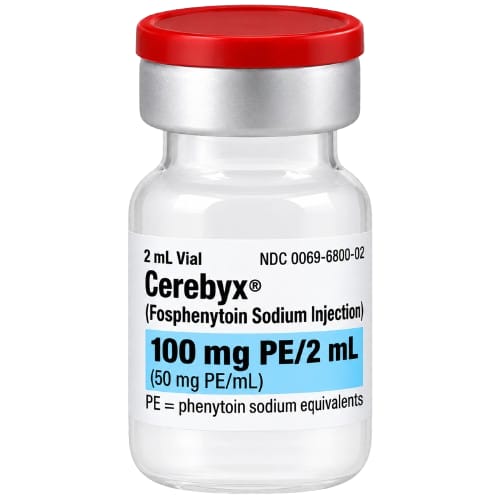
| Generic name | fosphenytoin sodium |
|---|---|
| Drug class | Anticonvulsants, Hydantoins |
| Forms | Injection solution (for intravenous or intramuscular use) |
Quick overview
Cerebyx Injection (fosphenytoin sodium) is an anticonvulsant medicine from the hydantoin drug class, given by injection to prevent or control seizures. It is usually used only for a short time, such as 5 days, and only when phenytoin cannot be taken by mouth. It is used for status epilepticus, seizures during brain surgery, and as a short-term replacement for oral phenytoin.
What is Cerebyx Injection
Cerebyx is an anti-epileptic medicine (anticonvulsant) given by injection to prevent or control seizures. It is usually used only for a short time, such as 5 days, and only when phenytoin cannot be taken by mouth.
Cerebyx Injection uses
- Treating a prolonged, severe seizure emergency called generalized tonic-clonic status epilepticus
- Preventing and treating seizures that happen during brain surgery
- Short-term replacement for oral phenytoin when taking phenytoin by mouth is not possible
Benefits of Cerebyx Injection
- Controls severe seizures
- Treats status epilepticus
- Helps prevent seizures during neurosurgery
- Helps control generalized tonic-clonic seizures
- Provides an injectable alternative when oral phenytoin cannot be taken
How Cerebyx Injection works
Cerebyx is converted in the body into phenytoin, the medicine that actually controls seizures. Phenytoin is thought to work by blocking tiny channels in nerve cells that carry sodium, which calms down the overactive electrical signals in the brain that cause seizures.
Cerebyx Injection dosage
Cerebyx is given by injection into a vein or muscle by a healthcare provider; it is not taken by mouth. Your breathing, blood pressure, heart rhythm, and other vital signs will be watched closely during and after the injection, especially for the first 10 to 20 minutes after it is given, since this is when levels in the blood are highest. If you are switching from this injection back to phenytoin tablets or capsules, your doctor will manage the change in dose for you. Older adults may need lower or less frequent doses because their bodies clear the medicine more slowly. Do not stop this medication suddenly without talking to your doctor, since stopping suddenly can cause seizures to come back or worsen.
| Age group | Dose |
|---|---|
| Under 18 years | Not recommended |
| 18–64 years | 4–6 mg PE/kg/day |
| 65+ years | 4–6 mg PE/kg/day |
Available forms and strengths
- Injection solution (for intravenous or intramuscular use)
Side effects of Cerebyx Injection
Common
- Dizziness
- Drowsiness
- Headache
- Nausea and vomiting
- Constipation
- Dry mouth
- Itching
- Tremor
- Muscle weakness
- Loss of coordination
- Ringing in the ears
- Pain in hips or back
- Flushing (warmth, redness, or tingly feeling under the skin)
- Low blood pressure
- Fast heart rate
- Spinning sensation (vertigo)
- Double vision
- Changes in taste
- Unusual or involuntary eye movements
Serious
- Hives, difficulty breathing, swelling of the face, lips, tongue, or throat
- Fever, sore throat, burning eyes, skin pain, or a red or purple rash that spreads and causes blistering and peeling
- Swollen glands, flu-like symptoms, muscle aches, severe weakness, unusual bruising, or yellowing of the skin or eyes
- Very slow heartbeats, irregular heartbeats, fluttering in the chest, or shortness of breath
- Lightheadedness, confusion, or unusual thoughts or behavior
- Tingling, burning, or numbness sensations, especially in the groin area
- Purple discoloration, swelling, or pain around or spreading from the injection site (sometimes called purple glove syndrome)
- Sudden weakness, chills, ill feeling, mouth sores, red or swollen gums, or trouble swallowing
- Leg cramps, increased thirst or urination (signs of low blood potassium)
- Signs of a severe allergic or whole-body reaction such as rash with fever and swollen lymph nodes
- Severe headache, confusion, slurred speech, arm or leg weakness, trouble walking, loss of coordination, feeling unsteady, very stiff muscles, high fever, profuse sweating, or tremors
- Sudden vision loss, blurred vision, tunnel vision, eye pain or swelling, or seeing halos around lights
Warnings and precautions
- Giving this medicine too quickly into a vein can cause dangerously low blood pressure and serious, even fatal, heart rhythm problems. It must be given at a controlled, limited speed with the heart and breathing monitored closely during and after the infusion.
- Stopping this medicine suddenly can cause seizures to return or become more frequent, including a dangerous prolonged seizure state. Any changes to the dose or stopping treatment should be done gradually and only under medical supervision.
- This medicine can cause severe, sometimes fatal, skin reactions. Treatment should be stopped at the first sign of a rash unless it is clearly caused by something else.
- A serious whole-body allergic reaction called DRESS (with fever, rash, swollen glands, and organ problems) can occur and may be life-threatening, so any such symptoms need immediate medical evaluation.
- Swelling of the face, mouth, or throat (angioedema) can happen and requires stopping the medicine right away and getting emergency care.
- This medicine can cause serious liver injury, including rare cases of liver failure, so it must be stopped immediately and not restarted if this occurs.
- Blood cell problems, including dangerously low levels of platelets or white blood cells, have occasionally occurred, some fatal.
- Swelling, discoloration, and pain spreading from the injection site (sometimes called purple glove syndrome) can occur, sometimes appearing days after the injection.
- This medicine can cause fetal harm, including birth defects of the face, skull, heart, and limbs, and problems with growth and thinking skills, if taken during pregnancy.
- Cerebyx may harm an unborn baby, but having uncontrolled seizures during pregnancy can also be dangerous for both mother and baby, so this medicine should only be stopped or changed under a doctor's guidance. Tell your doctor right away if you become pregnant.
- It isn't known for certain if this medicine passes into breast milk, but the related medicine phenytoin does. Talk with your doctor about the benefits of breastfeeding compared with your need for this medicine and any possible risks to the baby.
- People with kidney problems may process this medicine differently, which can raise the chance of side effects, so doctors may need to monitor blood levels more closely.
- People with liver problems may break down this medicine more slowly and could be more likely to develop early signs of toxicity, so closer monitoring is needed.
- Avoid drinking alcohol while being treated with this medicine, and tell your doctor about your alcohol use, since it can change how the medicine works in your body.
Storage
- Store under refrigeration at 2°C to 8°C (36°F to 46°F)
- The product should not be stored at room temperature for more than 48 hours
- Vials that develop particulate matter should not be used
- Injection vials are single-dose only. After opening, any unused product should be discarded
When to see a doctor
- Get medical help right away if you have signs of a serious allergic reaction such as hives, trouble breathing, or swelling of the face, lips, tongue, or throat.
- Seek care immediately for signs of a severe skin reaction, such as fever, sore throat, burning eyes, skin pain, or a red or purple rash that spreads, blisters, or peels.
- Get help right away for serious eye symptoms such as sudden vision loss, blurred or tunnel vision, eye pain or swelling, or seeing halos around lights.
- Seek emergency care for serious heart symptoms, such as a fast, irregular, or pounding heartbeat, fluttering in the chest, shortness of breath, sudden dizziness, lightheadedness, or passing out.
- Get medical help right away for a severe headache, confusion, slurred speech, arm or leg weakness, trouble walking, loss of coordination, feeling unsteady, very stiff muscles, high fever, heavy sweating, or tremors.
- Seek emergency medical help right away if you suspect an overdose, since it can be fatal.
Alternatives
- Levetiracetam
- Phenobarbital
- Phenytoin
Watch the video
FAQs
What is Cerebyx Injection used for?
It is used to treat status epilepticus, to prevent and treat seizures during brain surgery, and as a short-term injectable replacement when oral phenytoin cannot be taken.
How does Cerebyx Injection work?
Cerebyx is converted in the body into phenytoin, which blocks sodium channels in nerve cells to calm the overactive electrical signals in the brain that cause seizures.
How is Cerebyx Injection given?
It is given by a healthcare provider as an injection into a vein or muscle, not taken by mouth, with vital signs monitored closely during and after administration, especially the first 10 to 20 minutes.
What are the serious side effects of Cerebyx Injection?
Serious side effects include severe allergic reactions, severe skin reactions, DRESS syndrome, liver injury, blood cell problems, purple glove syndrome at the injection site, and dangerous heart rhythm changes if infused too quickly.
Can Cerebyx Injection be stopped suddenly?
No, stopping suddenly can cause seizures to return or worsen, including a dangerous prolonged seizure state, so any dose changes should be done gradually under medical supervision.
General information, not medical advice
Your prescriber and the leaflet in your pack know your situation. This page does not.
- Follow your prescriber and the leaflet
- Don't start, stop, or change a dose on your own
- Doses and warnings differ by country and product
Sources
Video
Related medicines

Injectafer Injection: Uses, Dosage, Side Effects, Precautions and Alternates
Iron products
Injectafer (ferric carboxymaltose) treats iron deficiency anemia and heart failure-related iron deficiency via IV. Learn uses, dosage, side effects, and

Gliclazide Tablet: Uses, Dosage, Side Effects, Precautions and Alternates
Sulfonylurea (hypoglycemic/antidiabetic agent)
Gliclazide Tablet is a sulfonylurea for type 2 diabetes that boosts insulin release. Learn about dosage, side effects, warnings, and precautions.