
Safety
General information, not medical advice
Your prescriber and the leaflet in your pack know your situation. This page does not.
- Follow your prescriber and the leaflet
- Don't start, stop, or change a dose on your own
- Doses and warnings differ by country and product
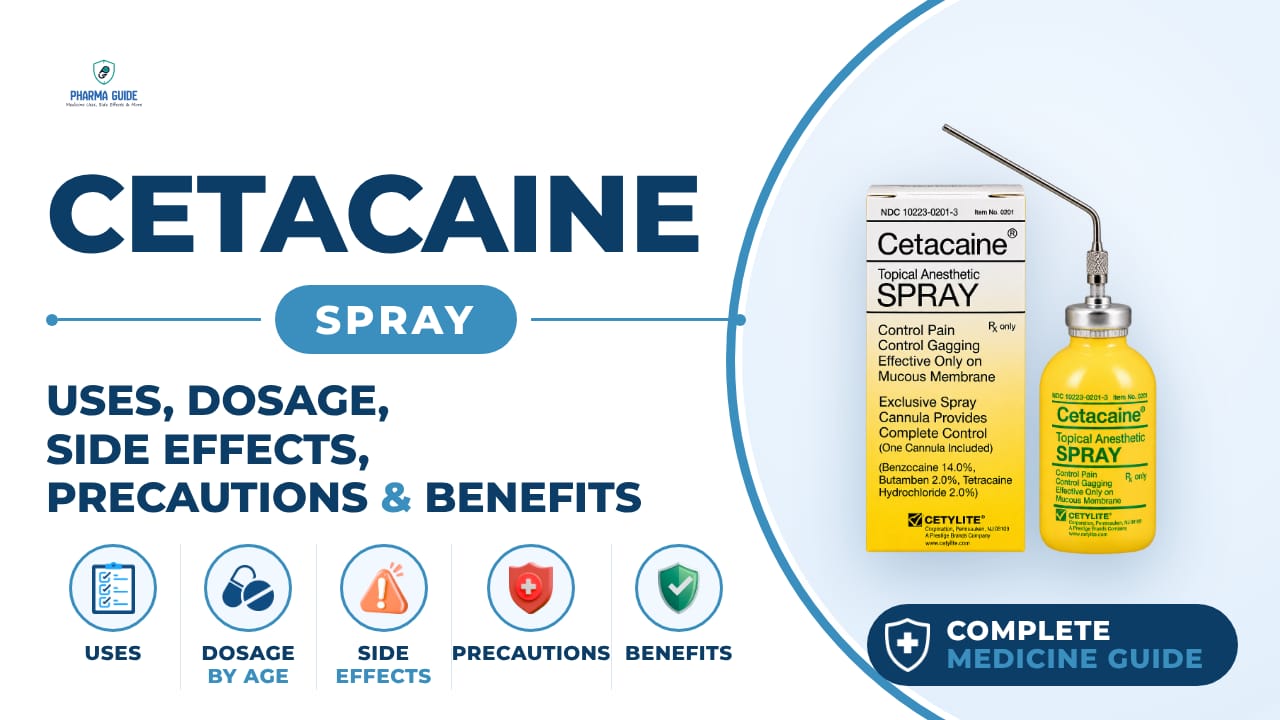
Cetacaine Spray: Uses, Dosage, Side Effects, Precautions and Alternates
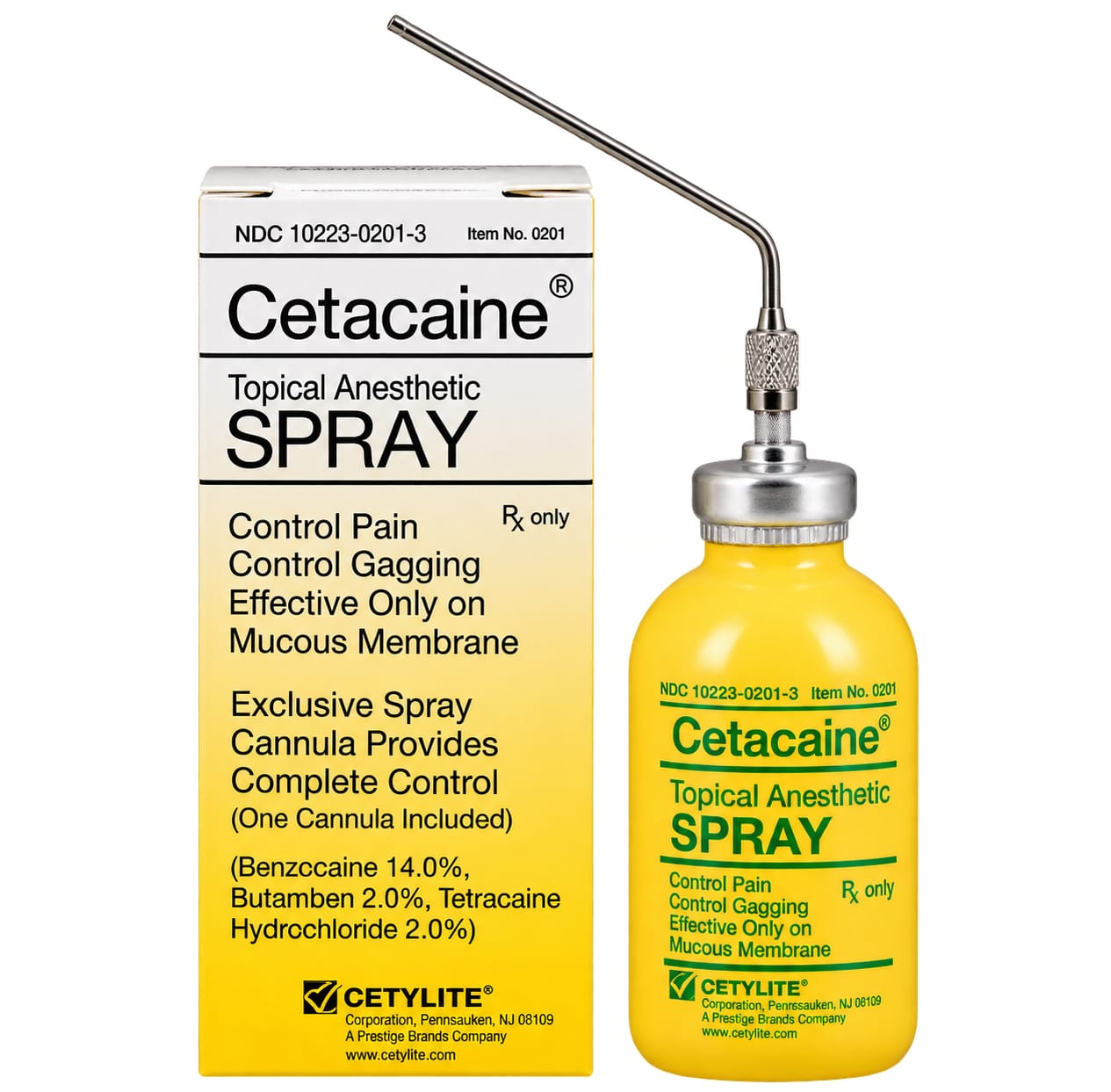
| Generic name | Benzocaine, Butamben, Tetracaine Hydrochloride |
|---|---|
| Drug class | Topical anesthetic (ester-type local anesthetic combination) |
| Forms | Spray, Liquid, Gel |
Quick overview
Cetacaine Spray contains Benzocaine, Butamben, and Tetracaine Hydrochloride, a combination topical anesthetic used by dental and medical professionals to numb mucous membranes and control pain during procedures. It also helps suppress the gag reflex. It works quickly, numbing tissue in about 30 seconds, with effects lasting 30 to 60 minutes. It is applied directly by a healthcare professional and is not intended for self-medication.
What is Cetacaine Spray
Cetacaine Spray is a prescription topical anesthetic spray used by dental and medical professionals to numb mucous membranes and control pain during procedures. It also helps suppress the gag reflex.
Cetacaine Spray uses
- Produces anesthesia of all accessible mucous membrane except the eyes
- Controls pain and gagging during surgical, endoscopic, or other procedures in the ear, nose, mouth, pharynx, larynx, trachea, bronchi, and esophagus
- May be used for vaginal or rectal procedures when feasible
- Used for dental hygiene and pre-injection numbing procedures
Benefits of Cetacaine Spray
- Rapid onset of numbness, about 30 seconds
- Numbing lasts about 30 to 60 minutes
- The only topical anesthetic spray indicated for suppressing the gag reflex
- Combination of ingredients shown to work better than benzocaine alone
How Cetacaine Spray works
Cetacaine contains three numbing ingredients that act on the surface of mucous membranes to block pain signals, working faster and lasting longer than a single numbing ingredient alone.
Cetacaine Spray dosage
Cetacaine Spray is applied directly by a healthcare or dental professional to the site where pain control is needed. The tissue does not need to be dried before the spray is applied. The spray is given for a brief burst only, lasting about one second or less for normal numbing. It should never be injected or used in or near the eyes. It is not for use under dentures or cotton rolls, since trapped medicine under them could injure the tissue. It is not to be used for prolonged or repeated self-medication, since this raises the risk of skin reactions.
| Age group | Dose |
|---|---|
| Under 2 years | Do not use. |
| 2–17 years | No established pediatric dose; if medically necessary |
| 18–64 years | Usual application is approximately 1 second or less to the required area |
| 65–74 years | Use a reduced dose when appropriate, particularly in debilitated or acutely ill patients |
Available forms and strengths
- Spray
- Liquid
- Gel
Side effects of Cetacaine Spray
Common
- Minor irritation, redness, or burning at the application site
- Contact dermatitis with redness and itching, which may progress to blistering and oozing, especially with prolonged or repeated self-medication
Serious
- Methemoglobinemia, a rare condition where blood cannot carry enough oxygen, which can cause bluish or gray skin color (cyanosis)
- Severe allergic reactions, including anaphylaxis, rash, hives, or swelling (extremely rare)
Warnings and precautions
- Do not use in infants or children younger than 2 years old.
- Cetacaine must never be injected and should never be used in or near the eyes.
- Do not apply to large areas of broken or inflamed tissue, as this can lead to too much of the drug being absorbed into the body.
- People who are allergic to any ingredient in Cetacaine, or who have a certain enzyme deficiency (cholinesterase deficiency), should not use it.
- Do not use it under dentures or cotton rolls, since trapping the medicine against the tissue this way could cause tissue injury.
- Spraying for more than two seconds is not safe.
- Repeated or prolonged self-medication with this product is not safe and raises the risk of skin reactions.
- Using too much of this medicine can raise the risk of methemoglobinemia, a condition that lowers the blood's ability to carry oxygen.
- Cetacaine should not be used in early pregnancy unless a doctor decides the benefits outweigh the unknown risks, because its safety in pregnancy has not been proven.
- No routine kidney-specific dose adjustment is usually required for limited topical use, but extensive or repeated application may increase systemic absorption and should be used cautiously in significant renal impairment.
- Use cautiously in liver disease because some local anesthetic components are metabolized by the liver, and systemic exposure may last longer if large amounts are absorbed.
- No major direct interaction is expected with limited topical use, but alcohol may worsen dizziness or other systemic side effects if significant absorption occurs.
- Cetacaine usually does not affect driving when used locally as directed. Avoid driving if you develop dizziness, weakness, blurred vision, or unusual drowsiness.
Storage
- Store at controlled room temperature 20°-25°C (68°-77°F)
When to see a doctor
- Get medical help right away if the skin, lips, or nail beds turn blue or gray, which can be a sign of methemoglobinemia (low blood oxygen).
- Stop use and seek care if a rash, hives, swelling, or other signs of an allergic reaction develop.
- Watch for skin reactions like redness, itching, blistering, or oozing at the application site, especially with repeated use, and seek care if they occur.
Alternatives
- Lidocaine topical anesthetic
- Benzocaine topical anesthetic
- Tetracaine topical anesthetic
Watch the video
FAQs
What is Cetacaine Spray used for?
It is used by dental and medical professionals to numb mucous membranes and control pain and gagging during surgical, endoscopic, or other procedures in areas like the ear, nose, mouth, pharynx, larynx, trachea, bronchi, and esophagus. It may also be used for vaginal or rectal procedures and dental hygiene.
How fast does Cetacaine Spray work and how long does it last?
It numbs tissue in about 30 seconds, with effects lasting 30 to 60 minutes.
Can Cetacaine Spray be used in children?
It should not be used in infants or children younger than 2 years old. There is no established pediatric dose for ages 2 to 17, and it should only be used if medically necessary.
What are the serious side effects of Cetacaine Spray?
Serious side effects include methemoglobinemia, a rare condition where blood cannot carry enough oxygen and can cause bluish or gray skin color, and severe allergic reactions such as anaphylaxis, rash, hives, or swelling.
Is Cetacaine Spray safe to use repeatedly at home?
No, it is not intended for self-medication. Prolonged or repeated self-use raises the risk of skin reactions like redness, itching, blistering, and oozing.
General information, not medical advice
Your prescriber and the leaflet in your pack know your situation. This page does not.
- Follow your prescriber and the leaflet
- Don't start, stop, or change a dose on your own
- Doses and warnings differ by country and product
Sources
Video
Related medicines

Injectafer Injection: Uses, Dosage, Side Effects, Precautions and Alternates
Iron products
Injectafer (ferric carboxymaltose) treats iron deficiency anemia and heart failure-related iron deficiency via IV. Learn uses, dosage, side effects, and

Gliclazide Tablet: Uses, Dosage, Side Effects, Precautions and Alternates
Sulfonylurea (hypoglycemic/antidiabetic agent)
Gliclazide Tablet is a sulfonylurea for type 2 diabetes that boosts insulin release. Learn about dosage, side effects, warnings, and precautions.