
Safety
General information, not medical advice
Your prescriber and the leaflet in your pack know your situation. This page does not.
- Follow your prescriber and the leaflet
- Don't start, stop, or change a dose on your own
- Doses and warnings differ by country and product
Cetrizet Tablet: Uses, Dosage, Side Effects, Precautions and Alternates
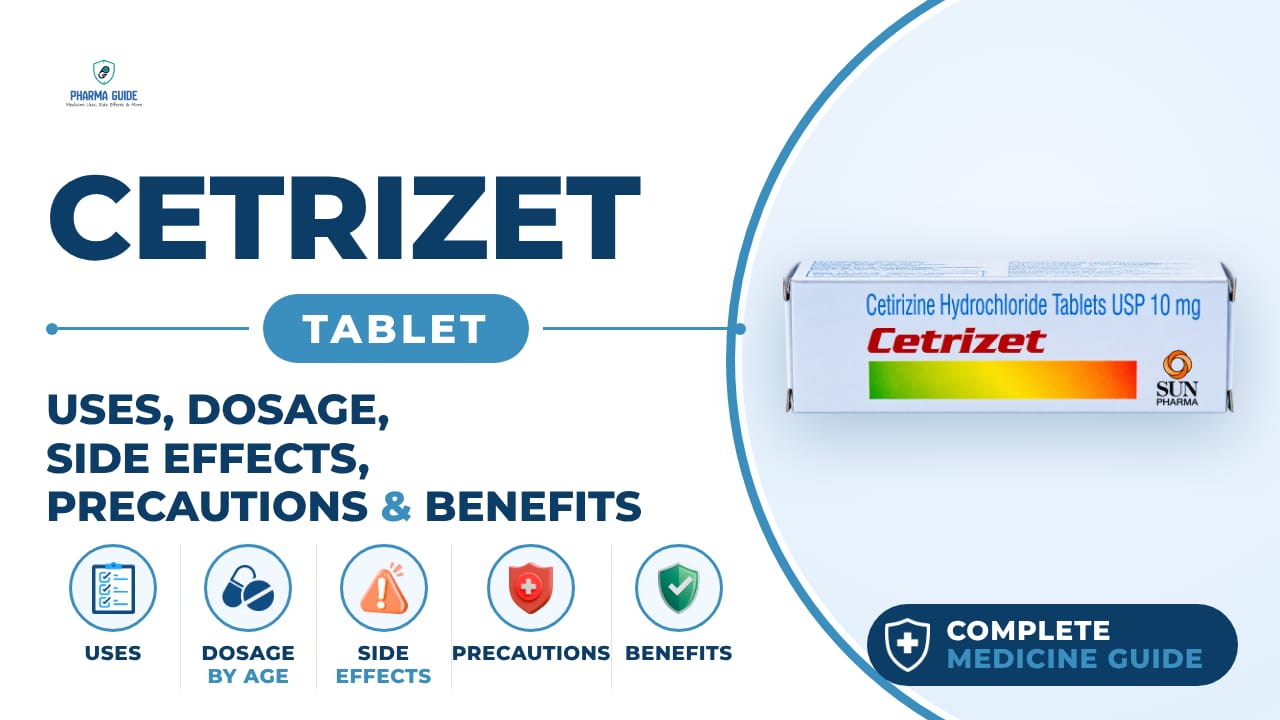
| Generic name | Cetirizine |
|---|---|
| Drug class | Antihistamine (H1-Receptor Antagonist) |
| Forms | Tablet |

Quick overview
Cetrizet Tablet contains cetirizine, a second-generation antihistamine. It is used to relieve common allergy symptoms such as allergic rhinitis, chronic urticaria (hives), common cold symptoms, insect bites and stings, and itching or skin rash. It works by blocking histamine in the body, which helps prevent or relieve allergy symptoms. It is available as a tablet.
What is Cetrizet Tablet
Cetrizet is an anti-allergic medicine that contains cetirizine, a second-generation antihistamine. It is used to relieve common allergy symptoms.
Cetrizet Tablet uses
- Allergic Rhinitis (sneezing, runny nose, itchy/watery eyes, nasal congestion)
- Chronic Urticaria (hives)
- Common Cold
- Insect bites and stings
- Itching and skin rash
Benefits of Cetrizet Tablet
- Allergy Relief: Helps reduce sneezing, runny nose, and nasal itching.
- Itch Relief: Helps relieve itching caused by allergic reactions.
- Hives Support: Helps manage urticaria symptoms.
- Eye Symptom Relief: Helps reduce itchy and watery eyes caused by allergies.
How Cetrizet Tablet works
Cetirizine blocks histamine, a natural chemical in the body that causes allergy symptoms. This helps prevent or relieve symptoms like sneezing, itching, rash, watery eyes, and runny nose.
Cetrizet Tablet dosage
Cetrizet Tablet can be taken with or without food. Swallow the tablet with a glass of water; do not chew or crush it. Take it once daily as prescribed, and drink an adequate amount of water with this medicine. Finish the entire course of treatment even if you feel better, since stopping suddenly may bring symptoms back. Do not stop taking this medicine without speaking to your doctor first. It is not recommended for children below 6 years of age.
| Age group | Dose |
|---|---|
| 2–5 Years | 2.5–5 mg once daily |
| 6–11 Years | 5–10 mg once daily |
| 12 Years and Above | 10 mg once daily |
| Adults & Older Adults | 10 mg once daily (adjust if kidney problems are present) |
Available forms and strengths
- Tablet
Side effects of Cetrizet Tablet
Common
- Sleepiness
- Tiredness/Fatigue
- Dizziness
- Headache
- Diarrhoea
- Nausea or vomiting
- Dry mouth
- Stomach pain
- Change or loss of taste
- Blurred vision
- Cough
- Vertigo
- Rash
- Conjunctivitis
- Constipation
Serious
- Drowsiness or sleepiness
- Fatigue
- Dry mouth
- Headache
- Dizziness
- Stomach discomfort
Warnings and precautions
- Avoid this medicine if you are allergic to it. If your allergy symptoms get worse after taking it—like skin rash, redness, itching, sneezing, or breathing trouble—get medical help right away.
- Taking this medicine along with sedative medicines can increase your risk of sleepiness and impaired thinking. Tell your doctor about all medicines, herbs, and supplements you take.
- Elderly patients should use this medicine cautiously, as they have a higher risk of side effects. Your doctor may monitor you closely or adjust your dose.
- This medicine is not recommended for children under 6 years old because there isn't enough safety information for that age group.
- If you have trouble fully emptying your bladder, use this medicine cautiously, as it may make this problem worse.
- There is not enough safety data to know if this medicine is completely safe during pregnancy. Use it only if your doctor prescribes it.
- This medicine passes into breast milk. High doses or long-term use may cause drowsiness and other effects in the baby, so talk to your doctor if you are breastfeeding.
- This medicine should not be used if you have severe kidney problems, since impaired kidneys cannot clear it properly, which can cause it to build up and lead to serious side effects.
- Use this medicine with extra caution if you have mild to moderate liver problems. Your doctor may want to monitor your liver function.
- Drinking alcohol while taking this medicine is not recommended, as it can increase the risk of dizziness, drowsiness, and trouble concentrating.
- This medicine may cause dizziness or drowsiness. Avoid driving or operating machinery if you experience these effects.
Storage
- Store up to 30°C, protected from light
- Keep all medicines out of reach of children
- Store at room temperature in a cool, dry place
- Ensure the container is tightly sealed to avoid exposure to air and moisture
- Always check the expiration date before taking the tablet
When to see a doctor
Get emergency medical help right away, or contact your doctor, if you think you've taken too much of this medicine.
Seek immediate medical attention if your allergic symptoms get worse, including skin rash, redness, itching, sneezing, or difficulty breathing.
Alternatives
- Levocetirizine
- Loratadine
- Fexofenadine
Watch the video
FAQs
What is Cetrizet Tablet used for?
Cetrizet Tablet is used to relieve allergic rhinitis, chronic urticaria (hives), common cold symptoms, insect bites and stings, and itching or skin rash.
How does Cetrizet Tablet work?
Cetrizet Tablet contains cetirizine, which blocks histamine, a natural chemical in the body that causes allergy symptoms, helping prevent or relieve sneezing, itching, rash, watery eyes, and runny nose.
What is the dosage of Cetrizet Tablet for adults?
Adults and older adults are typically prescribed 10 mg once daily, with dose adjustments if kidney problems are present.
Can children take Cetrizet Tablet?
Cetrizet Tablet is not recommended for children below 6 years of age. For ages 6-11, the dose is 5-10 mg once daily, and for ages 12 and above, it is 10 mg once daily.
What are the common side effects of Cetrizet Tablet?
Common side effects include sleepiness, tiredness, dizziness, headache, diarrhoea, nausea or vomiting, dry mouth, stomach pain, and blurred vision.
General information, not medical advice
Your prescriber and the leaflet in your pack know your situation. This page does not.
- Follow your prescriber and the leaflet
- Don't start, stop, or change a dose on your own
- Doses and warnings differ by country and product
Sources
- https://www.accessdata.fda.gov/drugsatfda_docs/label/2002/19835s15,%2020346s8lbl.pdf
- https://dailymed.nlm.nih.gov/dailymed/drugInfo.cfm?setid=abaf61ad-17bd-4dcf-aff1-6687c4cb1b9f
- https://www.medicines.org.uk/emc/product/3474/smpc#gref
- https://medlineplus.gov/druginfo/meds/a698026.html
- https://www.medicines.org.uk/emc/files/pil.3474.pdf
- https://www.ncbi.nlm.nih.gov/books/NBK549776/
- https://go.drugbank.com/drugs/DB00341
- https://pubchem.ncbi.nlm.nih.gov/compound/Cetirizine
Video
Related medicines
Clarinex Tablet: Uses, Dosage, Side Effects, Precautions and Alternates
Antihistamine (H1-receptor antagonist)
Clarinex Tablet (desloratadine) relieves allergy symptoms and hives by blocking histamine. Learn uses, dosage, side effects, and precautions here.
Aerius Tablet: Uses, Dosage, Side Effects, Precautions and Alternates
Antihistamine (H1-receptor antagonist)
Aerius Tablet contains desloratadine, a non-sedating antihistamine used for allergic rhinitis and chronic hives. Learn its uses, dosage, side effects, and