
Safety
General information, not medical advice
Your prescriber and the leaflet in your pack know your situation. This page does not.
- Follow your prescriber and the leaflet
- Don't start, stop, or change a dose on your own
- Doses and warnings differ by country and product
Clarinex Tablet: Uses, Dosage, Side Effects, Precautions and Alternates
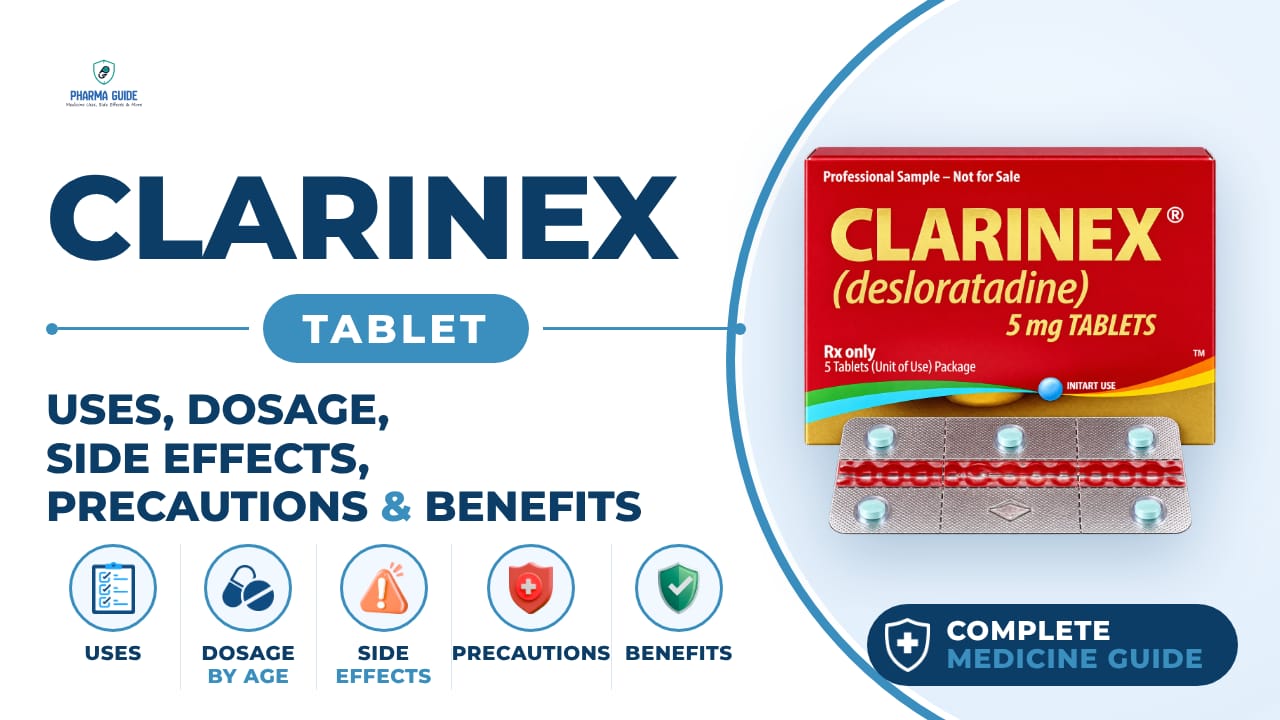
| Generic name | desloratadine |
|---|---|
| Drug class | Antihistamine (H1-receptor antagonist) |
| Forms | Tablet, RediTabs (orally disintegrating tablet), Oral solution/syrup |
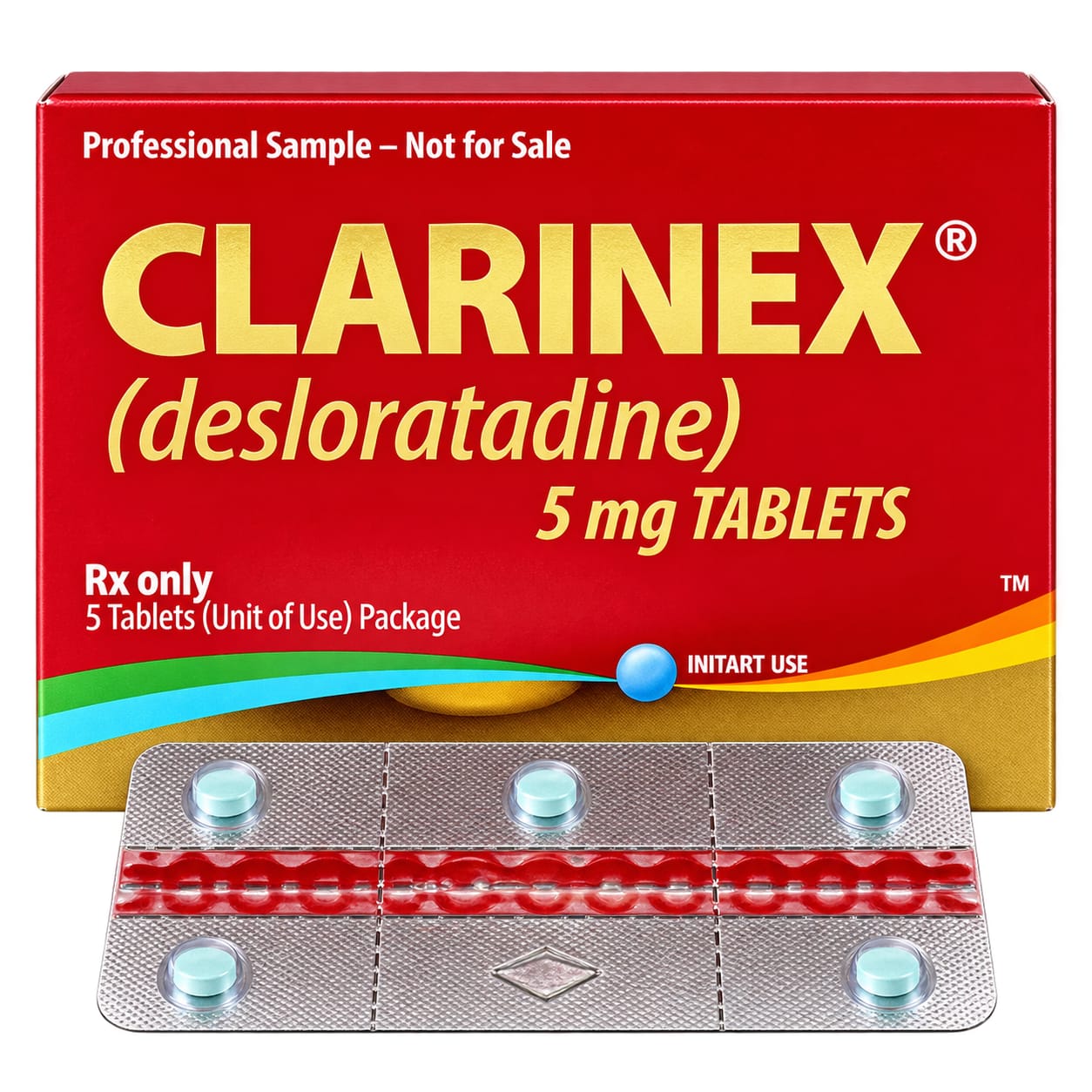
Quick overview
Clarinex Tablet contains desloratadine, an antihistamine (H1-receptor antagonist). It is used to relieve nasal and non-nasal symptoms of seasonal and perennial allergic rhinitis, as well as itching and hives associated with chronic idiopathic urticaria. It works by blocking histamine, a chemical the body releases during allergic reactions. It is available as a tablet, an orally disintegrating tablet (RediTabs), and an oral solution.
What is Clarinex Tablet
Clarinex is a prescription antihistamine tablet that contains desloratadine. It reduces the effects of histamine, a natural chemical in the body that causes allergy symptoms.
Clarinex Tablet uses
- Relief of nasal and non-nasal symptoms of seasonal allergic rhinitis in people 2 years and older
- Relief of nasal and non-nasal symptoms of perennial allergic rhinitis in people 6 months and older
- Symptomatic relief of itching, and reduction in the number and size of hives in people with chronic idiopathic urticaria 6 months and older
Benefits of Clarinex Tablet
- Reduces sneezing, itching, watery eyes, and runny nose caused by allergies
- Reduces itching and the number and size of hives in chronic skin reactions
- Starts working within about an hour and can last up to 24 hours
How Clarinex Tablet works
Clarinex blocks histamine, a chemical your body releases during an allergic reaction, which stops symptoms like itching, sneezing, runny nose, and hives from occurring or getting worse.
Clarinex Tablet dosage
Clarinex can be taken with or without food. Take it exactly as prescribed and follow the directions on your prescription label. Do not increase the dose or take it more often than prescribed.
If using the orally disintegrating tablet (RediTabs), remove it from the package only when ready to take it, place it on the tongue, and let it dissolve without chewing; it can be taken with or without water. Take the RediTabs tablet right away after opening the blister pack.
If using liquid medicine, measure the dose carefully with a proper dosing syringe or measuring device, not a kitchen spoon. Do not give this medicine to a child younger than 6 months old.
If you miss a dose, take it as soon as you remember, but skip it if it is almost time for your next dose; do not take two doses at once.
| Age group | Dose |
|---|---|
| Under 12 years | Use an age-appropriate pediatric formulation; do not use the 5 mg tablet without medical advice |
| 12–64 years | 5 mg once daily |
| 65 years and older | 5 mg once daily; use caution if kidney or liver function is impaired |
Available forms and strengths
- Tablet
- RediTabs (orally disintegrating tablet)
- Oral solution/syrup
- 5 mg strength
Side effects of Clarinex Tablet
Common
- Dry mouth
- Sore throat
- Muscle pain
- Drowsiness, tiredness
- Menstrual pain
Serious
- Allergic reaction with rash, itching, hives, or swelling of lips, tongue, face, or throat
- Shortness of breath or trouble breathing
- Fast or irregular heartbeat, palpitations
- Seizures
- Elevated liver enzymes or hepatitis (liver inflammation)
Warnings and precautions
- Do not take this medicine if you are allergic to desloratadine or to loratadine.
- This medicine can cause serious allergic reactions including rash, itching, hives, and swelling of the face, lips, tongue, or throat. Stop taking it and get medical help right away if this happens.
- This medicine may contain phenylalanine, so tell your doctor if you have phenylketonuria (PKU).
- Do not give this medicine to a child younger than 2 years old without a doctor's advice, and never give it to a child younger than 6 months old.
- Tell your doctor if you are pregnant or plan to become pregnant. It is not known whether this medicine could harm an unborn baby.
- This medicine passes into breast milk, so talk to your doctor about the best way to feed your baby if you are taking it.
- People with kidney disease may need a lower dose. Tell your doctor if you have kidney problems before taking this medicine.
- People with liver disease may need a lower dose. Tell your doctor if you have liver problems before taking this medicine.
Storage
- Store CLARINEX Tablets between 59°F to 86°F (15°C to 30°C)
- CLARINEX Tablets are sensitive to heat. Do not store above 86°F (30°C)
- Protect CLARINEX Tablets from moisture
- Keep CLARINEX Tablets, RediTabs Tablets, and Oral Solution and all medicines out of the reach of children
When to see a doctor
- Get emergency medical help right away if you have signs of an allergic reaction, such as hives, trouble breathing, or swelling of the face, lips, tongue, or throat.
- If you think you've taken too much of this medicine, get medical help right away or contact your local poison control center.
Alternatives
- Loratadine
- Levocetirizine
- Fexofenadine
Watch the video
FAQs
What is Clarinex Tablet used for?
Clarinex is used to relieve nasal and non-nasal symptoms of seasonal and perennial allergic rhinitis, and to reduce itching and the number and size of hives in people with chronic idiopathic urticaria.
How does Clarinex Tablet work?
Clarinex contains desloratadine, an antihistamine that blocks histamine, a chemical the body releases during allergic reactions, stopping symptoms like itching, sneezing, runny nose, and hives.
What is the dosage of Clarinex for adults?
For ages 12 to 64, the dose is 5 mg once daily. Those 65 and older also take 5 mg once daily but should use caution if kidney or liver function is impaired.
What are the common side effects of Clarinex Tablet?
Common side effects include dry mouth, sore throat, muscle pain, drowsiness, tiredness, and menstrual pain.
Can Clarinex be taken with food?
Yes, Clarinex can be taken with or without food, exactly as prescribed by your doctor.
General information, not medical advice
Your prescriber and the leaflet in your pack know your situation. This page does not.
- Follow your prescriber and the leaflet
- Don't start, stop, or change a dose on your own
- Doses and warnings differ by country and product
Sources
Video
Related medicines
Cetrizet Tablet: Uses, Dosage, Side Effects, Precautions and Alternates
Antihistamine (H1-Receptor Antagonist)
Cetrizet Tablet contains cetirizine, used for allergic rhinitis, hives, cold symptoms, and itching. Learn its uses, dosage, side effects, and precautions.
Aerius Tablet: Uses, Dosage, Side Effects, Precautions and Alternates
Antihistamine (H1-receptor antagonist)
Aerius Tablet contains desloratadine, a non-sedating antihistamine used for allergic rhinitis and chronic hives. Learn its uses, dosage, side effects, and