
Safety
General information, not medical advice
Your prescriber and the leaflet in your pack know your situation. This page does not.
- Follow your prescriber and the leaflet
- Don't start, stop, or change a dose on your own
- Doses and warnings differ by country and product
Cetrotide Injection: Uses, Dosage, Side Effects, Precautions and Alternates
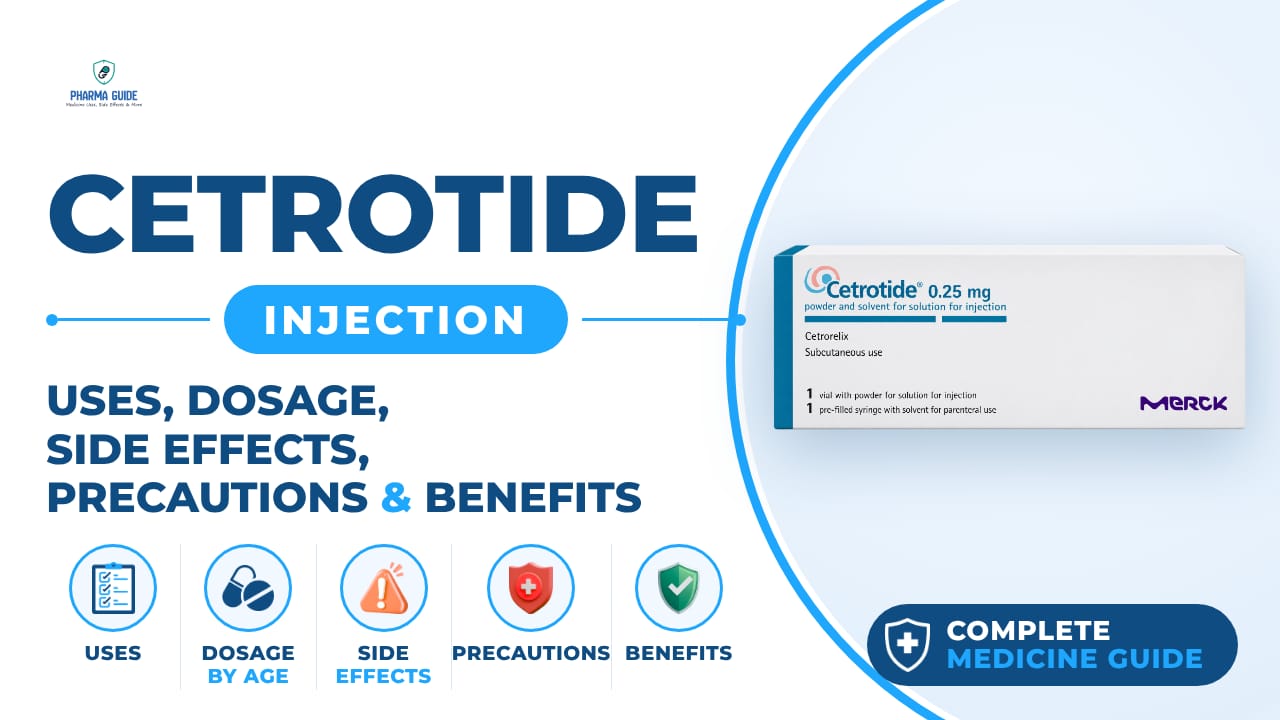
| Generic name | cetrorelix |
|---|---|
| Drug class | anti-gonadotropin-releasing hormone (GnRH antagonist) |
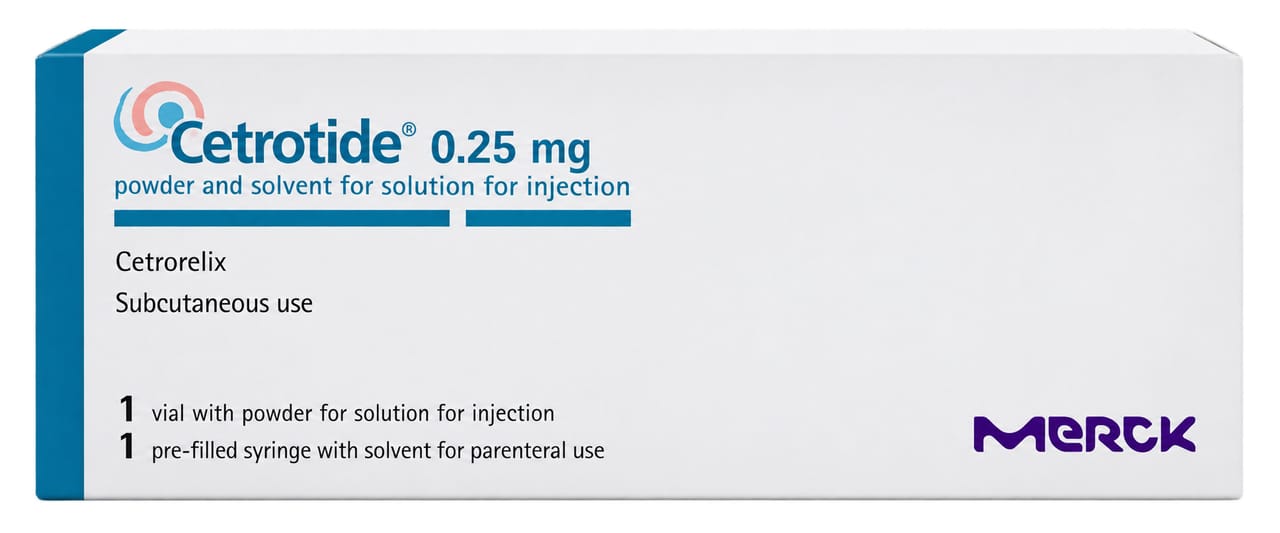
| Forms | Powder and solvent for solution for injection (prefilled syringe with solvent and vial with powder) |
Quick overview
Cetrotide Injection contains the active substance cetrorelix, a GnRH antagonist. It comes as a powder and solvent that are mixed to make a solution for injection under the skin. It is used in women undergoing controlled ovarian stimulation for fertility treatment to help prevent premature ovulation before egg collection.
What is Cetrotide Injection
Cetrotide contains the active substance cetrorelix. It is available as a powder and solvent that is mixed to make a solution for injection under the skin.
Cetrotide Injection uses
- Prevention of premature ovulation in women undergoing controlled ovarian stimulation followed by egg collection and assisted reproductive techniques such as IVF
Benefits of Cetrotide Injection
- Helps prevent a premature LH surge during fertility treatment.
- Helps stop early ovulation before eggs are ready for retrieval.
- Supports better control of ovarian stimulation cycles in IVF treatment.
- Helps fertility specialists time egg retrieval more accurately.
- Supports the development of multiple mature follicles until the planned trigger injection.
How Cetrotide Injection works
Cetrotide blocks a natural hormone called LHRH, which normally triggers the release of another hormone (LH) that causes ovulation. By blocking LHRH, Cetrotide stops the chain of events that leads to an egg being released too early from the ovary.
Cetrotide Injection dosage
This medicine is only for injection just under the skin of your belly (subcutaneous). Use a different injection site on your belly each day to reduce skin irritation. Your first injection should be given under the supervision of your doctor, and you should be watched for 30 minutes afterward in case of an allergic reaction. Later injections may be given by yourself once you know the signs of an allergic reaction and what to do if one happens.
It is best to use the medicine at the same time each day, leaving 24 hours between doses, either every morning or every evening. You will start using another fertility medicine first, then start Cetrotide a few days later on the day your doctor tells you. Keep using this medicine until your doctor tells you to stop, usually up to the day your eggs are collected.
Only mix the powder with the water (solvent) provided, using a gentle swirling motion — do not shake it. Use the mixed solution right away after preparing it. Do not use the solution if it contains particles or is not clear and colourless. Clean the injection site with an alcohol swab before each injection. Do not rub the injection site after the shot, to reduce bruising.
If you miss a dose, inject it as soon as you remember and contact your doctor for advice — do not double the dose to catch up. This medicine is not intended for use in children or in women who have gone through menopause.
| Age group | Dose |
|---|---|
| Children & adolescents <18 years | Not indicated; safety and effectiveness not established |
| Adult women – IVF/ART, daily regimen | 0.25 mg subcutaneously once daily, usually starting stimulation day 5 or 6 and continuing until the day of hCG administration |
| Adult women – Single-dose regimen | 3 mg subcutaneously once on stimulation day 7; if hCG is not given within 4 days, start 0.25 mg once daily 96 hours later |
| Adult men | Not indicated |
| Older adults | Not routinely indicated; clinical use has not been established |
Available forms and strengths
- Powder and solvent for solution for injection (prefilled syringe with solvent and vial with powder)
Side effects of Cetrotide Injection
Common
- Local injection site reactions such as redness, swelling, and itching
- Mild to moderate ovarian hyperstimulation syndrome (OHSS)
- Headache
- Nausea
Serious
- Severe allergic/pseudo-allergic reactions, including life-threatening anaphylaxis
- Severe ovarian hyperstimulation syndrome (OHSS), with symptoms like lower abdominal pain, nausea, vomiting, diarrhea followed by rapid weight gain, reduced urine output, and difficulty breathing
Warnings and precautions
- Serious allergic reactions, including life-threatening anaphylaxis, can happen, especially with the first dose. Your first injection should be given under medical supervision.
- Ovarian hyperstimulation syndrome (OHSS) can occur during or after ovarian stimulation treatment, causing the ovaries to become too large.
- There is limited experience using Cetrotide in repeated fertility treatment cycles, so your doctor will carefully weigh the benefits and risks if you need it more than once.
- Cetrotide must not be used if you are allergic to cetrorelix, similar hormone medicines, or any of its ingredients.
- Cetrotide must not be used during pregnancy. It is not known to be safe for an unborn baby and animal studies suggest it could cause harm.
- Cetrotide must not be used while breastfeeding.
- Cetrotide has not been studied in people with kidney disease, so caution is needed, and it must not be used in people with severe kidney impairment.
- Cetrotide has not been studied in people with liver disease, so caution is needed and you should tell your doctor if you have liver disease.
- Cetrotide is not expected to affect your ability to drive or use machines.
Storage
- Store refrigerated at 2–8°C (36–46°F) in the original package.
- Keep in the original carton to protect the medicine from light.
- Do not freeze or place near the freezer compartment.
- Unopened packs may be stored at room temperature up to 30°C (86°F) for up to 3 months, depending on the product label.
- After mixing, use immediately and discard any unused solution.
- Keep securely stored and out of reach of children.
When to see a doctor
- Get medical help right away if you notice signs of a serious allergic reaction, such as hives, warm red itchy skin, swelling of the face, lips, tongue or throat, fast or uneven pulse, wheezing, or serious trouble breathing.
- Contact your doctor right away if you have signs of severe OHSS, such as clearly enlarged ovaries, reduced urine output, weight gain, difficulty breathing, or fluid buildup in your stomach or chest.
- Tell your fertility doctor right away if you think you might be pregnant while using this medicine.
Alternatives
- Leuprolide
- Fyremadel
- Orgalutran
- Ganirelix
- Buserelin
Watch the video
FAQs
What is Cetrotide Injection used for?
It is used to prevent premature ovulation in women undergoing controlled ovarian stimulation followed by egg collection and assisted reproductive techniques such as IVF.
How does Cetrotide Injection work?
Cetrotide blocks a natural hormone called LHRH, which normally triggers the release of LH that causes ovulation. By blocking LHRH, it stops the chain of events that leads to an egg being released too early.
How is Cetrotide Injection given?
It is injected just under the skin of the belly, using a different injection site each day. The first injection should be given under medical supervision with 30 minutes of observation, and later doses may be self-administered at the same time each day.
What are the common side effects of Cetrotide Injection?
Common side effects include local injection site reactions like redness, swelling, and itching, mild to moderate ovarian hyperstimulation syndrome, headache, and nausea.
Can Cetrotide Injection be used during pregnancy?
No, Cetrotide must not be used during pregnancy, as its safety for an unborn baby is not known and animal studies suggest it could cause harm.
General information, not medical advice
Your prescriber and the leaflet in your pack know your situation. This page does not.
- Follow your prescriber and the leaflet
- Don't start, stop, or change a dose on your own
- Doses and warnings differ by country and product
Sources
Video
Related medicines

Injectafer Injection: Uses, Dosage, Side Effects, Precautions and Alternates
Iron products
Injectafer (ferric carboxymaltose) treats iron deficiency anemia and heart failure-related iron deficiency via IV. Learn uses, dosage, side effects, and

Gliclazide Tablet: Uses, Dosage, Side Effects, Precautions and Alternates
Sulfonylurea (hypoglycemic/antidiabetic agent)
Gliclazide Tablet is a sulfonylurea for type 2 diabetes that boosts insulin release. Learn about dosage, side effects, warnings, and precautions.