
Safety
General information, not medical advice
Your prescriber and the leaflet in your pack know your situation. This page does not.
- Follow your prescriber and the leaflet
- Don't start, stop, or change a dose on your own
- Doses and warnings differ by country and product
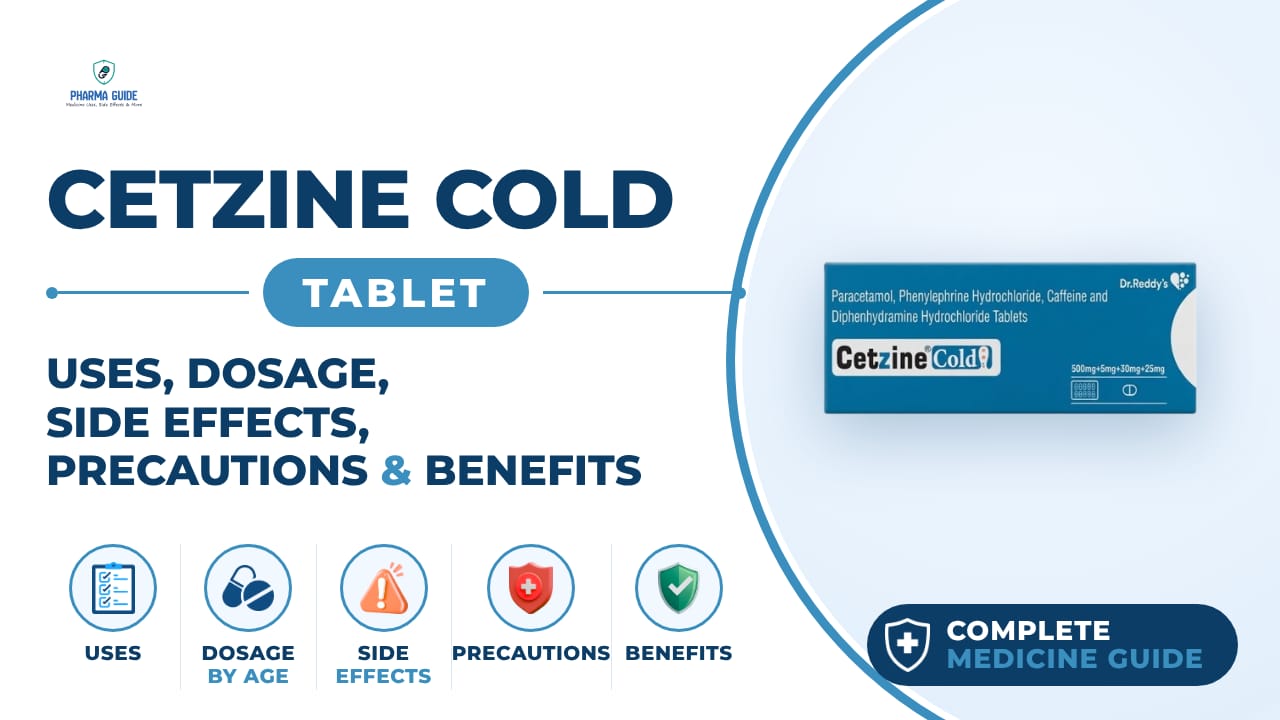
Cetzine Cold Tablet: Uses, Dosage, Side Effects, Precautions and Alternates
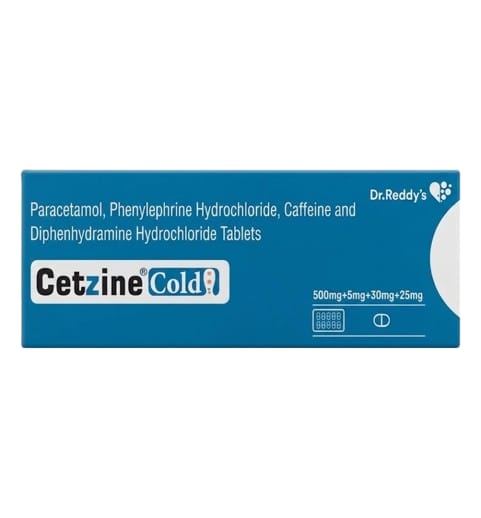
| Generic name | Caffeine + Diphenhydramine + Paracetamol/Acetaminophen + Phenylephrine |
|---|---|
| Drug class | Non-steroidal anti inflammatory, adrenergic, H1 antagonists and methylxanthine |
| Forms | Tablet |
Quick overview
Cetzine Cold Tablet is a combination medicine containing caffeine, diphenhydramine, paracetamol/acetaminophen and phenylephrine, used to relieve common cold and flu symptoms such as fever, headache, a blocked nose, sneezing and body aches. It works through four different mechanisms to ease these symptoms and help you feel more comfortable while recovering. It is intended for adults aged 18–64 years and is not recommended for children under 18 or adults 65 and older.
What is Cetzine Cold Tablet
Cetzine Cold Tablet is a combination medicine used to relieve symptoms of the common cold and flu, including fever, headache, a blocked nose, sneezing and body aches, helping you feel more comfortable while you recover.
Cetzine Cold Tablet uses
- Reduces fever and body aches
- Eases a blocked or stuffy nose (nasal congestion)
- Reduces sneezing and runny nose
Benefits of Cetzine Cold Tablet
- Helps reduce fever and body aches
- Relieves nasal congestion
- Reduces sneezing and runny nose
- Helps ease headache
- Provides temporary relief from cold symptoms
How Cetzine Cold Tablet works
This tablet combines four ingredients that each work differently: paracetamol reduces pain and fever; phenylephrine narrows blood vessels in the nose to relieve congestion; diphenhydramine is an antihistamine that reduces sneezing, itching and runny nose and also has a sedating effect; and caffeine is a mild stimulant that helps reduce tiredness.
Cetzine Cold Tablet dosage
Swallow the tablet whole with a glass of water. Do not crush or chew the tablet, as this may affect how the medication is absorbed. Take the tablet at fixed times each day to maintain a consistent level of medication in your body. Take it as prescribed, for the shortest time needed. Do not take other paracetamol-containing medicines at the same time. This medicine is taken by mouth.
| Age group | Dose |
|---|---|
| Under 18 years | Not recommended |
| 18–64 years | 1 tablet, every 6 hours |
| 65+ years | Not recommended |
Available forms and strengths
- Tablet
Side effects of Cetzine Cold Tablet
Common
- Dizziness
- Drowsiness
- Difficulty falling asleep
- Dryness of the mouth
- Reduced coordination
Serious
- Sleepiness
- Dizziness
- Nausea
- Dry mouth
- Headache
- Restlessness
- Difficulty sleeping
Warnings and precautions
- This medicine is not recommended for pregnant women. Talk to your doctor about the risks before taking it while pregnant.
- Breastfeeding women should use this medicine with caution, as it can pass into breast milk and reach the nursing infant. Talk to a doctor before taking it while breastfeeding.
- Patients with kidney disease should use this medicine cautiously. If you have a severe kidney problem, talk to your doctor before taking it.
- This medicine should be used cautiously in patients with liver disease, and dose adjustments may be needed. If you have a severe liver problem, talk to your doctor about the dose before taking it.
- Avoid alcohol while taking this medicine, as it can add to dizziness, drowsiness, coordination problems and sleep problems caused by the medication. Too much alcohol can also raise the risk of liver damage.
- This medicine can affect the mental or physical abilities needed for driving or using machines. You may feel drowsy, dizzy or have trouble with coordination, so avoid attentive tasks after taking it.
- Do not take this medicine if you are allergic to paracetamol, phenylephrine, diphenhydramine, or caffeine.
- This medicine is not intended for children under 12 years old.
- Do not take this medicine along with other prescription medicines that also contain paracetamol or acetaminophen.
- Tell your doctor if you have high blood pressure before taking this medicine.
- Do not take this medicine for longer than your doctor has told you, and do not extend the treatment on your own.
- This medicine can interact with other diseases including alcoholism, heart problems, phenylketonuria (PKU), asthma/COPD, kidney dysfunction, liver disease, diabetes, and glaucoma.
Storage
- Store this medicine at a temperature below 30 ºC.
- Protect it from light and moisture.
- Keep Cetzine Cold Tablet away from children.
- Do not use this medicine after the expiry date has passed.
When to see a doctor
- If side effects do not improve or become serious, talk to your doctor right away.
- If your cold symptoms last more than three days, see your doctor for a full check-up and treatment plan.
- If you or someone else takes too much of this medicine by accident, get medical help right away from a doctor or nearby hospital.
Alternatives
- Sudin Cold
- Sumo Cold
- Nicip Cold & Flu
Watch the video
FAQs
What is Cetzine Cold Tablet used for?
It is a combination medicine used to relieve common cold and flu symptoms such as fever, headache, a blocked nose, sneezing, runny nose and body aches.
How should I take Cetzine Cold Tablet?
Swallow the tablet whole with a glass of water without crushing or chewing it. Adults aged 18–64 years take 1 tablet every 6 hours, at fixed times, for the shortest time needed as prescribed.
Who should not take Cetzine Cold Tablet?
It is not recommended for children under 18 years or adults 65 and older. It is also not recommended for pregnant women, and anyone allergic to paracetamol, phenylephrine, diphenhydramine or caffeine should avoid it.
What are the common side effects of Cetzine Cold Tablet?
Common side effects include dizziness, drowsiness, difficulty falling asleep, dry mouth and reduced coordination.
Can I drink alcohol while taking Cetzine Cold Tablet?
No, alcohol should be avoided because it can increase dizziness, drowsiness, coordination problems and sleep issues, and too much alcohol can raise the risk of liver damage.
General information, not medical advice
Your prescriber and the leaflet in your pack know your situation. This page does not.
- Follow your prescriber and the leaflet
- Don't start, stop, or change a dose on your own
- Doses and warnings differ by country and product
Sources
- CDSCO [Internet]. Gov.in. Available from: https://cdscoonline.gov.in/CDSCO/Drugs
- Tripathi KD. Essentials of medical pharmacology. 8th ed. New Delhi, India: Jaypee Brothers Medical; 2018.
- Diphenhydramine [Internet]. Medlineplus.gov. Available from: https://medlineplus.gov/druginfo/meds/a682539.html
- Phenylephrine [Internet]. Medlineplus.gov. Available from: https://medlineplus.gov/druginfo/meds/a606008.html
- Acetaminophen [Internet]. Medlineplus.gov. Available from: https://medlineplus.gov/druginfo/meds/a681004.html
Video
Related medicines

Injectafer Injection: Uses, Dosage, Side Effects, Precautions and Alternates
Iron products
Injectafer (ferric carboxymaltose) treats iron deficiency anemia and heart failure-related iron deficiency via IV. Learn uses, dosage, side effects, and

Gliclazide Tablet: Uses, Dosage, Side Effects, Precautions and Alternates
Sulfonylurea (hypoglycemic/antidiabetic agent)
Gliclazide Tablet is a sulfonylurea for type 2 diabetes that boosts insulin release. Learn about dosage, side effects, warnings, and precautions.