
Safety
General information, not medical advice
Your prescriber and the leaflet in your pack know your situation. This page does not.
- Follow your prescriber and the leaflet
- Don't start, stop, or change a dose on your own
- Doses and warnings differ by country and product
Chloramphenicol Eye Drops: Uses, Dosage, Side Effects, Precautions and Alternates
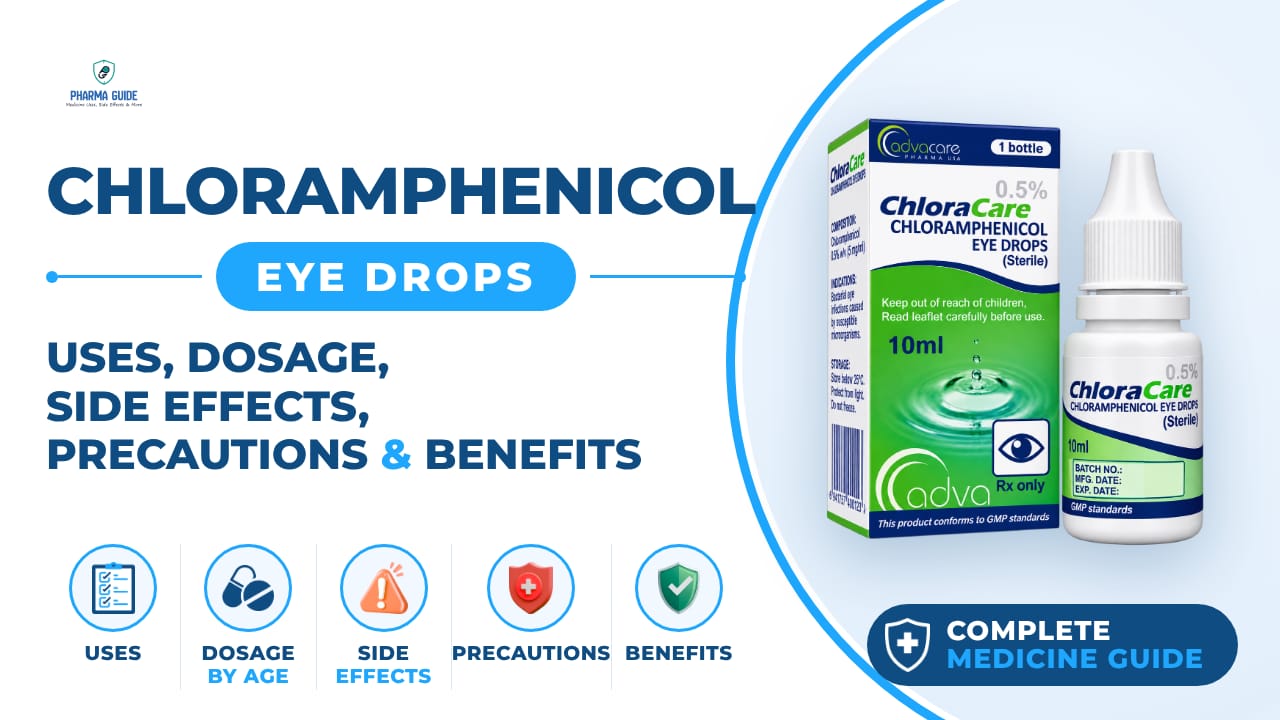
| Generic name | Chloramphenicol |
|---|---|
| Drug class | Antibiotic |
| Forms | Eye drops (ophthalmic solution), Eye ointment |
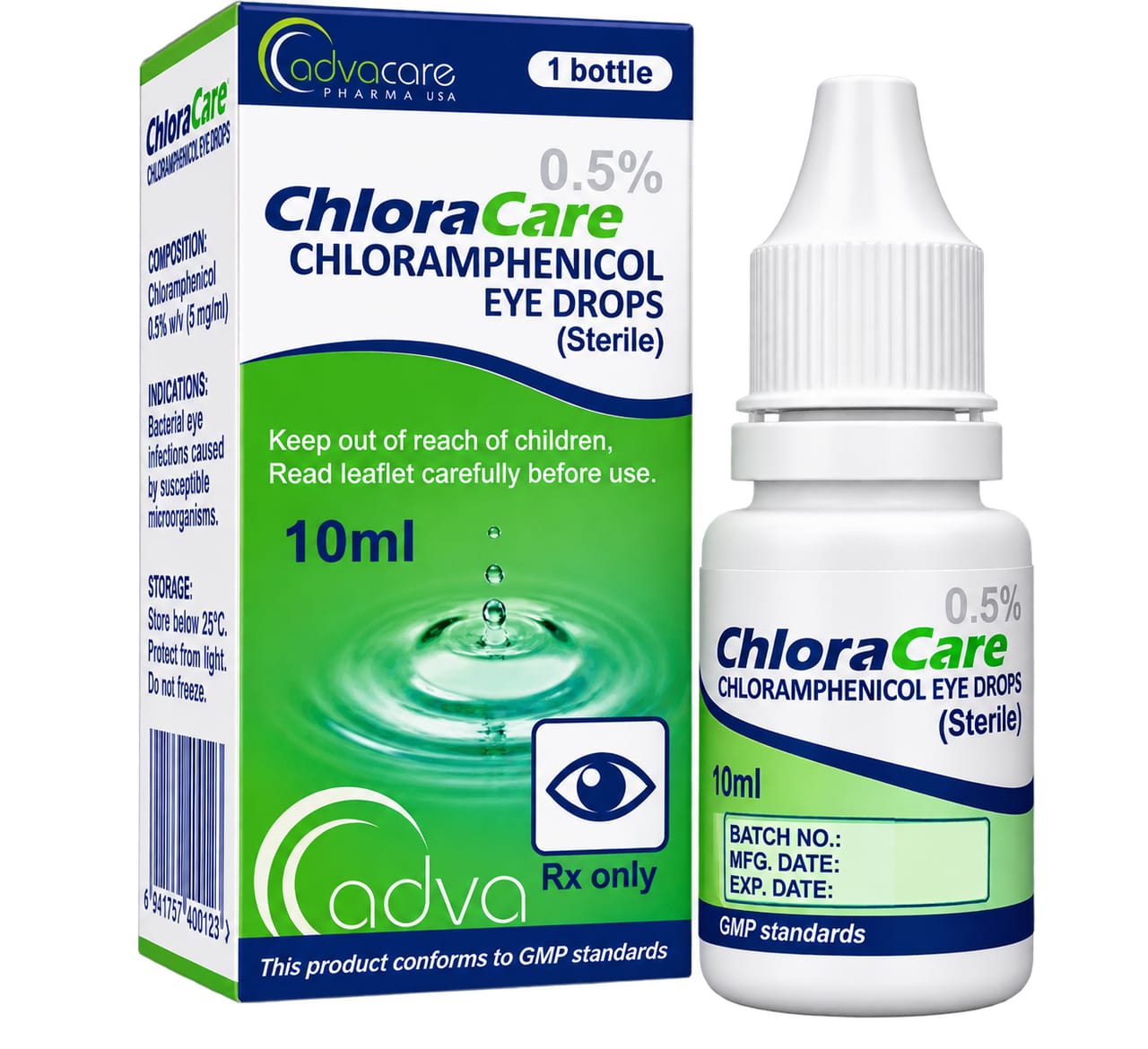
Quick overview
Chloramphenicol Eye Drops contain the antibiotic chloramphenicol and are used to treat infections of the eye, such as bacterial conjunctivitis. They work by helping kill the bacteria causing the infection so the body can overcome it. The drops are used in both adults and children, with dosing that varies by age and improves as the infection clears.
What is Chloramphenicol Eye Drops
Chloramphenicol belongs to a group of medicines called antibiotics. It is used to treat infections of the eye, such as bacterial conjunctivitis, an infection of the outer surfaces of the eye.
Chloramphenicol Eye Drops uses
- Treating bacterial conjunctivitis (infection of the outer surface of the eye)
- Treating other superficial eye infections
- Used perioperatively to help prevent surgical wound infections in eye surgery
Benefits of Chloramphenicol Eye Drops
- Helps kill the bacteria causing the eye infection so the body can overcome it
- Can be used in both adults and children
How Chloramphenicol Eye Drops works
When put in the eye, chloramphenicol works by helping kill the bacteria (germs) so the body can overcome the infection. It stops bacteria from making the proteins they need to survive.
Chloramphenicol Eye Drops dosage
Wash your hands before using the drops. Tilt your head back and look at the ceiling, then gently pull the lower eyelid down to make a space for the drop. Avoid touching the tip of the bottle or dropper to your eye or any other surface to keep the medicine germ-free. After putting in a drop, close your eye and press a fingertip against the inner corner of the eye for about a minute to help the medicine reach the infection.
If you think a drop missed your eye, use another drop. Use during waking hours only. Keep using this medicine for the full course of treatment even if your symptoms improve, and do not stop early or miss doses.
Do not wear contact lenses during treatment; wait 24 hours after finishing treatment before wearing them again. Glasses can be worn during treatment. If using another eye drop or ointment at the same time, wait several minutes before applying the second product.
If you miss a dose, apply it as soon as you remember, but if it is almost time for the next dose, skip the missed one and continue your regular schedule. Do not double up on a dose to make up for a missed one.
| Age group | Dose |
|---|---|
| Under 2 years | Use only if specifically prescribed by a doctor |
| 2–11 years | 1 drop every 2 hours initially, then reduce as infection improves |
| 12–17 years | 1 drop every 2 hours initially, then every 4–6 hours |
| 18–64 years | 1 drop every 2 hours initially, then every 4–6 hours |
| 65+ years | Same adult dose; use under medical guidance |
Available forms and strengths
- Eye drops (ophthalmic solution)
- Eye ointment
Side effects of Chloramphenicol Eye Drops
Common
- Burning or stinging when applied
- Temporary blurred vision after use
- Eyes stinging or sight being blurred immediately after using the drops
Serious
- Pale skin, sore throat and fever, unusual bleeding or bruising, or unusual tiredness or weakness
- Itching, redness, skin rash, swelling, or other signs of irritation not present before use
- Wheeziness (shortness of breath), fever, swelling of the face, lips or tongue, itching or rash with swelling of the skin
- A sore throat, bruising, or being unable to overcome an infection
- Changes in blood cells causing severe tiredness or easy bruising
- Prolonged irritation, swelling, watery eyes, or sensitivity to light
Warnings and precautions
- Do not use this medicine if you are allergic to chloramphenicol or any of its ingredients, or if you or a family member has had a blood disorder or bone marrow disease, including anemia, when using chloramphenicol before.
- Talk to your doctor before use if you have visual disturbances, severe eye pain, sensitivity to light, an inflamed eye with a rash on the scalp or face, a cloudy-looking eye, unusual appearance of the black or colored part of the eye, a foreign body in the eye, an eye infection that keeps coming back, glaucoma, dry eyes, recent eye injury or surgery, or if you are using other eye drops or ointment.
- This medicine contains phenylmercuric nitrate as a preservative, which may cause allergic reactions. Do not wear contact lenses during treatment.
- If you develop a new eye infection while using this treatment, stop using the drops and speak to your doctor.
- Tell your doctor if you are taking cancer medicines such as methotrexate or immune system medicines such as azathioprine, as this medicine may affect how they work.
- Serious blood-related side effects, including a rare but potentially fatal blood disorder, have been reported even with eye drop use because some of the drug can be absorbed into the body.
- This medicine should not be used during pregnancy unless your doctor considers it essential, because the effects are unknown.
- This medicine should not be used while breastfeeding unless your doctor considers it essential, because the effects are unknown.
- No effects on the ability to drive or use machines have been reported, but if you notice any visual disturbance after using the drops, do not drive or use machines until it clears up.
Storage
- Store in a refrigerator at a temperature between 2°C and 8°C.
- Protect from light.
- Discard the bottle 28 days after opening, even if there is solution remaining.
- Do not use Chloramphenicol after the expiry date which is stated on the carton and label after "EXP". The expiry date refers to the last day of that month.
- Do not throw away any medicines via wastewater or household waste. Ask your pharmacist how to throw away medicines you no longer use.
- Keep this medicine out of the sight and reach of children.
When to see a doctor
- Contact your doctor if your symptoms get worse or do not improve within a couple of days of treatment.
- Stop using the medicine and tell your doctor right away if you get wheeziness, fever, swelling of the face, lips or tongue, itching, or a rash with skin swelling.
- Tell your doctor right away if you get a sore throat, bruising, or can't seem to shake off an infection, since these can be signs of a rare but serious blood problem.
- If you accidentally use too much, wash your eye with plenty of water, and tell your doctor immediately if any painful symptoms continue.
- If you develop prolonged irritation, swelling, watery eyes, or sensitivity to light, wash the eye with water for 15 minutes; see a doctor for an eye exam if symptoms continue.
Alternatives
- Tobramycin Eye Drops
- Gentamicin Eye Drops
- Azithromycin Eye Drops
- Erythromycin Eye Ointment
- Fusidic Acid Eye Drops/Gel
Watch the video
FAQs
What is Chloramphenicol Eye Drops used for?
It is an antibiotic used to treat infections of the eye, such as bacterial conjunctivitis, other superficial eye infections, and to help prevent surgical wound infections during eye surgery.
How does Chloramphenicol Eye Drops work?
It works by helping kill the bacteria causing the infection, stopping them from making the proteins they need to survive, so the body can overcome the infection.
Can I wear contact lenses while using Chloramphenicol Eye Drops?
No, you should not wear contact lenses during treatment. Wait 24 hours after finishing treatment before wearing them again, though glasses can be worn during treatment.
What should I do if I miss a dose of Chloramphenicol Eye Drops?
Apply the missed dose as soon as you remember, but if it is almost time for the next dose, skip the missed one and continue your regular schedule. Do not double up on a dose.
How should Chloramphenicol Eye Drops be stored?
Store in a refrigerator between 2°C and 8°C, protect from light, and discard the bottle 28 days after opening even if solution remains.
General information, not medical advice
Your prescriber and the leaflet in your pack know your situation. This page does not.
- Follow your prescriber and the leaflet
- Don't start, stop, or change a dose on your own
- Doses and warnings differ by country and product
Sources
Video
Related medicines
Fusidic Acid Cream: Uses, Dosage, Side Effects, Precautions and Alternates
Antibiotic
Fusidic Acid Cream is a prescription antibiotic for bacterial skin infections like impetigo. Learn uses, dosage, side effects, and precautions.
Fucidin Cream: Uses, Dosage, Side Effects, Precautions and Alternates
Antibiotic
Fucidin Cream is a prescription antibiotic containing fusidic acid, used to treat bacterial skin infections. Learn about its uses, dosage, and side effects.