
Safety
General information, not medical advice
Your prescriber and the leaflet in your pack know your situation. This page does not.
- Follow your prescriber and the leaflet
- Don't start, stop, or change a dose on your own
- Doses and warnings differ by country and product
Fusidic Acid Cream: Uses, Dosage, Side Effects, Precautions and Alternates
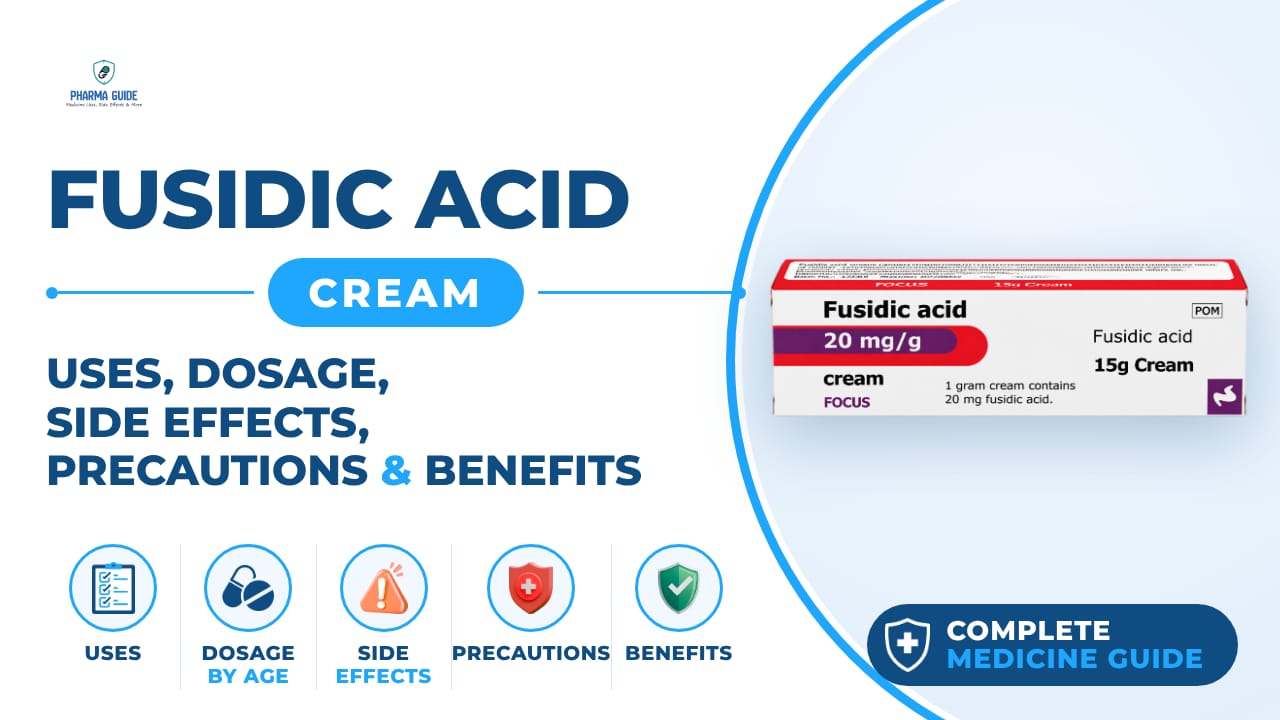
| Generic name | Fusidic acid |
|---|---|
| Drug class | Antibiotic |
| Forms | Cream, Ointment, Eye drops |
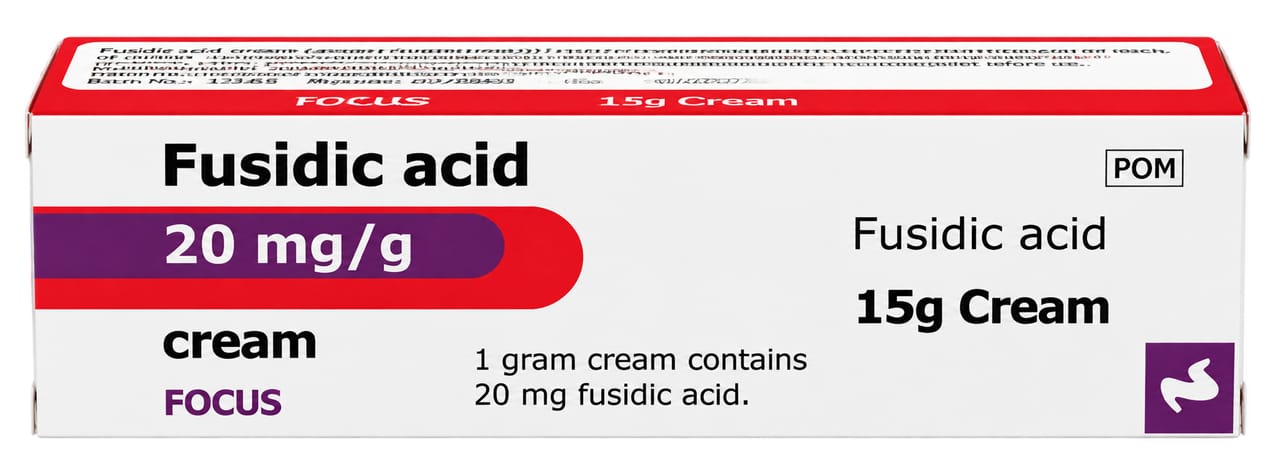
Quick overview
Fusidic Acid Cream is a prescription antibiotic applied to the skin to treat bacterial skin infections such as impetigo and folliculitis. It works by stopping bacteria from growing, which helps the infection heal. It does not treat infections caused by viruses or fungi. It is applied as a thin layer, usually two to three times daily, as directed by a doctor.
What is Fusidic Acid Cream
Fusidic acid cream is a prescription antibiotic medicine used on the skin. It works by stopping the growth of bacteria that cause skin infections. It does not treat infections caused by viruses or fungi.
Fusidic Acid Cream uses
- Skin infections caused by bacteria, such as impetigo
- Folliculitis (inflammation of hair follicles)
- Sycosis barbae (infection of bearded skin)
- Paronychia (infection around a fingernail or toenail)
- Erythrasma (brown, scaly skin patches, often in skin folds)
- Infected cuts, wounds, and burns
- Cellulitis
Benefits of Fusidic Acid Cream
- Can reduce redness, swelling, pain, itching, and discharge caused by bacterial skin infections
- Healing usually starts within one to two weeks of treatment
How Fusidic Acid Cream works
Fusidic acid is an antibiotic that blocks bacteria from making the proteins they need to survive, which stops them from growing and eventually kills them.
Fusidic Acid Cream dosage
Apply the cream to the skin only — do not swallow it. Wash your hands before applying the cream, then rub the cream gently onto the affected skin. If using on the face, be careful to avoid the eyes. Wash your hands after applying, unless you are treating your hands.
If you use a sterile bandage or dressing over the area, you may need to apply the cream less often. In babies, a nappy may act as a dressing — follow your doctor's advice.
If you forget a dose, apply it as soon as you remember, but do not apply a double amount to make up for it. Keep using the cream for as long as your doctor tells you, even if the skin looks better, so the infection does not come back. Usage does not depend on food timings.
| Age group | Dose |
|---|---|
| Under 1 Year | Use only if prescribed by a doctor |
| 1 Year and Above | Apply a thin layer to affected area 2–3 times daily |
| Adults (18–64 Years) | Apply a thin layer 2–3 times daily as prescribed |
| Older Adults (65+ years) | Apply a thin layer 2–3 times daily; use as directed |
Available forms and strengths
- Cream
- Ointment
- Eye drops
Side effects of Fusidic Acid Cream
Common
- Itching
- Rash or skin sensitivity reactions (contact dermatitis)
- Eczema
- Irritation at the application site, including pain, stinging, burning, and redness
- Dry skin
- Mild skin irritation
- Skin thinning or discolouration
Serious
- Severe allergic reaction (red, lumpy rash, swelling of face, mouth, lips, or eyelids, difficulty breathing, high fever, feeling faint)
- Blistering of the skin
- Swelling of the skin (angioedema)
- Hives (urticaria)
- Conjunctivitis
- Soreness or burning sensation in the eyes
Warnings and precautions
- If you are pregnant, ask your doctor before using this cream. Since very little of the medicine gets into the bloodstream when applied to the skin, no harmful effects are expected, but you should still check with your doctor first.
- If you are breastfeeding, this cream is unlikely to harm your baby, but you should avoid applying it directly on your breast.
- Apply only to the affected skin area as directed by a healthcare provider. Avoid contact with eyes, mouth, and other sensitive areas.
- Avoid using on deep wounds, severe burns, or serious skin infections without medical advice. Complete the full course of treatment to reduce the risk of antibiotic resistance.
- It is not known how this medicine interacts with alcohol, so it's best to ask your doctor before drinking.
- This cream does not affect your ability to drive or use machinery.
- Take extra care when applying the cream near the eyes, since it can cause a prickling feeling and should not be applied in or near the eye.
- Using this cream for a long time or in large amounts increases the chance of side effects and can make your skin more sensitive to it.
- Do not use this cream for more than 14 days, as bacteria may become resistant to the antibiotic.
- Some ingredients in the cream, such as cetyl alcohol and potassium sorbate, can cause skin reactions like contact dermatitis, and one ingredient may irritate the eyes and mucous membranes.
- Do not use this medicine if you are allergic to fusidic acid or any of the other ingredients.
Storage
- Keep this medicine out of the sight and reach of children.
- Do not use this medicine after the expiry date which is stated on the carton or the tube after "EXP".
- Do not store above 25°C.
- Discard the tube after 4 weeks of first opening the tube even if there is still some cream left in it.
- Do not throw away any medicines via wastewater or household waste. Ask your pharmacist how to throw away medicines you no longer use.
When to see a doctor
- Get medical help right away if you have signs of a severe allergic reaction, such as a red and lumpy rash, swelling of the face, mouth, lips, or eyelids, an unexplained fever, or feeling faint. If your throat swells and you have trouble breathing or swallowing, go to the hospital immediately.
- If you accidentally get cream in your eye, rinse it out with cold water right away. If you start having problems with your sight or your eye becomes sore, contact your doctor immediately.
- Contact your doctor if the cream is accidentally swallowed by an infant.
- See your doctor if your symptoms do not improve or go away even after two weeks of using the cream.
Alternatives
- Mupirocin Cream
- Retapamulin Ointment
- Neomycin Cream
Watch the video
FAQs
What is Fusidic Acid Cream used for?
It is used to treat bacterial skin infections such as impetigo, folliculitis, sycosis barbae, paronychia, erythrasma, infected cuts, wounds, burns, and cellulitis.
How often should I apply Fusidic Acid Cream?
Apply a thin layer to the affected area usually two to three times daily, as directed by your doctor.
How long does it take for Fusidic Acid Cream to work?
Healing usually starts within one to two weeks of treatment.
What are the common side effects of Fusidic Acid Cream?
Common side effects include itching, rash or skin sensitivity reactions, eczema, irritation at the application site such as pain, stinging, burning, and redness, dry skin, mild skin irritation, and skin thinning or discolouration.
Can I use Fusidic Acid Cream for more than 14 days?
No, it should not be used for more than 14 days as bacteria may become resistant to the antibiotic.
General information, not medical advice
Your prescriber and the leaflet in your pack know your situation. This page does not.
- Follow your prescriber and the leaflet
- Don't start, stop, or change a dose on your own
- Doses and warnings differ by country and product
Sources
- https://www.nhs.uk/medicines/fusidic-acid/
- https://patient.info/medicine/fusidic-acid-for-skin-infections-fucidin
- https://www.medicines.org.uk/emc/medicine/29284
- https://www.medicines.org.uk/emc/product/3364/pil
- https://www.healthlinkbc.ca/medications/fdb0437
- https://www.nps.org.au/medicine-finder/fucidin-topical-ointment#full-pi
Video
Related medicines
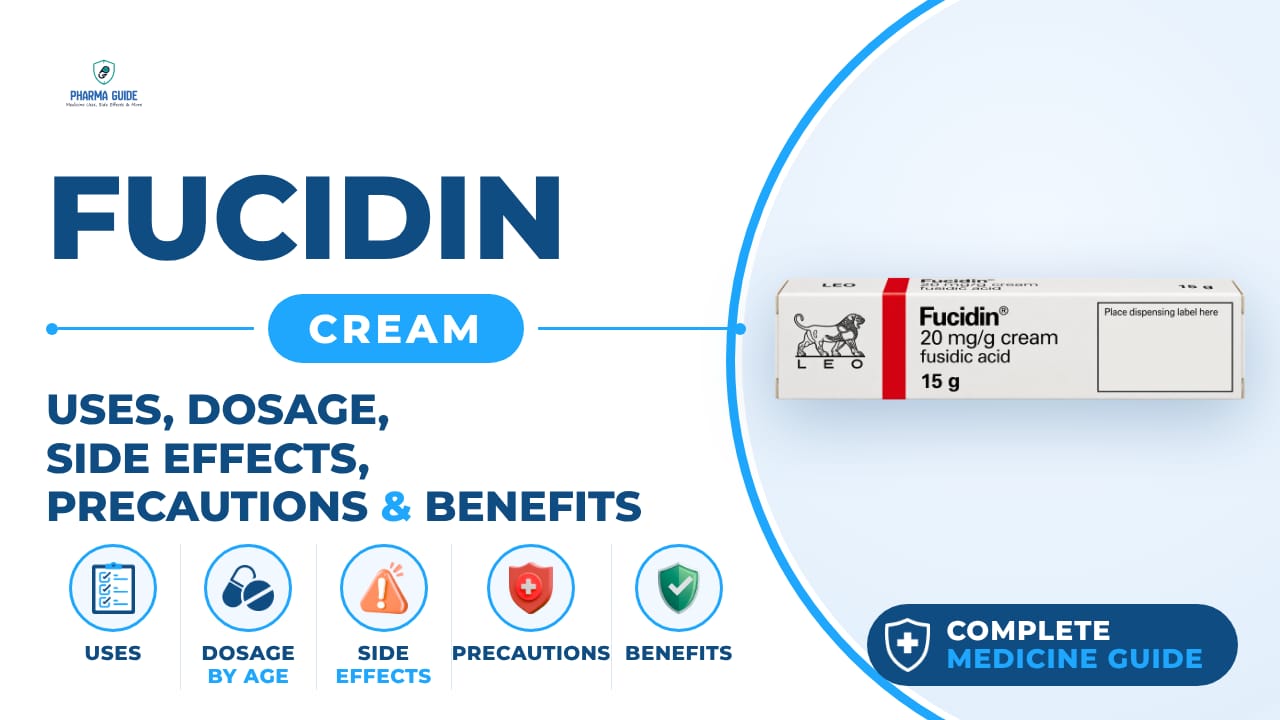
Fucidin Cream: Uses, Dosage, Side Effects, Precautions and Alternates
Antibiotic
Fucidin Cream is a prescription antibiotic containing fusidic acid, used to treat bacterial skin infections. Learn about its uses, dosage, and side effects.
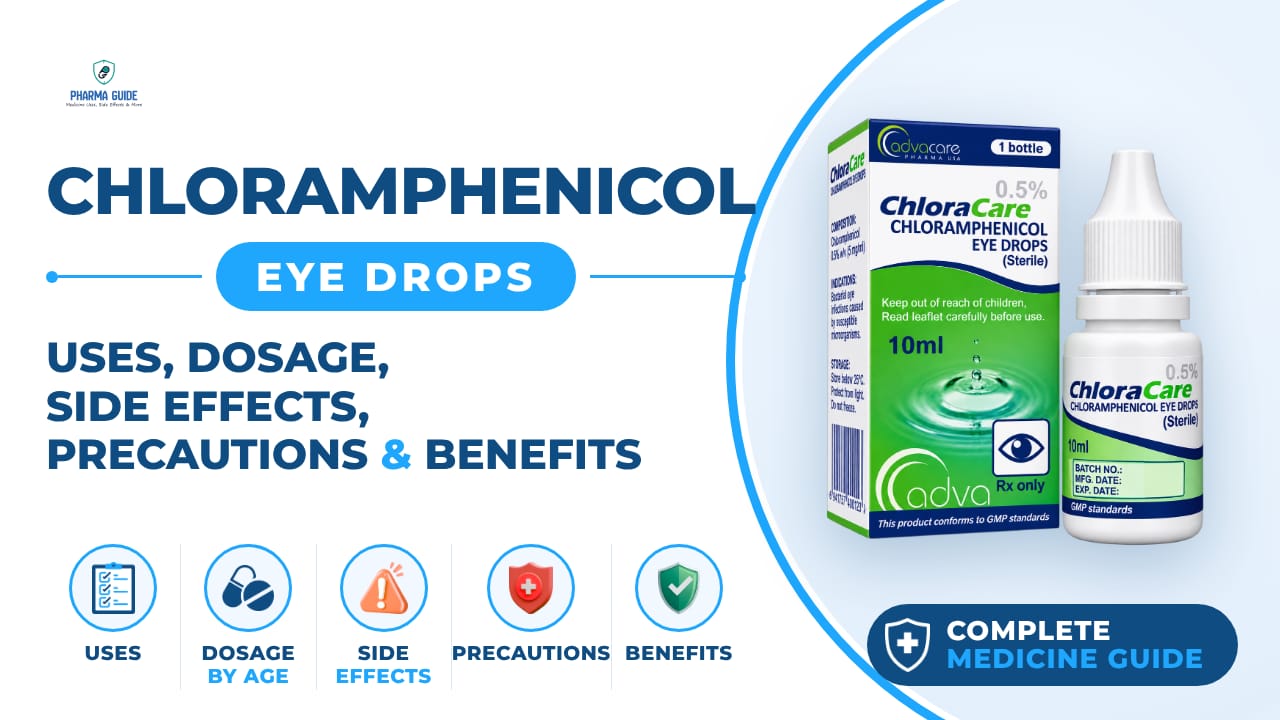
Chloramphenicol Eye Drops: Uses, Dosage, Side Effects, Precautions and Alternates
Antibiotic
Chloramphenicol Eye Drops treat bacterial conjunctivitis and other eye infections. Learn uses, dosage by age, side effects, warnings, and storage tips.