
Safety
General information, not medical advice
Your prescriber and the leaflet in your pack know your situation. This page does not.
- Follow your prescriber and the leaflet
- Don't start, stop, or change a dose on your own
- Doses and warnings differ by country and product
Fucidin Cream: Uses, Dosage, Side Effects, Precautions and Alternates
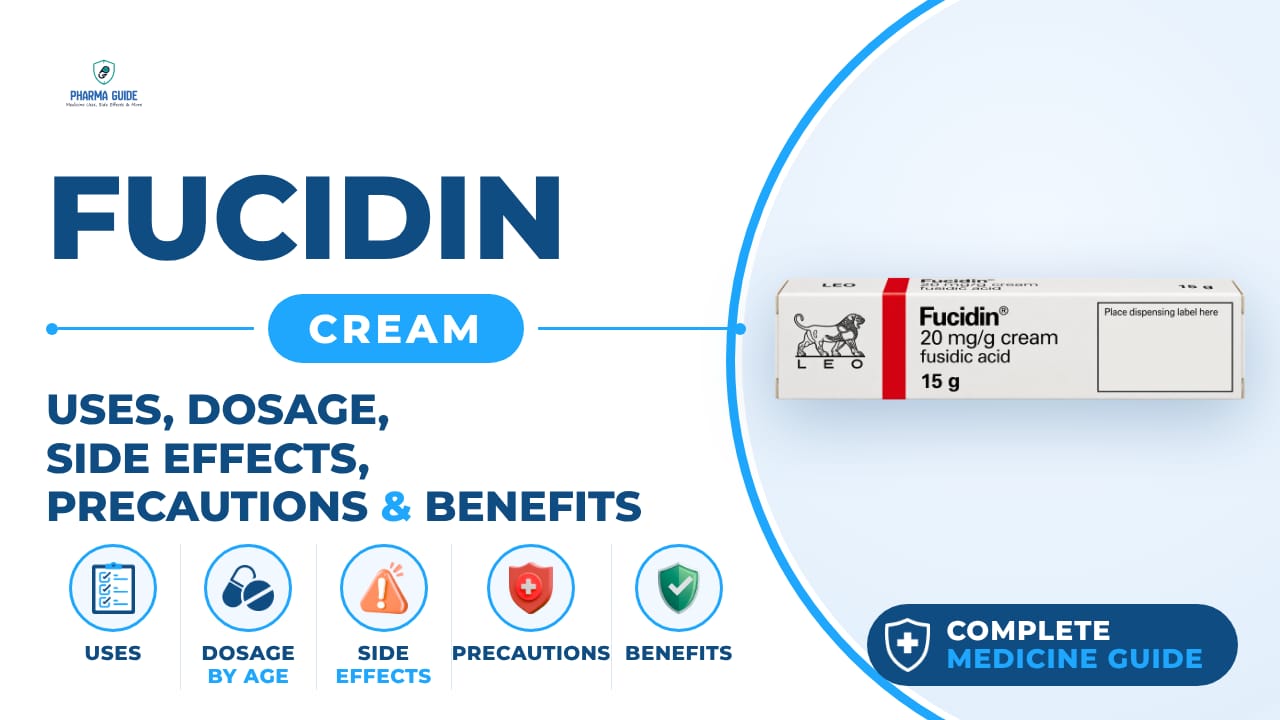
| Generic name | Fusidic Acid |
|---|---|
| Drug class | Antibiotic |
| Forms | Cream, Ointment |

Quick overview
Fucidin Cream is a prescription-only antibiotic cream containing fusidic acid, used to treat certain bacterial skin infections. It works by stopping bacteria from growing and multiplying, allowing the immune system to clear the infection. It is available as a cream or ointment and is applied directly to the affected skin, usually two to four times a day as directed by a doctor.
What is Fucidin Cream
Fucidin Cream is a prescription-only antibiotic cream. It contains fusidic acid, which kills the bacteria that cause certain skin infections.
Fucidin Cream uses
- Infected eczema, dermatitis, or psoriasis
- Impetigo
- Infected hair follicles (folliculitis)
- Sycosis barbae (infected hair follicles in the beard area)
- Paronychia (infection around the fingernails or toenails)
- Erythrasma
- Infected wounds, cuts, scrapes or burns
- Infection around the nails
- Boils caused by bacteria
- Infected insect bites
Benefits of Fucidin Cream
- Kills the bacteria causing the skin infection
- Reduces redness, swelling and irritation
- Helps the infected skin heal faster
- Can be used on broken skin such as cuts and grazes to treat infection
How Fucidin Cream works
Fucidin cream works by stopping the bacteria that cause the infection from growing and making more copies of themselves. This lets your immune system clear away the remaining bacteria.
Fucidin Cream dosage
Wash and dry the affected skin before applying the cream. Apply a thin layer to the affected area, usually two to four times a day depending on your doctor's instructions. Rub the cream in gently until it is absorbed. Wash your hands after applying, unless the area being treated is on the hand.
Try to use it at about the same time each day to keep a steady effect and help you remember. Do not cover the area with a bandage unless your doctor tells you to. Keep using it for the full length of time your doctor recommends, even if your skin looks better, so the infection does not come back.
If you miss a dose, skip it and apply your next dose at the usual time — do not double up. Children under 3 years old should only use this cream under a doctor's guidance.
| Age group | Dose |
|---|---|
| Infants (0–12 Months) | Apply a thin layer to affected area as prescribed |
| Children (1–12 Years) | Apply a thin layer 2–3 times daily (as directed) |
| Teenagers (13–17 Years) | Apply a thin layer 2–3 times daily |
| Adults (18–64 Years) | Apply a thin layer 2–3 times daily |
| Older Adults (65+ Years) | Apply a thin layer 2–3 times daily; use as prescribed |
Available forms and strengths
- Cream
- Ointment
Side effects of Fucidin Cream
Common
- Mild stinging or burning at the application site
- Redness or rash
- Mild irritation or pain at the treated area
- Itching, redness, swelling or blistering of the skin that comes on gradually
- Conjunctivitis (itching and discharge of the eyes) if the cream gets near the eyes
Serious
- Severe and sudden itching, redness, hives or a rash around the application area
- Nausea or vomiting
- Swelling of the face, lips, mouth, tongue or throat with breathing difficulties
- Diarrhoea, including diarrhoea that starts weeks after stopping the cream
Warnings and precautions
- Do not use this cream if you have ever had an allergic reaction to it, to fusidic acid, or to any of its ingredients.
- Do not use the cream after 60 days of first opening the tube, or after the expiry date, or if the packaging looks torn or tampered with.
- Do not give this cream to anyone else, even if they seem to have the same condition as you.
- Do not use this cream to treat any other condition unless your doctor tells you to — it should not be used for spots, acne, warts, verrucas, boils, cysts, viral infections like cold sores, or fungal infections like thrush or athlete's foot.
- Be careful not to get the cream in your eyes, especially when treating your face or hands.
- In babies during their first month of life, the active ingredient may cause serious side effects, so ask your doctor first if it is meant for a baby.
- Fucidin cream is generally considered safe to use during pregnancy because it is applied only to the skin and is not well absorbed into the body. Still, check with your doctor before using it if you are pregnant or planning a pregnancy.
- Fucidin cream is considered suitable for breastfeeding women, but talk to your doctor or pharmacist before using it.
- Avoid using on large areas of skin unless advised by a doctor. Do not use on eyes, inside the nose, or mucous membranes unless specifically directed.
- Use only for the prescribed duration to reduce the risk of antibiotic resistance. Do not apply on deep wounds, severe burns, or extensive skin infections without medical advice.
- Do not share the cream with other people. Store the cream according to the package instructions and keep it out of reach of children.
- This cream is not expected to affect your ability to drive or use machinery, but it may occasionally cause dizziness, tiredness or drowsiness in some people. If this happens, do not drive or operate machinery.
Storage
- Store in a cool, dry place where the temperature stays below 30°C
- Do not use after 60 days of first opening the tube, or after the expiry date on the pack, whichever comes first
- Keep away from heat, dampness and direct sunlight — do not store in the bathroom, near a sink, or in a car
- Keep out of reach and sight of children, ideally in a locked cupboard
- If you no longer need the medicine or it is out of date, take it to a pharmacy for safe disposal
When to see a doctor
- Call your doctor straight away if you get diarrhoea while using this cream, even if it starts weeks after you stop using it.
- Go straight to the emergency department or call your doctor immediately if you notice sudden severe itching, redness, hives or a rash around the application area, nausea or vomiting, or swelling of the face, lips, mouth, tongue or throat with breathing difficulties.
- If you think you or someone else has swallowed or used too much of this cream, seek urgent medical attention even if there are no symptoms.
- If your infection does not improve within about a week of treatment, speak to a healthcare professional.
Alternatives
- Mupirocin Cream
- Retapamulin Ointment
- Neomycin Cream
Watch the video
FAQs
What is Fucidin Cream used for?
It is used to treat bacterial skin infections such as infected eczema, impetigo, folliculitis, paronychia, erythrasma, infected wounds, cuts, scrapes, burns, boils, and infected insect bites.
How often should Fucidin Cream be applied?
It is usually applied as a thin layer to the affected area two to four times a day, depending on your doctor's instructions.
Can Fucidin Cream be used during pregnancy?
It is generally considered safe during pregnancy since it is applied to the skin and not well absorbed into the body, but you should check with your doctor before using it.
What should I do if I miss a dose of Fucidin Cream?
Skip the missed dose and apply your next dose at the usual time — do not double up.
What are the serious side effects of Fucidin Cream?
Serious side effects include severe sudden itching, redness, hives or rash around the application area, nausea or vomiting, swelling of the face, lips, mouth, tongue or throat with breathing difficulties, and diarrhoea, including diarrhoea that starts weeks after stopping the cream.
General information, not medical advice
Your prescriber and the leaflet in your pack know your situation. This page does not.
- Follow your prescriber and the leaflet
- Don't start, stop, or change a dose on your own
- Doses and warnings differ by country and product
Sources
Video
Related medicines

Fusidic Acid Cream: Uses, Dosage, Side Effects, Precautions and Alternates
Antibiotic
Fusidic Acid Cream is a prescription antibiotic for bacterial skin infections like impetigo. Learn uses, dosage, side effects, and precautions.

Chloramphenicol Eye Drops: Uses, Dosage, Side Effects, Precautions and Alternates
Antibiotic
Chloramphenicol Eye Drops treat bacterial conjunctivitis and other eye infections. Learn uses, dosage by age, side effects, warnings, and storage tips.