
Safety
General information, not medical advice
Your prescriber and the leaflet in your pack know your situation. This page does not.
- Follow your prescriber and the leaflet
- Don't start, stop, or change a dose on your own
- Doses and warnings differ by country and product
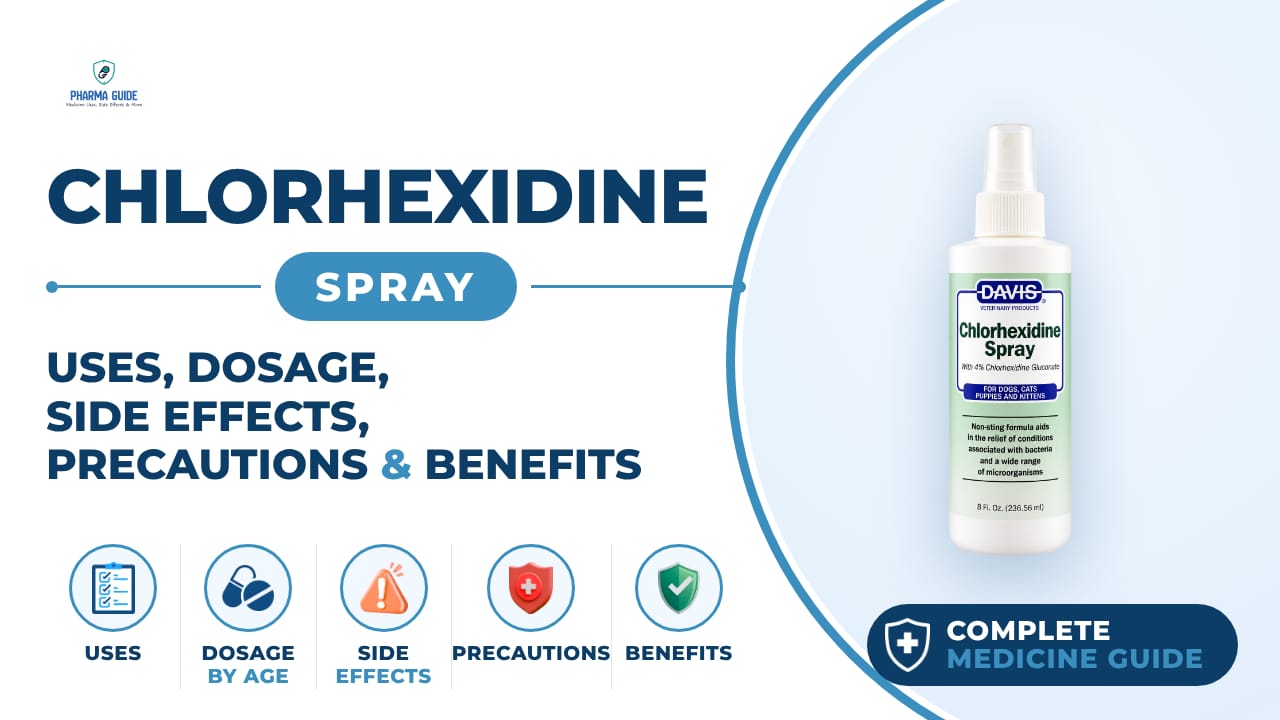
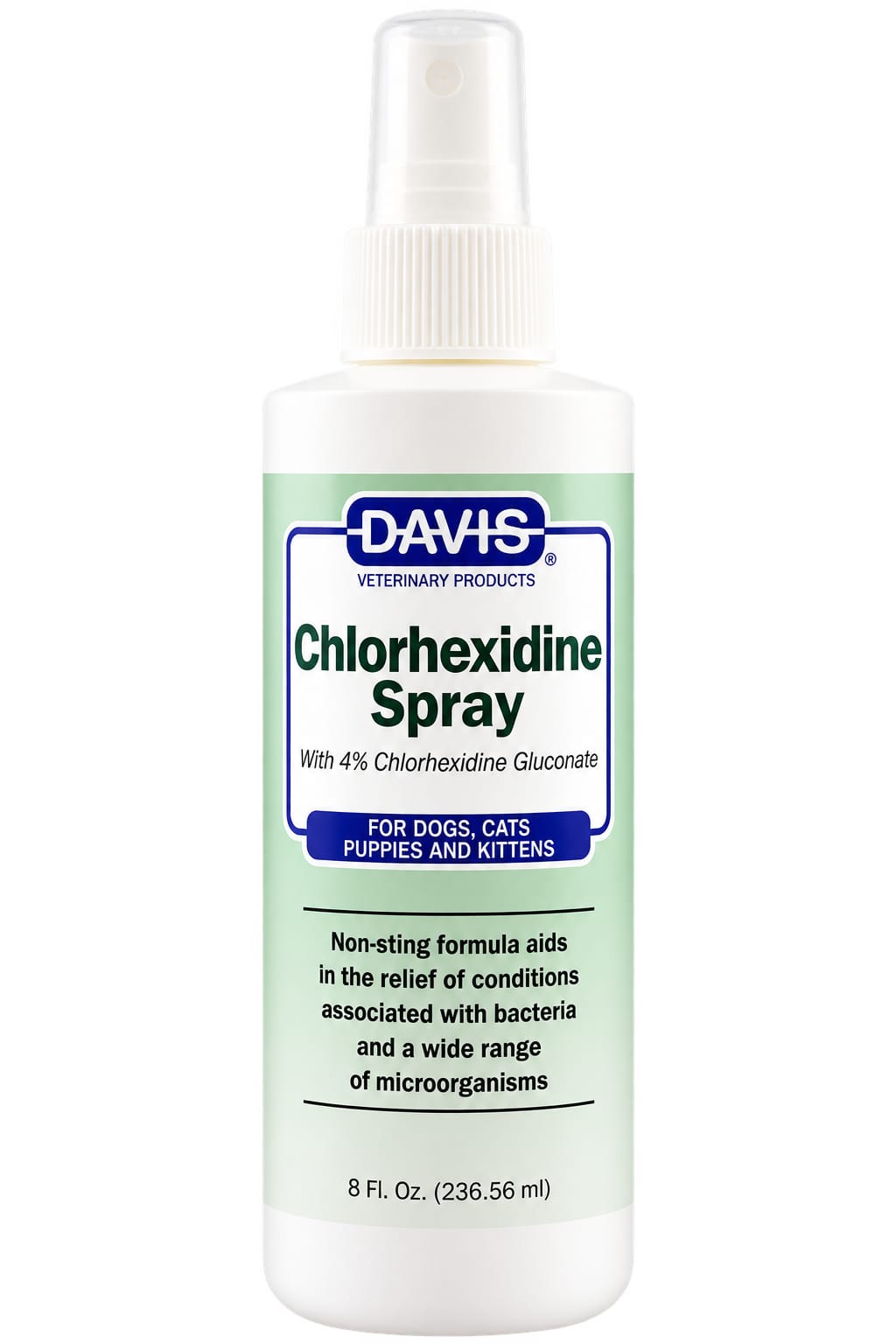
Chlorhexidine Spray: Uses, Dosage, Side Effects, Precautions and Alternates
| Generic name | Chlorhexidine |
|---|---|
| Drug class | Antiseptic |
| Forms | Oral rinse (mouthwash), Oromucosal spray (throat spray), Topical antiseptic solution |
Quick overview
Chlorhexidine Spray contains chlorhexidine, an antiseptic used to kill germs on the skin or in the mouth and throat, or to treat gum problems. It is available as an oral rinse, an oromucosal throat spray, and a topical antiseptic solution. It works by sticking to surfaces in the mouth or on the skin and releasing slowly over time to keep reducing bacteria. Common effects include staining of teeth and altered taste, while serious allergic reactions are also possible.
What is Chlorhexidine Spray
Chlorhexidine Spray is an antiseptic used to kill germs on the skin or in the mouth and throat, or to treat gum problems. Its generic name is chlorhexidine, and it belongs to the antiseptic drug class.
Chlorhexidine Spray uses
- Treatment of the symptoms of painful, irritated sore throats (oromucosal spray)
- Treatment of gingivitis between dental visits, as part of a professional program (oral rinse)
- General antiseptic for cleaning and disinfecting wounds and treating burns (topical solution)
- Reduces oral bacteria
- Helps control plaque
- May support treatment of gum inflammation
Benefits of Chlorhexidine Spray
- Helps reduce redness and swelling of the gums and control gum bleeding
- Provides antimicrobial activity that reduces bacteria counts in plaque
- Provides broad antiseptic activity
- Can reduce bacterial growth in the mouth
- Available in several topical formulations
- May support oral hygiene during short treatment courses
How Chlorhexidine Spray works
Chlorhexidine is an antiseptic that is active against a wide range of bacteria. It sticks to surfaces in the mouth or on the skin and is slowly released over time, continuing to reduce bacteria.
Chlorhexidine Spray dosage
Use twice daily, in the morning and evening after brushing your teeth, when using the oral rinse. Do not rinse with water or other mouthwashes, brush your teeth, or eat immediately after using the oral rinse. Spit out after use; the oral rinse should not be swallowed.
For the throat spray, aim the nozzle at the back of the throat and spray onto the affected area, taking care not to inhale while spraying. Do not exceed the recommended number of sprays per day. Doses can be repeated through the day as needed, but do not use for long periods without checking with a doctor. The throat spray should not be used in children under 12 years old. Clean the spray nozzle daily and prime the pump before first use or if not used for a while, as instructed on the pack.
For the wound antiseptic solution, rinse the area with water first, apply the minimum amount needed to cover the wound, and let it air dry. Discard the wound antiseptic solution within 24 hours of opening.
Use exactly as prescribed by your doctor or pharmacist.
Available forms and strengths
- Oral rinse (mouthwash)
- Oromucosal spray (throat spray)
- Topical antiseptic solution
Side effects of Chlorhexidine Spray
Common
- Increase in staining of teeth and other oral surfaces
- Increase in tartar (calculus) formation
- Altered sense of taste
- Mild burning or stinging in the mouth or throat
- Dry mouth
- Brown discoloration of teeth and tongue that is removable
Serious
- Hypersensitivity and generalized allergic reactions, including anaphylactic shock
- Swelling of the face, lips, tongue or throat
- Wheezing or difficulty breathing
- Severe skin reactions such as rash, blisters, or eczema
- Parotid gland swelling and inflammation of the salivary glands (sialadenitis)
- Chemical burns in neonates when used on the skin
- Serious eye injury if the solution contacts the eyes, including corneal damage
Warnings and precautions
- Do not use if you are allergic to chlorhexidine or any of the other ingredients in the product.
- Products with alcohol can be flammable and should be kept away from open flames, heaters, and other electrical devices.
- Do not use chlorhexidine antiseptic solution in the eyes, intravenously, by mouth, in the ear canal (especially with a perforated eardrum), or near the meninges, brain, or spinal cord.
- Using chlorhexidine on the skin before procedures has been linked to chemical burns in newborns, especially premature babies.
- Do not use the throat spray in children younger than 12 years old.
- The throat spray is not meant for long-term use; only use it when needed to relieve pain and irritation.
- Avoid contact with the eyes; if the spray or solution gets in the eyes, rinse thoroughly with water right away and seek medical advice.
- Chlorhexidine oral rinse is classified as Pregnancy Category B; studies in animals did not show harm to the fetus, but it should be used in pregnancy only if clearly needed. For the throat spray, talk to your doctor before use if pregnant or breastfeeding. One antiseptic solution source classifies chlorhexidine as Pregnancy Category A.
- It is not known whether chlorhexidine passes into human breast milk, so caution should be used. Talk to your doctor before using the throat spray while breastfeeding.
- Dose adjustment is required when kidney function is significantly reduced. No routine liver-specific adjustment is usually required.
- Some chlorhexidine products contain alcohol. The throat spray contains a small amount of alcohol, which is not expected to cause noticeable effects. No special precautions are needed for driving or using machines with the throat spray.
Storage
- Store above freezing (32°F or 0°C) (oral rinse)
- Keep out of reach of children
- Store below 25°C; do not refrigerate or freeze (throat spray); discard 3 months after first use; do not throw away medicines via wastewater or household waste, ask your pharmacist how to dispose of unused medicine
- Store in a closed container at room temperature, away from heat, moisture, and direct light; do not keep frozen; if combined with alcohol, store away from open flames, heaters, and other electrical devices
- Store below 30°C or below 25°C depending on strength (antiseptic solution); do not heat in excess of 80°C; protect from light
- Discard antiseptic solution waste according to local requirements
When to see a doctor
- Get medical help right away if you have swelling of the face, lips, tongue, or throat, a red itchy rash, wheezing or trouble breathing, feeling faint or dizzy, a strange metallic taste, or collapse — these may be signs of a serious allergic reaction.
- See a doctor if your sore throat gets worse, does not improve after two days, or comes with a high fever, headache, nausea, or vomiting.
- If you swallow the liquid straight from the bottle by accident, see a doctor right away and bring the package with you.
- Seek medical attention if a small child swallows more than a small amount of the oral rinse, or if signs of alcohol intoxication appear.
- If the antiseptic solution is swallowed, get medical help immediately.
- If chlorhexidine gets into the eyes, wash it out right away with plenty of water and get advice from an eye doctor.
Alternatives
- Cefpodoxime
- Cefdinir
- Cefuroxime
- Amoxicillin
Watch the video
FAQs
What is Chlorhexidine Spray used for?
It is used to kill germs on the skin or in the mouth and throat, or to treat gum problems. Forms include an oromucosal throat spray for sore throats, an oral rinse for gingivitis, and a topical solution for cleaning wounds and burns.
How do you use the Chlorhexidine throat spray?
Aim the nozzle at the back of the throat and spray onto the affected area, taking care not to inhale while spraying. Do not exceed the recommended number of sprays per day, and avoid long-term use without checking with a doctor. It should not be used in children under 12 years old.
What are the common side effects of Chlorhexidine Spray?
Common effects include staining of teeth and oral surfaces, increased tartar formation, altered taste, mild burning or stinging in the mouth or throat, dry mouth, and removable brown discoloration of teeth and tongue.
Can Chlorhexidine Spray be used during pregnancy?
Chlorhexidine oral rinse is classified as Pregnancy Category B, and animal studies did not show harm to the fetus, but it should be used only if clearly needed. For the throat spray, talk to your doctor before use if pregnant or breastfeeding.
When should you see a doctor while using Chlorhexidine Spray?
Seek medical help right away for swelling of the face, lips, tongue, or throat, a red itchy rash, wheezing or trouble breathing, dizziness, a strange metallic taste, or collapse, as these may signal a serious allergic reaction. Also see a doctor if a sore throat worsens or does not improve after two days.
General information, not medical advice
Your prescriber and the leaflet in your pack know your situation. This page does not.
- Follow your prescriber and the leaflet
- Don't start, stop, or change a dose on your own
- Doses and warnings differ by country and product
Sources
- https://www.accessdata.fda.gov/drugsatfda_docs/label/2013/019028s022lbl.pdf
- https://www.safetyandquality.gov.au/sites/default/files/resources/attachments/guidance_for_health_service_organisations_-_appropriate_and_safe_use_of_chlorhexidine_in_health_care_settings.pdf
- https://www.medsafe.govt.nz/profs/datasheet/c/Chlorhexidinesol.pdf
Video
Related medicines
TCP Antiseptic Liquid: Uses, Dosage, Side Effects, Precautions and Alternates
Antiseptic
TCP Antiseptic Liquid treats cuts, grazes, sore throats, mouth ulcers and spots. Learn uses, dilution, dosage, side effects and precautions.
Benzoyl Peroxide Gel: Uses, Dosage, Side Effects, Precautions and Alternates
Antiseptic
Benzoyl Peroxide Gel treats mild to moderate acne by reducing bacteria and clearing blocked pores. Learn uses, dosage, side effects, and precautions.