
Safety
General information, not medical advice
Your prescriber and the leaflet in your pack know your situation. This page does not.
- Follow your prescriber and the leaflet
- Don't start, stop, or change a dose on your own
- Doses and warnings differ by country and product
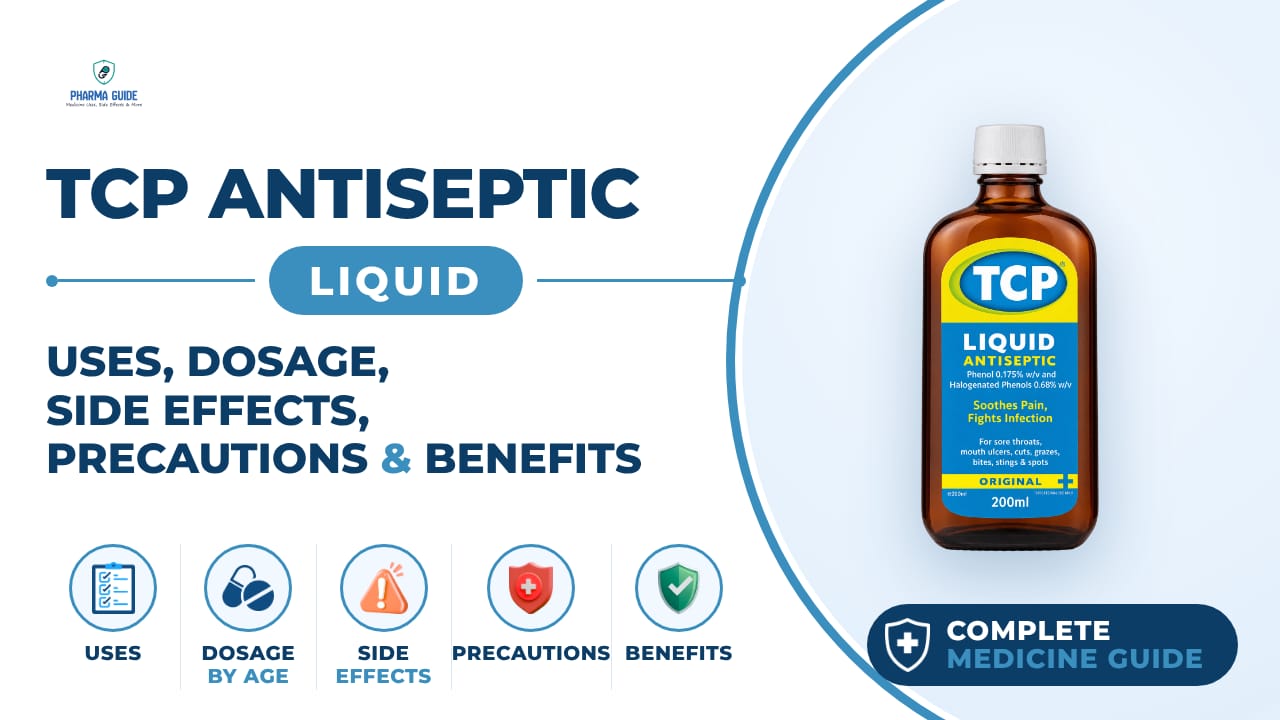
TCP Antiseptic Liquid: Uses, Dosage, Side Effects, Precautions and Alternates
| Generic name | TCP antiseptic solution |
|---|---|
| Drug class | Antiseptic |
| Forms | Liquid |
Quick overview
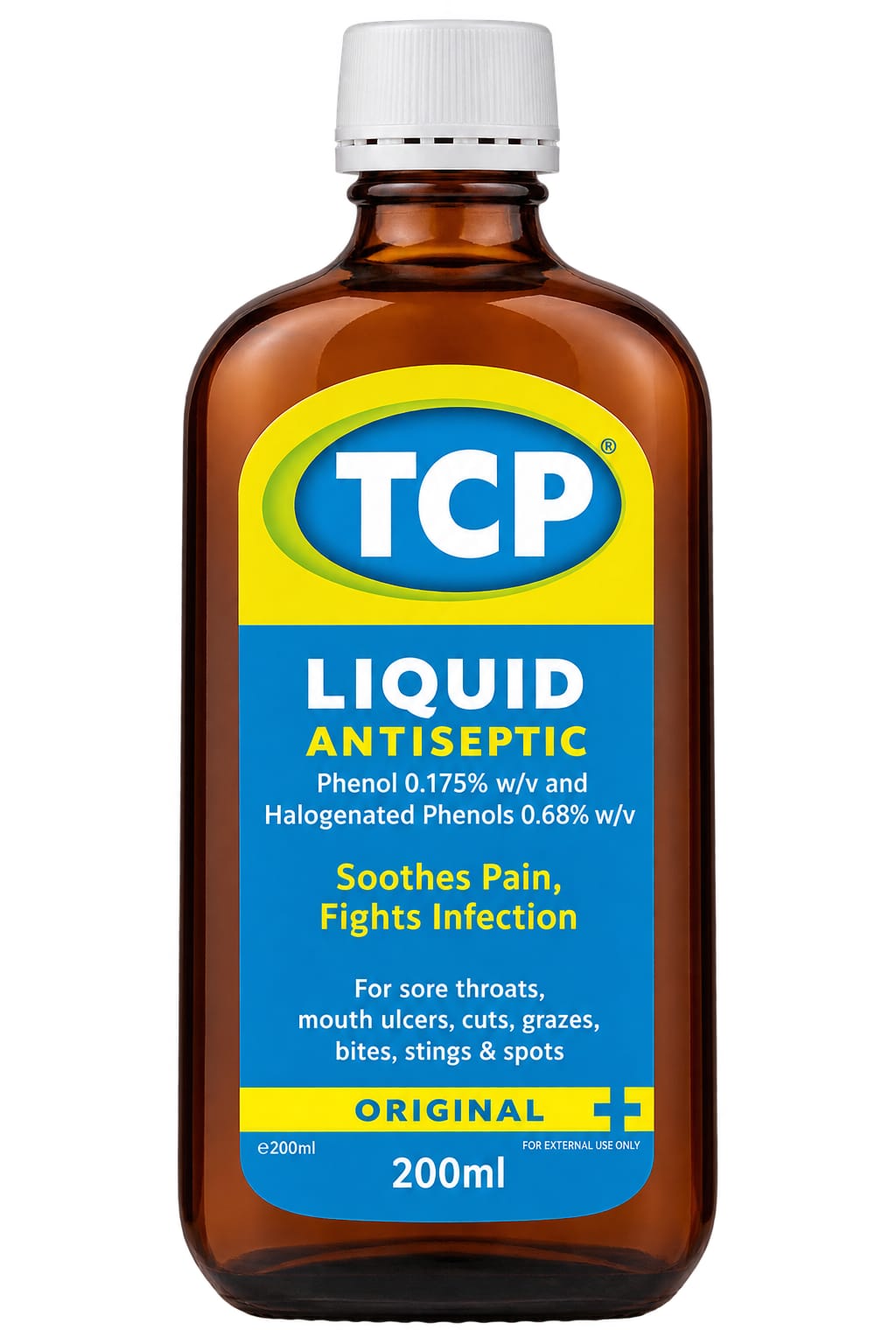
TCP Antiseptic Liquid is an antiseptic solution containing phenols, used to clean and disinfect minor wounds and to help with sore throats and mouth ulcers. It has been sold under this brand name since 1918, with the active ingredients changed to phenols in the 1950s. It has a strong, distinctive smell that many people recognise as the typical antiseptic scent.
What is TCP Antiseptic Liquid
TCP Antiseptic Liquid is an antiseptic liquid used to clean and disinfect minor wounds and treat sore throats and mouth ulcers. It has been sold under this brand name since 1918, and the active ingredients were changed to phenols in the 1950s. It has a strong, distinctive smell that many people recognise as the typical antiseptic smell.
TCP Antiseptic Liquid uses
- Cuts, grazes, bites and stings
- Sore throats
- Mouth ulcers
- Spots, boils and pimples
- Can be used as a mouthwash when diluted
Benefits of TCP Antiseptic Liquid
- Helps clean minor cuts and grazes.
- Helps reduce germs on the skin.
- Provides antiseptic action.
- Supports cleaning of minor skin injuries.
How TCP Antiseptic Liquid works
TCP contains phenol and halogenated phenols, which kill or stop the growth of many types of germs that cause infection. These ingredients also have a numbing, pain-relieving effect, which is why it can help ease sore throat pain.
TCP Antiseptic Liquid dosage
Follow the instructions on the bottle for how to dilute and use the product correctly. For sore throats, dilute with water before gargling, and do not swallow it. For cuts, grazes, bites and stings, dilute with water and apply gently with a clean cloth, cotton ball or swab, covering the whole affected area. For mouth ulcers and spots, it can be dabbed on directly without diluting. Let it dry naturally on the skin; there is no need to rinse it off.
Suitable for adults and children over 16 years; consult a doctor before using in younger children. Consult a doctor before use in pregnancy. Do not use on young children for sore throats because they may not be able to gargle safely without swallowing it. If a wound does not improve after a few days or appears to worsen, seek medical attention. Not recommended for severe burns; consult a healthcare professional for these.
| Age group | Dose |
|---|---|
| Under 12 years | Not recommended |
| 12–17 years | 5 mL, once/day (diluted) |
| 18–60 years | 5 mL, once/day (diluted) |
| 60+ years | 5 mL, once/day (diluted) |
Available forms and strengths
- Liquid
Side effects of TCP Antiseptic Liquid
Common
- Mild stinging
- Skin redness
- Irritation at the application site
Serious
- Skin irritation
- Redness
- Burning sensation
- Dryness
- Allergic rash
Warnings and precautions
- Do not use TCP if you have an allergic skin condition or are sensitive to any of its ingredients.
- Never swallow TCP.
- Do not use TCP on cats, as the phenol in it is toxic to them.
- Do not use TCP to treat mouth ulcers that have lasted longer than 14 days without checking with a doctor or dentist first.
- TCP is not recommended for use on severe burns; ask a healthcare professional for proper treatment.
- Talk to your doctor before using TCP if you are pregnant, to make sure it is safe for you and your baby. Do not apply undiluted to skin unless the label specifically allows it. Swallowing large amounts of TCP may harm the kidneys. Stop use if severe irritation occurs. Keep away from children. Avoid contact with eyes.
Storage
- Do not store above 30°C
- Keep the bottle out of the reach and sight of children
- Check the expiry date on the packaging and do not use after this date
When to see a doctor
- If you swallow a large amount of TCP, drink plenty of water right away. If you feel unwell or discomfort continues, get medical help immediately.
- If your symptoms last more than a few days or get worse, speak to your doctor or find another treatment.
- If a wound does not show signs of healing within a few days, or it gets worse, get medical attention promptly.
Alternatives
- Chlorhexidine Solution
- Betadine Solution
- Savlon Antiseptic Liquid
Watch the video
FAQs
What is TCP Antiseptic Liquid used for?
It is used to clean and disinfect cuts, grazes, bites and stings, and to help with sore throats, mouth ulcers, and spots, boils and pimples. Diluted, it can also be used as a mouthwash.
How do you use TCP Antiseptic Liquid?
Dilute with water before gargling for sore throats, or dilute and apply with a clean cloth or cotton ball for cuts and grazes. For mouth ulcers and spots, it can be dabbed on directly without diluting. Let it dry naturally without rinsing.
Can children use TCP Antiseptic Liquid?
It is not recommended for children under 12. For ages 12-17, it can be used diluted, 5 mL once a day, but a doctor should be consulted before use in younger children, and it should not be used for sore throats in young children who cannot gargle safely.
What are the side effects of TCP Antiseptic Liquid?
Common side effects include mild stinging, skin redness, and irritation at the application site. More serious effects can include burning sensation, dryness, and allergic rash.
Is TCP Antiseptic Liquid safe during pregnancy?
You should talk to your doctor before using TCP if you are pregnant, to make sure it is safe for you and your baby.
General information, not medical advice
Your prescriber and the leaflet in your pack know your situation. This page does not.
- Follow your prescriber and the leaflet
- Don't start, stop, or change a dose on your own
- Doses and warnings differ by country and product
Sources
Video
Related medicines
Chlorhexidine Spray: Uses, Dosage, Side Effects, Precautions and Alternates
Antiseptic
Chlorhexidine Spray is an antiseptic used for sore throats, gum problems, and skin wounds. Learn uses, dosage, side effects, and safety warnings.
Benzoyl Peroxide Gel: Uses, Dosage, Side Effects, Precautions and Alternates
Antiseptic
Benzoyl Peroxide Gel treats mild to moderate acne by reducing bacteria and clearing blocked pores. Learn uses, dosage, side effects, and precautions.