
Safety
General information, not medical advice
Your prescriber and the leaflet in your pack know your situation. This page does not.
- Follow your prescriber and the leaflet
- Don't start, stop, or change a dose on your own
- Doses and warnings differ by country and product
Chloroquine Tablet: Uses, Dosage, Side Effects, Precautions and Alternates
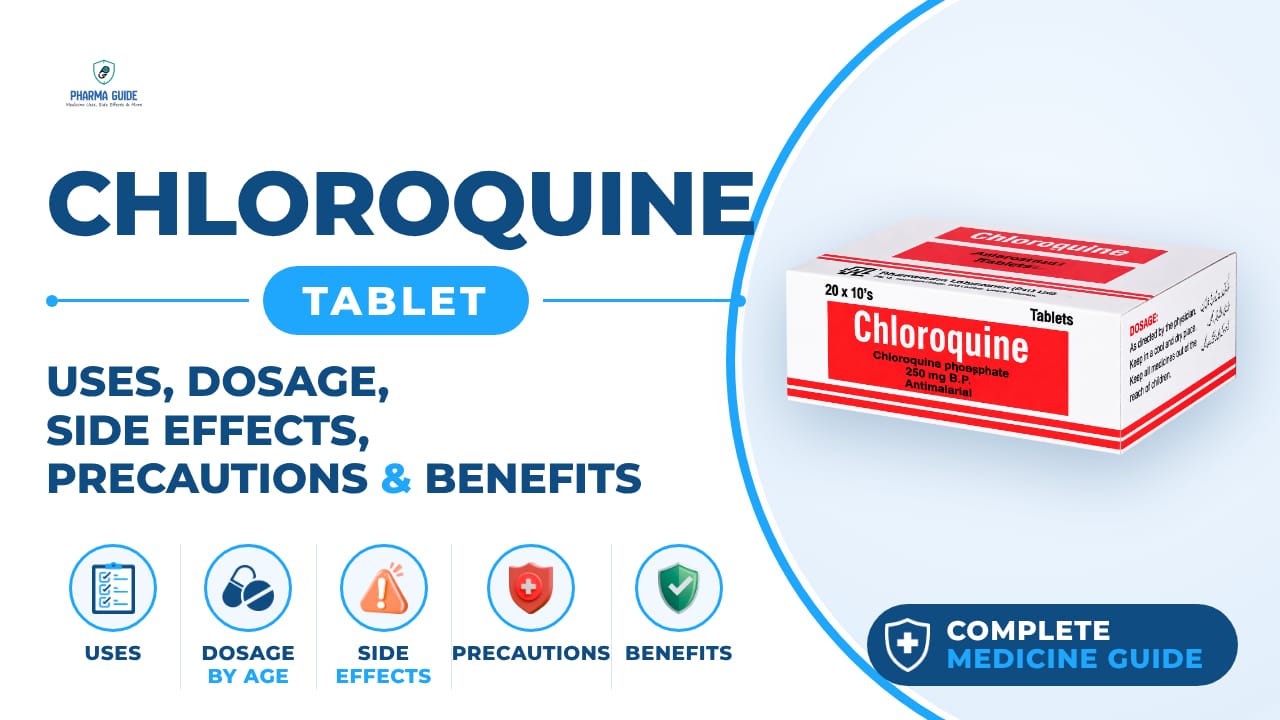
| Generic name | Chloroquine (chloroquine phosphate) |
|---|---|
| Drug class | Anti-malarial agent (antimalarial, 4-aminoquinoline) |
| Forms | Tablet |
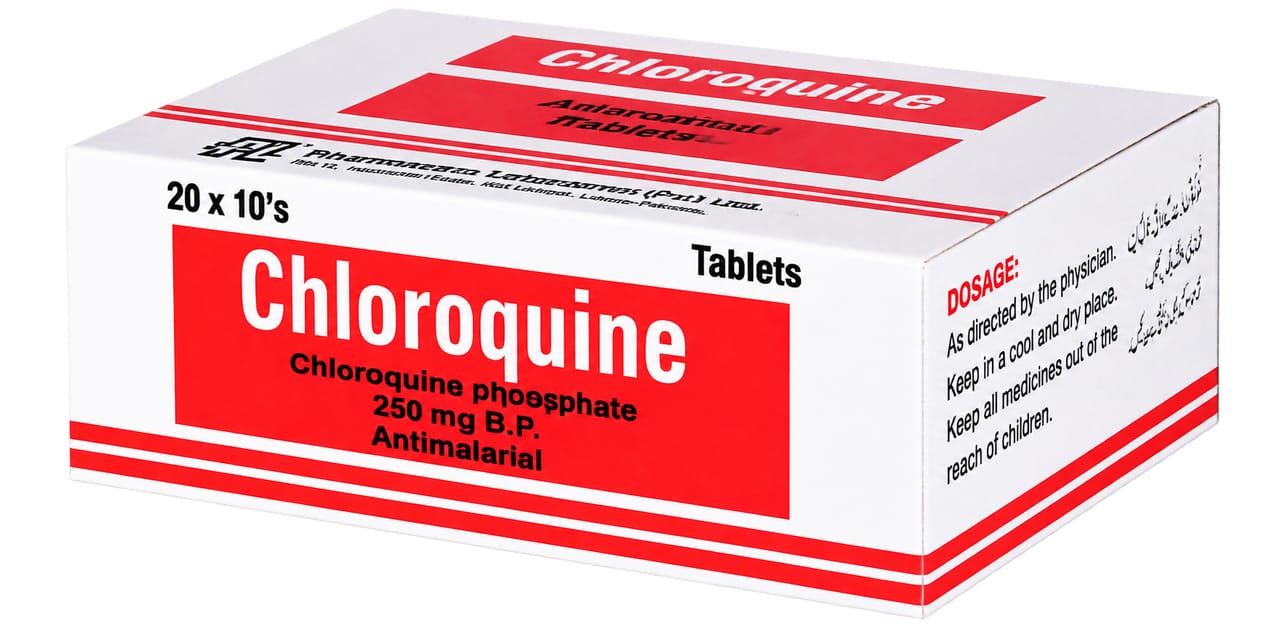
Quick overview
Chloroquine Tablet is a prescription antimalarial medicine used to prevent and treat certain types of malaria and to treat extraintestinal amebiasis, a liver infection caused by parasites. It works by interfering with processes the malaria parasite needs to grow. It can be taken with or without food, is generally considered safe for malaria prevention and treatment during pregnancy, and can be used in children. A lower-cost generic version is also available.
What is Chloroquine Tablet
Chloroquine is a prescription tablet used to prevent and treat certain types of malaria and to treat a liver infection caused by parasites called extraintestinal amebiasis. The generic name is chloroquine (chloroquine phosphate), and it belongs to the anti-malarial agent (4-aminoquinoline) drug class.
Chloroquine Tablet uses
- Treatment of uncomplicated malaria
- Prevention of malaria in areas of the world where there's no chloroquine resistance
- Extraintestinal amebiasis (a type of parasitic infection)
Benefits of Chloroquine Tablet
- Works well to prevent and treat certain types of malaria
- Generally safe to use for malaria prevention and treatment during pregnancy
- Can be taken by children
- Can take with or without food
- Available as a lower-cost generic
How Chloroquine Tablet works
Chloroquine is an antimalarial medicine. It works by interfering with certain processes that the malaria parasites need in order to grow, and it treats malaria, a red blood cell infection spread by mosquito bites.
Chloroquine Tablet dosage
Take this medicine exactly as directed by your doctor; do not take more, more often, or for longer than ordered. For malaria prevention, start taking this medicine before traveling to an area where malaria occurs, so your doctor can see how you react to it and change medicines if needed. Keep taking this medicine while in the malaria-risk area and for a period of time after leaving, even if you feel fine. If you already have malaria, keep taking the full course even if you start feeling better after a few days, to fully clear the infection. Take it on a regular schedule; if taking it weekly, take it on the same day each week and do not miss doses.
If you are also taking kaolin or antacids, take them several hours apart from chloroquine. If you are also taking ampicillin, take it a couple of hours apart from this medicine. This medicine can be taken with or without food; taking it with food may help if it upsets your stomach.
If you miss a dose, take it as soon as you remember, unless it is almost time for your next dose—then skip the missed dose and continue your regular schedule; do not double up doses.
| Age group | Dose |
|---|---|
| Under 1 year | Specialist-directed, weight-based dosing |
| 1–11 years | Weight-based: 10 mg/kg initially, then 5 mg/kg at 6, 24, and 36 hours |
| 12–17 years | Weight-based: 10 mg/kg initially, then 5 mg/kg at 6, 24, and 36 hours |
| Adults ≥18 years | 1,000 mg initially, then 500 mg after 6–8 hours, then 500 mg once daily for 2 days |
Available forms and strengths
- Tablet
Side effects of Chloroquine Tablet
Common
- Nausea
- Vomiting
- Diarrhea
- Stomach cramps
- Headache
- Rash
- Itching
- Tiredness
- Confusion
- Anxiety
- Hallucinations (hearing or seeing things that aren't there)
- Muscle weakness
Serious
- Seizures
- Changes in vision: blurry vision, only seeing half of an object, difficulty focusing, trouble seeing things at night
- Irregular heartbeat (QT prolongation): dizziness, feeling lightheaded, blurry vision, pounding heart, fainting
- Dangerously low blood sugar: feeling anxious, sweating, shaking, confusion, dizziness, weakness, fast heartbeat, feeling hungry, coma
- Serious skin reactions: fever, tiredness, body aches, blistering rash, peeling skin
- Chest pain or tightness, decreased urine output, swelling of the face, fingers, feet, or lower legs, troubled breathing, or weight gain
- Fast, pounding, or uneven heartbeat
- Continuing ringing or buzzing or other unexplained noise in the ears or hearing loss
- Difficulty speaking, drooling, loss of balance control, muscle trembling, jerking, or stiffness, restlessness, shuffling walk, uncontrolled movements especially of the face, neck, and back
- Blurred vision, difficulty reading, or any other change in vision
Warnings and precautions
- Using this medicine alone or with certain other medicines may increase the risk of serious heart rhythm problems.
- This medicine can cause dangerously low blood sugar, which can be life-threatening, even in people not taking other blood sugar medicines.
- Taking this medicine for a long time may cause muscle weakness or nerve problems.
- People with psoriasis or porphyria may have their condition become much worse while taking this medicine.
- This medicine can damage hearing, especially in people who already have hearing problems.
- This medicine can affect blood counts, and the risk may be higher in people with G6PD deficiency.
- This medicine may raise the risk of seizures in people who have had seizures before.
- Rare but serious eye damage can occur, especially with high doses or long-term use of 5 years or more, and vision changes can sometimes get worse even after stopping the medicine.
- Small amounts of this medicine have caused accidental deaths in children, so keep it out of their reach.
- Do not have any immunizations without your doctor's approval while being treated with this medicine.
- There is limited pregnancy safety information specific to chloroquine in this source; talk with your doctor about the benefits and risks.
- There isn't enough research on how this medicine affects breastfeeding infants, so your doctor will weigh the benefits and risks before you take it while breastfeeding.
- People with kidney disease should use this medicine with caution because the body may remove it more slowly, increasing its effects.
- People with liver disease should use this medicine with caution because the body may remove it more slowly, increasing its effects.
- It's best to avoid or limit alcohol while taking this medicine, since drinking alcohol can raise the chance of liver problems.
- This medicine may cause vision problems, dizziness, or lightheadedness, so don't drive or do anything dangerous until you know how it affects you.
Storage
- Store the medicine in a closed container at room temperature, away from heat, moisture, and direct light
- Keep from freezing
- Keep out of the reach of children
- Do not keep outdated medicine or medicine no longer needed
- Ask your healthcare professional how you should dispose of any medicine you do not use
When to see a doctor
- Get medical care right away if you feel dizzy, lightheaded, or have blurry vision, as these could be signs of a serious heart problem.
- Contact your provider immediately if you notice chest pain or tightness, reduced urine output, swelling of the face, fingers, feet or legs, trouble breathing, or a fast, pounding, or uneven heartbeat.
- Check with your doctor right away if you notice blurred vision, trouble reading, or any other changes in your vision.
- Get medical help right away if you have difficulty speaking, drooling, loss of balance, muscle trembling or stiffness, restlessness, a shuffling walk, or uncontrolled movements of the face, neck, or back.
- Check with your doctor right away if you develop muscle weakness while taking this medicine.
- Check with your doctor right away if you have ongoing ringing, buzzing, or other unexplained noise in your ears, or hearing loss.
- Get emergency help immediately if you have signs of an overdose, such as cold clammy skin, decreased urination, drowsiness, dry mouth, fast weak pulse, increased thirst, dizziness or fainting, loss of appetite, muscle pain or cramps, or numbness/tingling in the hands, feet, or lips.
- If your child accidentally swallows this medicine and it wasn't prescribed to them, get emergency help right away.
Alternatives
- Artemether + Lumefantrine
- Atovaquone + Proguanil
- Quinine + Doxycycline
- Quinine + Clindamycin
Watch the video
FAQs
What is Chloroquine Tablet used for?
It is used to treat uncomplicated malaria, prevent malaria in areas without chloroquine resistance, and treat extraintestinal amebiasis, a liver infection caused by parasites.
How does Chloroquine Tablet work?
It works by interfering with certain processes that malaria parasites need in order to grow, helping to treat malaria, a red blood cell infection spread by mosquito bites.
Can Chloroquine Tablet be taken with food?
Yes, it can be taken with or without food, and taking it with food may help if it upsets your stomach.
Is Chloroquine Tablet safe during pregnancy?
It is generally considered safe for malaria prevention and treatment during pregnancy, though the article notes limited pregnancy safety information specific to chloroquine, so you should talk with your doctor about benefits and risks.
What should I do if I miss a dose of Chloroquine Tablet?
If you miss a dose, take it as soon as you remember unless it is almost time for your next dose, in which case you should skip the missed dose and continue your regular schedule without doubling up.
General information, not medical advice
Your prescriber and the leaflet in your pack know your situation. This page does not.
- Follow your prescriber and the leaflet
- Don't start, stop, or change a dose on your own
- Doses and warnings differ by country and product
Sources
Video
Related medicines

Injectafer Injection: Uses, Dosage, Side Effects, Precautions and Alternates
Iron products
Injectafer (ferric carboxymaltose) treats iron deficiency anemia and heart failure-related iron deficiency via IV. Learn uses, dosage, side effects, and

Gliclazide Tablet: Uses, Dosage, Side Effects, Precautions and Alternates
Sulfonylurea (hypoglycemic/antidiabetic agent)
Gliclazide Tablet is a sulfonylurea for type 2 diabetes that boosts insulin release. Learn about dosage, side effects, warnings, and precautions.