
Safety
General information, not medical advice
Your prescriber and the leaflet in your pack know your situation. This page does not.
- Follow your prescriber and the leaflet
- Don't start, stop, or change a dose on your own
- Doses and warnings differ by country and product
Chlorphenamine Tablet: Uses, Dosage, Side Effects, Precautions and Alternates
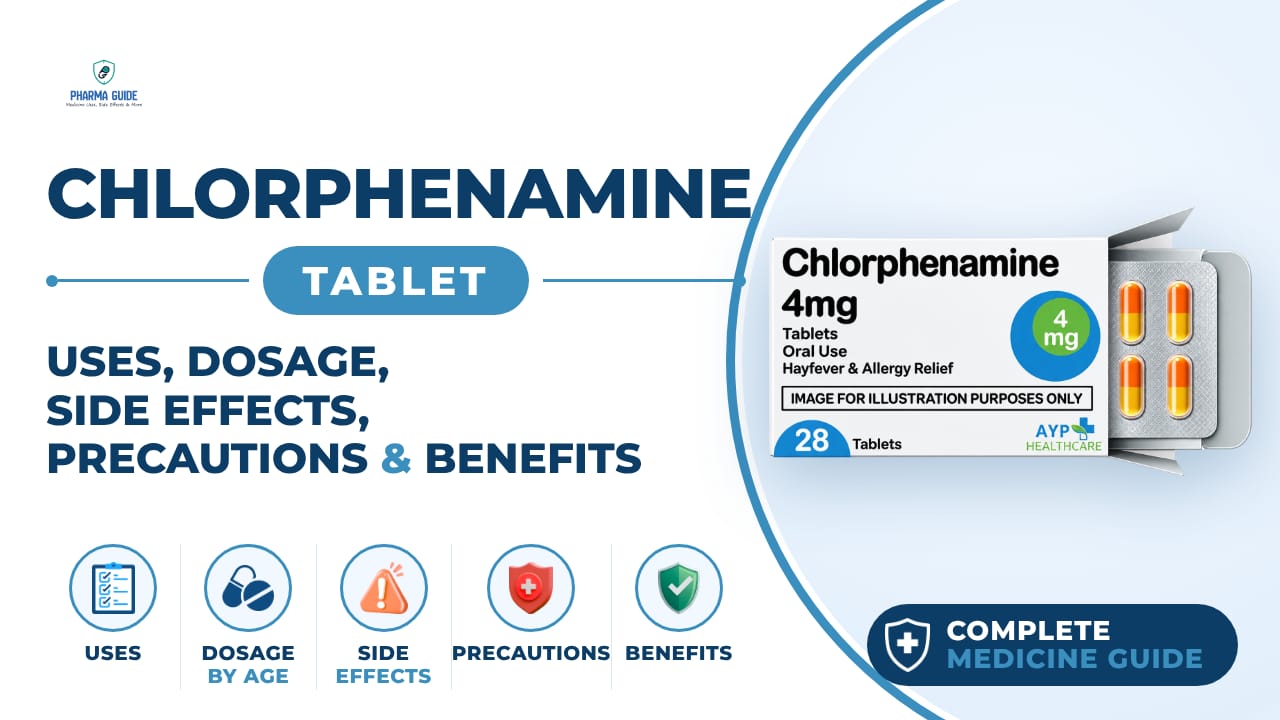
| Generic name | Chlorphenamine maleate |
|---|---|
| Drug class | Antihistamine (sedating antihistamine) |
| Forms | Tablets, Capsules, Caplets, Liquids (syrup) |
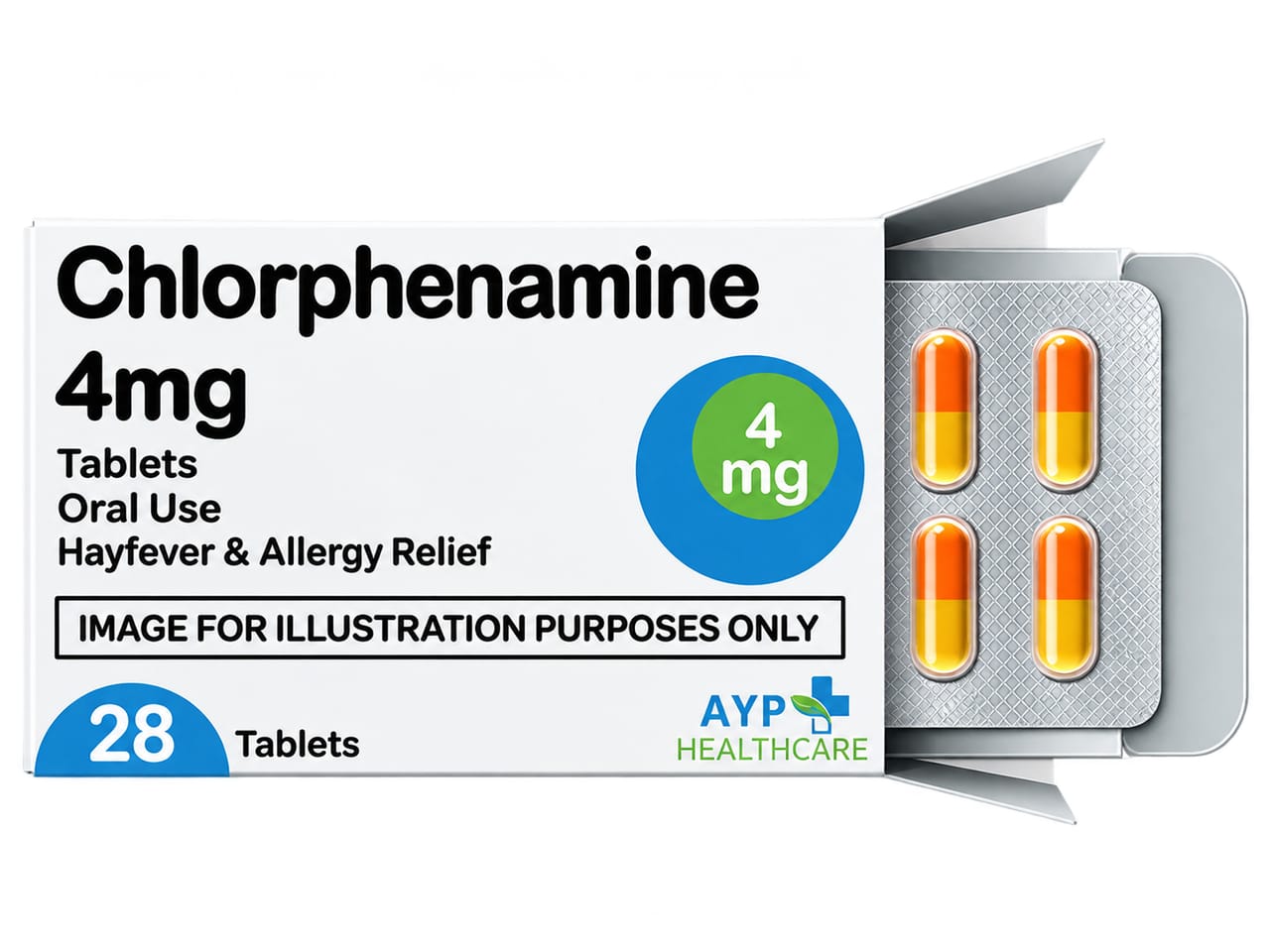
Quick overview
Chlorphenamine Tablet (chlorphenamine maleate) is a sedating antihistamine used to relieve allergy symptoms such as hay fever, itchy skin rashes, and reactions to insect bites or foods. It also helps relieve some cold symptoms and can help with travel sickness. It works by blocking histamine, the chemical responsible for allergic symptoms, and can also cause drowsiness.
What is Chlorphenamine Tablet
Chlorphenamine is an antihistamine medicine used to relieve allergy symptoms such as hay fever, itchy skin rashes, and reactions to insect bites or foods. It also helps relieve some cold symptoms and can help with travel sickness.
Chlorphenamine Tablet uses
- Treats hay fever
- Relieves sneezing
- Relieves runny nose
- Treats hives (urticaria)
- Relieves itching
- Helps with reactions to insect bites and stings
- Relieves symptoms of certain skin and food allergies
Benefits of Chlorphenamine Tablet
- Reduces allergy symptoms like itching, sneezing, and watery eyes
- Can help you feel more relaxed or fall asleep
- Starts working quickly to relieve allergic symptoms
How Chlorphenamine Tablet works
When your body comes into contact with something you're allergic to, it releases a chemical called histamine, which causes itching, watery eyes, runny nose, sneezing, and rashes. Chlorphenamine blocks the effects of histamine, reducing these symptoms. It also acts on the brain, which can make you feel more relaxed or sleepy.
Chlorphenamine Tablet dosage
Swallow tablets with a glass of water (children may also take with milk or juice). Do not chew the tablet. It can be taken with or without food. Doses are usually spaced several hours apart, up to a set maximum number of doses in 24 hours — follow the instructions on the packaging.
If you miss a dose, take it as soon as you remember, but do not double up to make up for a missed dose. Adults and children have very different dosing needs — always check the packaging carefully. Elderly people may need a lower dose and should check with their doctor or pharmacist before use.
If your child vomits within 30 minutes of a dose, give the same dose again; if it happens later than that, wait for the next normal dose.
| Age group | Dose |
|---|---|
| 6–11 years | 2 mg every 4–6 hours; maximum 12 mg in 24 hours |
| 12–17 years | 4 mg every 4–6 hours as needed; maximum 24 mg in 24 hours |
| 18–64 years | 4 mg every 4–6 hours as needed; maximum 24 mg daily |
Available forms and strengths
- Tablets
- Capsules
- Caplets
- Liquids (syrup)
Side effects of Chlorphenamine Tablet
Common
- Drowsiness or sleepiness
- Dry mouth, nose and throat
- Feeling tired, blurred vision, dizziness
- Headache, inability to concentrate, lack of co-ordination
- Feeling sick (nausea), being sick, diarrhoea
- Constipation
- Nervousness and irritability
- Anxiety
Serious
- Difficulty breathing, raised and itchy skin, swelling of the face, lips, tongue or throat (severe allergic reaction)
- Hallucinations
- Twitching or jerking muscles
- Fast heart beat
- Convulsions and shaking or tremors
- Difficulty passing urine
- Yellowing of the skin or whites of the eyes (hepatitis/liver problems)
- Reduction in red blood cells causing pale yellow skin, weakness or breathlessness
- Slow, stiff or uncontrolled movements
- Inability to pass urine
Warnings and precautions
- Talk to your doctor before taking chlorphenamine if you are pregnant or trying to become pregnant, so they can discuss the benefits and risks with you.
- Ask your doctor before taking chlorphenamine if you are breastfeeding, as it is not known if it passes into breast milk.
- Tell your doctor or pharmacist if you have kidney disease before taking this medicine. Tell your doctor or pharmacist if you have liver disease. Children with liver problems should not take this medicine.
- Avoid alcohol while taking this medicine, as it can increase the sedative (sleepy) effects of chlorphenamine.
- This medicine may make you drowsy and cause blurred vision and impaired movement. Do not drive or operate machinery if you are affected this way.
- Do not take this medicine if you have or have had glaucoma, a stomach or duodenal ulcer, prostate problems, or bladder problems.
- Do not take this medicine if you are taking, or have taken in the last 14 days, a monoamine oxidase inhibitor (MAOI) medicine.
- Do not use this medicine in children under 6 years of age to relieve cough and cold symptoms.
- Do not take if you have known brain damage, epilepsy, or are in a coma or pre-coma state.
- This medicine contains sunset yellow (E110), which can cause allergic reactions including asthma, especially in people sensitive to aspirin.
- Contains lactose — tell your doctor before taking this medicine if you have an intolerance to some sugars.
- Children and elderly adults are more likely to get certain nervous system side effects, including unusual excitement in children and confusion in elderly people.
Storage
- Keep your medicine in the original pack until it is time to take it
- Do not store above the temperature shown on the packaging of your medicine
- Do not use after the end of the month of the expiry date (EXP month/year) shown on the pack
- Keep it out of sight and reach of children
- Keep the container tightly closed and store in the original container
- Do not store above 25°C
- Do not throw away medicines via wastewater or household waste; ask your pharmacist how to dispose of medicines you no longer use
- Ask your pharmacist what to do with any leftover medicine or medicine that has expired
When to see a doctor
- Stop using the medicine and get immediate medical help if you have difficulty breathing, a raised and itchy skin rash, or swelling of the face, lips, tongue or throat — these are signs of a severe allergic reaction.
- If you think you or someone else may have taken too much chlorphenamine, contact a doctor or go to the nearest hospital emergency department right away, even if there are no symptoms.
- For children, contact a doctor straight away or go to the hospital if they cannot pass urine when they need to, as there is a risk of kidney damage, or if they have slow, stiff, or uncontrolled movements.
Alternatives
- Cetirizine
- Levocetirizine
- Desloratadine
Watch the video
FAQs
What is Chlorphenamine Tablet used for?
It is used to relieve allergy symptoms such as hay fever, itchy skin rashes, hives, and reactions to insect bites or foods, as well as some cold symptoms and travel sickness.
How does Chlorphenamine Tablet work?
It blocks the effects of histamine, the chemical released during allergic reactions that causes itching, watery eyes, runny nose, sneezing, and rashes. It also acts on the brain, which can cause drowsiness or relaxation.
What is the dosage of Chlorphenamine Tablet for adults?
Adults aged 18–64 years typically take 4 mg every 4–6 hours as needed, up to a maximum of 24 mg in 24 hours.
What are the common side effects of Chlorphenamine Tablet?
Common side effects include drowsiness, dry mouth, nose and throat, tiredness, blurred vision, dizziness, headache, nausea, constipation, nervousness and anxiety.
Can I drink alcohol while taking Chlorphenamine Tablet?
No, alcohol should be avoided as it can increase the sedative (sleepy) effects of chlorphenamine.
General information, not medical advice
Your prescriber and the leaflet in your pack know your situation. This page does not.
- Follow your prescriber and the leaflet
- Don't start, stop, or change a dose on your own
- Doses and warnings differ by country and product
Sources
- https://5.imimg.com/data5/SELLER/Doc/2023/3/SY/WP/XM/41245248/solvin-cold-tablet-cpm-paracetamol-phenylephrine-tab.pdf
- https://mhraproductsprod.blob.core.windows.net/docs/cf2d8af7f29185476d30f3a4add453d5682572ca
- https://www.medicinesforchildren.org.uk/wp-content/uploads/sites/8/2021/08/Chlorphenamine-maleate-for-allergy-symptoms-2.pdf
Video
Related medicines

Injectafer Injection: Uses, Dosage, Side Effects, Precautions and Alternates
Iron products
Injectafer (ferric carboxymaltose) treats iron deficiency anemia and heart failure-related iron deficiency via IV. Learn uses, dosage, side effects, and

Gliclazide Tablet: Uses, Dosage, Side Effects, Precautions and Alternates
Sulfonylurea (hypoglycemic/antidiabetic agent)
Gliclazide Tablet is a sulfonylurea for type 2 diabetes that boosts insulin release. Learn about dosage, side effects, warnings, and precautions.