
Safety
General information, not medical advice
Your prescriber and the leaflet in your pack know your situation. This page does not.
- Follow your prescriber and the leaflet
- Don't start, stop, or change a dose on your own
- Doses and warnings differ by country and product
Cholbam Capsule: Uses, Dosage, Side Effects, Precautions and Alternates
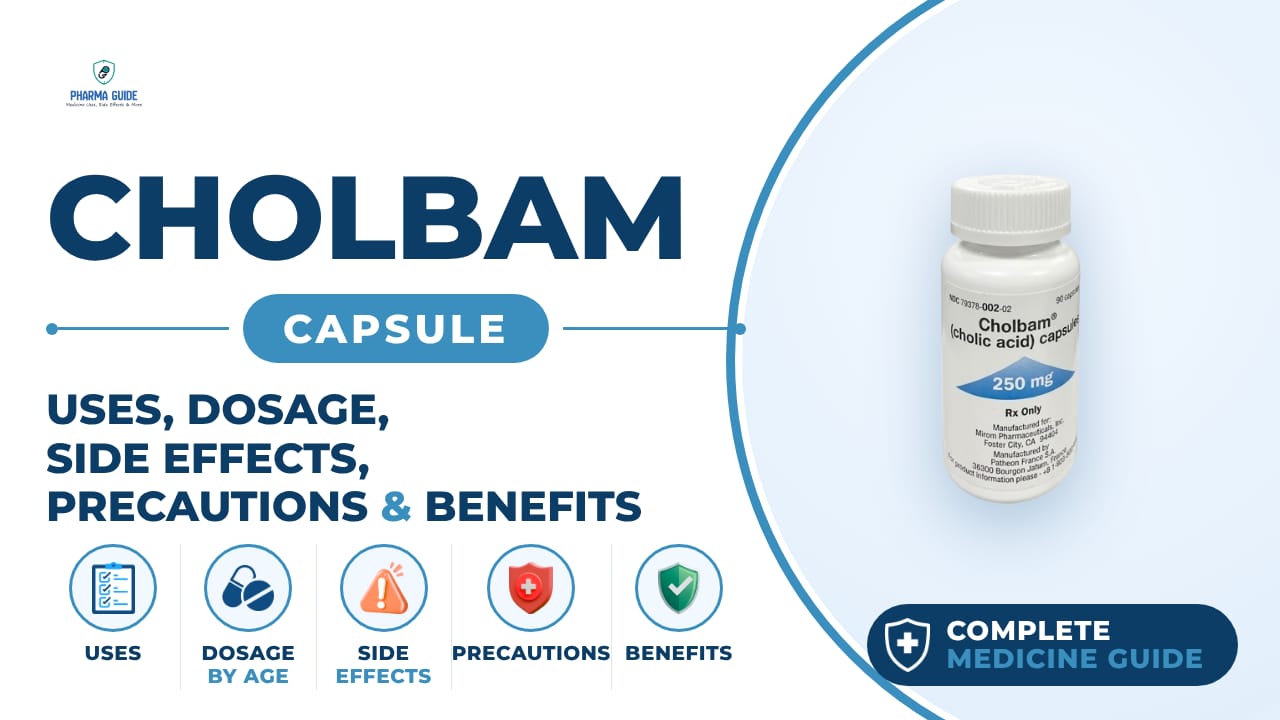
| Generic name | cholic acid |
|---|---|
| Drug class | Digestive enzymes / Bile acid |
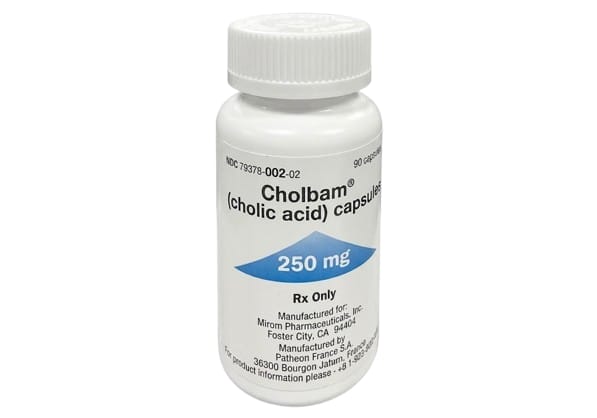
| Forms | Capsules (50 mg and 250 mg) |
Quick overview
Cholbam (cholic acid) is a bile acid medicine used to treat bile acid synthesis disorders caused by single enzyme defects, and as an add-on treatment for certain peroxisomal disorders. It supplies a bile acid that the body cannot make on its own, helping with fat digestion and nutrient absorption while reducing the buildup of harmful substances in the liver. It is taken by mouth with food, and regular blood tests are needed to monitor liver function during treatment.
What is Cholbam Capsule
Cholbam is a bile acid medicine. Bile acids are made naturally by the body to help digest fats and certain nutrients. People with certain bile acid disorders cannot make this bile acid normally, which can make it harder for the body to absorb important nutrients and can let toxic bile acids build up and harm the liver.
Cholbam Capsule uses
- Treatment of bile acid synthesis disorders due to single enzyme defects (SEDs)
- Adjunctive treatment of peroxisomal disorders (PDs) including Zellweger spectrum disorders in patients who have liver disease, fatty stools (steatorrhea), or problems absorbing fat-soluble vitamins
Benefits of Cholbam Capsule
- Helps normalize bile acid production in the body so fats and nutrients can be digested and absorbed properly
- Can reduce liver inflammation and improve liver test results in people who respond to treatment
How Cholbam Capsule works
Cholic acid is a natural bile acid normally made by the liver from cholesterol. In people with these bile acid disorders, the body cannot make enough of this bile acid, so harmful in-between substances build up and damage the liver. Taking Cholbam supplies the missing bile acid, which helps restore normal bile flow, helps the body digest fats and absorb fat-soluble vitamins, and signals the liver to stop overproducing the harmful substances.
Cholbam Capsule dosage
Take Cholbam with food. Swallow the capsule whole; do not crush or chew it. If you cannot swallow a capsule whole, open it and sprinkle the contents into a spoonful of soft food such as mashed potatoes or apple puree, or mix with infant formula or breast milk for younger children. Stir the mixture for 30 seconds and give or take it right away; do not save the mixture for later use. The granules will not dissolve in the food or liquid, so expect to see fine granules.
Take this medicine at least 1 hour before, or 4 to 6 hours after, taking a bile acid binding resin or an aluminum-based antacid. When you take your dose, avoid taking other oral medicines at the same time, since this medicine can affect how well your body absorbs them. This medicine is not approved for use in anyone younger than 3 weeks old.
If you miss a dose, take it as soon as you remember, but skip it if it is almost time for your next dose; do not take two doses at once. You will need regular blood tests to monitor your liver function while taking this medicine.
| Age group | Dose |
|---|---|
| Under 18 years | Not recommended |
| 18–64 years | 10–15 mg/kg/day |
| 65+ years | 10–15 mg/kg/day |
Available forms and strengths
- Capsules (50 mg and 250 mg)
Side effects of Cholbam Capsule
Common
- Diarrhea
- Acid reflux (reflux esophagitis)
- General ill feeling (malaise)
- Yellowing of the skin or eyes (jaundice)
- Skin sores or lesions
- Nausea
- Abdominal pain
- Intestinal polyp
- Urinary tract infection
- Numbness, tingling, or burning pain in hands or feet (peripheral neuropathy)
Serious
- Signs of worsening liver problems: nausea, upper stomach pain, itching, tiredness, loss of appetite, dark urine, clay-colored stools, yellowing of the skin or eyes
- Blood in your stools or changes in bowel habits such as diarrhea or constipation
- Pain or burning when you urinate
- Signs of an allergic reaction: hives, difficulty breathing, swelling of the face, lips, tongue, or throat
Warnings and precautions
- This medicine can make liver damage worse. Your doctor needs to check your liver function regularly with blood tests while you are taking this medicine, and treatment may need to be stopped if your liver function worsens or doesn't improve within a few months of starting treatment.
- Avoid taking this medicine together with cyclosporine or similar drugs that block bile acid transport, since this can cause bile acids to build up in the liver and cause symptoms. If it can't be avoided, your doctor will monitor your liver blood tests closely.
- Medicines called bile acid binding resins (such as cholestyramine, colestipol, or colesevelam) and aluminum-containing antacids can reduce how well this medicine works, so they need to be spaced apart from your dose.
- Use Cholbam only under specialist supervision, particularly regarding kidney function.
- Tell your doctor about all medicines and supplements you take.
- Seek medical advice if you develop worsening jaundice, dark urine, or severe abdominal pain.
- There have been no formal studies of this medicine in pregnant women or in animals. A small number of published reports of women taking cholic acid during pregnancy for a related condition had healthy babies, but this is not enough evidence to know the risk during pregnancy. If you become pregnant while taking this medicine, you may be asked to join a pregnancy registry that tracks outcomes.
- This bile acid occurs naturally in human breast milk, but no studies have looked at whether taking this medicine affects breast milk or a breastfed baby. Your doctor will weigh the benefits of breastfeeding against your need for this medicine and any possible risks to the baby.
Storage
- Store at room temperature, 20–25°C.
- Keep in the original container, tightly closed.
- Protect from moisture and excessive heat.
- Keep out of reach of children.
When to see a doctor
- Get emergency help right away if you have signs of an allergic reaction, such as hives, trouble breathing, or swelling of the face, lips, tongue, or throat.
- Call your doctor right away if your skin or the whites of your eyes turn yellow, your urine turns dark or tea-colored, you have pain on the right side of your stomach, you bruise or bleed more easily than normal, or you feel unusually tired or weak — these can be signs of liver problems.
- Call your doctor right away if you notice blood in your stools, changes in bowel habits, or pain or burning when you urinate.
- If you think you or someone else may have taken too much of this medicine, get emergency medical help or contact a poison control center right away.
Alternatives
- Ursodiol
- Chenodiol
- Cholic acid
Watch the video
FAQs
What is Cholbam Capsule used for?
Cholbam is used to treat bile acid synthesis disorders due to single enzyme defects, and as an add-on treatment for peroxisomal disorders, including Zellweger spectrum disorders, in patients with liver disease, fatty stools, or problems absorbing fat-soluble vitamins.
How should I take Cholbam Capsule?
Take Cholbam with food, swallowing the capsule whole without crushing or chewing it. If you cannot swallow it whole, open the capsule and sprinkle the contents into soft food or mix with infant formula or breast milk, stirring for 30 seconds and using it right away.
What should I avoid while taking Cholbam?
Take Cholbam at least 1 hour before, or 4 to 6 hours after, bile acid binding resins or aluminum-based antacids, since these can reduce how well Cholbam works. Also avoid taking other oral medicines at the same time as your dose, and avoid cyclosporine or similar drugs unless your doctor is closely monitoring your liver function.
What are the serious side effects of Cholbam?
Serious side effects include signs of worsening liver problems such as nausea, upper stomach pain, itching, tiredness, loss of appetite, dark urine, clay-colored stools, and yellowing of the skin or eyes, as well as blood in stools, changes in bowel habits, pain or burning when urinating, and allergic reactions.
Is Cholbam safe during pregnancy?
There have been no formal studies of Cholbam in pregnant women or animals. A small number of published reports of women taking cholic acid during pregnancy for a related condition had healthy babies, but this is not enough evidence to know the risk during pregnancy.
General information, not medical advice
Your prescriber and the leaflet in your pack know your situation. This page does not.
- Follow your prescriber and the leaflet
- Don't start, stop, or change a dose on your own
- Doses and warnings differ by country and product
Sources
Video
Related medicines

Injectafer Injection: Uses, Dosage, Side Effects, Precautions and Alternates
Iron products
Injectafer (ferric carboxymaltose) treats iron deficiency anemia and heart failure-related iron deficiency via IV. Learn uses, dosage, side effects, and

Gliclazide Tablet: Uses, Dosage, Side Effects, Precautions and Alternates
Sulfonylurea (hypoglycemic/antidiabetic agent)
Gliclazide Tablet is a sulfonylurea for type 2 diabetes that boosts insulin release. Learn about dosage, side effects, warnings, and precautions.