
Safety
General information, not medical advice
Your prescriber and the leaflet in your pack know your situation. This page does not.
- Follow your prescriber and the leaflet
- Don't start, stop, or change a dose on your own
- Doses and warnings differ by country and product
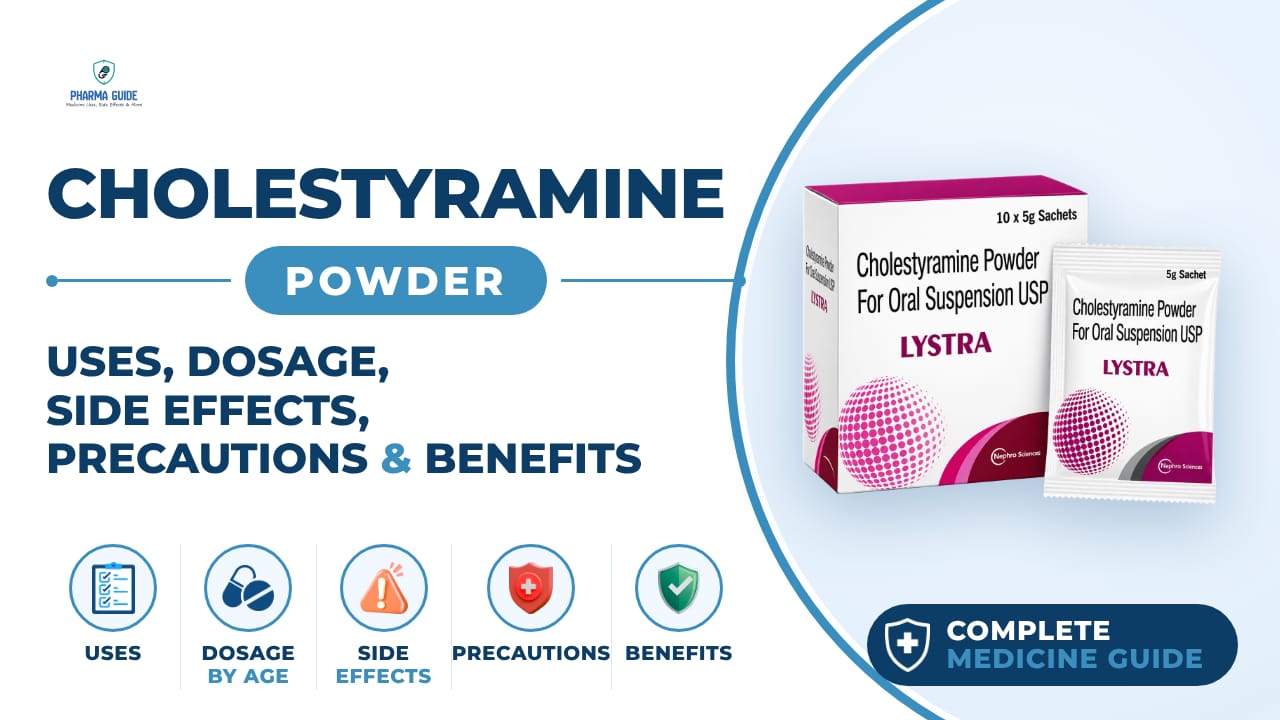
Cholestyramine Powder: Uses, Dosage, Side Effects, Precautions and Alternates
| Generic name | Cholestyramine Resin |
|---|---|
| Drug class | Antihypercholesterolemic and Antidiarrheal (bile acid sequestrant) |
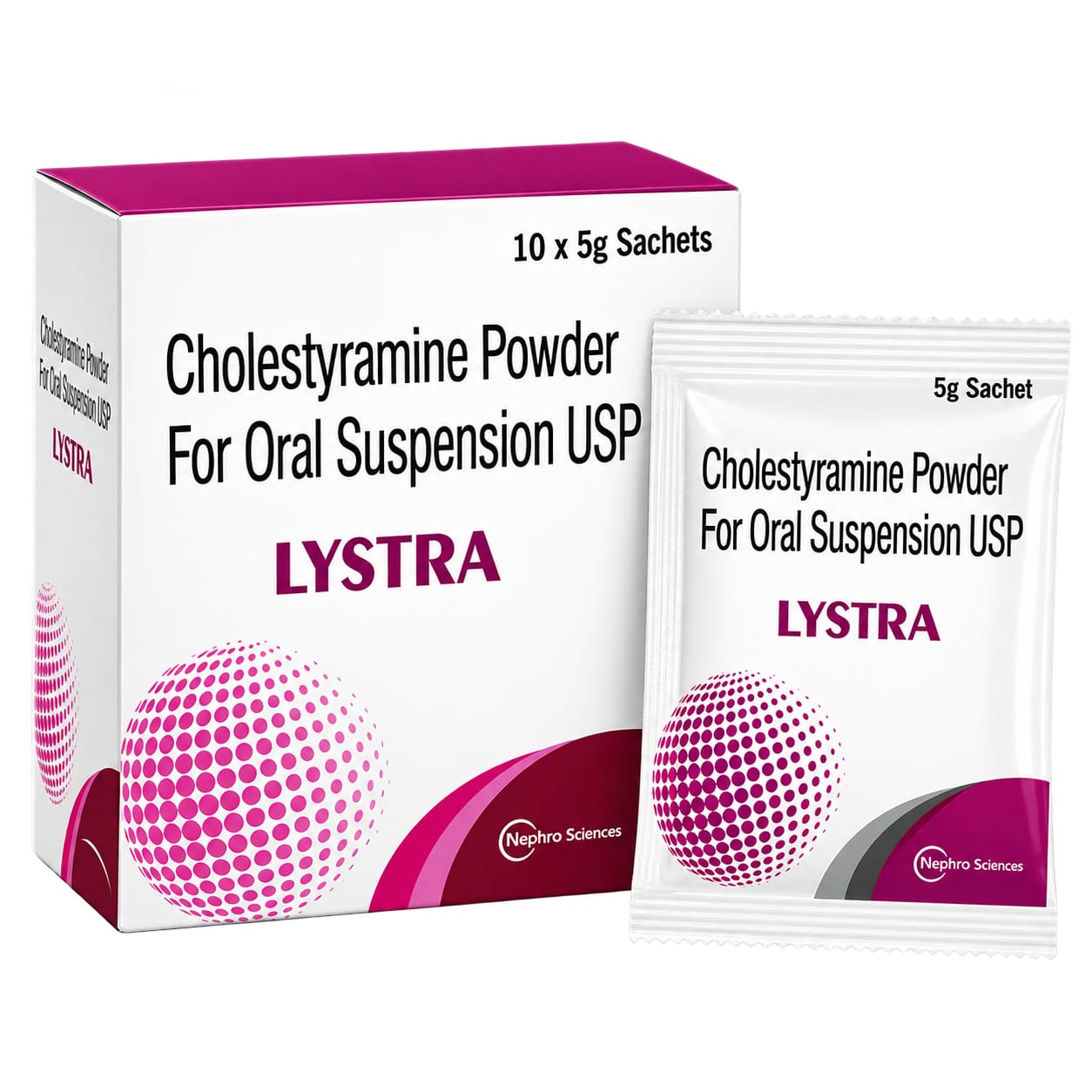
| Forms | Powder for oral suspension (Light powder and Regular powder, in single-dose sachets or multi-dose containers with a scoop) |
Quick overview
Cholestyramine Powder (generic name: Cholestyramine Resin) is a bile acid sequestrant used to lower high cholesterol, control certain types of diarrhea, and relieve itching caused by partial bile duct blockage. It is a powder that must be mixed with water or another liquid before taking. It works in the digestive system by binding to bile acids so they are removed from the body in the stool.
What is Cholestyramine Powder
Cholestyramine is a powder medicine that you mix with water or another liquid before drinking. It is a type of resin that binds to bile acids in your gut so they leave the body in your stool.
Cholestyramine Powder uses
- Lowering high cholesterol (used together with diet and exercise changes)
- Controlling diarrhea caused by too much bile acid, such as after bowel surgery
- Relieving itching caused by partial blockage of the bile ducts
Benefits of Cholestyramine Powder
- Can lower cholesterol levels, which may reduce the risk of heart disease and heart attack
- Can relieve itching linked to bile acid buildup from partial bile duct blockage
- Can reduce diarrhea caused by excess bile acids in the gut
How Cholestyramine Powder works
Cholestyramine works in your digestive system. It binds to bile acids (which are made from cholesterol) in your gut, forming a complex that passes out of your body in your stool. Because the body loses bile acids this way, your liver uses more cholesterol to make new bile acids, which lowers the amount of cholesterol in your blood.
Cholestyramine Powder dosage
Always mix the powder with water or another liquid, or with a very moist food, before taking it — never swallow it dry, as this can cause choking. You can mix it with water or a non-carbonated drink like milk or juice, or with moist foods such as soup, applesauce, yogurt, or pudding. Let the powder sit on top of the liquid for a minute or two, then stir well before drinking or eating it.
Take other medicines at least 1 hour before or 4 to 6 hours after taking this medicine, so it does not block their absorption. The color of the powder may vary from batch to batch; this does not affect how well it works. Keep taking this medicine as directed even if you feel well; do not stop without talking to your doctor. Drink plenty of liquids while taking this medicine.
If you miss a dose, take it as soon as you remember, unless it is almost time for your next dose — in that case skip the missed dose and do not double up.
| Age group | Dose |
|---|---|
| Children and adolescents under 18 years | Pediatric dosing is weight-based: about 240 mg/kg/day of anhydrous cholestyramine resin, divided into 2–3 doses; generally not more than 8 g/day |
| 18–39 years | Starting dose: 4 g once or twice daily |
| 65–74 years | Usually follows adult dosing, starting at 4 g once or twice daily, with cautious adjustment |
| 75 years and older | Individualized cautiously because constipation and gastrointestinal adverse effects may be more troublesome |
Available forms and strengths
- Powder for oral suspension (Light powder and Regular powder, in single-dose sachets or multi-dose containers with a scoop)
Side effects of Cholestyramine Powder
Common
- Constipation
- Bloating or gas
- Stomach discomfort or pain
- Nausea and vomiting
- Diarrhea
- Loss of appetite
- Heartburn or indigestion
- Skin rash or irritation of the skin, tongue, or area around the anus
Serious
- Fatty, bulky, or smelly stools (steatorrhea)
- Signs of vitamin A, D, or K deficiency, such as increased bleeding or night blindness
- Thin or brittle bones (osteoporosis), including sudden pain in the wrist, spine, or hip
- Signs of intestinal blockage, such as inability to pass stool or gas, severe stomach pain and cramping, or vomiting
- Unusual bleeding, such as from the gums or rectum
Warnings and precautions
- Never take this medicine dry — always mix it with water or another liquid first, because swallowing it dry can cause choking.
- This medicine can bind to other medicines you take, reducing how well your body absorbs them. Take other medicines at least 1 hour before or 4 to 6 hours after this medicine.
- Do not use this medicine if you are allergic to cholestyramine or any ingredient in it, or if you have a condition where your bile duct is completely blocked.
- This medicine can interfere with absorption of fat-soluble vitamins A, D, and K, and can lower folic acid levels. Talk to your doctor about whether you need vitamin supplements if you take this medicine long-term.
- The Light Powder form contains aspartame, a source of phenylalanine, which may be harmful if you have phenylketonuria (PKU).
- This medicine is not expected to directly harm an unborn baby because it is not absorbed into the bloodstream. However, it can block absorption of important vitamins and nutrients, which may affect the baby, so your doctor will weigh the benefits against possible risks.
- Caution is needed when this medicine is used by a breastfeeding mother, because it may reduce vitamin absorption, which could affect the nursing baby.
- Tell your doctor if you have kidney problems before starting this medicine.
- Tell your doctor if you have liver problems before starting this medicine.
- This medicine has not been shown to affect your ability to drive or use machines.
Storage
- Store at room temperature (15-30°C)
- Protect from moisture
- Keep out of reach and sight of children
- Bring unused and expired medicine to your local pharmacist for proper disposal
When to see a doctor
- Get medical help right away if you have signs of intestinal blockage, such as not being able to pass stool or gas, severe stomach pain and cramping, or vomiting.
- Tell your doctor if you notice increased bleeding, night blindness, or sudden bone pain (which may suggest a broken bone from weakened bones).
- If you think you or someone else has taken too much of this medicine, contact a healthcare professional, hospital emergency department, or your regional poison control center right away, even if there are no symptoms.
- Call your doctor immediately if you notice unusual bleeding, such as from the gums or rectum.
Alternatives
- Colestipol
- Colesevelam
- Statins such as atorvastatin
- Ezetimibe
Watch the video
FAQs
What is Cholestyramine Powder used for?
It is used for lowering high cholesterol along with diet and exercise, controlling diarrhea caused by excess bile acid such as after bowel surgery, and relieving itching caused by partial blockage of the bile ducts.
How should I take Cholestyramine Powder?
Always mix the powder with water, another liquid, or a very moist food before taking it—never swallow it dry, as this can cause choking. Let it sit on the liquid for a minute or two, then stir well before drinking or eating.
How does Cholestyramine Powder work?
It binds to bile acids in the gut, forming a complex that passes out in the stool. This causes the liver to use more cholesterol to make new bile acids, lowering blood cholesterol levels.
Can Cholestyramine Powder affect other medicines?
Yes, it can bind to other medicines and reduce how well your body absorbs them, so you should take other medicines at least 1 hour before or 4 to 6 hours after this medicine.
What are the serious side effects of Cholestyramine Powder?
Serious side effects include fatty or smelly stools, signs of vitamin A, D, or K deficiency like increased bleeding or night blindness, brittle bones, signs of intestinal blockage, and unusual bleeding from the gums or rectum.
General information, not medical advice
Your prescriber and the leaflet in your pack know your situation. This page does not.
- Follow your prescriber and the leaflet
- Don't start, stop, or change a dose on your own
- Doses and warnings differ by country and product
Sources
Video
Related medicines

Injectafer Injection: Uses, Dosage, Side Effects, Precautions and Alternates
Iron products
Injectafer (ferric carboxymaltose) treats iron deficiency anemia and heart failure-related iron deficiency via IV. Learn uses, dosage, side effects, and

Gliclazide Tablet: Uses, Dosage, Side Effects, Precautions and Alternates
Sulfonylurea (hypoglycemic/antidiabetic agent)
Gliclazide Tablet is a sulfonylurea for type 2 diabetes that boosts insulin release. Learn about dosage, side effects, warnings, and precautions.