
Safety
General information, not medical advice
Your prescriber and the leaflet in your pack know your situation. This page does not.
- Follow your prescriber and the leaflet
- Don't start, stop, or change a dose on your own
- Doses and warnings differ by country and product
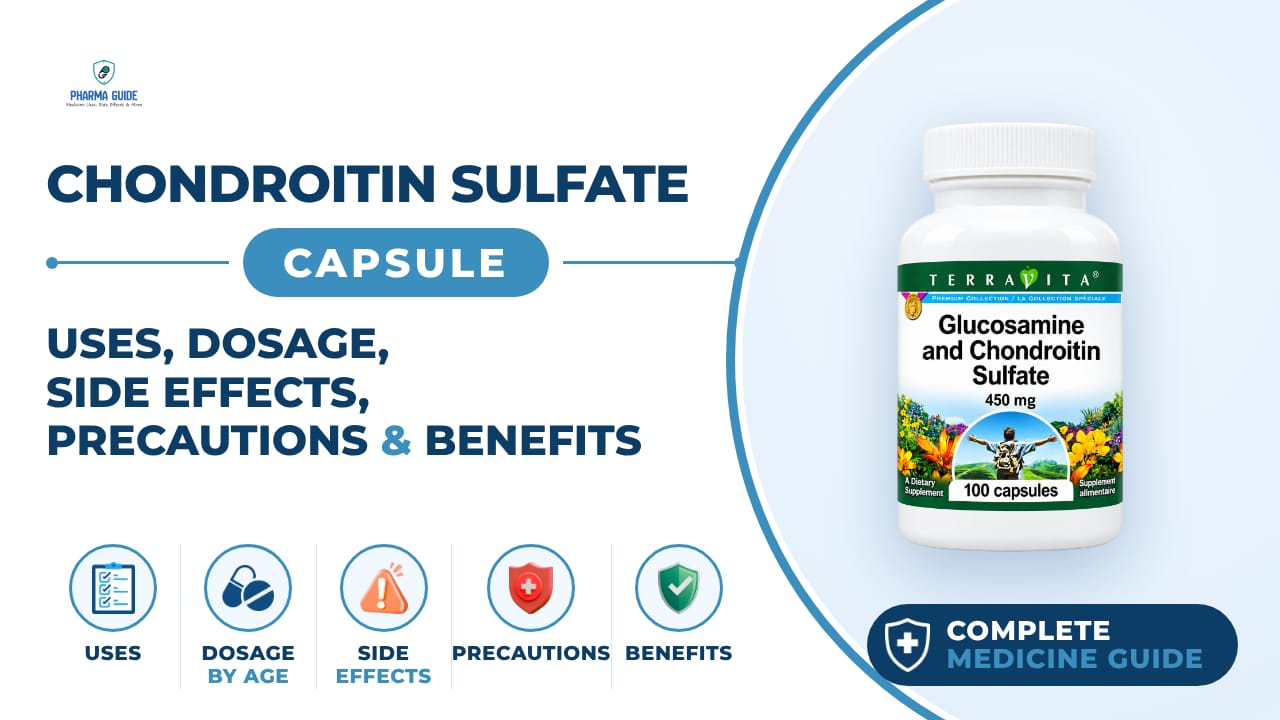
Chondroitin Sulfate Capsule: Uses, Dosage, Side Effects, Precautions and Alternates
| Generic name | Chondroitin Sulfate |
|---|---|
| Drug class | Glycosaminoglycan supplement / SYSADOA (symptomatic slow-acting drug for osteoarthritis) |
| Forms | Capsule |
Quick overview
Chondroitin Sulfate Capsule contains chondroitin sulfate, a glycosaminoglycan supplement classified as a SYSADOA (symptomatic slow-acting drug for osteoarthritis). It is normally found in cartilage around joints and is typically manufactured from animal sources such as shark or cow cartilage. It is taken as a supplement to support joint health and may help with osteoarthritis symptoms. It is generally well tolerated but has some important precautions, including interactions with warfarin.
What is Chondroitin Sulfate Capsule
Chondroitin sulfate is a chemical that is normally found in cartilage around joints in the body. It is usually manufactured from animal sources, such as shark and cow cartilage, and is taken as a supplement to support joint health.
Chondroitin Sulfate Capsule uses
- May be used for osteoarthritis symptoms
- May support cartilage and joint function
- May help reduce joint pain or stiffness in some people
Benefits of Chondroitin Sulfate Capsule
- May modestly improve joint symptoms in some patients
- Generally well tolerated
- Available as capsules, tablets, and combination supplements
How Chondroitin Sulfate Capsule works
In osteoarthritis, the cartilage in the joints breaks down over time. Chondroitin sulfate is one of the building blocks of cartilage, so taking it as a supplement might help slow this breakdown.
Chondroitin Sulfate Capsule dosage
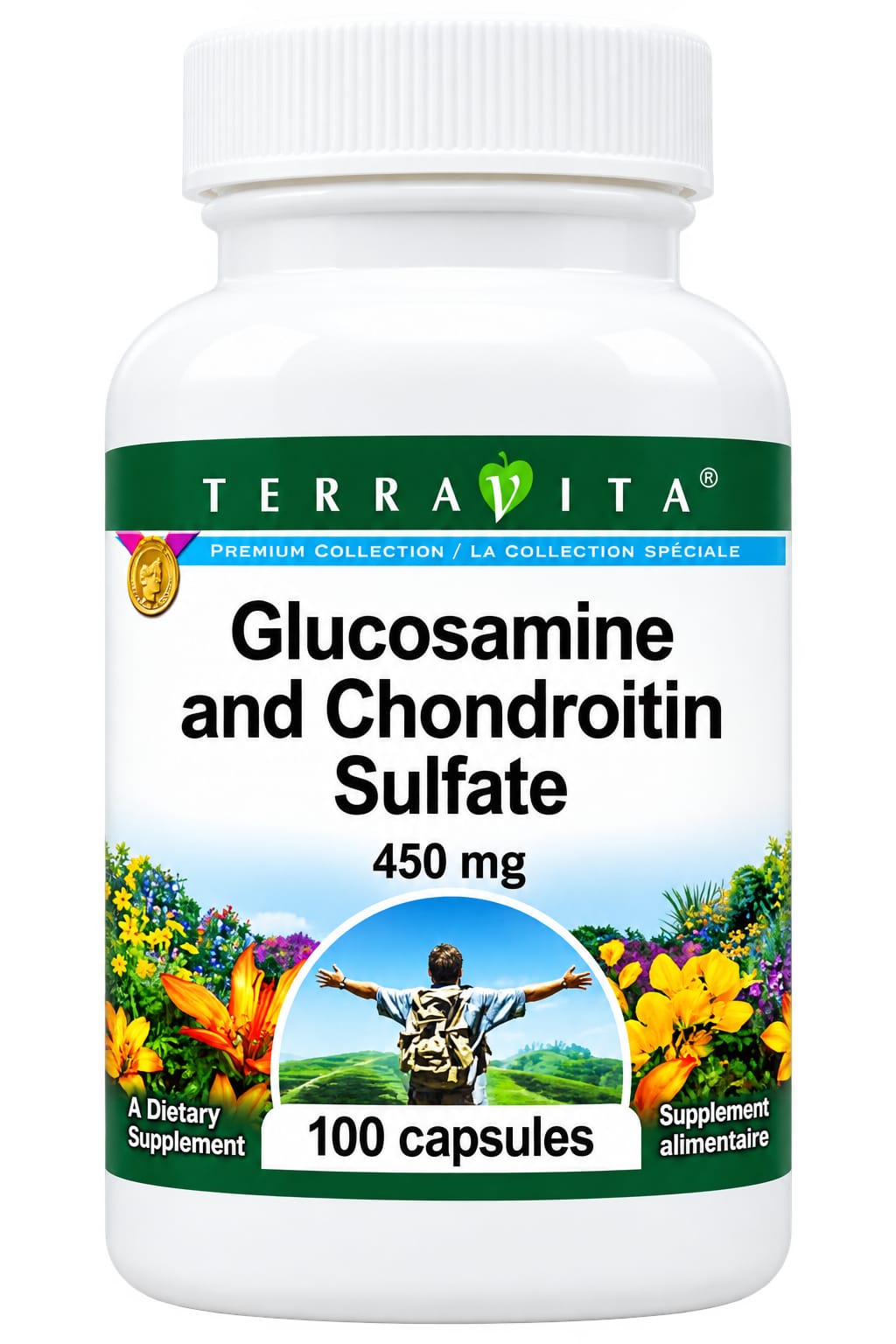
Chondroitin sulfate is taken by mouth, often in a single daily dose or split into two or three doses a day. It is often used in combination with other ingredients such as glucosamine sulfate, glucosamine hydrochloride, N-acetyl glucosamine, or manganese ascorbate. For osteoarthritis, oral use for up to 3 years has been studied. It has a delayed onset of action, and its therapeutic effect can only be assessed after a few weeks of treatment.
| Age group | Dose |
|---|---|
| Under 12 years | No established routine dose; use only if specifically recommended by a clinician |
| 12–17 years | No standard age-based dose is established |
| 18–39 years | Commonly studied adult dose: 800–1,200 mg/day, often divided into 2–3 doses |
Available forms and strengths
- Capsule
Side effects of Chondroitin Sulfate Capsule
Common
- Mild stomach pain
- Nausea
- Bloating
- Diarrhea
- Constipation
- Headache
- Swollen eyelids
- Leg swelling
- Hair loss
- Skin rash
Serious
- Irregular heartbeat
Warnings and precautions
- If you have asthma, there is some concern that chondroitin sulfate could make it worse, so use it cautiously.
- In people with blood clotting disorders, chondroitin sulfate might increase the risk of bleeding.
- If you have prostate cancer or are at high risk for it, do not take chondroitin sulfate, since early research suggests chondroitin might cause the spread or return of prostate cancer.
- Taking chondroitin together with glucosamine can increase the blood-thinning effect of warfarin, which can cause serious bruising and bleeding. Do not take chondroitin if you are on warfarin.
- Because chondroitin comes from animal sources, there is some concern about contamination with diseased animal tissue, though no human disease cases have been reported and the risk is considered low.
- Some chondroitin products contain excess amounts of manganese, so check with a healthcare professional about choosing a reliable brand.
- There is not enough reliable information about the safety of taking chondroitin sulfate if you are pregnant. It's best to avoid use to be safe.
- There is not enough reliable information about the safety of taking chondroitin sulfate while breastfeeding. It's best to avoid use to be safe.
- People with kidney disease or a family history of kidney disease should talk to their doctor before taking glucosamine (often combined with chondroitin) and should have their kidney function monitored while taking it, since glucosamine may rarely contribute to kidney scarring.
- No standard liver-specific adjustment is established.
- No major direct interaction with alcohol is established.
- Chondroitin generally does not impair driving.
When to see a doctor
- Talk with your health provider before combining chondroitin with warfarin, since this combination can cause serious bruising and bleeding.
Alternatives
- Glucosamine sulfate
- Glucosamine hydrochloride
- Hyaluronic acid supplements
Watch the video
FAQs
What is Chondroitin Sulfate Capsule used for?
It is used for osteoarthritis symptoms, to support cartilage and joint function, and may help reduce joint pain or stiffness in some people.
What is the typical dosage of Chondroitin Sulfate Capsule?
For adults aged 18-39, the commonly studied dose is 800-1,200 mg/day, often divided into 2-3 doses. It is often combined with glucosamine or other ingredients.
What are the side effects of Chondroitin Sulfate Capsule?
Common side effects include mild stomach pain, nausea, bloating, diarrhea, constipation, headache, swollen eyelids, leg swelling, hair loss, and skin rash. A serious side effect is irregular heartbeat.
Can I take Chondroitin Sulfate Capsule with warfarin?
No, taking chondroitin with warfarin (especially combined with glucosamine) can increase the blood-thinning effect and cause serious bruising and bleeding, so it should be avoided.
Is Chondroitin Sulfate Capsule safe during pregnancy?
There is not enough reliable information about its safety during pregnancy or breastfeeding, so it's best to avoid use to be safe.
General information, not medical advice
Your prescriber and the leaflet in your pack know your situation. This page does not.
- Follow your prescriber and the leaflet
- Don't start, stop, or change a dose on your own
- Doses and warnings differ by country and product
Sources
Video
Related medicines

Injectafer Injection: Uses, Dosage, Side Effects, Precautions and Alternates
Iron products
Injectafer (ferric carboxymaltose) treats iron deficiency anemia and heart failure-related iron deficiency via IV. Learn uses, dosage, side effects, and

Gliclazide Tablet: Uses, Dosage, Side Effects, Precautions and Alternates
Sulfonylurea (hypoglycemic/antidiabetic agent)
Gliclazide Tablet is a sulfonylurea for type 2 diabetes that boosts insulin release. Learn about dosage, side effects, warnings, and precautions.