
Safety
General information, not medical advice
Your prescriber and the leaflet in your pack know your situation. This page does not.
- Follow your prescriber and the leaflet
- Don't start, stop, or change a dose on your own
- Doses and warnings differ by country and product
Cilest Tablet: Uses, Dosage, Side Effects, Precautions and Alternates
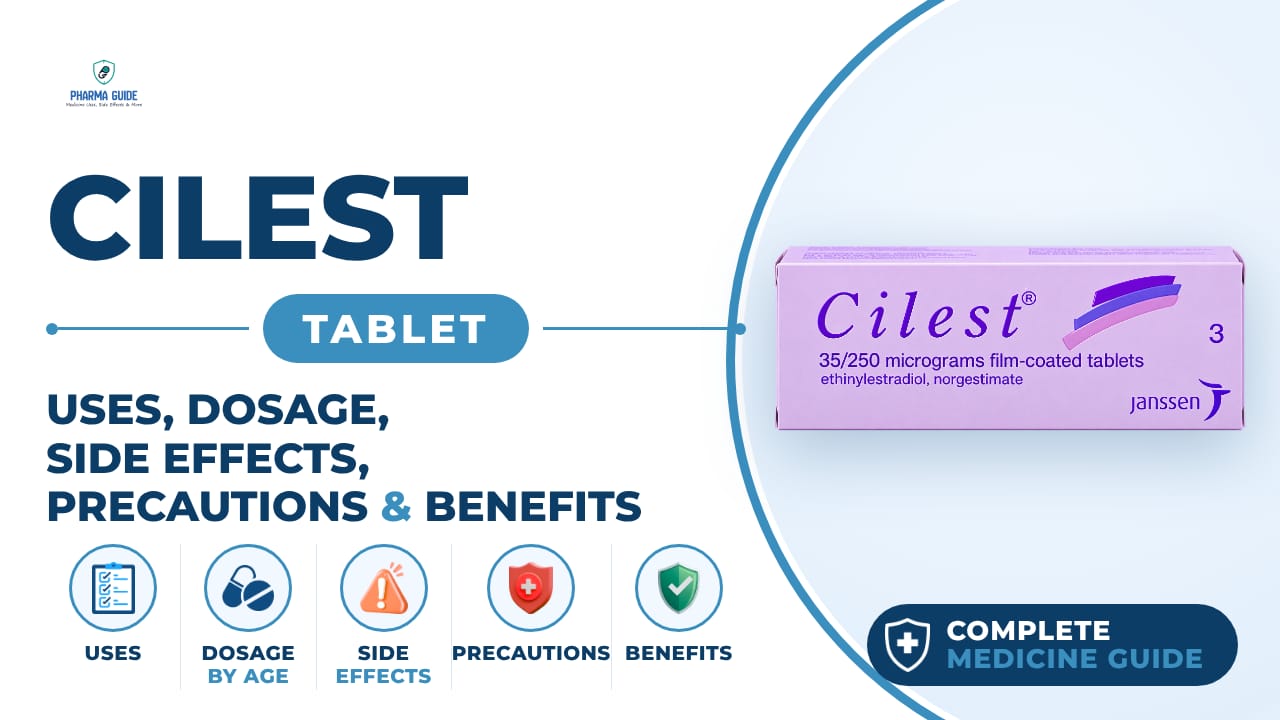
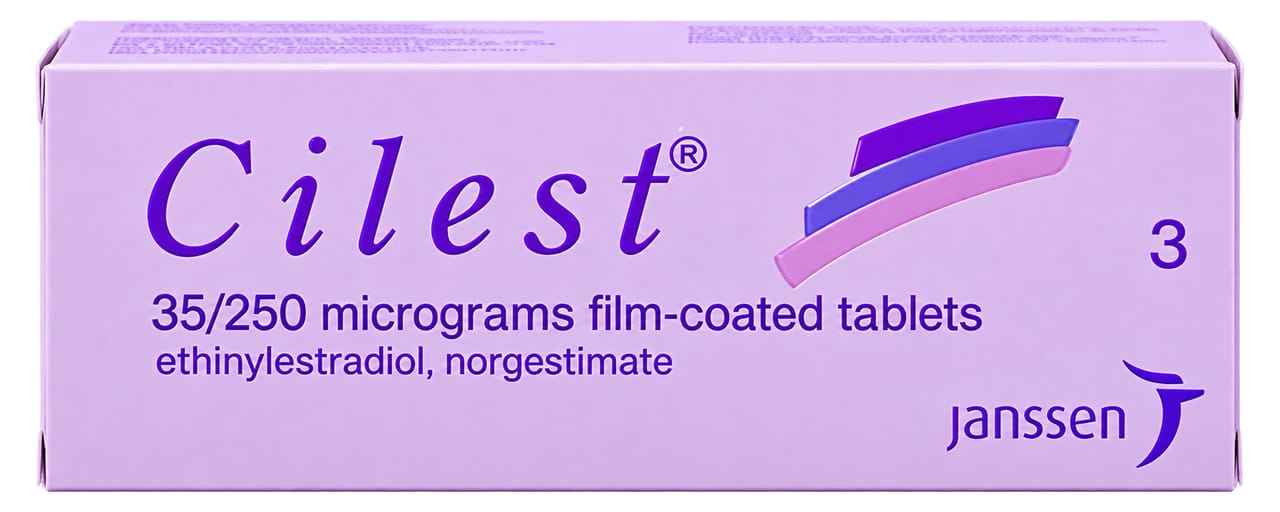
| Generic name | Norgestimate/ethinylestradiol |
|---|---|
| Drug class | Combined oral contraceptive pill (hormonal contraceptive) |
| Forms | Film-coated tablets in blister strips of 21 |
Quick overview
Cilest Tablet is a combined oral contraceptive pill containing norgestimate and ethinylestradiol. It is taken to prevent pregnancy and may also help with irregular, heavy, or painful periods and pre-menstrual symptoms. Cilest works by stopping the release of an egg each month and by thickening cervical mucus. It is taken as one tablet daily for 21 days, followed by a seven-day pill-free break.
What is Cilest Tablet
Cilest is a combined oral contraceptive pill (the Pill) containing two female sex hormones, norgestimate and ethinylestradiol. It is taken to prevent pregnancy.
Cilest Tablet uses
- Prevents pregnancy
- May help with irregular, heavy, or painful periods
- May help with pre-menstrual symptoms
- May reduce the risk of ovarian and womb cancer if used long term
Benefits of Cilest Tablet
- One of the most reliable reversible methods of contraception if used correctly
- Does not interrupt sex
- Usually makes periods regular, lighter and less painful
- May help with pre-menstrual symptoms
How Cilest Tablet works
Cilest contains two hormones that stop an egg being released from the ovaries each month, and also thicken the mucus in the cervix so sperm find it harder to reach the womb.
Cilest Tablet dosage
Swallow each pill whole with water if necessary; do not chew the pill. Take your pill at the same time every day. Cilest comes in a strip of pills, each marked with a day of the week; start with the pill marked for the correct day and follow the direction of the arrows. After finishing a strip, there are seven days when no pills are taken, then the next strip is started on time, even if still bleeding. Cilest can be taken with or without food, as there are no special food or drink instructions.
If a pill is missed, how many pills are missed and when affects what you should do; extra contraception such as condoms may be needed. If vomiting occurs shortly after taking a pill, or there is severe diarrhoea, the pill may not work properly and a spare pill or extra contraception may be needed.
| Age group | Dose |
|---|---|
| Under 17 | Not indicated |
| 18–39 years | 1 tablet once daily for 21 days |
Available forms and strengths
- Film-coated tablets in blister strips of 21
Side effects of Cilest Tablet
Common
- Headache
- Nausea, vomiting and diarrhoea
- Bleeding and spotting between periods in the first few months
- Painful or unusual periods
- Migraine
- Swollen hands, ankles or feet
- Depression, mood changes, feeling nervous or dizzy
- Difficulty sleeping (insomnia)
- Stomach ache and bloating, constipation, wind
- Acne, rash
- Muscle spasms, pain in legs, arms and back
- Painful breasts
- Urinary tract infections
- Vaginal infections such as thrush
- Vaginal discharge
- No menstrual periods
- Feeling weak
- Weight gain
Serious
- Signs of a blood clot: painful swelling in the leg, sudden chest pain, difficulty breathing, sudden changes in eyesight
- Signs of heart attack or stroke: severe headache or migraine, sudden changes in eyesight, sudden weakness or numbness, slurred speech, sudden crushing chest pain reaching the left arm
- Signs of breast cancer: dimpling of the skin, changes in the nipple, lumps you can see or feel
- Signs of severe liver problems: severe pain in the upper abdomen, yellow skin or eyes (jaundice)
- Increased blood pressure
- Fits (convulsions)
- Hives, swelling of the face, lips, mouth, tongue or throat which may cause difficulty swallowing or breathing (signs of allergy)
Warnings and precautions
- Do not start taking Cilest if you are pregnant. If you think you might be pregnant while taking it, confirm with a pregnancy test before stopping.
- If breastfeeding, your doctor may advise against taking Cilest and discuss other contraception options; breastfeeding does not reliably prevent pregnancy.
- Significant kidney disease should be reviewed before use.
- Cilest should not be taken if you have breast or liver cancer, or if you have or have recently had severe liver disease. Liver diseases such as jaundice and liver tumours have been linked to the Pill, though rare.
- Cilest has no known effect on the ability to drive or use machines.
- The Pill may slightly increase the risk of blood clots, especially in the first year of use. Signs include painful leg swelling, sudden chest pain, breathlessness, or sudden vision changes — these require urgent medical attention.
- The Pill slightly increases the risk of breast cancer, with the risk returning to normal within about 10 years of stopping.
- Do not take Cilest if you are breastfeeding and your baby is less than 6 weeks old, have breast or liver cancer, certain heart conditions, a history of blood clots, very high blood pressure, heavy smoking at age 35 or older, migraines affecting vision, long-standing diabetes with complications, severe liver disease, or lupus, among other conditions.
- Certain medicines can make Cilest less effective, including some epilepsy medicines, antibiotics like rifampicin, anti-HIV medicines, and St. John's Wort, among others.
- Cilest does not protect against sexually transmitted infections; only condoms help with this.
Storage
- Store Cilest below 25°C
- Store it in the original package to protect it from light
- Do not use Cilest after the expiry date shown on the strip; the expiry date refers to the last day of that month
- Do not throw away any medicines down a drain or into a bin; ask your pharmacist what to do with any medicines you do not want
When to see a doctor
- See a doctor as soon as possible if you notice signs of a blood clot such as painful leg swelling, sudden chest pain, difficulty breathing, or sudden eyesight changes. Stop taking Cilest and use another method of contraception until your doctor advises you can restart.
- See a doctor as soon as possible if you notice changes in your breasts, such as dimpling of the skin, changes in the nipple, or any lumps.
- See a doctor as soon as possible if you get severe stomach pain, or yellow skin or eyes (jaundice); you may need to stop taking Cilest.
- If you think you may have signs of a serious side effect such as a blood clot, heart attack, stroke, breast cancer, severe liver problems, high blood pressure, fits, or an allergic reaction, see a doctor straight away — you may need to stop taking Cilest.
Alternatives
- Cilique
- Lizinna
Watch the video
FAQs
What is Cilest Tablet used for?
Cilest is a combined oral contraceptive pill used to prevent pregnancy. It may also help with irregular, heavy, or painful periods and pre-menstrual symptoms, and may reduce the risk of ovarian and womb cancer with long-term use.
How does Cilest Tablet work?
Cilest contains norgestimate and ethinylestradiol, two hormones that stop an egg being released from the ovaries each month and thicken cervical mucus so sperm find it harder to reach the womb.
How should Cilest Tablet be taken?
Take one pill at the same time every day for 21 days, starting with the pill marked for the correct day and following the arrows. After finishing a strip, take a seven-day break with no pills, then start the next strip on time even if still bleeding. It can be taken with or without food.
What should I do if I miss a Cilest pill?
What you should do depends on how many pills are missed and when; extra contraception such as condoms may be needed. If vomiting occurs shortly after taking a pill, or there is severe diarrhoea, the pill may not work properly and a spare pill or extra contraception may be needed.
What are the serious side effects of Cilest Tablet?
Serious side effects include signs of a blood clot, heart attack or stroke, breast cancer, severe liver problems, increased blood pressure, fits, and allergic reactions such as hives or swelling of the face, lips, mouth, tongue or throat.
General information, not medical advice
Your prescriber and the leaflet in your pack know your situation. This page does not.
- Follow your prescriber and the leaflet
- Don't start, stop, or change a dose on your own
- Doses and warnings differ by country and product
Sources
Video
Related medicines

Injectafer Injection: Uses, Dosage, Side Effects, Precautions and Alternates
Iron products
Injectafer (ferric carboxymaltose) treats iron deficiency anemia and heart failure-related iron deficiency via IV. Learn uses, dosage, side effects, and

Gliclazide Tablet: Uses, Dosage, Side Effects, Precautions and Alternates
Sulfonylurea (hypoglycemic/antidiabetic agent)
Gliclazide Tablet is a sulfonylurea for type 2 diabetes that boosts insulin release. Learn about dosage, side effects, warnings, and precautions.