
Safety
General information, not medical advice
Your prescriber and the leaflet in your pack know your situation. This page does not.
- Follow your prescriber and the leaflet
- Don't start, stop, or change a dose on your own
- Doses and warnings differ by country and product
Ciloxan Eye Drops: Uses, Dosage, Side Effects, Precautions and Alternates
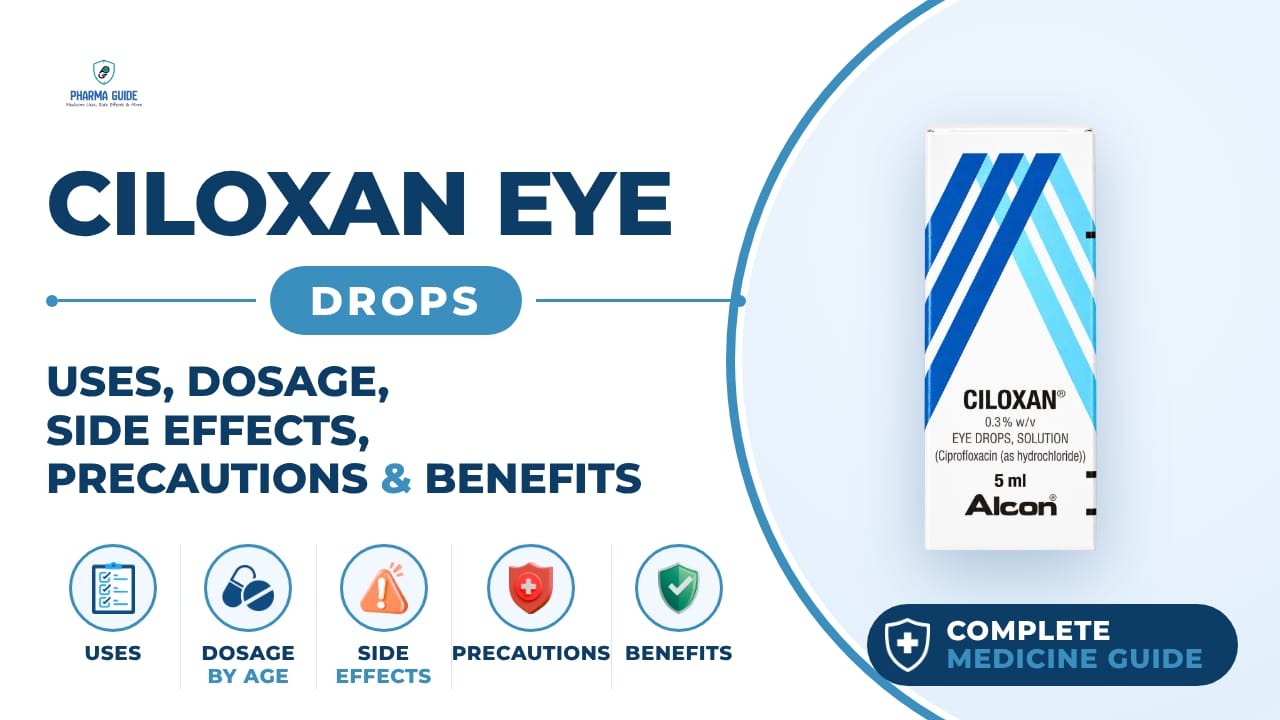
| Generic name | ciprofloxacin hydrochloride (ophthalmic) |
|---|---|
| Drug class | Fluoroquinolone antibiotic (Quinolones, Ophthalmic / Ophthalmic anti-infectives) |
| Forms | Ophthalmic solution (eye drops), Ophthalmic ointment |
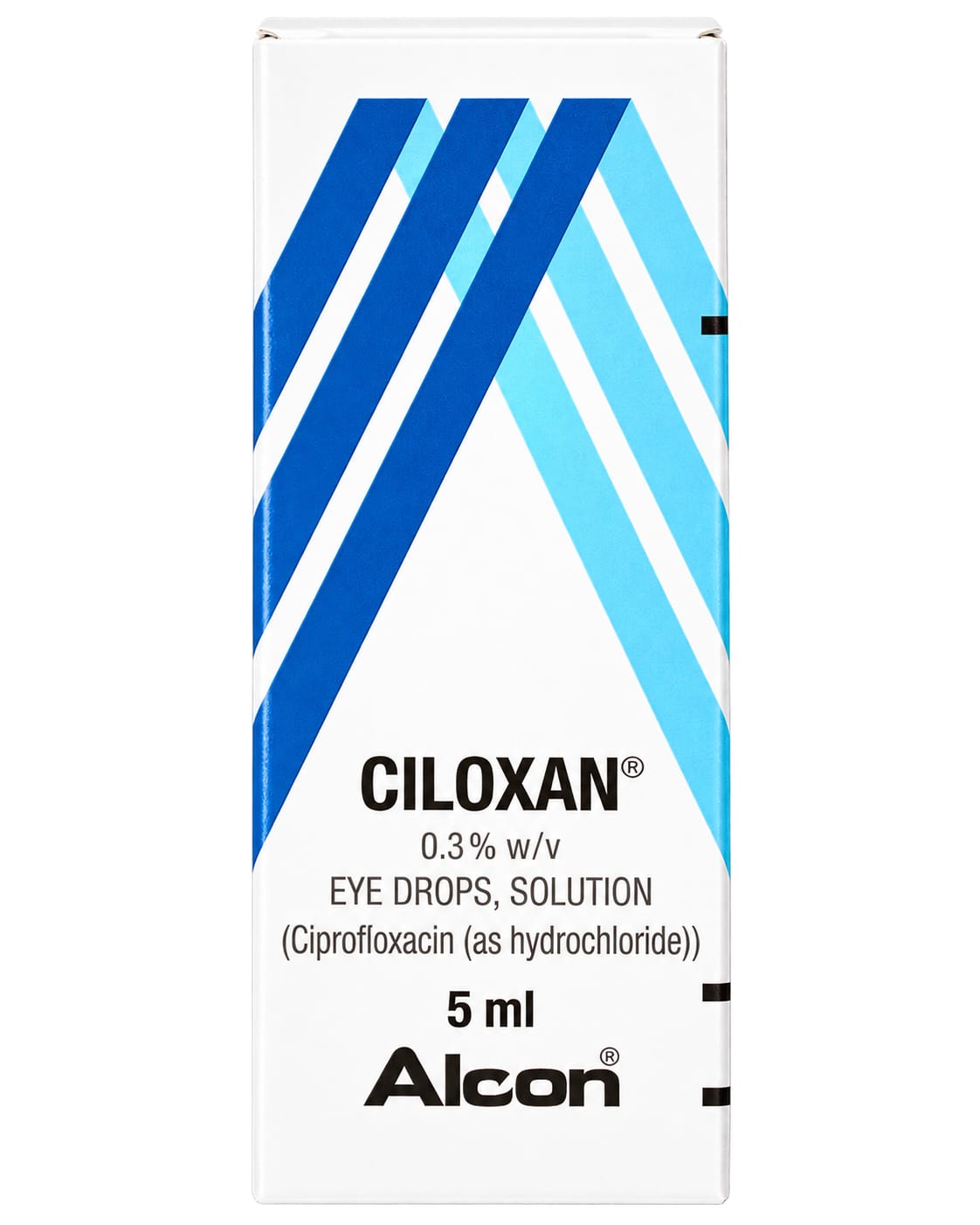
Quick overview
Ciloxan Eye Drops contain ciprofloxacin hydrochloride, a fluoroquinolone antibiotic used to treat certain bacterial eye infections, including bacterial conjunctivitis (pink eye) and infected corneal ulcers. The drops work by stopping bacteria from copying and repairing their DNA, which kills the bacteria causing the infection. They only work against bacteria, not viral or fungal eye infections, and are available as an ophthalmic solution and ointment.
What is Ciloxan Eye Drops
Ciloxan Eye Drops contain ciprofloxacin hydrochloride, a fluoroquinolone antibiotic used to treat certain bacterial eye infections, including bacterial conjunctivitis (pink eye) and infected corneal ulcers. It only works against bacteria, not viral or fungal eye infections.
Ciloxan Eye Drops uses
- Treating bacterial eye infections such as bacterial conjunctivitis (pink eye)
- Treating an infected ulcer (sore) on the cornea of the eye
- Treats bacterial conjunctivitis
- Treats bacterial corneal ulcers
- Kills susceptible bacteria causing eye infections
Benefits of Ciloxan Eye Drops
- Kills the bacteria causing the eye infection, helping symptoms improve
- Helps corneal ulcers heal (re-epithelialize) when used for the full course
- Provides topical antibiotic treatment directly to the eye
- Active against several gram-positive and gram-negative ocular bacteria
- Has minimal systemic absorption compared with oral ciprofloxacin
- Can be used across pediatric and adult age groups when appropriately prescribed
How Ciloxan Eye Drops works
Ciprofloxacin works by stopping bacteria from being able to copy and repair their DNA, which kills the bacteria causing the infection.
Ciloxan Eye Drops dosage
Wash your hands before using the eye drops. Remove soft contact lenses before putting the drops in your eye, and do not wear contact lenses while being treated for the infection.
Tilt your head back, pull down the lower eyelid to form a small pocket, and place a drop into the pocket without letting the dropper tip touch your eye or any other surface. After putting in a drop, close your eye without blinking or rubbing it, and press a finger gently against the inside corner of the eye for about two minutes to stop the medicine draining into the tear duct and reduce the taste it can leave in your mouth. Wipe away any spillage on the cheek with a tissue, since the eye can only hold less than one drop at a time.
If you need more than one drop, wait about five minutes between drops. Wait at least five minutes before using any other eye drops, and at least ten minutes before using other eye medications if directed by your doctor.
Use the eye drops at about the same times each day, for as long as your doctor tells you, even if your eye starts feeling better, so the infection does not come back. While treating a corneal ulcer, you may notice a whitish buildup in the eye; this is a sign the medicine is working and is not harmful, and it should clear within a few days or weeks.
If you forget a dose, use it as soon as you remember, unless it is almost time for the next dose — then skip the missed dose and continue as normal. Do not use double the amount to make up for a missed dose.
Not for use in children under 1 year of age. Avoid driving or operating machinery until you know how the drops affect your vision, since temporary blurred vision can occur after use.
| Age group | Dose |
|---|---|
| Under 1 year | Safety and effectiveness not established |
| 1–11 years | 1–2 drops in the affected eye(s) every 2 hours while awake for 2 days, then 1–2 drops every 4 hours while awake for 5 days |
| 12–17 years | 1–2 drops every 2 hours while awake for 2 days, then 1–2 drops every 4 hours while awake for 5 days |
| 18–64 years | 1–2 drops every 2 hours while awake for 2 days, then 1–2 drops every 4 hours while awake for 5 days |
Available forms and strengths
- Ophthalmic solution (eye drops)
- Ophthalmic ointment
Side effects of Ciloxan Eye Drops
Common
- Temporary stinging or burning when applied
- Eye discomfort, irritation, or itching
- Eye redness
- Tearing or watery eyes
- Dry eyes
- Eyelid crusting or flaking skin of the eyelids
- Feeling like something is in your eye
- Blurred or decreased vision
- Puffy or red eyelids
- A bad or unpleasant taste in the mouth after using the drops
- Sensitivity to light
- A white-colored buildup in the eye (if being treated for a corneal ulcer)
- Nausea
Serious
- Hives
- Difficulty breathing
- Swelling of the face, lips, tongue, or throat
- Severe burning, stinging, or irritation after use
- Eye swelling
- Severe redness of the eye
- Severe discomfort of the eye
- Crusting or drainage from the eye
- Staining of the eyes, swelling in or around the eye, eye pain, or worsening vision
- Sudden vision loss, tunnel vision, or seeing halos around lights
- Fast, irregular, or pounding heartbeats; fluttering in the chest; shortness of breath; sudden dizziness or passing out
- Severe headache, confusion, slurred speech, arm or leg weakness, trouble walking, loss of coordination, very stiff muscles, high fever, profuse sweating, or tremors
- Tendon problems, especially in people over 65 taking cortisone-like medicines
Warnings and precautions
- This medicine must not be injected into the eye.
- Serious and sometimes fatal severe allergic reactions have occurred with related antibiotics, sometimes after the very first dose.
- Remove contact lenses before using this medicine, and do not wear soft contact lenses during treatment since the preservative can be absorbed into the lenses and cause irritation or discoloration.
- Using this antibiotic for a long time can let other germs, including fungi, grow out of control, causing a new infection that needs its own treatment.
- This medicine should be stopped right away if a skin rash or any other sign of an allergic reaction appears.
- This medicine is not approved for children younger than 1 year of age.
- Do not use this medicine if you are allergic to ciprofloxacin or to other quinolone antibiotics.
- It is not known if Ciloxan will harm an unborn baby. Tell your doctor if you are pregnant or plan to become pregnant so they can weigh the benefits and risks. It is not known if the medicine passes into breast milk. Talk to your doctor before breastfeeding while using Ciloxan.
- No routine kidney-based dose adjustment is generally required for topical ophthalmic use. No routine liver-based adjustment is generally required. No major direct interaction is expected with ophthalmic ciprofloxacin and alcohol.
- Be careful driving or operating machinery until you know how the eye drops affect your vision, since they can cause temporary blurred vision.
Storage
- Store Ciloxan Eye Drops in a cool, dry place where the temperature stays below 25°C. Do not refrigerate or freeze. Protect from light.
- Do not store Ciloxan Eye Drops or any other medicine in the car, the bathroom, or any other warm, damp place.
- Do not leave the top off the bottle for any length of time, to avoid contaminating the eye drops.
- Keep it out of the sight and reach of children.
- Write the date on the bottle when you open the eye drops and throw out any remaining solution after four weeks.
- If your doctor tells you to stop using Ciloxan Eye Drops or they have passed their expiry date, ask your pharmacist what to do with the remaining solution.
When to see a doctor
- Get medical help right away if you have hives, difficulty breathing, or swelling of your face, lips, tongue, or throat.
- Seek medical care immediately for serious eye symptoms such as sudden vision loss, blurred vision, tunnel vision, eye pain or swelling, or seeing halos around lights.
- Seek medical care immediately for serious heart symptoms such as fast, irregular, or pounding heartbeats, fluttering in the chest, shortness of breath, or sudden dizziness, lightheadedness, or passing out.
- Seek medical care immediately for severe headache, confusion, slurred speech, arm or leg weakness, trouble walking, loss of coordination, feeling unsteady, very stiff muscles, high fever, profuse sweating, or tremors.
- If you develop skin rash, swelling of the face, hands or feet, wheezing, difficulty breathing, shortness of breath, or sudden itchy swellings on the skin (hives), stop using the eye drops and tell your doctor immediately or go to the emergency department.
- If you think you or someone else may have swallowed the contents of a bottle of Ciloxan, contact your doctor or poison control center right away, or go to the emergency department, even if there are no symptoms.
Alternatives
- Ofloxacin eye drops
- Moxifloxacin eye drops
- Gatifloxacin eye drops
- Levofloxacin eye drops
Watch the video
FAQs
What is Ciloxan Eye Drops used for?
Ciloxan Eye Drops are used to treat bacterial eye infections, including bacterial conjunctivitis (pink eye) and infected corneal ulcers. They only work against bacteria, not viral or fungal infections.
How does Ciloxan Eye Drops work?
Ciloxan contains ciprofloxacin, which works by stopping bacteria from copying and repairing their DNA, which kills the bacteria causing the infection.
Can I wear contact lenses while using Ciloxan Eye Drops?
No, you should remove soft contact lenses before using the drops and avoid wearing them during treatment, since the preservative can be absorbed into the lenses and cause irritation or discoloration.
What should I do if I miss a dose of Ciloxan Eye Drops?
Use the missed dose as soon as you remember, unless it is almost time for the next dose, in which case you should skip the missed dose and continue as normal. Do not use double the amount to make up for it.
Is Ciloxan Eye Drops safe for children?
Ciloxan is not approved for children younger than 1 year of age. Dosing guidance is available for children aged 1 to 11 years, as well as for older age groups.
General information, not medical advice
Your prescriber and the leaflet in your pack know your situation. This page does not.
- Follow your prescriber and the leaflet
- Don't start, stop, or change a dose on your own
- Doses and warnings differ by country and product
Sources
Video
Related medicines

Injectafer Injection: Uses, Dosage, Side Effects, Precautions and Alternates
Iron products
Injectafer (ferric carboxymaltose) treats iron deficiency anemia and heart failure-related iron deficiency via IV. Learn uses, dosage, side effects, and

Gliclazide Tablet: Uses, Dosage, Side Effects, Precautions and Alternates
Sulfonylurea (hypoglycemic/antidiabetic agent)
Gliclazide Tablet is a sulfonylurea for type 2 diabetes that boosts insulin release. Learn about dosage, side effects, warnings, and precautions.