
Safety
General information, not medical advice
Your prescriber and the leaflet in your pack know your situation. This page does not.
- Follow your prescriber and the leaflet
- Don't start, stop, or change a dose on your own
- Doses and warnings differ by country and product
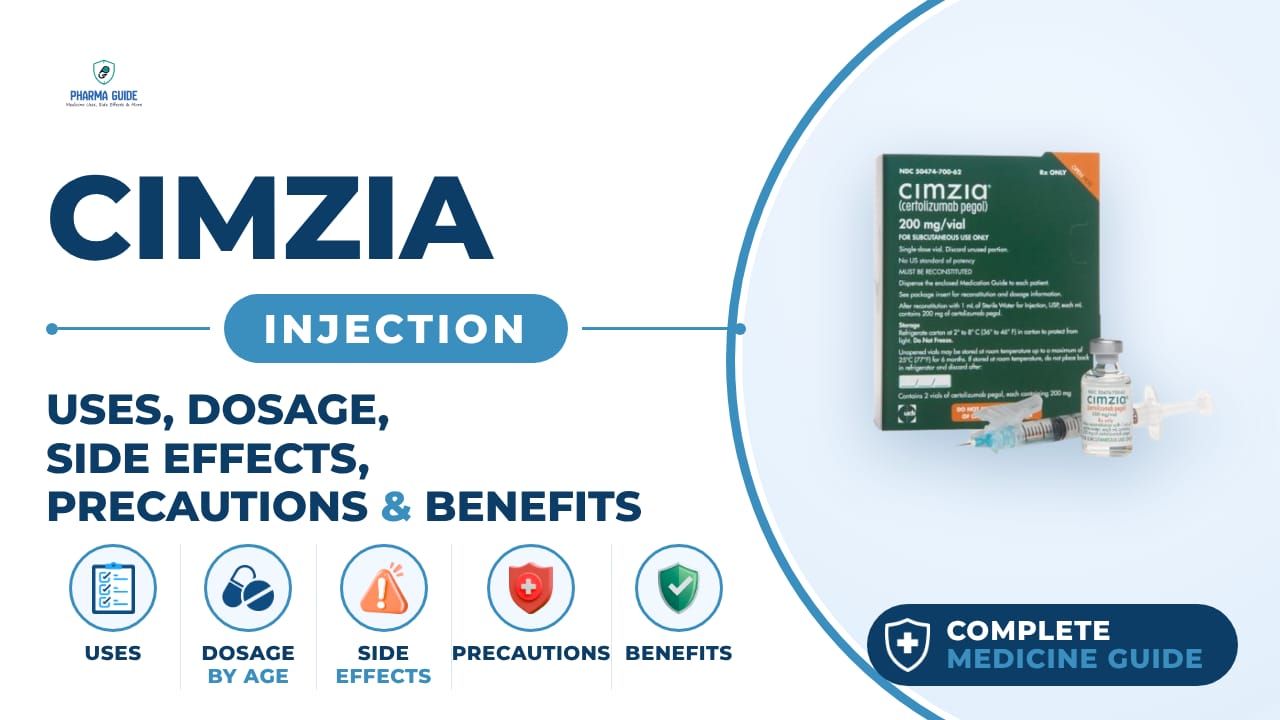
Cimzia Injection: Uses, Dosage, Side Effects, Precautions and Alternates
| Generic name | certolizumab pegol |
|---|---|
| Drug class | Tumor necrosis factor (TNF) blocker (biologic, disease-modifying antirheumatic drug) |
| Forms | Injection |
Quick overview
Cimzia Injection (certolizumab pegol) is a prescription tumor necrosis factor (TNF) blocker given as an injection under the skin. It is used for conditions such as Crohn's disease, rheumatoid arthritis, juvenile idiopathic arthritis, psoriatic arthritis, ankylosing spondylitis, non-radiographic axial spondyloarthritis, and moderate to severe plaque psoriasis. It works by blocking TNF-alpha, a substance that drives inflammation in the body. The typical adult dose is 200 mg every 2 weeks, and it is not recommended for use under 18 years of age.
What is Cimzia Injection
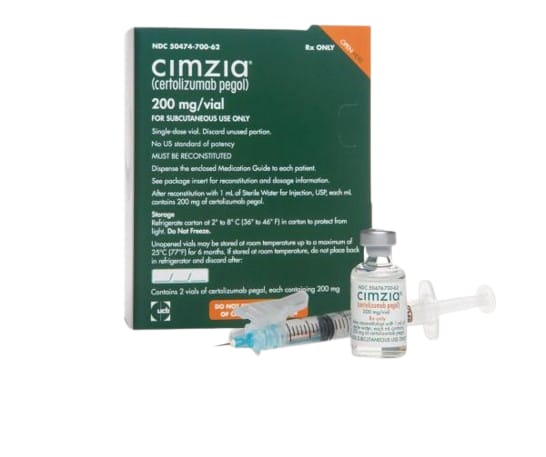
Cimzia is a prescription medicine made from a piece of a human antibody that attaches to polyethylene glycol (PEG). It blocks a substance in the body called tumor necrosis factor alpha (TNF-alpha), which plays a central role in causing inflammation. It belongs to the tumor necrosis factor (TNF) blocker class of biologic disease-modifying antirheumatic drugs and is given as an injection under the skin.
Cimzia Injection uses
- Reducing signs and symptoms of Crohn's disease and maintaining response in adults with moderate to severe disease who haven't responded well to usual treatment
- Treating moderate to severe active rheumatoid arthritis in adults
- Treating active polyarticular juvenile idiopathic arthritis in children 2 years and older
- Treating active psoriatic arthritis in adults
- Treating active ankylosing spondylitis in adults
- Treating active non-radiographic axial spondyloarthritis with signs of inflammation in adults
- Treating moderate to severe plaque psoriasis in adults who need injectable/oral treatment or light therapy
Benefits of Cimzia Injection
- Inflammation Control: Blocks TNF, a protein involved in inflammatory responses
- Rheumatoid Arthritis Support: Helps control inflammation and symptoms in eligible patients
- Psoriatic Arthritis Support: Helps reduce inflammatory joint symptoms
- Crohn's Disease Support: Used to maintain control of Crohn's disease in eligible patients
- Axial Spondyloarthritis Support: Used for certain inflammatory spinal conditions
- Plaque Psoriasis Support: Helps control moderate-to-severe plaque psoriasis in eligible patients
How Cimzia Injection works
People with these inflammatory conditions usually have too much of a substance called TNF-alpha in their bodies, which causes joint and tissue damage. Cimzia attaches to and blocks TNF-alpha, lowering inflammation and helping to protect joints and skin from further damage.
Cimzia Injection dosage
Cimzia is given as an injection under the skin (subcutaneous), usually in the thigh or stomach (abdomen) area. Do not inject into skin that is tender, bruised, red, hard, scarred, or has stretch marks. Rotate injection sites and use a new site at least 1 inch away from the last injection. If a higher dose requires two injections, give them at separate sites.
Let the pre-filled syringe or pen warm to room temperature before injecting, but do not warm it artificially and do not leave it at room temperature longer than instructed. Check that the liquid is clear to opalescent and colorless to yellow before use; do not use if cloudy, discolored, or containing particles. Only use the powder (vial) form if prepared by a healthcare professional; patients may self-inject the pre-filled syringe or pen after proper training. Do not share your pre-filled syringe or pen with another person. After injecting, do not recap the needle; dispose of it in a puncture-proof sharps container.
| Age group | Dose |
|---|---|
| Under 18 years | Not recommended |
| 18–64 years | 200 mg, every 2 weeks |
| 65+ years | 200 mg, every 2 weeks |
Available forms and strengths
Injection
Side effects of Cimzia Injection
Common
- Upper respiratory tract infections (such as colds, flu, sinus infections)
- Rash
- Urinary tract infections
- Headache
- Injection site reactions (pain, redness, swelling, bruising, itching)
- Fatigue
- Nausea
- High blood pressure
- Back pain
Serious
- Serious infections, including tuberculosis (TB), fungal infections, and infections that spread through the body (sepsis)
- Reactivation of hepatitis B virus infection in people who carry the virus
- Certain cancers, including lymphoma and skin cancers (including rare cases in children and teenagers)
- Heart failure (new or worsening), with symptoms like shortness of breath or swelling of feet/ankles
- Serious allergic reactions (anaphylaxis), including swelling of face/throat, rash, or trouble breathing
- Blood problems such as low blood cell counts, which can cause infections, bruising, or bleeding
- Nervous system problems such as multiple sclerosis-like symptoms, seizures, or Guillain-Barré syndrome
- Lupus-like syndrome (joint pain, rash, fever, chest pain, or shortness of breath)
Warnings and precautions
- Cimzia can lower your immune system's ability to fight infections. Serious infections including tuberculosis and infections that spread through the body have led to hospitalization and death in some patients.
- Children and teenagers treated with TNF blockers like Cimzia have developed lymphoma and other cancers, some of which were fatal.
- You should be tested for tuberculosis before starting Cimzia, and your doctor should monitor you for signs of TB during treatment, even if your initial test was negative.
- Cimzia can cause new heart failure or make existing heart failure worse. Tell your doctor if you have a history of heart problems.
- If you carry hepatitis B virus, Cimzia can cause the virus to become active again, which has been fatal in some cases. You should be tested for hepatitis B before starting treatment.
- Cimzia should not be combined with certain other biologic medicines because this increases the risk of serious infections without providing extra benefit.
- You should not receive live vaccines while taking Cimzia.
- The needle cover on the prefilled syringe or pen contains a material made from natural rubber latex, which may cause allergic reactions in people sensitive to latex.
- Cimzia should only be used during pregnancy if clearly needed. Plasma studies suggest the drug crosses the placenta only in small amounts, especially in the third trimester. Discuss with your doctor whether to continue treatment during pregnancy.
- Cimzia can generally be used while breastfeeding, as only minimal amounts pass into breast milk, but discuss with your doctor to weigh the benefits and risks for your situation.
- Specific studies have not been done in people with kidney problems, so there isn't enough information to recommend a specific dose adjustment for moderate or severe kidney impairment.
- Specific studies have not been performed to evaluate how liver problems might affect this medicine, so no dosing recommendations can be made for people with liver impairment.
- The prescribing information does not provide specific guidance about alcohol use with Cimzia.
- Cimzia may cause dizziness, vision problems, or tiredness in some people, which could affect your ability to drive or operate machinery safely.
Storage
- Keep refrigerated between 36°F to 46°F (2°C to 8°C)
- Do not freeze
- Do not shake
- Protect from light; store in the original carton
- If needed, pre-filled syringes or pens may be stored at room temperature up to 77°F (25°C) for a single period of up to 7 days (or up to 10 days per some product information); after removing from the refrigerator, do not place back in the refrigerator
- Write down the date removed from the refrigerator and discard if not used within the allowed room-temperature period
- Do not use if the medicine is past its expiration date
- Keep out of reach of children
When to see a doctor
- Get medical help right away if you have signs of a serious allergic reaction, such as rash, swelling of the face, tongue, lips, or throat, or trouble breathing.
- Call your doctor immediately if you have any signs of infection, such as fever, chills, cough, blood in phlegm, warm or red skin, burning when you urinate, muscle aches, shortness of breath, weight loss, diarrhea, stomach pain, or feeling very tired.
- Seek medical attention if you develop symptoms of heart failure, such as shortness of breath, swelling of your ankles or feet, or sudden weight gain.
- Tell your healthcare provider right away if you notice symptoms that could mean your hepatitis B has become active again, such as feeling unwell, tiredness, pain on the right side of your stomach, yellowing of skin or eyes, poor appetite, or vomiting.
- Contact your doctor right away if you develop new nervous system symptoms such as dizziness, vision problems, numbness, tingling, or weakness in your arms or legs.
- Tell your healthcare provider right away if you develop a fever that does not go away, easy bruising or bleeding, or look very pale, as these could be signs of a blood problem.
- Call your doctor if you develop symptoms of a lupus-like reaction, such as shortness of breath, joint pain, or a rash on the cheeks or arms that gets worse with sun exposure.
Alternatives
- Adalimumab
- Etanercept
Watch the video
FAQs
What is Cimzia Injection used for?
Cimzia is used to treat Crohn's disease, rheumatoid arthritis, juvenile idiopathic arthritis, psoriatic arthritis, ankylosing spondylitis, non-radiographic axial spondyloarthritis, and moderate to severe plaque psoriasis by blocking TNF-alpha, a substance that drives inflammation.
What is the typical dosage for Cimzia Injection?
The typical adult dose is 200 mg given as a subcutaneous injection every 2 weeks. It is not recommended for use in people under 18 years of age.
How should Cimzia be stored?
Cimzia should be kept refrigerated between 36°F to 46°F (2°C to 8°C), not frozen, not shaken, and protected from light in its original carton. If needed, pre-filled syringes or pens may be stored at room temperature up to 77°F (25°C) for a single period of up to 7 days (or up to 10 days per some product information), and should not be placed back in the refrigerator afterward.
What are the serious side effects of Cimzia?
Serious side effects include serious infections such as tuberculosis, reactivation of hepatitis B, certain cancers including lymphoma, new or worsening heart failure, serious allergic reactions, blood problems, nervous system problems, and lupus-like syndrome.
Can Cimzia be used during pregnancy or breastfeeding?
Cimzia should only be used during pregnancy if clearly needed, as it crosses the placenta in small amounts, especially in the third trimester. It can generally be used while breastfeeding since only minimal amounts pass into breast milk, but you should discuss this with your doctor.
General information, not medical advice
Your prescriber and the leaflet in your pack know your situation. This page does not.
- Follow your prescriber and the leaflet
- Don't start, stop, or change a dose on your own
- Doses and warnings differ by country and product
Sources
- U.S. FDA Prescribing Information for CIMZIA (certolizumab pegol), UCB, Inc., Revised 9/2025
- Health Canada Product Monograph for CIMZIA (certolizumab pegol), UCB Canada Inc., Date of Approval August 16, 2018
- European Medicines Agency (EMA) Summary of Product Characteristics for Cimzia (certolizumab pegol)
Video
Related medicines

Injectafer Injection: Uses, Dosage, Side Effects, Precautions and Alternates
Iron products
Injectafer (ferric carboxymaltose) treats iron deficiency anemia and heart failure-related iron deficiency via IV. Learn uses, dosage, side effects, and

Gliclazide Tablet: Uses, Dosage, Side Effects, Precautions and Alternates
Sulfonylurea (hypoglycemic/antidiabetic agent)
Gliclazide Tablet is a sulfonylurea for type 2 diabetes that boosts insulin release. Learn about dosage, side effects, warnings, and precautions.