Cipro Tablet: Uses, Dosage, Side Effects, Precautions and Alternates
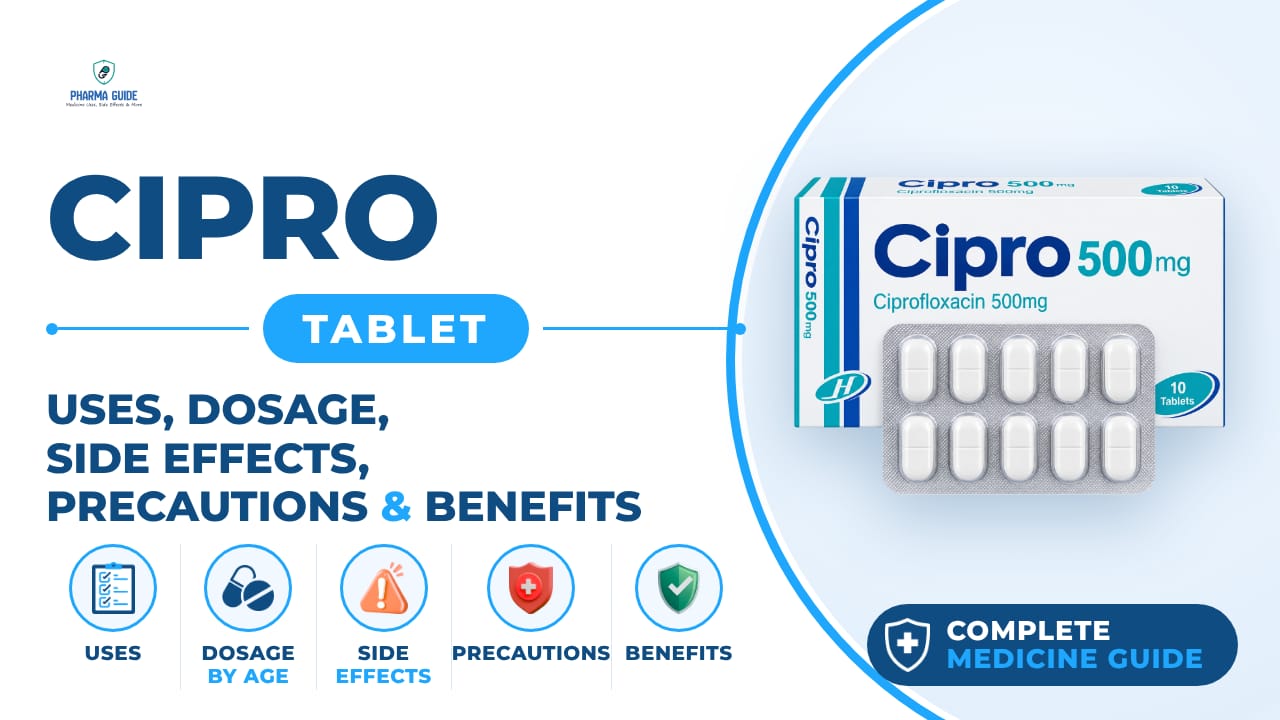
| Generic name | Ciprofloxacin |
|---|---|
| Drug class | Fluoroquinolones (quinolone antibiotics) |
| Forms | Tablet, Extended-release tablet (XR), Oral suspension, Injection for intravenous infusion |

Quick overview
Cipro Tablet is the brand name for ciprofloxacin, a fluoroquinolone antibiotic used to treat a wide range of bacterial infections such as urinary tract infections, skin infections, and respiratory infections. It works by stopping bacteria from copying and repairing their DNA, which kills the infection. Cipro does not treat colds, flu, or viral infections, and it carries important warnings about tendon, nerve, and central nervous system effects.
What is Cipro Tablet
Cipro is the brand name for ciprofloxacin, an antibiotic in the fluoroquinolone class. It is a broad-spectrum antibiotic that treats many bacterial infections. It does not treat colds, the flu, or infections caused by viruses.
Cipro Tablet uses
- Urinary tract infections (UTIs)
- Skin and skin structure infections
- Bone and joint infections
- Lower respiratory tract infections
- Complicated intra-abdominal infections (used with metronidazole)
- Infectious diarrhea
- Typhoid (enteric) fever
- Uncomplicated cervical and urethral gonorrhea
- Chronic bacterial prostatitis
- Acute uncomplicated cystitis
- Acute sinusitis
- Inhalational anthrax (post-exposure)
- Plague
Benefits of Cipro Tablet
- Effective at killing bacteria
- Generally safe to use for most people
- Relatively affordable
- Can treat a wide range of bacterial infections
How Cipro Tablet works
Cipro works by stopping bacteria from copying and repairing their genetic material (DNA), which stops the bacteria from growing and multiplying and kills the infection.
Cipro Tablet dosage
Take this medication by mouth with a full glass of water at the same time every day. Do not crush or chew this medication. You may cut a tablet in half only if it is scored (has a line in the middle). If you split it, take both halves.
You can take it with or without food. If it upsets your stomach, take it with food. Do not take Cipro with dairy products (like milk or yogurt) or calcium-fortified juices alone, but you may take it with a meal that contains these products. Take products with aluminum, calcium, iron, magnesium, or zinc, antacids, multivitamins, or sucralfate at least 2 hours before or 6 hours after your Cipro dose.
Drink plenty of fluids while taking Cipro to help prevent crystals forming in the urine. Finish the full course of treatment even if you feel better, unless your care team tells you to stop.
Space your doses evenly. If you miss a dose, take it as soon as you can, but not later than 6 hours before the next dose; if less than 6 hours remain, skip it. Do not double up.
Talk to your care team about the use of this medication in children, as special care may be needed.
| Age group | Dose |
|---|---|
| Under 18 years | Not routinely recommended; use only for specific infections under specialist supervision |
| 18–64 years | Common adult doses: 250–750 mg every 12 hours, depending on the infection |
| 65+ years | Usually the same adult dose, but kidney function should be assessed and the dose adjusted when necessary |
Available forms and strengths
- Tablet
- Extended-release tablet (XR)
- Oral suspension
- Injection for intravenous infusion
Side effects of Cipro Tablet
Common
- Nausea
- Diarrhea
- Vomiting
- Stomach pain or upset
- Heartburn
- Headache
- Dizziness
- Rash
- Dry mouth
- Skin reactions on sun-exposed areas
- Changes in liver function tests
Serious
- Tendon pain, swelling, or rupture
- Nerve damage (peripheral neuropathy) with pain, burning, tingling, numbness, or weakness
- Central nervous system effects such as seizures, hallucinations, anxiety, depression, or confusion
- Worsening of muscle weakness in people with myasthenia gravis
- Severe allergic reaction (hives, trouble breathing or swallowing, swelling of the face, lips, or tongue)
- Liver injury (yellowing of skin or eyes, dark urine, light-colored stool, loss of appetite)
- Heart rhythm changes (fast or irregular heartbeat, fainting)
- Aortic aneurysm and dissection (sudden chest, stomach, or back pain)
- Severe or bloody diarrhea (C. difficile infection)
- Serious skin reactions (blistering, peeling, or loosening of the skin)
- Low or high blood sugar
- Increased pressure around the brain (severe headache, vision changes)
Warnings and precautions
- Cipro carries the FDA's most serious (boxed) warning. Fluoroquinolones like Cipro can cause disabling and possibly permanent serious reactions affecting tendons, nerves, and the central nervous system, which can happen together.
- Cipro can cause tendon swelling (tendinitis) and tendon rupture in people of all ages.
- The risk is higher in people over 60, those taking steroids, and those with kidney, heart, or lung transplants. Stop taking it and seek help at the first sign of tendon pain or swelling.
- Cipro may worsen muscle weakness in people with myasthenia gravis, which can cause serious breathing problems. Avoid Cipro if you have a known history of myasthenia gravis.
- Because of the risk of serious side effects, Cipro should be reserved for people who have no other treatment options for uncomplicated urinary tract infections, acute bronchitis flare-ups, and acute sinusitis.
- Cipro can make your skin more sensitive to the sun, causing severe sunburn-like reactions. Avoid excessive sun and UV light, and wear protective clothing and sunscreen.
- Studies report an increased risk of aortic aneurysm and dissection within two months of using fluoroquinolones, especially in elderly people.
- Cipro may not be suitable during pregnancy. The manufacturer states it should not be used during pregnancy because safety has not been determined. Tell your care team if you are pregnant or trying to get pregnant.
- Ciprofloxacin passes into breast milk. For most uses, breastfeeding is not recommended during treatment and for an additional 2 days after the last dose. Talk with your care team.
- Tell your care team if you have kidney disease. Some dose changes may be needed, especially for people with severe kidney problems, and the risk of side effects may be greater.
- Tell your care team if you have liver disease. Cases of severe liver injury, including liver failure, have been reported. Stop treatment and seek care if you notice signs of liver problems.
- Drinking alcohol with this medication can increase the risk of dizziness or fainting.
- This medication may affect your coordination, reaction time, or judgment and can make you dizzy or lightheaded. Do not drive or operate machinery until you know how it affects you.
Storage
- Store tablets at room temperature between 68°F to 77°F (20°C to 25°C).
- Keep the container tightly closed.
- Keep out of the reach of children and pets.
- Throw away any unused medication after the expiration date.
When to see a doctor
- Stop taking Cipro and get emergency medical help right away if you have signs of a severe allergic reaction, such as hives, trouble breathing or swallowing, or swelling of the lips, tongue, or face.
- Stop taking Cipro immediately and get medical help right away at the first sign of tendon pain, swelling, or inflammation, or if you hear or feel a snap or pop in a tendon area.
- Get emergency medical help right away if you have sudden chest, stomach, or back pain, which can be a sign of an aortic aneurysm.
- Call your care team right away if you get watery diarrhea, diarrhea that does not go away, or bloody stools, even up to two or more months after finishing the medicine.
- Stop taking Cipro and talk to your care team right away if you notice numbness, burning, tingling, weakness, or other changes in sensation in your arms, hands, legs, or feet.
- Stop taking Cipro and talk to your care team right away if you have seizures, hallucinations, thoughts of suicide, or other changes in mood or behavior.
- If you think you have taken too much of this medicine, contact your local poison control center or emergency room at once.
Alternatives
- Moxifloxacin
- Azithromycin
- Clarithromycin
- Doxycycline
- Amoxicillin
- Amoxicillin-Clavulanate
- Cefixime
- Cefuroxime
Watch the video
FAQs
What is Cipro Tablet used for?
Cipro treats bacterial infections such as urinary tract infections, skin and skin structure infections, bone and joint infections, respiratory infections, infectious diarrhea, typhoid fever, and more. It does not treat colds, flu, or viral infections.
How does Cipro Tablet work?
Cipro works by stopping bacteria from copying and repairing their DNA, which stops the bacteria from growing and multiplying and kills the infection.
Can I take Cipro with dairy products?
Do not take Cipro with dairy products like milk or yogurt, or calcium-fortified juices alone, but you may take it with a meal that contains these products.
What are the serious side effects of Cipro Tablet?
Serious side effects include tendon pain, swelling, or rupture, nerve damage, central nervous system effects like seizures or hallucinations, severe allergic reactions, liver injury, heart rhythm changes, and aortic aneurysm or dissection.
Is Cipro Tablet safe during pregnancy?
The manufacturer states Cipro should not be used during pregnancy because safety has not been determined. Tell your care team if you are pregnant or trying to get pregnant.
Sources
Video
Related medicines

Mefenamic Acid Capsule: Uses, Dosage, Side Effects, Precautions and Alternates
Nonsteroidal anti-inflammatory drug (NSAID)
Mefenamic Acid Capsule is an NSAID for mild to moderate pain and menstrual cramps. Learn uses, dosage, side effects, and important safety warnings.

Augmentin Syrup: Uses, Dosage, Side Effects, Precautions and Alternates
Penicillins / beta-lactamase inhibitors
Augmentin Syrup combines amoxicillin and clavulanic acid to treat bacterial infections. Learn about dosage, side effects, and precautions before use.