Ciprofloxacin Tablet: Uses, Dosage, Side Effects, Precautions and Alternates

| Generic name | ciprofloxacin |
|---|---|
| Drug class | Quinolone / Fluoroquinolone antibiotic |
| Forms | Oral tablet, Extended-release tablet, Oral suspension (liquid), IV solution, Eye drops, Ear drops |
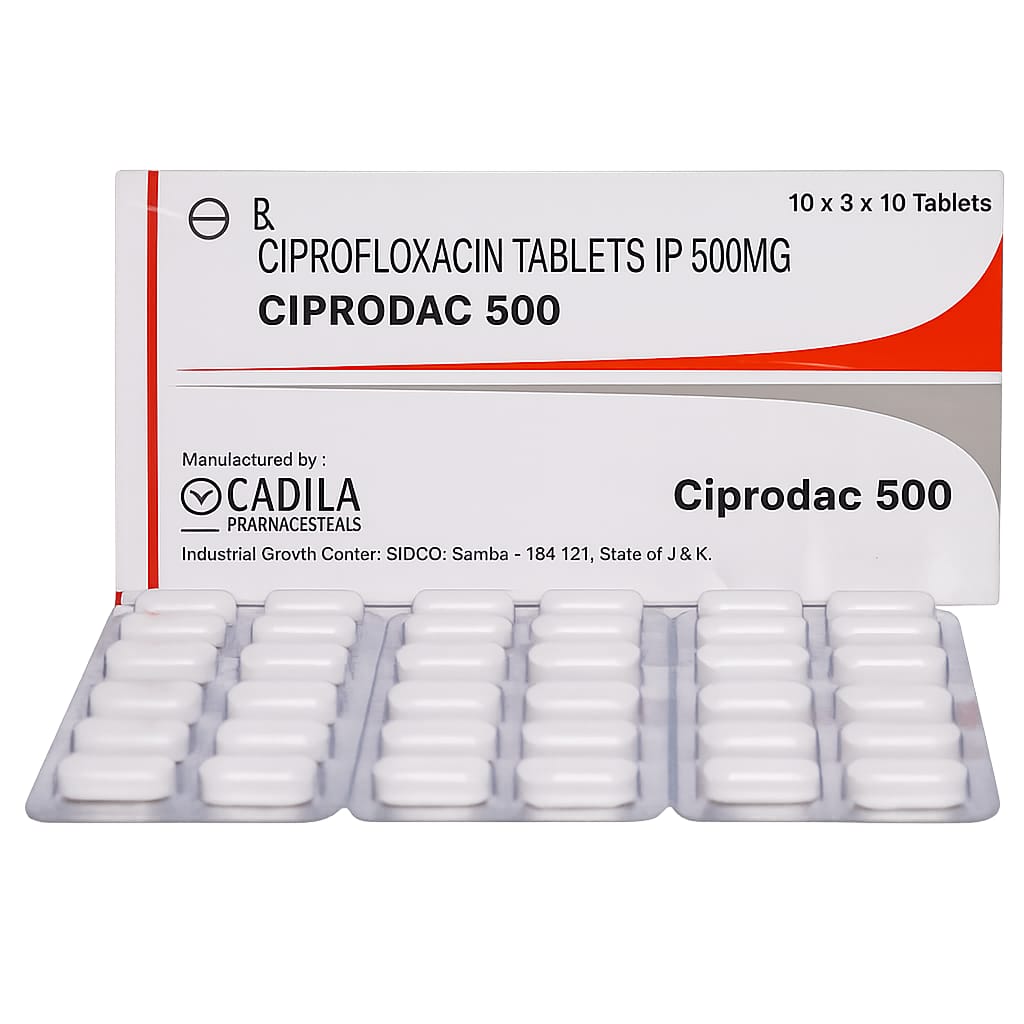
Quick overview
Ciprofloxacin Tablet is a quinolone (fluoroquinolone) antibiotic used to treat a variety of bacterial infections, including urinary tract infections, gonorrhea, sinus infections, and more. It works against bacteria and will not treat colds, the flu, or other viral infections. It is taken by mouth and can be used with or without food. As with all antibiotics, it carries specific warnings and potential side effects that should be discussed with a doctor or pharmacist.
What is Ciprofloxacin Tablet
Ciprofloxacin is an antibiotic that treats infections caused by bacteria. It belongs to a group of medicines called quinolone (fluoroquinolone) antibiotics. It will not treat colds, the flu, or other infections caused by viruses.
Ciprofloxacin Tablet uses
- Treating urinary tract infections (UTIs) in adults and children ages 1 year and older
- Treating gonorrhea in adults
- Treating sinus infections in adults
- Treating abdominal infections in adults, when used with metronidazole
- Treating chronic prostatitis in adults
- Treating joint and bone infections in adults
- Treating lower respiratory tract infections in adults
- Treating skin infections in adults
- Treating typhoid fever in adults
- Treating certain types of diarrhea in adults
- Treating plague in adults and children of any age
- Helping prevent infection after exposure to inhaled anthrax
Benefits of Ciprofloxacin Tablet
- Fights and clears many types of bacterial infections
- Can be taken by mouth with or without food
How Ciprofloxacin Tablet works
Ciprofloxacin is a fluoroquinolone antibiotic that works against bacteria to treat infections. It does not work on infections caused by viruses.
Ciprofloxacin Tablet dosage
Take this medicine by mouth with a full glass of water. Take it at the same time every day, as directed on the prescription label. Do not crush or chew this medication. You may cut a tablet in half only if it is scored (has a line in the middle); if you do, be sure to take both halves. Swallow the extended-release tablet whole; do not crush, chew, or break it.
You can take it with or without food. If it upsets your stomach, take it with food. Shake the oral suspension (liquid) for 15 seconds before measuring a dose, and use the dosing syringe or a medicine dose-measuring device, not a kitchen spoon. Do not give ciprofloxacin oral suspension through a feeding tube.
Drink plenty of liquids while you are taking this medicine. Take all of this medication for the full length of time prescribed, even if you feel better, unless your care team tells you to stop early.
Take products with aluminum, calcium, iron, magnesium, or zinc, and antacids or sucralfate, at a different time of day; take them well before or after your dose as directed. Do not take this medicine with dairy products such as milk or yogurt, or with calcium-fortified juice, by themselves; you may have these with your meals.
Talk to your care team about using this medicine in children, as special care may be needed. Do not share this medicine with others.
| Age group | Dose |
|---|---|
| Under 18 years | Not routinely recommended; use only for specific infections when prescribed by a specialist |
| 18–64 years | Common adult doses are 250–750 mg every 12 hours, depending on the infection |
| 65+ years | Usually the same adult dose, but the dose may need adjustment for kidney function and other health conditions |
Available forms and strengths
- Oral tablet
- Extended-release tablet
- Oral suspension (liquid)
- IV solution
- Eye drops
- Ear drops
Side effects of Ciprofloxacin Tablet
Common
- Diarrhea
- Dry mouth
- Headache
- Nausea
- Vomiting
- Abdominal pain
- Skin reactions on sun-exposed areas
- Abnormal liver function test results
Serious
- Allergic reactions such as skin rash, itching, hives, or swelling of the face, lips, tongue, or throat
- Heart rhythm changes such as fast or irregular heartbeat, dizziness, feeling faint, chest pain, or trouble breathing
- Increased pressure around the brain such as severe headache, vision changes, nausea, or vomiting
- Joint, muscle, or tendon pain, swelling, or stiffness, or signs of tendon rupture
- Liver injury such as upper belly pain, dark urine, yellowing skin or eyes, or unusual weakness
- Mood and behavior changes such as anxiety, confusion, hallucinations, or thoughts of suicide or self-harm
- Pain, tingling, or numbness in the hands or feet (nerve damage)
- Redness, blistering, peeling, or loosening of the skin, including inside the mouth
- Severe diarrhea, fever
- Seizures
- Sudden or severe chest, back, or stomach pain (possible aorta damage)
- Low blood sugar such as headache, hunger, irritability, shakiness, or fast heart rate
- Little or no urination
- Unusual vaginal discharge, itching, or odor
Warnings and precautions
- Fluoroquinolone antibiotics, including ciprofloxacin, may worsen myasthenia gravis in people who already have it, which can cause serious breathing problems.
- Ciprofloxacin may cause serious side effects such as tendon tearing or inflammation, nerve damage, and central nervous system effects, some of which may not be reversible.
- This medicine may cause tendon problems such as swelling or tearing, especially in the heel, during or even months after treatment.
- The risk is higher in people older than 60, those taking steroids, and those who have had an organ transplant.
- In rare cases ciprofloxacin may damage the aorta, which could lead to dangerous bleeding or death.
- This medicine can make you more sensitive to the sun. Stay out of the sun, wear protective clothing and sunscreen, and do not use sun lamps or tanning beds.
- Do not treat diarrhea with over-the-counter products.
- Contact your care team if diarrhea lasts more than 2 days or is severe and watery.
- This medicine may cause serious skin reactions that can appear weeks to months after starting it.
- Do not use this medicine if you take tizanidine.
- It is not known for certain whether ciprofloxacin is safe during pregnancy.
- Tell your doctor if you are pregnant or planning a pregnancy so they can advise you.
- It may not be safe to take ciprofloxacin while breastfeeding, as it passes into breast milk.
- It is recommended to avoid breastfeeding while taking it and for at least 2 days after the last dose. Talk to your doctor first.
- Tell your doctor if you have kidney disease or kidney problems before taking ciprofloxacin.
- Tell your doctor if you have liver disease or liver problems before taking ciprofloxacin.
- There is no known interaction between ciprofloxacin and alcohol, but drinking alcohol could worsen side effects such as nausea, vomiting, dizziness, and fainting.
- Talk to your doctor about alcohol use.
- This medicine may affect your coordination, reaction time, or judgment.
- Do not drive or operate machinery until you know how it affects you.
Storage
- Store at room temperature below 30 degrees C (86 degrees F).
- Keep the container tightly closed and avoid areas where it could get damp or wet, such as bathrooms.
- Do not allow the liquid medicine to freeze. Throw away any unused liquid after 14 days.
- Keep out of the reach of children and pets.
- Throw away any unused medication after the expiration date, and dispose of leftover medicine safely.
When to see a doctor
Get emergency medical help if you have signs of an allergic reaction such as hives, difficult breathing, or swelling in your face or throat, or a severe skin reaction with fever, skin pain, or a spreading rash that blisters and peels. Get emergency medical help if you have severe and constant pain in your chest, stomach, or back, which could be a sign of aorta damage.
Stop taking this medicine and call your doctor at once if you have signs of tendon rupture, nerve damage, serious mood or behavior changes, or low blood sugar. If you think you have taken too much of this medicine, contact your local poison control center or an emergency room at once. Call your care team right away if you have myasthenia gravis and your symptoms get worse while taking this medicine.
Alternatives
- Levofloxacin
- Ofloxacin
- Moxifloxacin
- Norfloxacin
- Azithromycin
- Amoxicillin-Clavulanate
Watch the video
FAQs
What is Ciprofloxacin Tablet used for?
It treats bacterial infections such as urinary tract infections, gonorrhea, sinus infections, abdominal infections, chronic prostatitis, joint and bone infections, lower respiratory tract infections, skin infections, typhoid fever, certain types of diarrhea, and plague. It is also used to help prevent infection after exposure to inhaled anthrax.
How should I take Ciprofloxacin Tablet?
Take it by mouth with a full glass of water at the same time every day, with or without food. Do not crush or chew it, though scored tablets may be cut in half if both halves are taken. Drink plenty of liquids and complete the full course even if you feel better.
Can I take Ciprofloxacin with dairy products or antacids?
Avoid taking it with dairy products like milk or yogurt, calcium-fortified juice, or antacids and products containing aluminum, calcium, iron, magnesium, or zinc by themselves. These can be taken with meals, but doses of these products should be spaced apart from your ciprofloxacin dose.
What are the serious side effects of Ciprofloxacin Tablet?
Serious side effects include allergic reactions, heart rhythm changes, increased pressure around the brain, tendon pain or rupture, liver injury, mood and behavior changes, nerve damage, severe skin reactions, seizures, possible aorta damage, low blood sugar, and reduced urination.
Is Ciprofloxacin safe during pregnancy or breastfeeding?
It is not known for certain whether ciprofloxacin is safe during pregnancy, so you should tell your doctor if you are pregnant or planning one. It may pass into breast milk, so breastfeeding should be avoided while taking it and for at least 2 days after the last dose.
Sources
Video
Related medicines

Mefenamic Acid Capsule: Uses, Dosage, Side Effects, Precautions and Alternates
Nonsteroidal anti-inflammatory drug (NSAID)
Mefenamic Acid Capsule is an NSAID for mild to moderate pain and menstrual cramps. Learn uses, dosage, side effects, and important safety warnings.

Augmentin Syrup: Uses, Dosage, Side Effects, Precautions and Alternates
Penicillins / beta-lactamase inhibitors
Augmentin Syrup combines amoxicillin and clavulanic acid to treat bacterial infections. Learn about dosage, side effects, and precautions before use.