
Safety
General information, not medical advice
Your prescriber and the leaflet in your pack know your situation. This page does not.
- Follow your prescriber and the leaflet
- Don't start, stop, or change a dose on your own
- Doses and warnings differ by country and product
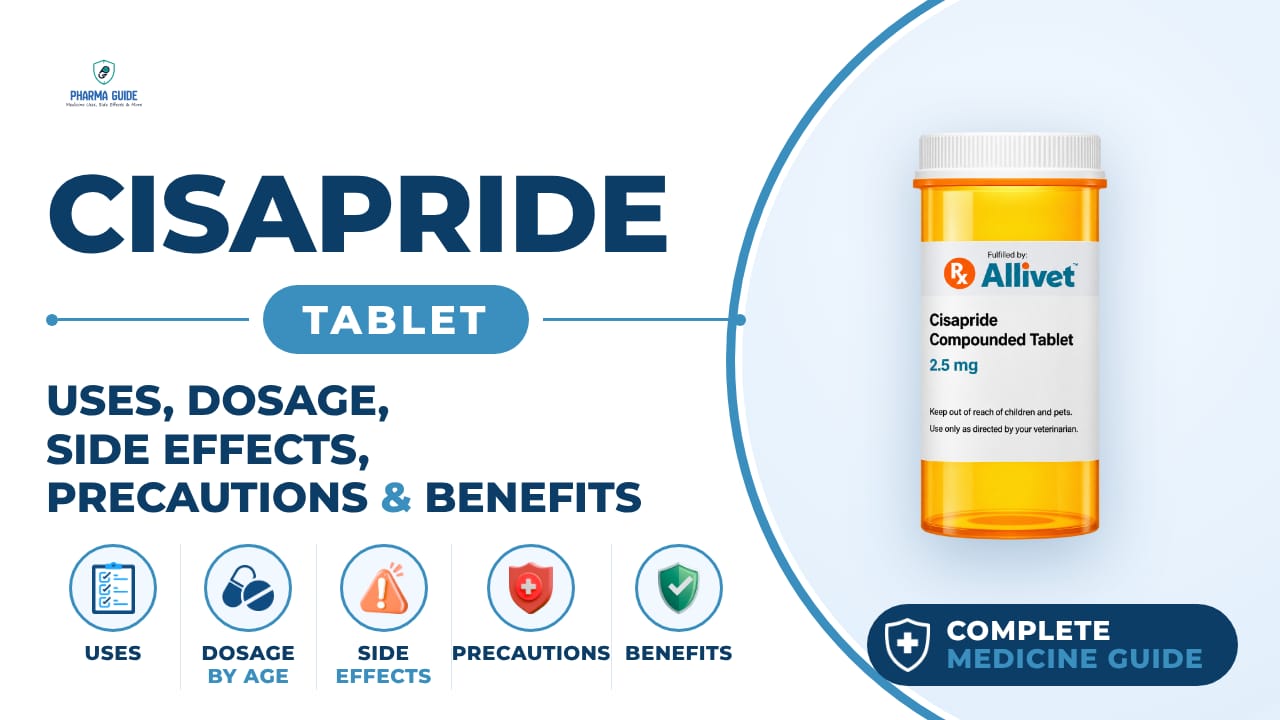
Cisapride Tablet: Uses, Dosage, Side Effects, Precautions and Alternates
| Generic name | Cisapride |
|---|---|
| Drug class | GI stimulants |
| Forms | Tablet, Oral suspension (liquid), Injection |
Quick overview
Cisapride is a gastrointestinal stimulant that speeds up movement in the esophagus, stomach, and intestines during digestion. It was previously used for gastrointestinal motility disorders, severe gastroesophageal reflux, and some forms of gastroparesis. Cisapride has been discontinued in the United States, but may still be available as a tablet in other countries. It carries important precautions, including interactions with certain medicines and foods, and should only be used exactly as prescribed.
What is Cisapride Tablet
Cisapride is a medicine that speeds up movement in the esophagus, stomach, and intestines during digestion. It has been discontinued in the United States, but may be available as a tablet elsewhere.
Cisapride Tablet uses
- Previously used for gastrointestinal motility disorders
- Previously used for severe gastroesophageal reflux
- Previously used for some forms of gastroparesis
Benefits of Cisapride Tablet
- Can stimulate gastrointestinal movement
- May accelerate gastric emptying
- Can improve motility-related symptoms in selected patients
How Cisapride Tablet works
Cisapride speeds up the movement of your esophagus, stomach, and intestines during digestion. It also makes your stomach empty faster into your intestines and strengthens the muscle between your stomach and esophagus.
Cisapride Tablet dosage
Take exactly as prescribed by your doctor. Do not take more or less than recommended, or for longer than recommended. Shake the oral suspension (liquid) well just before measuring a dose, and use a proper dose-measuring spoon or cup rather than a regular table spoon. This medicine is usually taken four times a day, a short while before meals and at bedtime. If you miss a dose, take it as soon as you remember, but skip it if it is almost time for your next dose; do not double up. Taking this medicine with food does not cause problems.
| Age group | Dose |
|---|---|
| Under 1 year | No routine tablet dose |
| 1–3 years | Specialist-only pediatric dosing may use 0.2 mg/kg per dose, 3–4 times daily, maximum 0.8 mg/kg/day |
Available forms and strengths
- Tablet
- Oral suspension (liquid)
- Injection
Side effects of Cisapride Tablet
Common
- Diarrhoea
- Headache
- Nausea or vomiting
- Dry mouth
- Dizziness
- Fatigue
- Stomach pain
- Increased urination
Serious
- Fast or irregular heartbeats
- Feeling like you might pass out
- Allergic reaction: hives, difficult breathing, swelling of face, lips, tongue, or throat
Warnings and precautions
- Do not take cisapride if you are allergic to it, or if you have bleeding or a blockage in your stomach, heart disease, hardened arteries, congestive heart failure, a slow or abnormal heart rhythm, a personal or family history of Long QT syndrome, a structural heart defect, heart block or other conduction problems, severe dehydration, malnutrition, an eating disorder, kidney failure, or severe lung problems or advanced cancer.
- Taking cisapride together with certain other medicines can cause serious or life-threatening problems.
- Do not eat grapefruit or drink grapefruit juice while taking this medicine, since it can raise the amount of cisapride in your body and lead to dangerous side effects.
- Do not take this medicine if you have an allergy, or liver, kidney, or heart disease, unless your doctor tells you to.
- Cisapride can have serious side effects in pregnant women. Do not take it while pregnant without talking to your doctor first.
- Cisapride can cause moderate side effects in breastfeeding women. Stop using it right away if you notice any side effects, and only restart if your doctor says it's safe.
- Cisapride may have harmful effects on the kidneys. Stop taking it if you notice side effects and talk to your doctor.
- Cisapride may have mild effects on the liver, though most people won't notice any liver problems.
- Drinking alcohol can make certain side effects of cisapride worse.
- This medicine can make you feel sleepy or tired, so it's best to avoid driving after taking it.
Storage
- Store at room temperature away from moisture and heat.
- Store at room temperature.
When to see a doctor
- Get emergency medical help if you have signs of an allergic reaction, such as hives, trouble breathing, or swelling of your face, lips, tongue, or throat.
- Stop taking cisapride and call your doctor right away if you have a fast or irregular heartbeat, or feel like you might pass out.
- If you think you have taken too much, seek emergency medical help. Overdose symptoms may include nausea, vomiting, rumbling stomach noises, gas, diarrhea, frequent urination, tremors, seizures, and weakness.
Alternatives
- Metoclopramide
- Prucalopride
- Domperidone
Watch the video
FAQs
What is cisapride tablet used for?
Cisapride was previously used for gastrointestinal motility disorders, severe gastroesophageal reflux, and some forms of gastroparesis.
Is cisapride still available in the United States?
Cisapride has been discontinued in the United States, but may still be available as a tablet in other countries.
How does cisapride work?
Cisapride speeds up the movement of the esophagus, stomach, and intestines during digestion. It also makes the stomach empty faster into the intestines and strengthens the muscle between the stomach and esophagus.
Can I eat grapefruit while taking cisapride?
No, you should not eat grapefruit or drink grapefruit juice while taking cisapride, since it can raise the amount of cisapride in your body and lead to dangerous side effects.
What are the serious side effects of cisapride?
Serious side effects include fast or irregular heartbeats, feeling like you might pass out, and allergic reactions such as hives, difficulty breathing, or swelling of the face, lips, tongue, or throat.
General information, not medical advice
Your prescriber and the leaflet in your pack know your situation. This page does not.
- Follow your prescriber and the leaflet
- Don't start, stop, or change a dose on your own
- Doses and warnings differ by country and product
Sources
Video
Related medicines

Injectafer Injection: Uses, Dosage, Side Effects, Precautions and Alternates
Iron products
Injectafer (ferric carboxymaltose) treats iron deficiency anemia and heart failure-related iron deficiency via IV. Learn uses, dosage, side effects, and

Gliclazide Tablet: Uses, Dosage, Side Effects, Precautions and Alternates
Sulfonylurea (hypoglycemic/antidiabetic agent)
Gliclazide Tablet is a sulfonylurea for type 2 diabetes that boosts insulin release. Learn about dosage, side effects, warnings, and precautions.