
Safety
General information, not medical advice
Your prescriber and the leaflet in your pack know your situation. This page does not.
- Follow your prescriber and the leaflet
- Don't start, stop, or change a dose on your own
- Doses and warnings differ by country and product
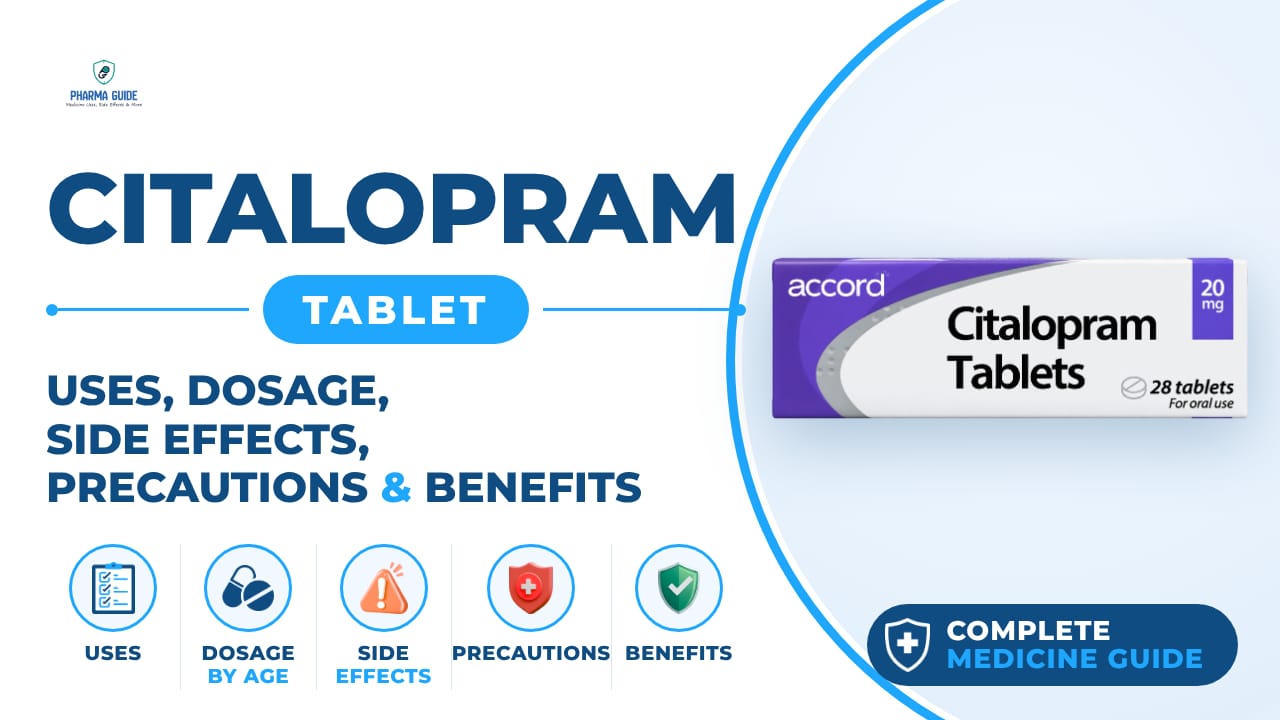
Citalopram Tablet: Uses, Dosage, Side Effects, Precautions and Alternates
| Generic name | citalopram |
|---|---|
| Drug class | Selective serotonin reuptake inhibitors (SSRI) |
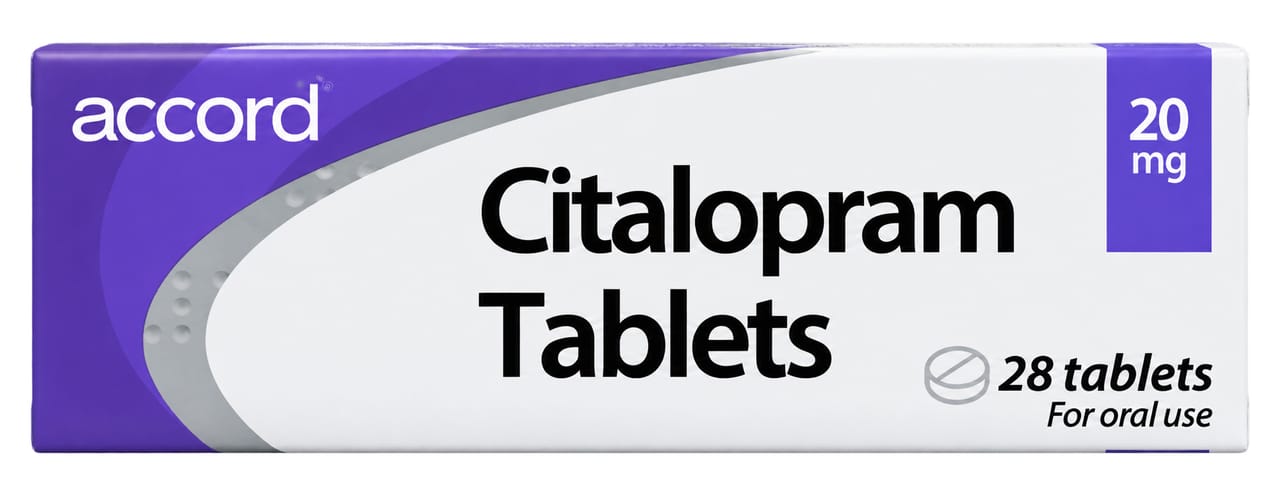
| Forms | Tablet, Capsule, Oral solution |
Quick overview
Citalopram Tablet (generic name citalopram) is a prescription selective serotonin reuptake inhibitor (SSRI) used in adults to treat depression, including major depressive disorder. It is sometimes used for anxiety disorders, obsessive-compulsive disorder, panic disorder, and social phobia. It works by increasing serotonin levels in the brain to help improve mood, and full benefit may take several weeks to appear.
What is Citalopram Tablet
Citalopram is a prescription medicine used in adults to treat depression, including major depressive disorder (MDD). It belongs to a group of antidepressants called selective serotonin reuptake inhibitors (SSRIs).
Citalopram Tablet uses
- Treats depression in adults, including major depressive disorder (MDD)
- Sometimes used for anxiety disorders
- Sometimes used for obsessive-compulsive disorder (OCD)
- Sometimes used for panic disorder
- Sometimes used for social phobia (social anxiety disorder)
Benefits of Citalopram Tablet
- Helps balance brain chemistry to improve mood
- Can reduce symptoms of depression and related mood or anxiety conditions over time
How Citalopram Tablet works
Citalopram increases the amount of serotonin, a natural brain chemical that helps maintain mental balance. It blocks the serotonin transporter, stopping serotonin from being reabsorbed into brain cells, which raises serotonin levels between nerve cells and helps improve communication between them.
Citalopram Tablet dosage
Take citalopram exactly as prescribed by your doctor, following the directions on your prescription label. You may take it with or without food, but take it the same way each time, and try to take it at around the same time every day. If using the liquid form, shake the bottle well and measure each dose with the supplied measuring device, not a kitchen spoon.
Your symptoms may not improve for up to 4 weeks, and full benefit may take several weeks or longer. Do not take more or less than prescribed, or use it for longer than your doctor advised. Do not stop taking this medicine suddenly without talking to your doctor, since stopping abruptly can cause withdrawal symptoms.
If you miss a dose, take it as soon as you remember, but skip it if it is almost time for your next dose; do not take two doses at once.
| Age group | Dose |
|---|---|
| Under 18 Years | Not routinely recommended unless prescribed by a specialist |
| Adults (18–64 Years) | 20 mg once daily initially; usual range 20–40 mg/day |
| Older Adults (65+ years) | 10–20 mg once daily (maximum dose usually 20 mg/day) |
Available forms and strengths
- Tablet
- Capsule
- Oral solution
Side effects of Citalopram Tablet
Common
- Sexual problems
- Dizziness, drowsiness
- Dry mouth, thirst, increased sweating or urination
- Loss of appetite, nausea, diarrhea, constipation
- Feeling anxious, agitated, or shaky
- Feeling weak or tired, sleep problems (insomnia), yawning
- Increased muscle movement
- Nosebleed, heavy menstrual bleeding
- Cold symptoms such as stuffy nose, sneezing, sore throat, or decreased sense of smell
- Fatigue or weakness
- Headaches
- Muscle aches and joint stiffness
Serious
- Signs of an allergic reaction: hives, difficult breathing, swelling of face, lips, tongue, or throat
- New or worse depression or anxiety, panic attacks, trouble sleeping, feeling impulsive, irritable, agitated, hostile, aggressive, restless, or thoughts about suicide or hurting yourself
- Light-headed feeling, like you might pass out
- Blurred vision, eye pain or redness, seeing halos around lights
- Fast or pounding heartbeats, pain or fluttering in chest, shortness of breath, sudden dizziness
- A seizure
- Unusual bleeding - nosebleeds, bleeding gums, abnormal vaginal bleeding, any bleeding that will not stop
- Manic episodes - racing thoughts, increased energy, decreased need for sleep, risk-taking behavior, agitation or talkativeness
- Severe nervous system reaction - very stiff (rigid) muscles, high fever, sweating, confusion, fast or uneven heartbeats, tremors
- Low blood sodium - headache, confusion, problems with thinking or memory, weakness, feeling unsteady
- Symptoms of serotonin syndrome: agitation, hallucinations, fever, sweating, shivering, fast heart rate, muscle stiffness, twitching, loss of coordination, nausea, vomiting, or diarrhea
- Serious heart problem - chest pain, fast or pounding heartbeats, shortness of breath, sudden dizziness
- Prolonged, painful erection
- Coughing up blood or blood in urine
- Black or red stools or blood in vomit
Warnings and precautions
- Taking this medicine during the last 3 months of pregnancy may harm the unborn baby, and taking it in the month before delivery may increase the risk of bleeding after birth, but stopping the medicine may not be safe. Do not start or stop citalopram without asking your doctor.
- Ask your doctor if it's safe to breastfeed while taking this medicine. Studies in breastfeeding women have shown harmful effects on infants, so an alternative medicine may be needed or breastfeeding may need to stop.
- Tell your doctor if you have kidney disease, as citalopram should be used with caution because effects may be increased due to slower removal of the medicine from the body.
- Tell your doctor if you have liver disease, as citalopram should be used with caution because effects may be increased due to slower removal of the medicine from the body.
- Do not drink alcohol while taking citalopram, since it is not recommended and can make side effects worse.
- Avoid driving or operating machinery until you know how citalopram affects you, since it may cause drowsiness or affect your judgment, thinking, or movement.
- Do not stop taking citalopram suddenly without your doctor's advice, since this can cause withdrawal symptoms.
- Citalopram can cause a serious heart rhythm problem. Call your doctor right away if you have chest pain, fast or pounding heartbeats, shortness of breath, and sudden dizziness.
- Do not take citalopram with pimozide, as the combination can cause dangerous heart rhythm problems.
- Do not use citalopram if you have taken an MAO inhibitor in the past 14 days or received a methylene blue injection, as a fatal reaction may occur.
- People with depression may have thoughts of suicide, and young people may have increased suicidal thoughts when starting this medicine. Watch for and report any sudden mood or behavior changes.
- This medicine may cause a serious condition called serotonin syndrome, especially if combined with certain other medicines.
- Citalopram may cause angle-closure glaucoma; call your doctor if you have vision changes or eye pain.
- Citalopram may affect growth in children; tell your doctor if a child is not growing at a normal rate while using this medicine.
Storage
- Store at room temperature away from moisture and heat.
- Keep the bottle tightly closed when not in use.
- Keep out of the reach of children.
- Do not keep outdated medicine or medicine no longer needed.
- Ask your healthcare professional how you should dispose of any medicine you do not use.
- Do not flush this medication down the toilet. Use a medicine take-back program.
When to see a doctor
Get emergency medical help if you have signs of an allergic reaction: hives, difficulty breathing, or swelling of your face, lips, tongue, or throat.
Seek medical attention right away if you have symptoms of serotonin syndrome, such as agitation, hallucinations, fever, sweating, shivering, fast heart rate, muscle stiffness, twitching, loss of coordination, nausea, vomiting, or diarrhea.
Call your doctor at once if you have a light-headed feeling like you might pass out, blurred vision or eye pain, fast or pounding heartbeats, chest pain, shortness of breath, a seizure, unusual bleeding, manic episodes, a severe nervous system reaction, or signs of low blood sodium.
Call your doctor right away if you have any sudden changes in mood or behavior, or thoughts about suicide.
If you take too much citalopram, call your healthcare provider or a poison control center right away, or go to the nearest hospital emergency room.
Alternatives
- Sertraline
- Escitalopram
- Mirtazapine
Watch the video
FAQs
What is Citalopram Tablet used for?
Citalopram is a prescription SSRI used in adults to treat depression, including major depressive disorder. It is sometimes used for anxiety disorders, obsessive-compulsive disorder, panic disorder, and social phobia.
How does Citalopram Tablet work?
Citalopram increases serotonin levels by blocking the serotonin transporter, which stops serotonin from being reabsorbed into brain cells, raising serotonin levels between nerve cells and improving communication between them.
What is the usual adult dose of Citalopram Tablet?
Adults aged 18 to 64 typically start at 20 mg once daily, with a usual range of 20 to 40 mg per day. Older adults 65 and above usually take 10 to 20 mg once daily, with a maximum of 20 mg per day.
How long does it take for Citalopram Tablet to work?
Symptoms may not improve for up to 4 weeks, and full benefit may take several weeks or longer.
What are the serious side effects of Citalopram Tablet?
Serious side effects include allergic reactions, new or worsening depression or suicidal thoughts, fainting, vision changes, fast or pounding heartbeats, seizures, unusual bleeding, manic episodes, severe nervous system reactions, low blood sodium, and serotonin syndrome.
General information, not medical advice
Your prescriber and the leaflet in your pack know your situation. This page does not.
- Follow your prescriber and the leaflet
- Don't start, stop, or change a dose on your own
- Doses and warnings differ by country and product
Sources
Video
Related medicines

Injectafer Injection: Uses, Dosage, Side Effects, Precautions and Alternates
Iron products
Injectafer (ferric carboxymaltose) treats iron deficiency anemia and heart failure-related iron deficiency via IV. Learn uses, dosage, side effects, and

Gliclazide Tablet: Uses, Dosage, Side Effects, Precautions and Alternates
Sulfonylurea (hypoglycemic/antidiabetic agent)
Gliclazide Tablet is a sulfonylurea for type 2 diabetes that boosts insulin release. Learn about dosage, side effects, warnings, and precautions.