
Safety
General information, not medical advice
Your prescriber and the leaflet in your pack know your situation. This page does not.
- Follow your prescriber and the leaflet
- Don't start, stop, or change a dose on your own
- Doses and warnings differ by country and product
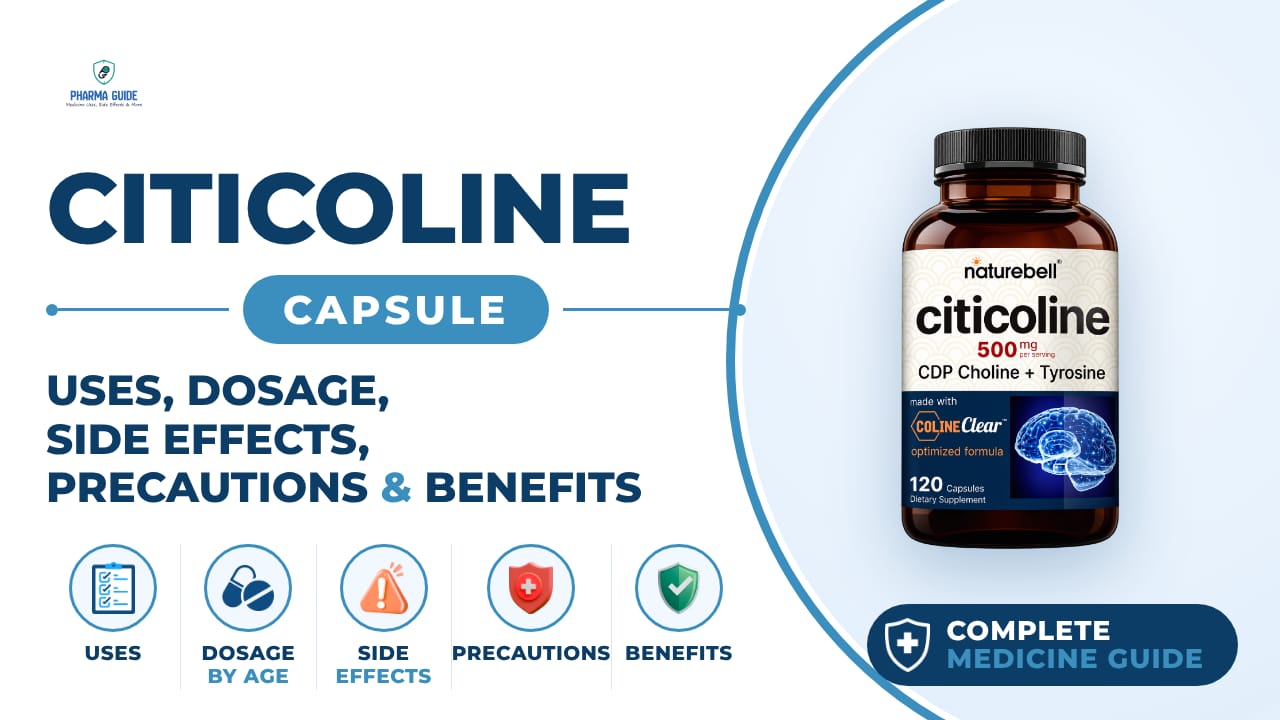
Citicoline Capsule: Uses, Dosage, Side Effects, Precautions and Alternates
| Generic name | CDP-choline |
|---|---|
| Drug class | Vitamins and Supplements (oral nutritional supplement) |
| Forms | Capsule, Oral supplement/solution, Intravenous injection |
Quick overview
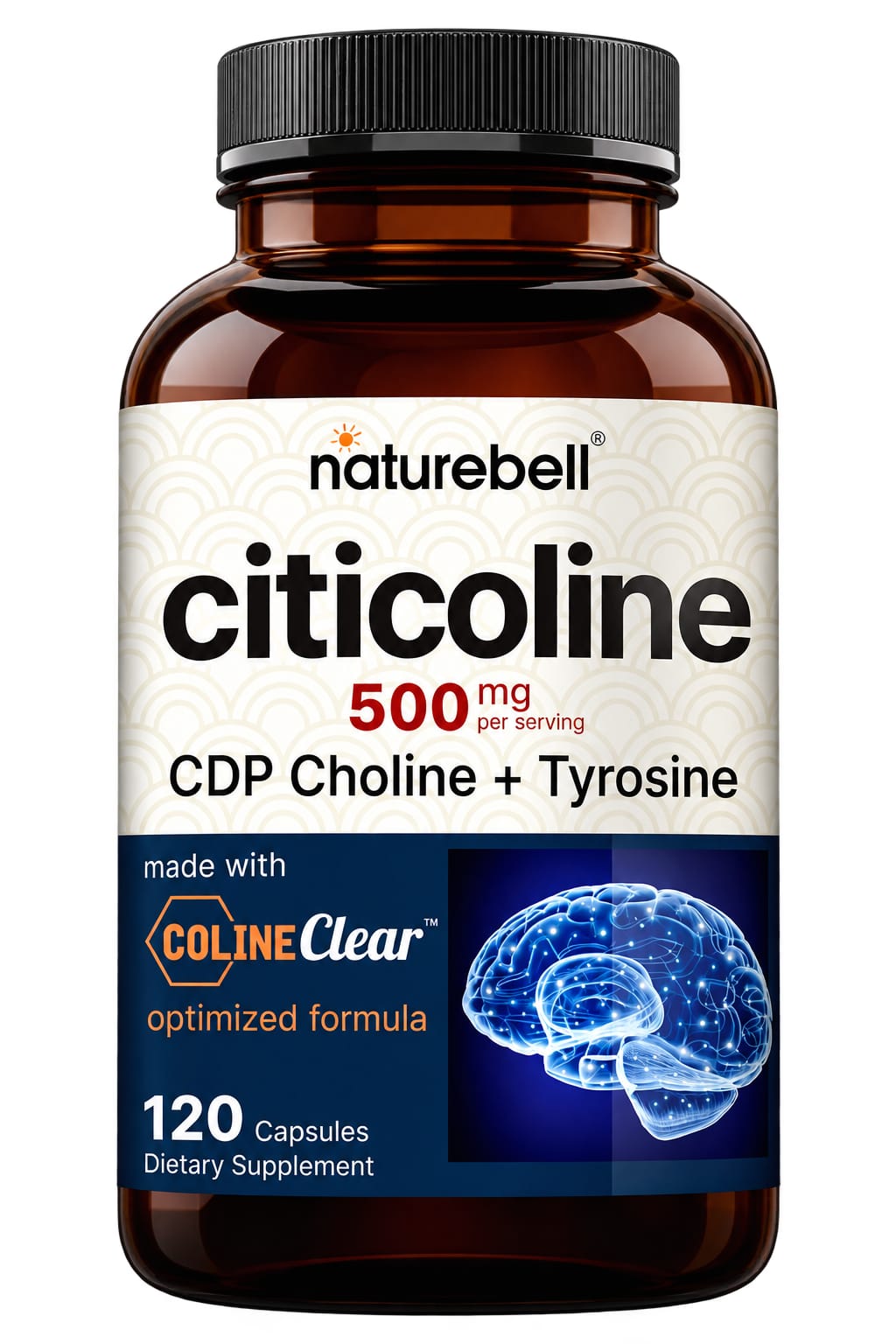
Citicoline Capsule, generically known as CDP-choline, is an oral nutritional supplement in the vitamins and supplements drug class. It provides a source of choline and supports the synthesis of phosphatidylcholine, a building block of brain cells. It has been studied for memory, cognitive function, and various neurological conditions, though evidence for treating specific diseases remains inconsistent. It is available as capsules, an oral supplement/solution, and an intravenous injection.
What is Citicoline Capsule
Citicoline, also called CDP-choline, is a substance your body naturally makes from the nutrient choline. It is found in all plant and animal cell membranes and is a building block for important brain chemicals. Supplement versions are made in a lab and are sold over the counter for brain and eye health, though their benefits for these uses are not well proven.
Citicoline Capsule uses
- Provides a source of choline
- Supports synthesis of phosphatidylcholine
- Has been studied for memory and cognitive function
- Has been investigated in neurological conditions, although evidence for treating specific diseases remains inconsistent
Benefits of Citicoline Capsule
- Supports normal phospholipid synthesis
- Contributes to acetylcholine production
- May support cognitive function in some adults
- Available as oral capsules and other formulations
How Citicoline Capsule works
Citicoline is turned by the body into choline, which crosses into the brain and is used to make important brain chemicals like dopamine, norepinephrine, and acetylcholine, as well as a substance called phosphatidylcholine that helps keep brain cells working properly.
Citicoline Capsule dosage
Read and follow the directions on the specific product label, or use it as your health care provider recommends. Citicoline products may contain other ingredients, especially those marketed for brain health or as "nootropics," so check the label to see what else is included. Do not take double or extra doses if you miss a dose.
| Age group | Dose |
|---|---|
| Under–17 years | No standard age-based medical dose is established |
| 18–39 years | Common supplement products provide 250–500 mg/day |
| 40–64 years | Common supplemental intake: 250–500 mg/day |
Available forms and strengths
- Capsule
- Oral supplement/solution
- Intravenous injection
Side effects of Citicoline Capsule
Common
- Anxiety or restlessness
- Upset stomach
- Gastrointestinal disturbances
- Transient headaches
- Low blood pressure (hypotension)
- Fast heart rate (tachycardia)
- Slow heart rate (bradycardia)
Serious
- Breathing problems or wheezing
- Racing heart
- Fever or general ill feeling
- Swollen lymph nodes
- Swelling of the face, lips, mouth, tongue, or throat
- Trouble swallowing or throat tightness
- Itching or skin rash
- Hives
- Nausea or vomiting
- Dizziness, feeling lightheaded, or fainting
- Stomach cramps
- Joint pain
Warnings and precautions
- People who are allergic to citicoline or to any ingredient in a specific product should not use it.
- Citicoline is a dietary supplement and has not been reviewed by the FDA for safety or effectiveness, and it cannot be marketed to treat or cure a disease.
- The FDA has not tested citicoline products to confirm they actually contain the ingredients stated on the label.
- Tell your health care provider if you have dementia, glaucoma, or Parkinson's disease before using citicoline.
- Citicoline may interact with other medicines and supplements, particularly levodopa, a medicine used for Parkinson's disease.
- It is not known if or how citicoline could affect pregnancy or harm a baby before birth. Tell your health care provider if you are pregnant or plan to become pregnant.
- It is not known if citicoline passes into breast milk, so tell your health care provider if you are breastfeeding or plan to breastfeed.
- No standard kidney-specific dose adjustment is established for supplemental citicoline.
- No standard liver-specific dose adjustment is established.
- It is not known whether drinking alcohol affects citicoline.
- Citicoline is not generally considered strongly sedating, but individual effects vary.
Storage
- Store according to the product label
- Most dietary supplements should be kept in a cool, dry place out of the reach of children and pets, away from direct sunlight
When to see a doctor
- Stop using citicoline and get medical help right away if you notice signs of a serious allergic reaction, such as trouble breathing, a racing heart, fever, swollen glands, swelling of the face or throat, trouble swallowing, rash, hives, nausea, vomiting, dizziness or fainting, stomach cramps, or joint pain.
- If you or someone else takes too much citicoline, get medical help right away or contact your local poison control center.
Alternatives
- Alpha-GPC
- Choline
- Phosphatidylcholine
Watch the video
FAQs
What is Citicoline Capsule used for?
It provides a source of choline, supports synthesis of phosphatidylcholine, and has been studied for memory, cognitive function, and various neurological conditions, though evidence for treating specific diseases remains inconsistent.
What is the common dosage of Citicoline Capsule?
For adults aged 18–64, common supplement products provide 250–500 mg per day. No standard age-based medical dose is established for those under 17.
What are the common side effects of Citicoline Capsule?
Common side effects include anxiety or restlessness, upset stomach, gastrointestinal disturbances, transient headaches, low blood pressure, fast heart rate, and slow heart rate.
Does Citicoline Capsule interact with other medicines?
Yes, citicoline may interact with other medicines and supplements, particularly levodopa, a medicine used for Parkinson's disease.
What forms does Citicoline Capsule come in?
It is available as capsules, an oral supplement/solution, and an intravenous injection.
General information, not medical advice
Your prescriber and the leaflet in your pack know your situation. This page does not.
- Follow your prescriber and the leaflet
- Don't start, stop, or change a dose on your own
- Doses and warnings differ by country and product
Sources
Video
Related medicines

Injectafer Injection: Uses, Dosage, Side Effects, Precautions and Alternates
Iron products
Injectafer (ferric carboxymaltose) treats iron deficiency anemia and heart failure-related iron deficiency via IV. Learn uses, dosage, side effects, and

Gliclazide Tablet: Uses, Dosage, Side Effects, Precautions and Alternates
Sulfonylurea (hypoglycemic/antidiabetic agent)
Gliclazide Tablet is a sulfonylurea for type 2 diabetes that boosts insulin release. Learn about dosage, side effects, warnings, and precautions.