
Safety
General information, not medical advice
Your prescriber and the leaflet in your pack know your situation. This page does not.
- Follow your prescriber and the leaflet
- Don't start, stop, or change a dose on your own
- Doses and warnings differ by country and product
Clavam Tablet: Uses, Dosage, Side Effects, Precautions and Alternates
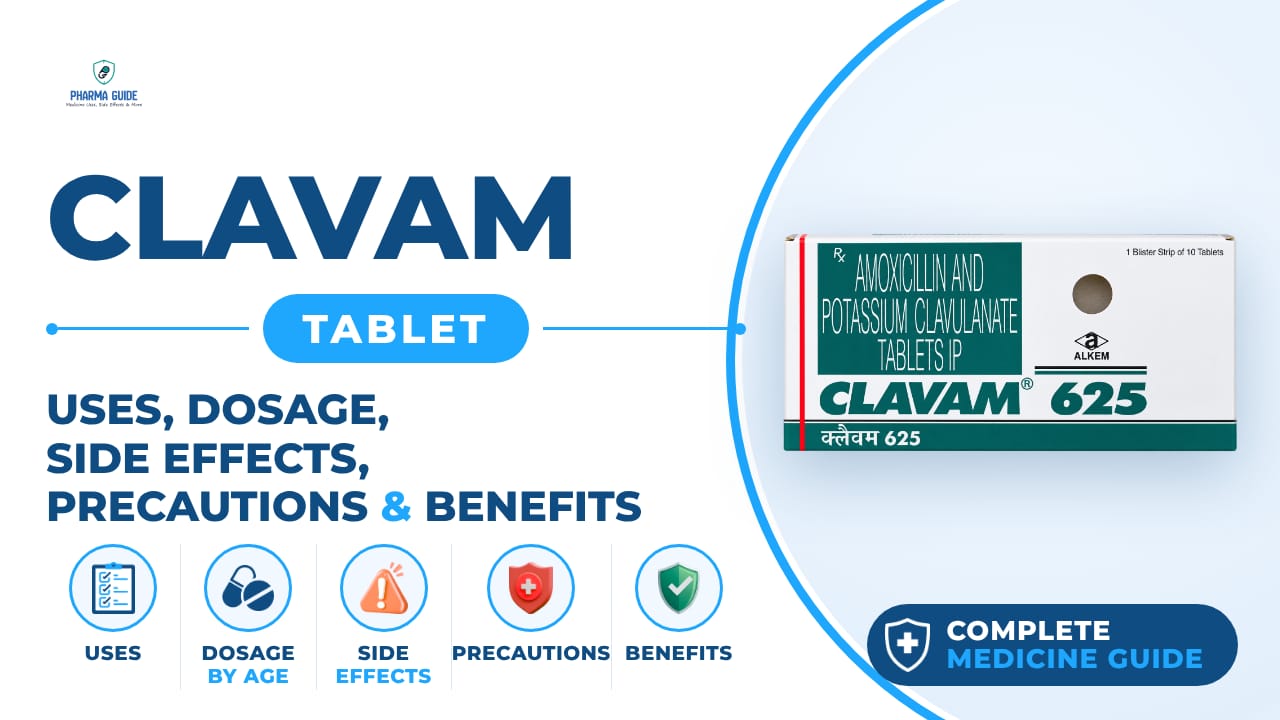
| Generic name | Amoxicillin & Clavulanic Acid |
|---|---|
| Drug class | Penicillin antibiotic (Beta-lactamase inhibitor combination) |
| Forms | Tablet, Injection, Syrup, Dry syrup, Drops |
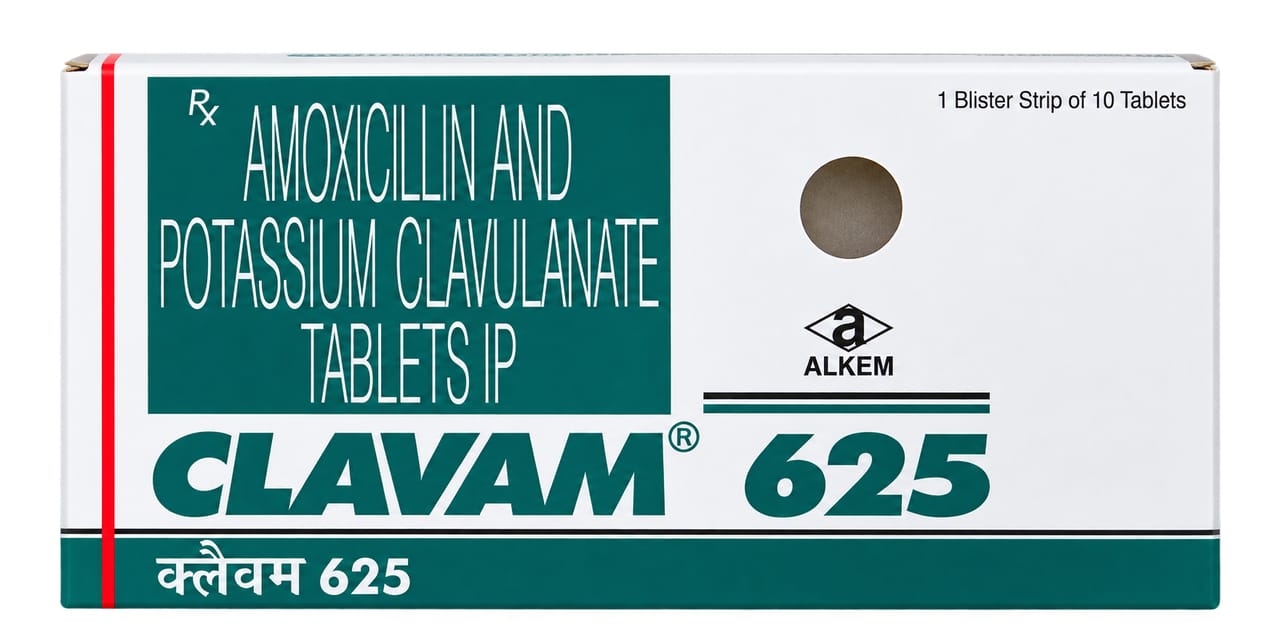
Quick overview
Clavam Tablet contains amoxicillin, a penicillin antibiotic, combined with clavulanic acid, a beta-lactamase inhibitor. It is used for the short-term treatment of certain bacterial infections, including chest, sinus, ear, skin, urinary, dental, bone, and throat infections. Clavulanic acid helps protect amoxicillin from being broken down by certain bacteria, allowing it to remain effective against a wider range of bacteria. It should be used exactly as prescribed by your doctor.
What is Clavam Tablet
Clavam tablets contain two active ingredients: amoxicillin, a penicillin antibiotic, and clavulanic acid. They belong to the penicillin group of antibiotics and are used for the short-term treatment of bacterial infections.
Clavam Tablet uses
- Chest infections such as bronchitis or pneumonia
- Bladder infections such as cystitis
- Sinus infections such as sinusitis
- Ear infections such as otitis media
- Skin and soft tissue infections
- Urinary tract infections
- Dental and periodontal infections
- Bone infections (osteomyelitis)
- Throat infections (pharyngitis/tonsillitis)
Benefits of Clavam Tablet
- Bacterial Infection Treatment: Treats certain bacterial infections caused by susceptible bacteria.
- Respiratory Infection Support: May be prescribed for bacterial infections of the throat, sinuses, and respiratory tract.
- Ear Infection Treatment: Can be used for certain bacterial ear infections.
- Skin Infection Support: May help treat susceptible bacterial skin and soft-tissue infections.
- Urinary Infection Treatment: Can be prescribed for certain bacterial urinary tract infections.
How Clavam Tablet works
Amoxicillin kills bacteria by weakening and breaking down their cell walls. Some bacteria produce an enzyme that can destroy amoxicillin, but clavulanic acid blocks this enzyme so amoxicillin keeps working, extending the antibiotic's effect to more types of bacteria.
Clavam Tablet dosage
Swallow the tablet with a full glass of water or other liquid. The tablet can be broken in half but should not be chewed. Take it immediately before or with the first mouthful of food, though it will still work if taken without food. Space doses as evenly as possible through the day; if taking it twice a day, take a dose about every twelve hours.
Keep taking the tablets until the course is finished or for as long as your doctor tells you, even if you feel better, because the infection can return. Do not stop taking or change the dose without checking with your doctor first.
If your next dose is due within six hours, skip the missed dose and take the next one at the normal time; otherwise take the missed dose as soon as you remember and continue as directed. Do not take a double dose to make up for a missed one.
Children under 6 years of age or weighing less than 25 kg should preferably be treated with a suspension or paediatric sachet form rather than tablets.
Use exactly as prescribed by your doctor or pharmacist.
Available forms and strengths
- Tablet
- Injection
- Syrup
- Dry syrup
- Drops
Side effects of Clavam Tablet
Common
- Diarrhoea
- Indigestion, stomach pain, feeling sick or vomiting
- Oral thrush (white, furry, sore tongue and mouth), abnormal taste
- Vaginal thrush (soreness, itching or discharge)
- Headache, dizziness, tiredness, hot flushes
- Tooth discolouration
- Hyperactivity
- Skin rash and itching
- Joint pain
- Heavy menstrual bleeding
Serious
- Itching, rash
- Dark urine or pale stools
- Yellowing of the skin or eyes (jaundice)
- Severe stomach cramps
- Severe watery or bloody diarrhoea
- Unusual bleeding or bruising
- Wheezing, hives, severe skin reaction, fainting
- Swelling of limbs, face, lips, mouth or throat
- Difficulty swallowing or breathing
- Joint discomfort or swelling, swollen lymph glands
- Nausea and vomiting or fever
- Fits/seizures
- Inflammation of the bowel (colitis)
- Inflammation of the liver (hepatitis)
- Inflammation of the kidney (nephritis)
- Blood disorders
- Crystals in the urine (crystalluria)
Warnings and precautions
- Do not take this medicine if you have had an allergic reaction to penicillin or similar antibiotics, or if you have previously had liver problems after taking this medicine. Tell your doctor if you have glandular fever (mononucleosis) or leukaemia, as this medicine is not recommended in these cases.
- This medicine can affect urine sugar tests, giving a false result, so tell your doctor if you need to test your urine for sugar. Using antibiotics unnecessarily or not finishing the full course can make bacteria resistant to the medicine in the future. Do not take medicine to stop diarrhoea if you get severe diarrhoea during or after treatment; tell your doctor instead.
- There is not enough safety information in pregnant women to know the risk to an unborn baby. If you are pregnant, only take this medicine if your doctor has prescribed it for you.
- Small amounts of this medicine pass into breast milk and could cause diarrhoea in a breastfed baby. Talk to your doctor if you are breastfeeding.
- If you have kidney problems, use this medicine with caution. Your doctor may want to monitor your kidney function and may need to adjust your dose.
- If you have had liver problems, especially after taking this medicine before, tell your doctor. Liver function may need to be checked periodically and the dose may need adjusting.
- It's best to avoid or limit alcohol during treatment and for several days afterward, as a precaution, even though a clear interaction hasn't been proven.
- This medicine does not usually affect your ability to drive or use machines, but it can cause dizziness or tiredness in some people, so be careful until you know how it affects you.
Storage
- Keep your tablets in the original pack until it is time to take them
- Keep the pack in a cool dry place
- Do not leave it in the car on a hot day
- Do not store medicine in the bathroom or near a sink
- Store all medicines out of the reach of children, such as in a locked cupboard
- If your doctor tells you to stop taking the tablets or if the expiry date has passed, ask your pharmacist what to do with any tablets left over
- Store below 25°C
- Store away from light, air and heat
When to see a doctor
Stop taking the medicine and get emergency help right away if you have wheezing, hives, a severe skin reaction, fainting, swelling of the limbs, face, lips, mouth or throat, trouble swallowing or breathing, joint pain or swelling, swollen glands, or nausea, vomiting or fever.
Tell your doctor immediately if you notice itching or rash, dark urine or pale stools, yellowing of the skin or eyes, severe stomach cramps, severe watery or bloody diarrhoea, or unusual bleeding or bruising.
If you think you or someone else has taken too much of this medicine, contact your doctor or your local poison control center right away for advice, even if there are no symptoms.
Tell your doctor as soon as possible if your infection symptoms get worse or do not improve within a few days of starting this medicine.
Alternatives
- Amoxicillin
- Cefuroxime
- Cephalexin
Watch the video
FAQs
What is Clavam Tablet used for?
Clavam Tablet is used for the short-term treatment of bacterial infections including chest, sinus, ear, skin, urinary, dental, bone, and throat infections.
How does Clavam Tablet work?
Amoxicillin kills bacteria by weakening and breaking down their cell walls, while clavulanic acid blocks an enzyme some bacteria produce to destroy amoxicillin, extending its effect to more bacteria types.
How should I take Clavam Tablet?
Swallow the tablet with a full glass of water, taken immediately before or with food, though it works without food too. Space doses evenly, and complete the full course as directed by your doctor.
What are the common side effects of Clavam Tablet?
Common side effects include diarrhoea, indigestion, nausea or vomiting, oral or vaginal thrush, headache, dizziness, tiredness, tooth discolouration, skin rash, and joint pain.
Who should not take Clavam Tablet?
Avoid Clavam Tablet if you have had an allergic reaction to penicillin or similar antibiotics, or previous liver problems after taking this medicine. It is not recommended for people with glandular fever or leukaemia.
General information, not medical advice
Your prescriber and the leaflet in your pack know your situation. This page does not.
- Follow your prescriber and the leaflet
- Don't start, stop, or change a dose on your own
- Doses and warnings differ by country and product
Sources
Video
Related medicines

Injectafer Injection: Uses, Dosage, Side Effects, Precautions and Alternates
Iron products
Injectafer (ferric carboxymaltose) treats iron deficiency anemia and heart failure-related iron deficiency via IV. Learn uses, dosage, side effects, and

Gliclazide Tablet: Uses, Dosage, Side Effects, Precautions and Alternates
Sulfonylurea (hypoglycemic/antidiabetic agent)
Gliclazide Tablet is a sulfonylurea for type 2 diabetes that boosts insulin release. Learn about dosage, side effects, warnings, and precautions.