
Safety
General information, not medical advice
Your prescriber and the leaflet in your pack know your situation. This page does not.
- Follow your prescriber and the leaflet
- Don't start, stop, or change a dose on your own
- Doses and warnings differ by country and product
Climara Patch: Uses, Dosage, Side Effects, Precautions and Alternates
| Generic name | estradiol |
|---|---|
| Drug class | estrogen replacement therapy |
| Forms | Transdermal patch (skin patch) |
Quick overview
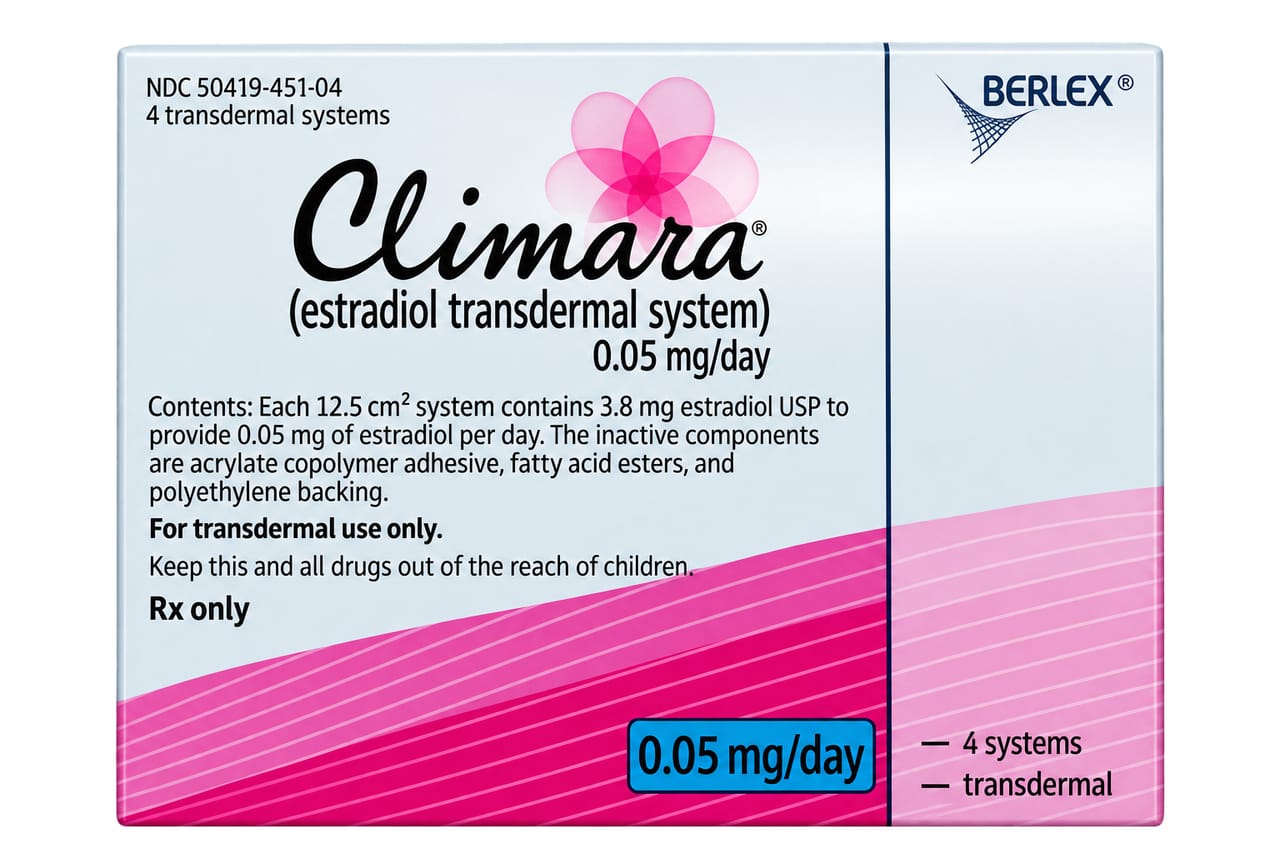
Climara Patch is a transdermal skin patch containing estradiol, a form of the female hormone estrogen. It is worn by women to treat menopause symptoms, vaginal and vulvar dryness, low estrogen levels from certain conditions, and to help prevent osteoporosis after menopause. The patch is changed once a week and releases estradiol through the skin into the bloodstream. It carries important warnings regarding uterine cancer, blood clots, stroke, and heart attack risk.
What is Climara Patch
Climara is a skin patch that contains estradiol, a form of the female hormone estrogen. It is worn on the skin and used by women to treat symptoms of menopause and other conditions caused by low estrogen levels.
Climara Patch uses
- Treatment of moderate to severe hot flashes and other symptoms associated with menopause
- Treatment of vaginal and vulvar dryness or irritation linked to menopause
- Treatment of low estrogen levels caused by hypogonadism, surgical removal of the ovaries, or primary ovarian failure
- Prevention of thinning bones (osteoporosis) after menopause
Benefits of Climara Patch
- Helps relieve moderate to severe hot flashes associated with menopause
- Helps reduce night sweats and other vasomotor symptoms
- Replaces estrogen lost after menopause through the skin
- Helps prevent postmenopausal osteoporosis in appropriate women when other options are unsuitable
- Provides once-weekly transdermal estradiol therapy for convenient hormone replacement
How Climara Patch works
The patch releases estradiol, a hormone similar to what your ovaries make, through your skin into your bloodstream to replace the estrogen your body is no longer making enough of.
Climara Patch dosage
Apply the patch to a clean, dry area of the lower stomach or the upper part of the buttocks. Do not apply the patch to the breasts or to oily, damaged, or irritated skin. Avoid applying the patch near the waistline or areas where clothing or sitting might rub it off. Press the patch firmly in place with your fingers for about 10 seconds, making sure it sticks well, especially around the edges.
Change the patch once a week, applying the new one to a different area of skin each time; wait at least a week before reusing the same spot. Remove the old patch before applying a new one. Do not wear more than one patch at a time.
Bathing, showering, or swimming does not usually affect the patch, but hot water or steam may cause it to loosen. If the patch falls off, try to reapply it; if it will not stick, apply a new one for the rest of that week's schedule. If you forget to change your patch, do so as soon as you remember.
| Age group | Dose |
|---|---|
| Under 18 years | Not indicated; safety and effectiveness not established |
| 18+ years – Premenopausal women | Not routinely indicated for menopausal therapy |
| Postmenopausal women – Vasomotor symptoms | Start 0.025 mg/day patch, applied once weekly |
| Postmenopausal women – Osteoporosis prevention | Start 0.025 mg/day patch, applied once weekly |
| 65+ years | Use the lowest effective individualized dose |
Available forms and strengths
- Transdermal patch (skin patch) — 0.025 mg/day
Side effects of Climara Patch
Common
- Headache
- Back pain
- Fluid retention or swelling
- Abdominal pain
- Nausea or vomiting
- Joint pain
- Feelings of depression or mood swings
- Upper respiratory infection, sore throat, sinus problems, or runny nose
- Itching or skin irritation at the patch site
- Breast pain or tenderness
- Bloating
- Breakthrough vaginal bleeding or spotting
- Changes in sex drive
- Dizziness
- Weight changes
- Darkening of the skin where the patch is applied
Serious
- Signs of a blood clot in the arm, leg, or lungs, such as pain, swelling, warmth, redness, difficulty breathing, or coughing up blood
- Signs of a stroke, such as sudden severe headache, vision changes, trouble speaking, weakness, or numbness
- Signs of a heart attack, such as chest pain or pressure, pain spreading to the arm or shoulder, nausea, or sweating
- Breast lumps
- Signs of liver problems, such as yellowing of the skin or eyes, dark urine, pale stools, nausea, or loss of appetite
- Severe or frequent headaches or migraines
- Heavy or prolonged vaginal bleeding
- High blood pressure
- Severe allergic reaction, including hives, swelling of the face or throat, or difficulty breathing
- Signs of depression, including poor concentration, changes in weight or sleep, or thoughts of suicide
Warnings and precautions
- Estrogens increase the risk of cancer of the lining of the uterus (endometrium). Your doctor should check any unexplained or ongoing vaginal bleeding.
- Estrogens can increase the risk of blood clots, stroke, and heart attack. Tell your doctor right away if you have signs of these problems.
- This medicine increases the risk of gallbladder disease that may require surgery.
- Women over 65 taking combined hormone therapy may have a higher risk of memory and thinking problems (dementia).
- Do not use this medicine if you have unusual vaginal bleeding that a doctor has not checked, if you have or have had breast cancer, or if you have a history of blood clots or certain other conditions.
- This medicine should not be used during pregnancy because it can harm an unborn baby.
- This medicine is not recommended while breastfeeding because it passes into breast milk and can reduce milk supply and quality.
- People with kidney disease may need special monitoring, since estrogen can affect calcium and phosphorus levels and estrogen levels may be higher in people with kidney failure on dialysis.
- People with liver disease or liver tumors should not use this medicine, and people with reduced liver function may need special monitoring.
Storage
- Store at 20–25°C (68–77°F) at controlled room temperature.
- Keep each patch in its original sealed protective pouch until ready to use.
- Protect from excessive heat, moisture, and direct sunlight.
- Do not refrigerate or freeze the patches.
- Keep out of reach and sight of children and pets, including used patches.
When to see a doctor
- Get medical help right away if you notice unusual vaginal bleeding, since it could be a sign of uterine cancer.
- Get medical help right away if you have leg or chest pain, sudden shortness of breath, or cough up blood, as these can be signs of a blood clot.
- Get medical help right away for a severe headache, vomiting, dizziness, fainting, changes in vision or speech, or weakness or numbness in an arm or leg, as these can be signs of a stroke or blood clot in the brain or eye.
- Contact your doctor if you find a breast lump.
- Get medical help right away if your skin or eyes turn yellow, which may signal a liver problem.
- Get medical help right away for pain, swelling, or tenderness in the abdomen, which may signal a gallbladder problem.
Alternatives
- Divigel
- Minivelle
- Estradot
- Vivelle-Dot
- EstroGel
Watch the video
FAQs
How often do you change the Climara Patch?
The patch is changed once a week, with each new patch applied to a different area of skin, waiting at least a week before reusing the same spot.
Where should you apply the Climara Patch?
Apply it to a clean, dry area of the lower stomach or upper buttocks, avoiding the breasts, oily or irritated skin, and areas near the waistline or where clothing may rub it off.
What happens if the Climara Patch falls off?
Try to reapply it; if it will not stick, apply a new patch for the remainder of that week's schedule.
What are the serious risks of using Climara Patch?
Climara Patch carries risks of uterine cancer, blood clots, stroke, heart attack, gallbladder disease, and memory or thinking problems in women over 65 taking combined hormone therapy.
Can Climara Patch be used during pregnancy or breastfeeding?
No, it should not be used during pregnancy because it can harm an unborn baby, and it is not recommended while breastfeeding since it passes into breast milk and can reduce milk supply and quality.
General information, not medical advice
Your prescriber and the leaflet in your pack know your situation. This page does not.
- Follow your prescriber and the leaflet
- Don't start, stop, or change a dose on your own
- Doses and warnings differ by country and product
Sources
- Healio Drug Lookup: Climara
- RxHealthMed: Climara
- FDA Prescribing Information: Climara (NDA 20-375/S-014)
Video
Related medicines

Injectafer Injection: Uses, Dosage, Side Effects, Precautions and Alternates
Iron products
Injectafer (ferric carboxymaltose) treats iron deficiency anemia and heart failure-related iron deficiency via IV. Learn uses, dosage, side effects, and

Gliclazide Tablet: Uses, Dosage, Side Effects, Precautions and Alternates
Sulfonylurea (hypoglycemic/antidiabetic agent)
Gliclazide Tablet is a sulfonylurea for type 2 diabetes that boosts insulin release. Learn about dosage, side effects, warnings, and precautions.