
Safety
General information, not medical advice
Your prescriber and the leaflet in your pack know your situation. This page does not.
- Follow your prescriber and the leaflet
- Don't start, stop, or change a dose on your own
- Doses and warnings differ by country and product
Clindoxyl Gel: Uses, Dosage, Side Effects, Precautions and Alternates
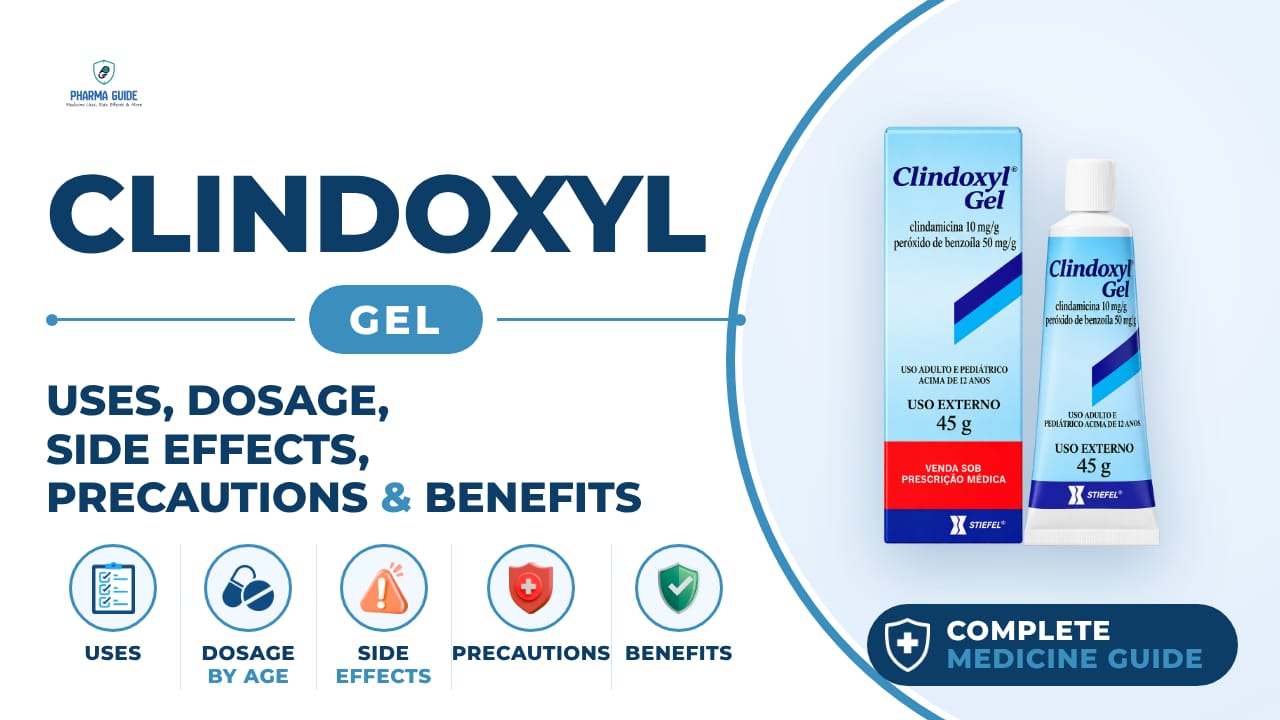
| Generic name | clindamycin phosphate and benzoyl peroxide |
|---|---|
| Drug class | Topical antibiotic and antibacterial keratolytic agent |
| Forms | Gel |
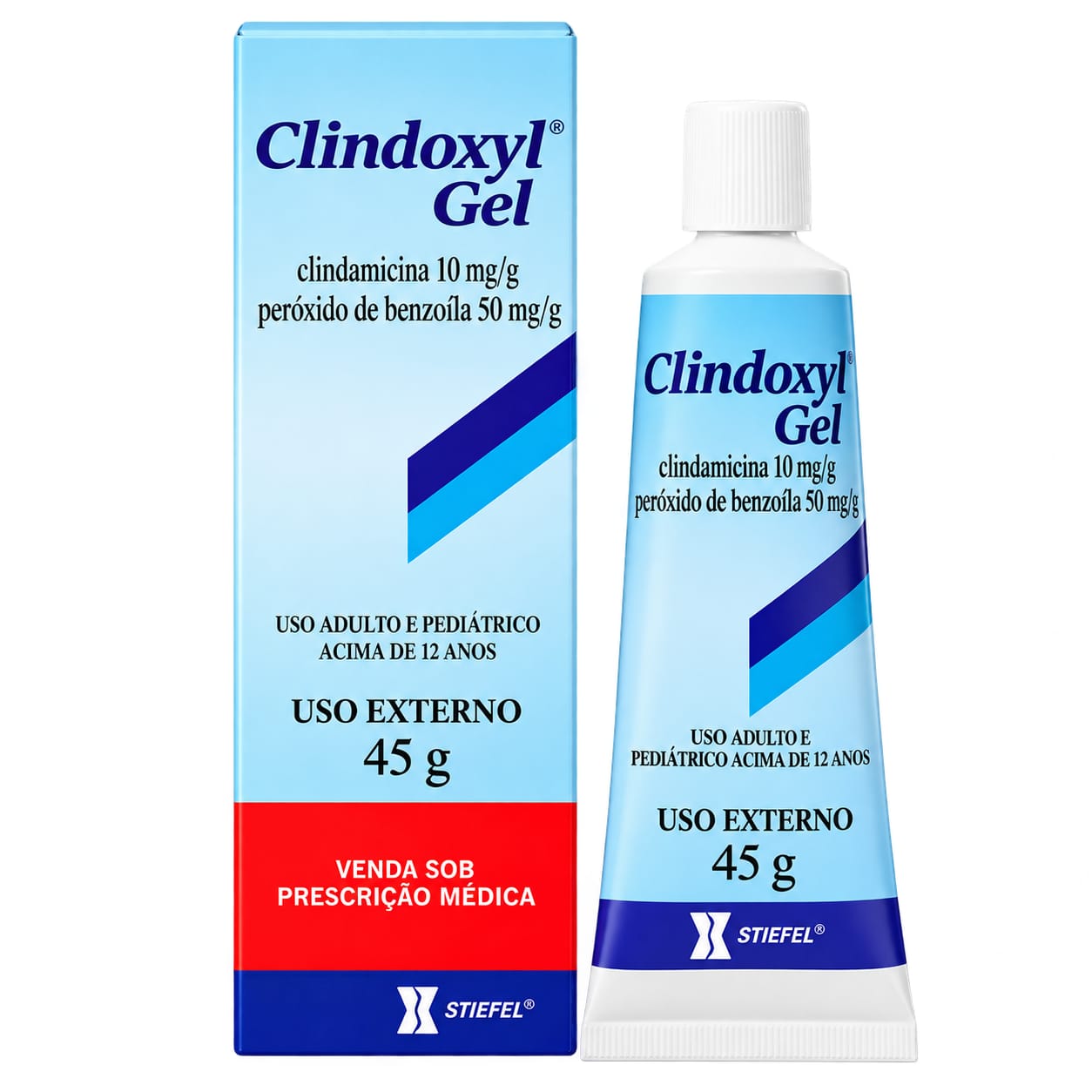
Quick overview
Clindoxyl Gel combines clindamycin phosphate, a topical antibiotic, with benzoyl peroxide, a bactericidal and exfoliating agent. It is applied to the skin to treat mild to moderate acne vulgaris, particularly inflammatory lesions, in people aged 12 years and above. The gel works by reducing acne-causing bacteria and helping clear pores blocked by dead skin cells. It is applied once daily as a thin layer to the entire affected area, not just individual spots.
What is Clindoxyl Gel
Clindoxyl Gel is a topical gel that combines an antibiotic (clindamycin) with benzoyl peroxide, a bactericidal and exfoliating agent, used on the skin to treat acne.
Clindoxyl Gel uses
- Topical treatment of mild to moderate acne vulgaris, particularly inflammatory lesions, in adults and adolescents aged 12 years and above
- Reduction of inflamed pimples and acne lesions
- Control of acne-causing bacteria
- Prevention of new acne breakouts
- Helps improve the appearance of acne-affected skin
Benefits of Clindoxyl Gel
- More effective than clindamycin and vehicle alone in reducing the number of inflammatory, non-inflammatory, and total acne lesions
- More effective than benzoyl peroxide in reducing the number of inflammatory and total acne lesions
- Greater overall improvement in investigator's global assessment compared to benzoyl peroxide, clindamycin, and vehicle alone in clinical studies
How Clindoxyl Gel works
The gel works in two ways: clindamycin slows or stops the growth of acne bacteria and helps kill them, while benzoyl peroxide also kills the bacteria and has a mild effect that helps clear away dead skin cells blocking pores.
Clindoxyl Gel dosage
Wash the skin with a mild, non-irritating cleanser, rinse with warm water, and gently pat dry before applying. Apply once daily to lightly cover the entire affected area of the face with a thin layer of gel, not just individual spots. Wash your hands with soap and water after applying.
Apply only to the skin — do not use in the eyes, inside the nose, the mouth and lips, other mucous membranes, or on broken or irritated skin. If the gel does not rub into the skin easily, too much is being applied. Using more than directed will not improve results and may increase the risk of skin irritation. If excessive dryness or peeling occurs, apply less often or pause use temporarily, then restart once symptoms settle.
It may take several weeks of regular use before you notice improvement; keep using as directed by your healthcare professional even if you feel better early on. Do not use other acne medicines on the skin at the same time unless your healthcare professional tells you to.
If you miss a dose, apply it as soon as you remember, but do not apply a double amount to make up for a missed dose. Not established as safe and effective in people under 12 years of age or over 65 years of age.
| Age group | Dose |
|---|---|
| Under 12 years | Safety and effectiveness are not established; no standard dose |
| 12–17 years | Apply a thin layer once daily in the evening to the entire acne-affected area |
| 18–64 years | Apply a thin layer once daily in the evening |
Available forms and strengths
- Gel
Side effects of Clindoxyl Gel
Common
- Skin rash that is red or bumpy
- Dry or itchy skin
- Numbness or tingling of the skin
- Burning or stinging of the skin
- Peeling skin
- A change in colour of the skin where the medicine was applied
- Sensitivity to the sun
- Worsening of acne
Serious
- Colitis (inflammation of the intestines) with cramps, severe pain, bloating, severe or long-lasting diarrhea (bloody or watery), nausea, vomiting
- Folliculitis (infection of hair follicles) with tiny red or white bumps at the base of a hair, painful or tender skin, blisters, itching
- Severe allergic reaction with hives, swelling of the mouth, face or tongue making it hard to breathe, or collapsing
Warnings and precautions
- This medicine is for use on the skin only. Keep it away from your eyes, inside your nose, your mouth and lips, other mucous membranes like inside the vagina, areas of broken or irritated skin, and sunburned skin until it has healed. If contact occurs, rinse with water for at least 5 minutes.
- Do not use this medicine if you have, or have had, inflammatory bowel disease such as Crohn's disease or ulcerative colitis, or if you have had severe or long-lasting diarrhea after taking antibiotics in the past.
- The gel can bleach hair, fabrics, and carpeting, so avoid letting it touch these materials.
- This medicine can make your skin more sensitive to sunlight. Avoid sunlamps and tanning beds, limit time in the sun, and use sunscreen and protective clothing when you must be outside.
- Do not use other acne medicines on the skin at the same time unless your healthcare professional tells you to, because combining treatments can cause extra irritation.
- Misusing or overusing this medicine could lead to bacteria that are no longer killed by clindamycin (resistance), meaning it may stop working for you in the future.
- There is limited data on use in pregnant women, so this medicine should only be used in pregnancy if your doctor decides the benefits outweigh the risks to the baby.
- This medicine has not been studied during breastfeeding, so it should only be used if your doctor decides the benefits outweigh the risks to your infant, and it should not be applied to the chest to avoid accidental ingestion by the baby.
- No dose change is needed for people with kidney problems, since very little of the medicine is absorbed into the body after skin application.
- No dose change is needed for people with liver problems, since very little of the medicine is absorbed into the body after skin application.
- No significant interaction with alcohol is expected since this is a skin medicine.
- This medicine is not expected to affect your ability to drive or operate machinery.
Storage
- Store at room temperature (15° - 25°C)
- Do not freeze
- Keep tube tightly closed
- Keep out of reach and sight of children
- If there is any gel left 60 days after you receive it, throw it out and talk to your healthcare professional
When to see a doctor
- Get immediate medical help if you develop a severe allergic reaction, including hives, swelling of the mouth, face, or tongue that makes breathing difficult, or if you collapse.
- Stop using the medicine and get medical help if you develop signs of colitis such as cramps, severe pain, bloating, severe or long-lasting diarrhea (bloody or watery), nausea, or vomiting.
- Talk to your healthcare professional if you notice signs of folliculitis, such as tiny red or white bumps at the base of a hair, painful or tender skin, blisters, or itching.
- If you accidentally swallow this gel, seek medical advice, and if you think you have used too much, contact your healthcare professional, an emergency department, or a poison control center right away, even without symptoms.
Alternatives
- Duac Gel
- Clindamycin topical gel
- Benzoyl peroxide gel
- Adapalene
Watch the video
FAQs
What is Clindoxyl Gel used for?
It is used for topical treatment of mild to moderate acne vulgaris, particularly inflammatory lesions, in people aged 12 years and above. It helps reduce acne-causing bacteria, control inflamed pimples, and prevent new breakouts.
How do you apply Clindoxyl Gel?
Wash the skin with a mild cleanser and pat dry, then apply a thin layer once daily to the entire affected area of the face, not just individual spots. Wash your hands with soap and water after applying.
How long does it take for Clindoxyl Gel to work?
It may take several weeks of regular use before you notice improvement, so it's important to keep using it as directed even if you feel better early on.
What are the side effects of Clindoxyl Gel?
Common side effects include skin rash, dryness, itching, numbness or tingling, burning or stinging, peeling, skin color changes, sun sensitivity, and worsening acne. Serious side effects can include colitis, folliculitis, and severe allergic reactions.
Can Clindoxyl Gel be used with other acne medicines?
No, you should not use other acne medicines on the skin at the same time unless your healthcare professional tells you to, since combining treatments can cause extra irritation.
General information, not medical advice
Your prescriber and the leaflet in your pack know your situation. This page does not.
- Follow your prescriber and the leaflet
- Don't start, stop, or change a dose on your own
- Doses and warnings differ by country and product
Sources
Video
Related medicines

Injectafer Injection: Uses, Dosage, Side Effects, Precautions and Alternates
Iron products
Injectafer (ferric carboxymaltose) treats iron deficiency anemia and heart failure-related iron deficiency via IV. Learn uses, dosage, side effects, and

Gliclazide Tablet: Uses, Dosage, Side Effects, Precautions and Alternates
Sulfonylurea (hypoglycemic/antidiabetic agent)
Gliclazide Tablet is a sulfonylurea for type 2 diabetes that boosts insulin release. Learn about dosage, side effects, warnings, and precautions.