
Safety
General information, not medical advice
Your prescriber and the leaflet in your pack know your situation. This page does not.
- Follow your prescriber and the leaflet
- Don't start, stop, or change a dose on your own
- Doses and warnings differ by country and product
Clobavate Cream: Uses, Dosage, Side Effects, Precautions and Alternates
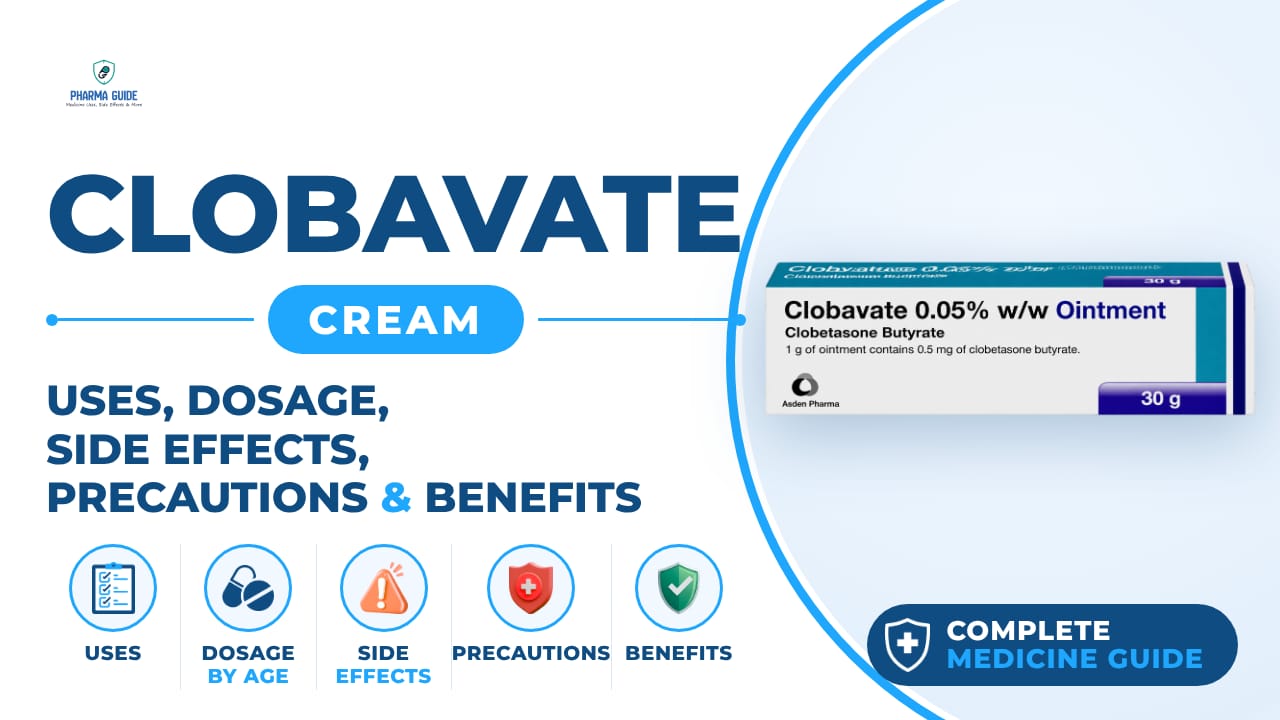
| Generic name | Clobetasol Propionate |
|---|---|
| Drug class | Super-potent Topical Corticosteroid |
| Forms | Cream, Foam, Ointment, Gel/Jelly, Shampoo, Solution, Lotion, Emollient Cream, Spray |
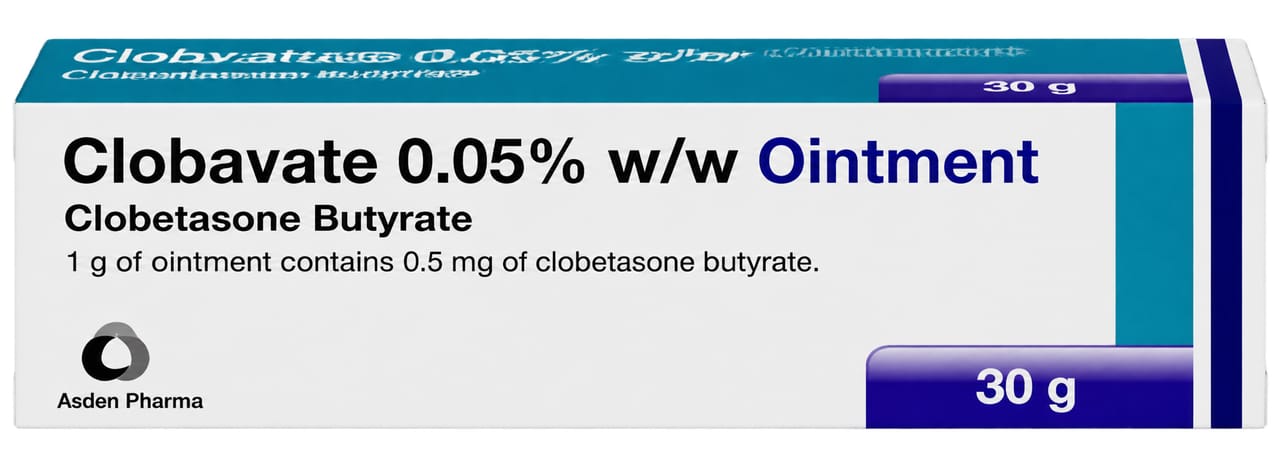
Quick overview
Clobavate Cream contains Clobetasol Propionate, a super-potent topical corticosteroid applied to the skin to treat inflammation, itching, and redness caused by certain skin conditions. It is used for conditions such as psoriasis, eczema, dermatitis, and other inflammatory skin conditions. Some improvement may be seen within 24 hours, with more noticeable results after a few days of use.
What is Clobavate Cream
Clobavate Cream is a topical corticosteroid medicine used on the skin to treat inflammation, itching, and redness caused by certain skin conditions.
Clobavate Cream uses
- Psoriasis
- Eczema
- Dermatitis
- Severe skin rashes
- Lichen planus
- Discoid lupus erythematosus
- Severe allergic skin reactions
- Other inflammatory skin conditions
Benefits of Clobavate Cream
- Reduces redness, itching, and swelling of the skin
- May show some improvement within 24 hours, with more noticeable results after a few days
How Clobavate Cream works
Clobetasol propionate works by attaching to certain receptors inside skin cells, which turns on genes that make anti-inflammatory proteins while blocking the production of substances that cause inflammation.
Clobavate Cream dosage
Wash your hands with soap and water before and after applying this medicine. Apply a thin layer only to the affected areas of skin and rub it in gently. Do not bandage or wrap the treated skin unless your doctor tells you to. Avoid contact with the eyes, mouth, nose, and vagina. Do not apply to skin that has cuts, scrapes, or burns; if it gets on these areas, rinse with water right away.
Keep using this medicine for the full length of treatment your doctor recommends; do not skip doses. Do not use on the face, groin, or underarms unless your doctor directs you to. This medicine is not recommended for children younger than 12 years old. Elderly patients may need closer monitoring since they may be more likely to have unwanted effects.
If you forget to apply a dose, apply it as soon as you remember, but if it is almost time for the next application, skip the missed one and continue your regular schedule; do not apply extra to make up for it.
| Age group | Dose |
|---|---|
| Under 1 year | Not recommended |
| 1–11 years | Apply a thin layer once or twice daily, only under medical supervision and for a short course |
| 12–17 years | Apply a thin layer once or twice daily, as prescribed |
| 18–64 years | Apply a thin layer once or twice daily |
| 65 years & older | Apply a thin layer once or twice daily, using the minimum amount needed |
Available forms and strengths
- Cream
- Foam
- Ointment
- Gel/Jelly
- Shampoo
- Solution
- Lotion
- Emollient Cream
- Spray
Side effects of Clobavate Cream
Common
- Burning sensation
- Itching
- Skin dryness
- Redness
- Thinning of skin
- Stretch marks
- Increased hair growth
- Burning or stinging at the application site
- Dry or cracking skin
- Mild skin rash
Serious
- Severe skin irritation
- Signs of skin infection
- Allergic reactions
- Adrenal gland problems
- Fatigue
- Weakness
- Vision problems
- Thinning, weakness, or wasting away of the skin
- Blurred vision
- Fast, irregular, or pounding heartbeat
- Increased thirst or urination
- Irritability
- Unusual tiredness or weakness
Warnings and precautions
- This medicine should be used during pregnancy only if the potential benefit justifies the potential risk to the unborn baby. Talk to your doctor if you are pregnant or planning to become pregnant.
- It is not known if this medicine passes into breast milk in amounts that could harm a nursing baby. Caution should be used, and you should consult your doctor before breastfeeding.
- For external use only. Avoid contact with the eyes. Do not use on facial skin, groin, or skin folds unless specifically prescribed. Avoid applying to large areas, broken skin, or under airtight/occlusive dressings unless directed by a doctor.
- The chance of side effects may be increased in people with liver failure.
- Do not use for untreated fungal, viral, or bacterial skin infections. Avoid prolonged or repeated use because clobetasol can cause skin thinning, stretch marks, discoloration, and increased susceptibility to infection.
- Use extra caution in children, as they can absorb more corticosteroid through the skin. Do not apply more frequently or for longer than prescribed. Stop and seek medical advice if the condition worsens, spreads, or becomes infected.
- Do not use this cream if you are allergic to clobetasol, have skin infections, acne, rosacea, skin ulcers, or if you are pregnant or breastfeeding.
- This medicine should not be used on a child under 1 year of age, and should not be used for acne, rosacea, perioral dermatitis, itching around the anus or genitals, infected skin (unless being treated with an anti-infective at the same time), itchy skin that is not inflamed, or widespread plaque psoriasis.
- Using too much of this medicine, or using it for a long time, may increase the risk of adrenal gland problems, especially in children and people using large amounts for a long time.
- Do not use this medicine together with other corticosteroid-containing medicines, as combining them may cause serious unwanted effects.
- Using this medicine under an airtight dressing, including a baby's diaper, can allow too much medicine to pass through the skin.
- Treatment should not be used for more than 2 consecutive weeks, and amounts greater than a certain weekly limit should not be used, because of the risk of affecting the body's hormone-regulating system.
Storage
- Keep in a cool, dry place below 30°C
- Away from direct sunlight and moisture
- Away from children's reach
- Don't refrigerate
- Keep in original packaging
- Store the medicine in a closed container at room temperature, away from heat, moisture, and direct light. Keep from freezing.
- Keep out of the reach of children.
- Do not keep outdated medicine or medicine no longer needed.
- Ask your healthcare professional how you should dispose of any medicine you do not use.
When to see a doctor
- Contact your doctor right away if you have blurred vision, dizziness or fainting, a fast or irregular heartbeat, increased thirst or urination, irritability, or unusual tiredness or weakness while using this medicine.
- Check with your doctor right away if you notice blurred vision, difficulty reading, or any other change in vision during or after treatment.
- Check with your doctor right away if you develop a skin rash, burning, stinging, swelling, or irritation on the skin.
- If your symptoms do not improve within a few days, or if they get worse, check with your doctor.
- Talk to your doctor or pharmacist if you develop newly appearing bone pain or worsening bone symptoms during treatment, especially with prolonged or repeated use.
Alternatives
- Dermovate Cream
- Clobevate
- Clobex
- Cormax
- Cormax Scalp Application
- Embeline
- Clobetasol Propionate
- Dermovate
- Dermovate Scalp Application
- Med Clobetasol Scalp Application
- Ratio-Clobetasol
Watch the video
FAQs
What is Clobavate Cream used for?
It is used to treat inflammation, itching, and redness caused by conditions such as psoriasis, eczema, dermatitis, severe skin rashes, lichen planus, discoid lupus erythematosus, and severe allergic skin reactions.
How quickly does Clobavate Cream work?
Some improvement may be seen within 24 hours, with more noticeable results after a few days of use.
How should Clobavate Cream be applied?
Wash your hands before and after use, apply a thin layer only to affected areas and rub it in gently, avoid the eyes, mouth, nose, and vagina, and do not bandage or wrap the treated skin unless your doctor tells you to.
Can Clobavate Cream be used on children?
It is not recommended for children younger than 12 years old, except under medical supervision for a short course in children aged 1 to 11 years; it should not be used in children under 1 year of age.
What are the serious side effects of Clobavate Cream?
Serious side effects include severe skin irritation, signs of skin infection, allergic reactions, adrenal gland problems, vision problems, blurred vision, fast or irregular heartbeat, increased thirst or urination, and unusual tiredness or weakness.
General information, not medical advice
Your prescriber and the leaflet in your pack know your situation. This page does not.
- Follow your prescriber and the leaflet
- Don't start, stop, or change a dose on your own
- Doses and warnings differ by country and product
Sources
Video
Related medicines

Injectafer Injection: Uses, Dosage, Side Effects, Precautions and Alternates
Iron products
Injectafer (ferric carboxymaltose) treats iron deficiency anemia and heart failure-related iron deficiency via IV. Learn uses, dosage, side effects, and

Gliclazide Tablet: Uses, Dosage, Side Effects, Precautions and Alternates
Sulfonylurea (hypoglycemic/antidiabetic agent)
Gliclazide Tablet is a sulfonylurea for type 2 diabetes that boosts insulin release. Learn about dosage, side effects, warnings, and precautions.