
Safety
General information, not medical advice
Your prescriber and the leaflet in your pack know your situation. This page does not.
- Follow your prescriber and the leaflet
- Don't start, stop, or change a dose on your own
- Doses and warnings differ by country and product
Clobetasol Cream: Uses, Dosage, Side Effects, Precautions and Alternates
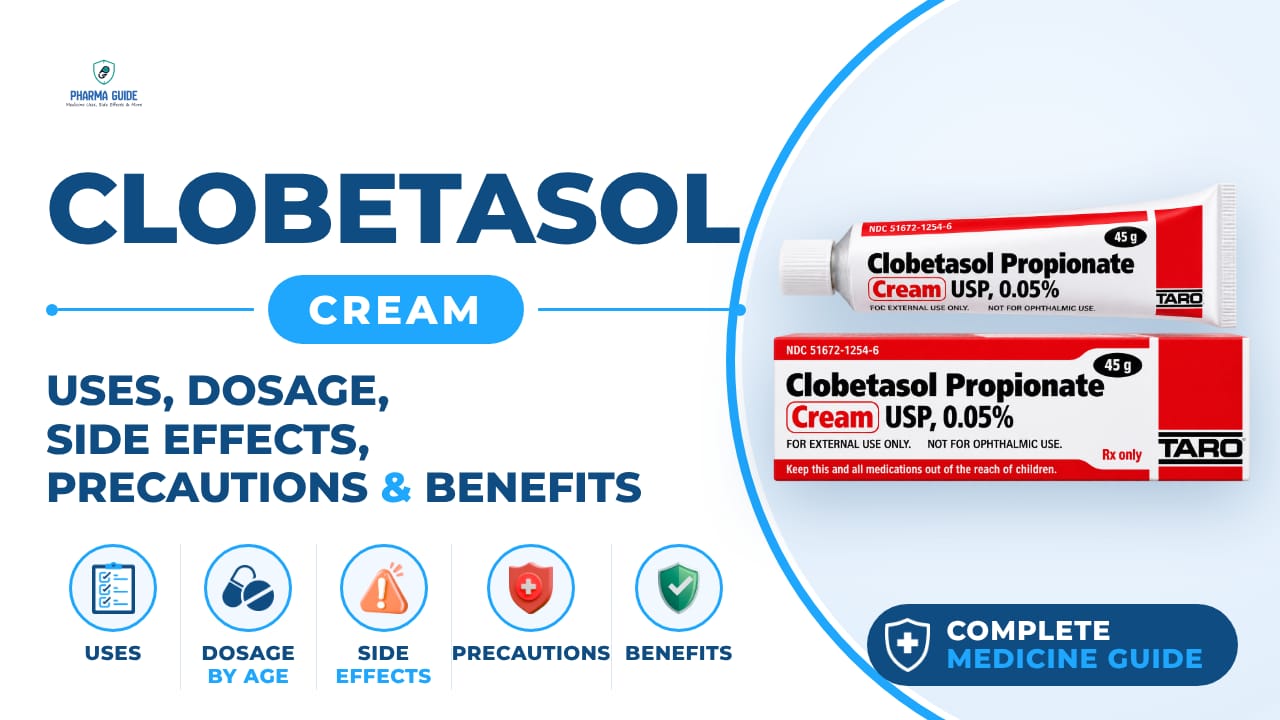
| Generic name | Clobetasol propionate |
|---|---|
| Drug class | Topical corticosteroid |
| Forms | Cream, Ointment, Gel/Jelly, Foam, Lotion, Emollient cream, Shampoo, Spray |
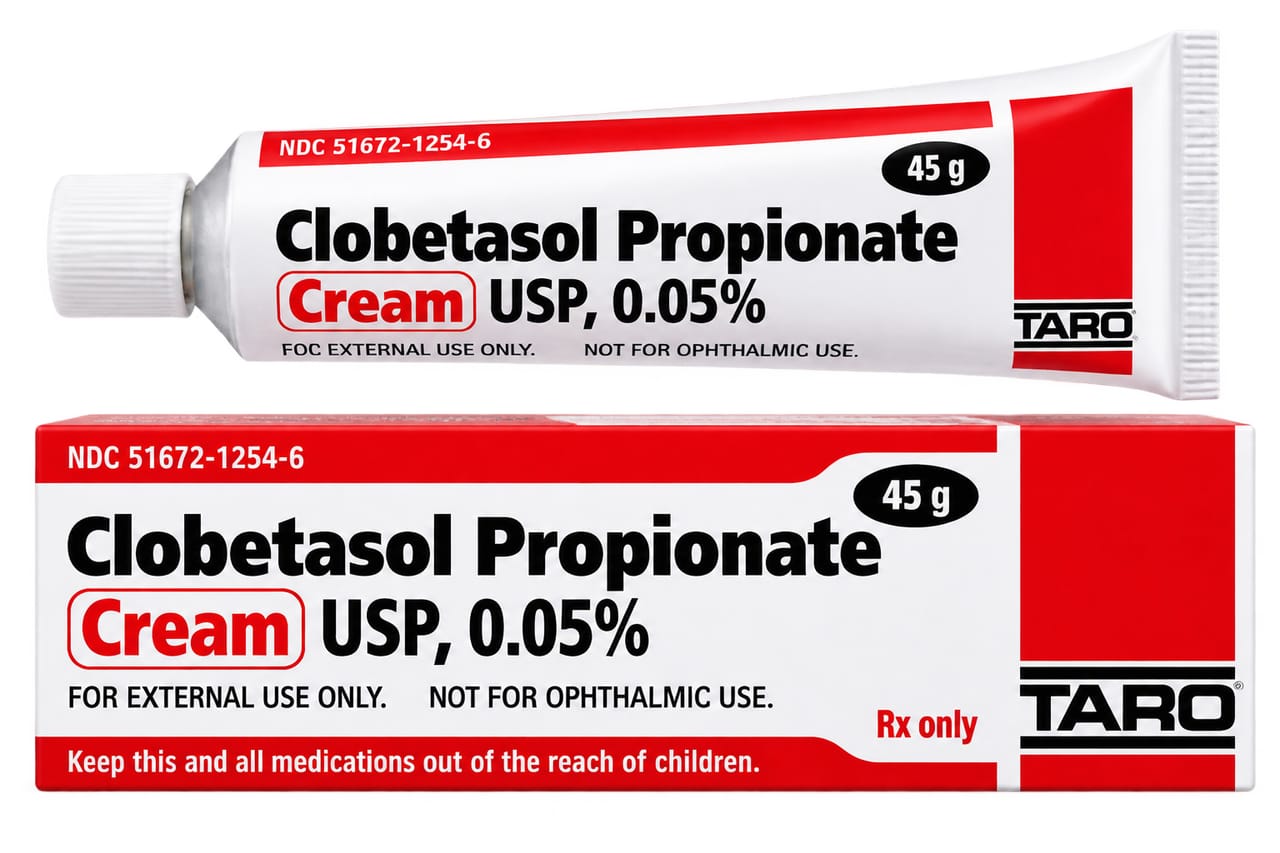
Quick overview
Clobetasol Cream contains clobetasol propionate, a strong prescription topical corticosteroid. It is applied to the skin to reduce redness, itching, swelling, and other discomfort caused by moderate to severe corticosteroid-responsive skin conditions, including plaque psoriasis and eczema. It is intended for short-term use as directed by a doctor.
What is Clobetasol Cream
Clobetasol cream is a strong prescription topical corticosteroid (cortisone-like medicine) used on the skin to reduce redness, itching, swelling, and other discomfort caused by certain skin conditions.
Clobetasol Cream uses
- Short-term relief of inflammation and itching from moderate to severe corticosteroid-responsive skin conditions, including plaque psoriasis
- Treatment of eczema and other corticosteroid-responsive dermatoses
- Relief of redness, itching, and swelling of the skin
Benefits of Clobetasol Cream
- Reduces redness, scaling, and itching that occur with psoriasis
- Superior to vehicle (inactive base) in reducing signs and symptoms of psoriasis and eczema in clinical trials
How Clobetasol Cream works
Clobetasol reduces inflammation and itching by lowering the body's inflammatory response and calming an overactive immune reaction in the skin. It also narrows blood vessels in the skin, which helps reduce redness.
Clobetasol Cream dosage
Apply a thin layer to the affected skin and rub in gently; do not apply thick layers. Apply twice daily, preferably once in the morning and once in the evening. Wash your hands before and after applying the medicine.
Do not apply to the face, underarms, groin, or areas where skin folds together unless your doctor tells you to. Do not bandage, wrap, or otherwise cover the treated skin unless your doctor tells you to, since this increases absorption. Wash the treated area with a mild cleanser and pat dry before applying, if directed.
Avoid contact with the eyes, mouth, lips, nose, and vaginal area. Do not use on cuts, scrapes, burns, or broken skin. Do not use cosmetics or other skin products on treated areas. Do not use other corticosteroid-containing products at the same time as this medicine.
Keep using the medicine for the full time your doctor prescribes, but do not use it longer than directed. Stop using the medicine once your skin condition has healed, even if before your treatment course ends.
Adults and children 12 years and older may use this medicine as directed; use in children younger than 12 is not recommended. Older adults may need a lower dose or different schedule because of age-related changes in how the body processes the drug.
| Age group | Dose |
|---|---|
| Under 12 Years | Use only if prescribed by a doctor |
| 12 Years and Above | Apply a thin layer to affected area once or twice daily |
| Adults (18–64 Years) | Apply a thin layer once or twice daily; use only for short-term treatment |
| Older Adults (65+ years) | Apply a thin layer with caution due to increased skin sensitivity |
Available forms and strengths
- Cream
- Ointment
- Gel/Jelly
- Foam
- Lotion
- Emollient cream
- Shampoo
- Spray
Side effects of Clobetasol Cream
Common
- Burning or stinging at the application site
- Itching
- Irritation
- Dry skin
- Redness or flushing of the skin
- Skin discomfort
Serious
- Adrenal gland problems (adrenal insufficiency) - symptoms include dizziness, fainting, low blood pressure, and fatigue
- Cushing's syndrome - symptoms include high blood sugar, high blood pressure, increased thirst, and increased hunger
- Thinning of the skin, easy bruising, or skin atrophy
- Widening of small blood vessels in the skin (telangiectasia)
- Skin infections or worsening of existing infections
- Severe allergic reaction - trouble breathing, swelling of the throat or tongue
- Increased eye pressure, glaucoma, or vision changes if the medicine gets near the eyes
- Worsening of psoriasis (red, scaly, thick patches of skin)
- Wounds that are slow to heal
Warnings and precautions
- This medicine can be absorbed through the skin and may cause the adrenal glands to stop working properly, especially if used on large areas, for a long time, on broken skin, under a dressing, or together with other steroids. Do not use more than the maximum recommended amount per week, and do not use for longer than your doctor recommends. Do not use on the face, underarms, or groin areas.
- Do not cover treated skin with a bandage or dressing unless your doctor tells you to, as this increases absorption and side effects. This medicine should not be used to treat rosacea or perioral dermatitis. If you develop a skin infection while using this medicine, tell your doctor, as you may need treatment for the infection or may need to stop using clobetasol.
- Use in children is generally not recommended due to a higher risk of side effects; children can absorb more of the drug through their skin than adults. This medicine can transfer to other people if they touch your treated skin, so wash your hands well after applying it. Tell your doctor you are using this medicine if you are having surgery, including dental surgery.
- There is not enough research in humans to know for certain how this medicine affects an unborn baby, and animal studies have shown harm to the fetus. Use only if your doctor decides the benefit outweighs the risk.
- It is not known if this medicine passes into breast milk in amounts that could affect a nursing baby. Talk to your doctor about the best way to feed your baby if you are using this medicine.
- Apply only a thin layer to the affected area as directed by a doctor. Do not use on the face, groin, underarms, or skin folds unless prescribed.
- If you have severe liver problems, your body may not break down this medicine as well, which can cause it to build up and increase your risk of side effects.
- Avoid applying on broken, infected, or irritated skin unless advised by a healthcare provider. Do not use for long periods, as it may cause skin thinning and other side effects.
- This medicine does not cause drowsiness.
Storage
- Store at room temperature (15-30°C); do not refrigerate the cream
- Keep the container tightly closed
- Keep out of the reach of children
- Do not keep outdated medicine or medicine no longer needed
- Ask your healthcare professional how to dispose of unused medicine
- Keep away from heat, moisture, and direct light
- Keep from freezing
When to see a doctor
- Get medical help right away if you have signs of adrenal gland problems, such as dizziness, fainting, low blood pressure, or unusual tiredness.
- Seek emergency care if you have a severe allergic reaction, such as trouble breathing or swelling of the throat or tongue.
- Contact your doctor right away if you notice blurred vision or any other change in your eyesight during or after treatment.
- Call your doctor if you develop a skin rash, burning, stinging, swelling, or irritation at the treated area.
- Tell your doctor if your skin condition is not improving after using the medicine for the recommended period.
- If you think you have used too much of this medicine, contact your doctor or local poison control center right away; call for emergency help if symptoms are severe.
Alternatives
- Betamethasone Cream
- Mometasone Cream
- Hydrocortisone Cream
Watch the video
FAQs
What is Clobetasol Cream used for?
It is used for short-term relief of inflammation and itching from moderate to severe corticosteroid-responsive skin conditions, including plaque psoriasis, eczema, and other corticosteroid-responsive dermatoses.
How should I apply Clobetasol Cream?
Apply a thin layer to the affected skin and rub in gently, twice daily, preferably once in the morning and once in the evening. Wash your hands before and after applying, and do not bandage or cover the treated area unless directed by your doctor.
Can Clobetasol Cream be used on the face?
No, it should not be applied to the face, underarms, groin, or skin folds unless your doctor tells you to.
What are the serious side effects of Clobetasol Cream?
Serious side effects include adrenal gland problems, Cushing's syndrome, thinning of the skin, easy bruising, widening of small blood vessels, skin infections, severe allergic reactions, increased eye pressure or vision changes, and worsening of psoriasis.
Can children use Clobetasol Cream?
Use in children younger than 12 is not recommended, as children can absorb more of the drug through their skin and have a higher risk of side effects.
General information, not medical advice
Your prescriber and the leaflet in your pack know your situation. This page does not.
- Follow your prescriber and the leaflet
- Don't start, stop, or change a dose on your own
- Doses and warnings differ by country and product
Sources
- https://www.medcentral.com/drugs/monograph/4403-386008/clobetasol-topical
- https://www.medicalnewstoday.com/articles/clobetasol-topical-cream
- Mayo Clinic - Clobetasol (topical application route)
- Sandoz Clobetasol Product Monograph, Sandoz Canada Inc., December 17, 2019
- Clobetasol Propionate Lotion Prescribing Information, Lupin Pharmaceuticals, December 2024
- TEVA-CLOBETASOL Product Monograph, Teva Canada Limited, December 18, 2017
Video
Related medicines
Amcinonide Lotion: Uses, Dosage, Side Effects, Precautions and Alternates
Topical corticosteroid
Amcinonide Lotion is a high-potency corticosteroid for eczema, dermatitis, and psoriasis. Learn uses, dosage, side effects, and precautions.
Amcinonide Cream: Uses, Dosage, Side Effects, Precautions and Alternates
Topical corticosteroid
Amcinonide Cream is a high-potency corticosteroid that relieves itching, redness, and inflammation from eczema, dermatitis, and psoriasis.