
Safety
General information, not medical advice
Your prescriber and the leaflet in your pack know your situation. This page does not.
- Follow your prescriber and the leaflet
- Don't start, stop, or change a dose on your own
- Doses and warnings differ by country and product
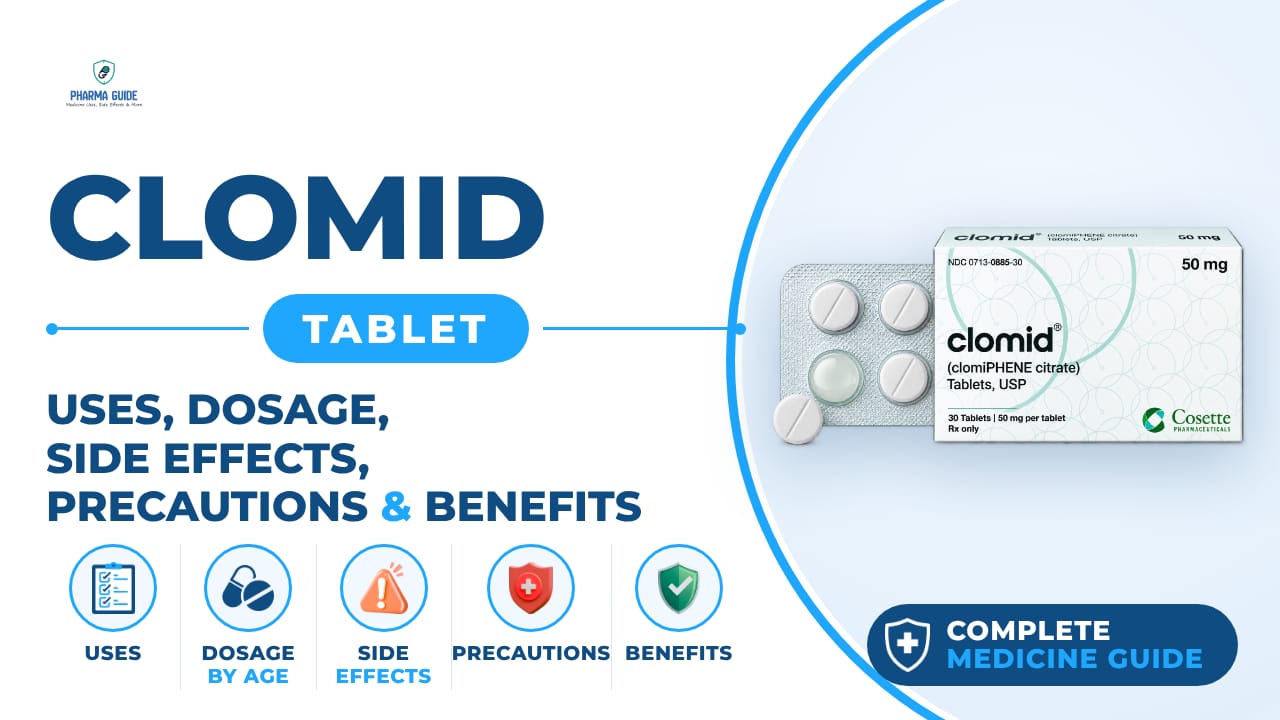
Clomid Tablet: Uses, Dosage, Side Effects, Precautions and Alternates
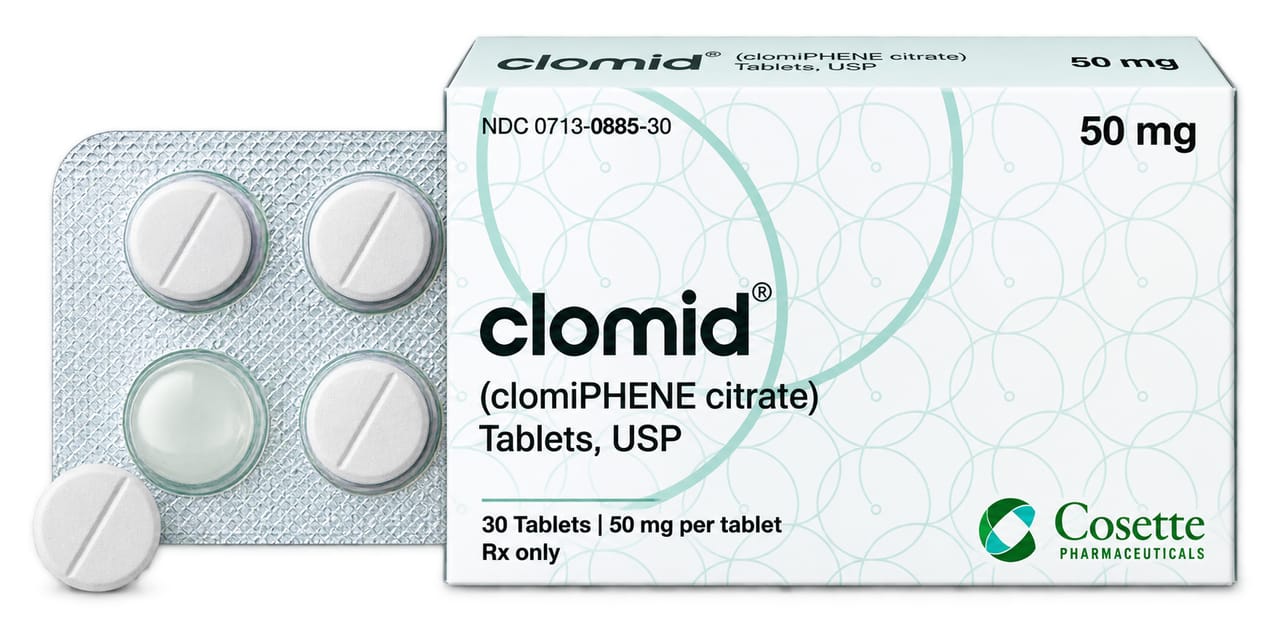
| Generic name | Clomiphene citrate |
|---|---|
| Drug class | Synthetic ovulation stimulant / ovulatory agent |
| Forms | Tablet |
Quick overview
Clomid Tablet (clomiphene citrate) is a non-steroidal fertility medicine used to cause ovulation in women with certain conditions, such as polycystic ovary syndrome, that prevent natural ovulation. It works by lowering estrogen early in the cycle, prompting the pituitary gland to release more follicle-stimulating hormone (FSH) and luteinizing hormone (LH) to ripen and release an egg. It is typically taken once daily for 5 days under medical supervision, with monitoring throughout treatment. Common side effects include hot flashes and breast tenderness, while serious effects such as ovarian hyperstimulation syndrome require prompt medical attention.
What is Clomid Tablet
Clomid is a non-steroidal fertility medicine used to cause ovulation in women with certain medical conditions, such as polycystic ovary syndrome, that prevent naturally occurring ovulation.
Clomid Tablet uses
- Ovulation induction in women with polycystic ovary syndrome (PCOS)
- Treatment of unexplained infertility
- Management of ovulatory dysfunction
- Enhancement of fertility in women planning to become pregnant
- Female infertility caused by anovulation (ovaries not releasing an egg each cycle)
Benefits of Clomid Tablet
- Helps develop and release a mature egg to improve chances of pregnancy
- Helps regulate the menstrual cycle so ovulation timing can be predicted
- In studies, women taking Clomid ovulate about 80% of the time, and nearly half conceive within three cycles
How Clomid Tablet works
Clomid lowers the amount of estrogen circulating in the body early in the cycle. This tricks the pituitary gland in the brain into releasing more follicle-stimulating hormone (FSH) and luteinizing hormone (LH), which tell the ovary to ripen a follicle and release an egg.
Clomid Tablet dosage
Take exactly as directed by your doctor and follow the instructions on your prescription label. It is usually taken once a day for 5 days, starting around the 5th day of your menstrual period, but your doctor will tell you exactly when to start. Take it at about the same time each day, and swallow the tablet whole with a glass of water.
You will need pelvic exams and monitoring (such as temperature charting, ultrasound scans, or blood/urine tests) before and during treatment. Have sexual intercourse around the time you are expected to ovulate, which is usually several days after finishing the tablets.
Do not take a double dose if you miss one — skip the missed dose and take your next dose as scheduled. Treatment is usually limited to a small number of cycles; your doctor will tell you how many courses you need. Avoid alcohol or other medicines during treatment unless your doctor says it is okay.
| Age group | Dose |
|---|---|
| Under 18 Years | Not recommended |
| 18–44 Years | 50 mg (1 tablet) once daily for 5 days |
| 45+ Years | 50 mg (1 tablet) once daily for 5 days, only under specialist supervision |
| Men (Adults) | Dose must be determined by a fertility specialist |
Available forms and strengths
- Tablet
Side effects of Clomid Tablet
Common
- Hot flashes/flushing (warmth, redness, or tingly feeling)
- Breast pain, tenderness, or swelling
- Headache
- Breakthrough bleeding or spotting
- Bloating
- Nausea and vomiting
- Mood changes such as irritability, anxiety, or depression
- Insomnia
- Fatigue
- Dizziness or light-headedness
- Hair loss
- Vaginal dryness
- Vaginal discharge
- Increased frequency of urination
- Increased heart rate or palpitations
- Enlarged ovaries
Serious
- Signs of allergic reaction: hives, difficulty breathing, swelling of the face, lips, tongue, or throat
- Ovarian hyperstimulation syndrome (OHSS): stomach pain, bloating, nausea, vomiting, diarrhea, rapid weight gain (especially face and midsection), little or no urinating, pain when breathing, rapid heart rate, or feeling short of breath
- Pelvic pain or pressure, or enlargement in the pelvic area
- Vision problems, seeing flashes of light or floaters, or increased sensitivity of eyes to light
- Heavy vaginal bleeding
- Erythema multiforme (a skin condition with red, itchy spots that may blister, sometimes with fever, sore throat, headache, or diarrhea)
- Growth of uterine fibroids
- Higher chance of ectopic pregnancy if you conceive on Clomid
- Small increase in risk of ovarian cancer with prolonged use
- High triglyceride levels in people with a history of this condition
Warnings and precautions
- Do not use Clomid if you have liver disease, abnormal vaginal bleeding that hasn't been evaluated, an uncontrolled thyroid or adrenal gland disorder, an ovarian cyst unrelated to PCOS, a pituitary gland tumor, or if you are pregnant.
- Using Clomid for longer than 3 treatment cycles may raise the risk of developing an ovarian tumor. Ask your doctor about your specific risk.
- Fertility treatment with Clomid can raise the chance of having twins or other multiple births, which are high-risk pregnancies for both mother and babies.
- Taking more than your doctor's prescribed dose can overstimulate your ovaries, possibly damaging them and endangering your health.
- Do not give this medicine to anyone else, even if they have the same condition, and do not use it for any other complaint unless your doctor tells you to.
- Do not use Clomid if you are already pregnant. Talk to your doctor if you have concerns about the effects of Clomid on a new pregnancy, and be aware fertility treatment can raise the chance of a multiple pregnancy, which carries higher risks.
- Clomiphene can pass into breast milk and may harm a nursing baby, and it may slow milk production in some women. Tell your doctor if you are breastfeeding.
- Do not use Clomid if you have liver disease or a history of liver problems.
- Avoid alcohol during treatment unless your doctor advises otherwise.
- This medicine may cause blurred vision or other visual disturbances, so be careful if you drive or do anything that requires you to be alert and see clearly until you know how it affects you.
Storage
- Store at room temperature away from moisture, heat, and light.
- Keep your tablets in a cool dry place where the temperature stays below 30°C.
- Keep your tablets in the pack until it is time to take them.
- Keep in a cool, dry place, away from direct sunlight, out of reach of children.
- If you no longer need to use this medicine or it is out of date, take it to any pharmacy for safe disposal.
- Do not use this medicine after the expiry date (EXP).
When to see a doctor
Get emergency help right away for signs of an allergic reaction: hives, difficulty breathing, or swelling of the face, lips, tongue, or throat.
Call your doctor right away if you notice stomach pain, bloating, nausea, vomiting, diarrhea, rapid weight gain (especially in the face and midsection), little or no urinating, or pain when breathing along with a rapid heart rate or shortness of breath — these can be signs of ovarian hyperstimulation syndrome (OHSS), which can be life-threatening.
Stop using Clomid and call your doctor right away if you have pelvic pain or pressure, pelvic enlargement, vision problems, flashes of light or floaters in your vision, increased sensitivity of the eyes to light, or heavy vaginal bleeding.
If your period is overdue, contact your doctor or fertility unit for advice, since this could mean either that the dose wasn't enough to cause ovulation or that you may be pregnant.
If you think you have taken too much Clomid, get urgent medical attention immediately, even if you feel fine.
Alternatives
- Letrozole
- Menotropins
- Metformin
Watch the video
FAQs
What is Clomid Tablet used for?
Clomid is used for ovulation induction in women with polycystic ovary syndrome, treatment of unexplained infertility, management of ovulatory dysfunction, and enhancing fertility in women trying to conceive.
How does Clomid Tablet work?
Clomid lowers estrogen levels early in the cycle, which tricks the pituitary gland into releasing more follicle-stimulating hormone (FSH) and luteinizing hormone (LH), prompting the ovary to ripen and release an egg.
What is the usual dosage of Clomid Tablet?
Clomid is usually taken once daily for 5 days, starting around day 5 of the menstrual period, at a dose of 50 mg (1 tablet) daily for adults aged 18-44, with monitoring throughout treatment.
What are the common side effects of Clomid Tablet?
Common side effects include hot flashes, breast tenderness or swelling, headache, bloating, nausea, mood changes, insomnia, fatigue, dizziness, and enlarged ovaries.
What are signs of ovarian hyperstimulation syndrome (OHSS) from Clomid?
Signs include stomach pain, bloating, nausea, vomiting, diarrhea, rapid weight gain (especially in the face and midsection), little or no urinating, pain when breathing, rapid heart rate, or shortness of breath, and require immediate medical attention.
General information, not medical advice
Your prescriber and the leaflet in your pack know your situation. This page does not.
- Follow your prescriber and the leaflet
- Don't start, stop, or change a dose on your own
- Doses and warnings differ by country and product
Sources
Video
Related medicines

Injectafer Injection: Uses, Dosage, Side Effects, Precautions and Alternates
Iron products
Injectafer (ferric carboxymaltose) treats iron deficiency anemia and heart failure-related iron deficiency via IV. Learn uses, dosage, side effects, and

Gliclazide Tablet: Uses, Dosage, Side Effects, Precautions and Alternates
Sulfonylurea (hypoglycemic/antidiabetic agent)
Gliclazide Tablet is a sulfonylurea for type 2 diabetes that boosts insulin release. Learn about dosage, side effects, warnings, and precautions.