
Safety
General information, not medical advice
Your prescriber and the leaflet in your pack know your situation. This page does not.
- Follow your prescriber and the leaflet
- Don't start, stop, or change a dose on your own
- Doses and warnings differ by country and product
Clomifene Citrate Tablet: Uses, Dosage, Side Effects, Precautions and Alternates
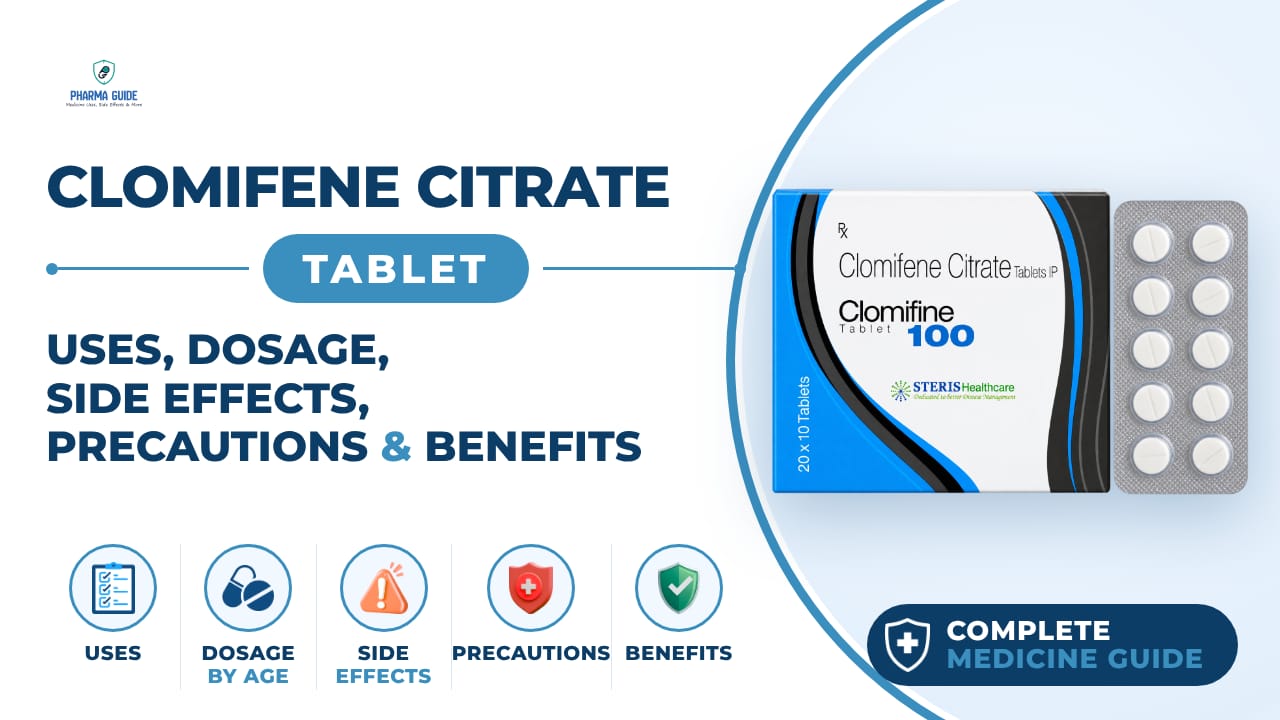
| Generic name | Clomifene Citrate |
|---|---|
| Drug class | ovulation stimulant |
| Forms | Tablet |
Quick overview
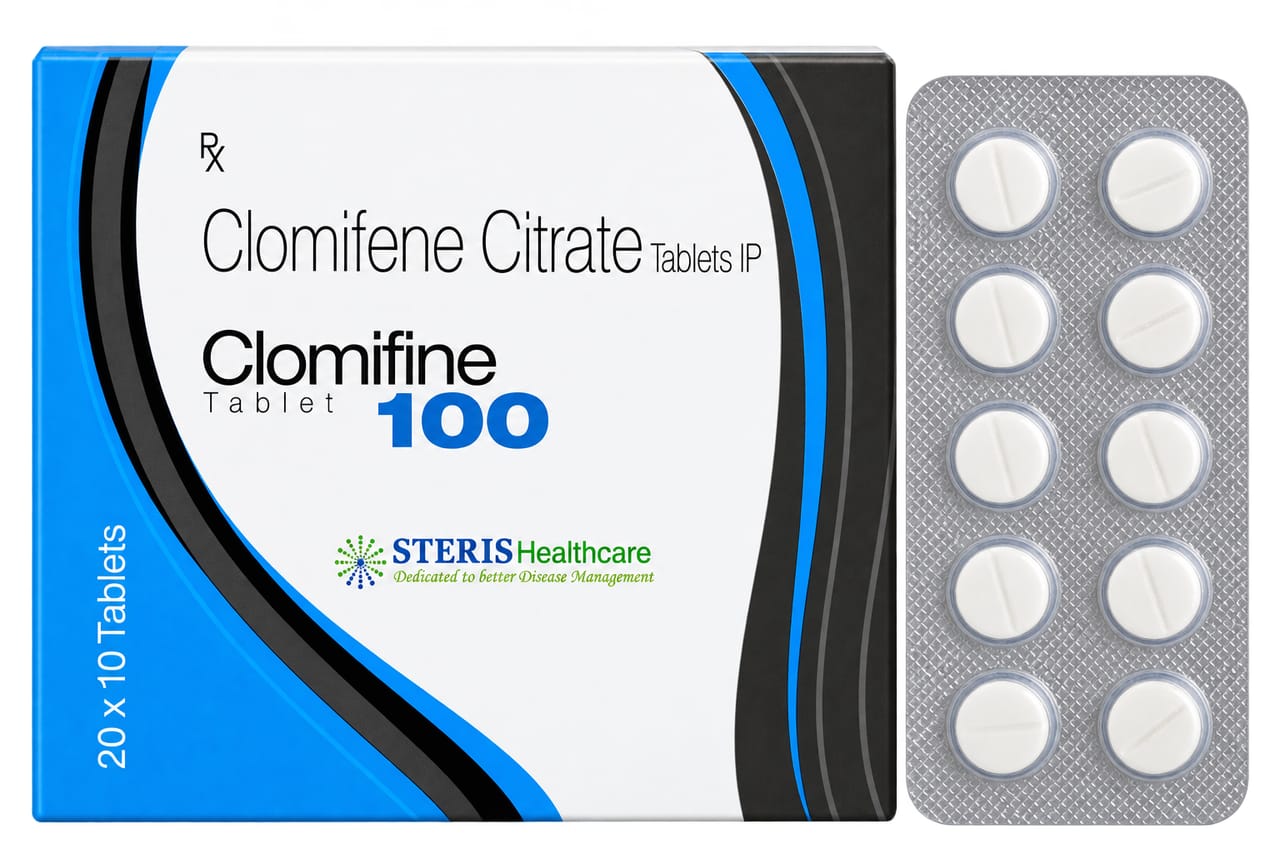
Clomifene Citrate Tablet contains clomifene citrate, an ovulation stimulant used to treat certain types of infertility in women who are not ovulating properly. It works by stimulating the release of eggs from the ovary and is taken by mouth as part of monitored fertility treatment. Common side effects include flushing, stomach discomfort, and headaches, while serious risks include ovarian hyperstimulation, multiple pregnancy, and vision problems. It should not be taken by children, adolescents, men, or women who have already gone through menopause.
What is Clomifene Citrate Tablet
Clomifene Citrate Tablet contains clomifene citrate, a medicine that belongs to a group called ovulation stimulants. It works by stimulating the release of eggs from the ovary.
Clomifene Citrate Tablet uses
- Treats some types of infertility in women who are not ovulating properly
- Helps women develop and release a mature egg
- Treats absent or irregular menstrual periods caused by conditions like polycystic ovary syndrome (PCOS)
- Increases the overall chance of natural conception or assisted procedures like intrauterine insemination (IUI)
Benefits of Clomifene Citrate Tablet
- Helps induce ovulation
- Used for certain forms of anovulatory infertility
- Can improve chances of ovulation in selected patients with PCOS
- Oral treatment rather than injectable fertility therapy
- Commonly used as part of monitored fertility treatment
How Clomifene Citrate Tablet works
Early in the menstrual cycle, the medicine lowers the amount of natural oestrogen in the body. This tricks the pituitary gland in the brain into producing more follicle stimulating hormone (FSH) and luteinizing hormone (LH). These hormones then cause the ovary to ripen a follicle, a fluid-filled sac that holds an egg, and release the egg.
Clomifene Citrate Tablet dosage
Take this medicine by mouth. Swallow the tablets whole with a drink of water; do not crush or chew them. Your doctor will tell you when in your menstrual cycle to start taking the tablets. Take the tablets once a day for five days, usually starting early in the menstrual cycle.
If you do not have a period after the first course, your doctor may increase your dose for the next course, which should start at least 30 days after the first course. You will not usually take more than three courses of treatment; if ovulation does not happen after three courses, talk to your doctor.
Do not change your dose yourself if you feel it is not working; ask your doctor. If you forget a dose, talk to your doctor as you may need to change your treatment cycle; do not take a double dose to make up for a forgotten tablet. Keep taking the medicine until your doctor tells you to stop, or the treatment may not work.
This medicine should not be taken by children, adolescents, men, or women who have already gone through the menopause.
| Age group | Dose |
|---|---|
| 18–35 years | Commonly 50 mg once daily for 5 days, usually started early in the menstrual cycle |
Available forms and strengths
Tablet.
Side effects of Clomifene Citrate Tablet
Common
- Flushing of the skin
- Pain or discomfort in the lower part of the stomach, weight gain, swelling (possible sign of enlarged ovaries)
- Feeling or being sick
- Increased pain with periods, heavy periods, or bleeding between periods
- Painful breasts
- Headaches
- Feeling bloated and distended
- Blurring of vision or spots or flashes in front of the eyes
- Hot flashes or sudden flushing
- Mild headaches
- Stomach bloating or pelvic discomfort
- Breast tenderness
- Mood swings or irritability
- Dizziness
Serious
- Allergic reaction such as rash, itching, swallowing or breathing problems, swelling of face, lips, throat or tongue, cold clammy skin, palpitations, dizziness, weakness, or fainting
- Signs of a stroke: numbness, weakness or paralysis on one side of the body, slurred speech, sudden blurred vision, confusion, or unsteadiness
- Signs of ectopic pregnancy: vaginal bleeding and abdominal pain if you are pregnant
- Reduced vision, eye pain, or difficulty seeing colours (possible optic nerve inflammation)
- Over-stimulation of the ovary causing pain in the pelvis, stomach, or calf, swelling or bloating, passing less urine, difficulty breathing, or weight gain
- Liver problems causing yellowing of the eyes or skin (jaundice)
- Mental illness such as psychosis
- Reduced visual acuity, optic nerve damage, retinal detachment, retinal blood vessel clot, double vision, eye pain, or focusing problems
- Fits (seizures)
- Cataracts
- Ovarian Hyperstimulation Syndrome: severe pelvic pain, rapid weight gain, or swelling
- Multiple pregnancy (twins or higher)
- Increased levels of fat in the blood, increased liver enzymes, or pancreatitis symptoms (upper abdominal pain)
- Palpitations, feeling faint or losing consciousness, confusion or speech problems
- Skin rash, itching, or unusual skin sensations like numbness, tingling, or burning
- Feeling anxious or nervous
- Bruising
- Swelling of the face, around the eyes, lips, or tongue
- Hair loss or thinning
Warnings and precautions
- Do not take this medicine if you are pregnant or think you may be pregnant. You should have a test to make sure you are not pregnant before starting treatment.
- Talk to your doctor before taking this medicine if you are breastfeeding or planning to breastfeed, as it can lower the amount of milk produced.
- Avoid in liver disease or abnormal liver function. Do not take this medicine if you have or have ever had liver disease.
- No major direct interaction with alcohol is established, but limiting alcohol is generally advisable during fertility treatment.
- This medicine has moderate effects on the ability to drive and use machines. You may notice blurred vision, which can be a hazard when driving or operating machines, especially in changing lighting. If this happens, do not drive or use tools or machines.
- Do not take this medicine if you are allergic to clomifene or any of its ingredients, are having an early menopause or have been told you are infertile, have or have had liver disease, have unusual menstrual bleeding of unknown cause, have a hormone-sensitive cancer, have an ovarian cyst, are pregnant, or have had visual problems linked to Clomid use before.
- Talk to your doctor about the risks of multiple pregnancies, ectopic pregnancy, ovarian hyperstimulation syndrome, and vision problems before you take this medicine.
- Check with your doctor before taking this medicine if you have had fits or seizures, fibroids, polycystic ovaries, swollen ovaries, a hormone-dependent cancer, or high blood fat levels (or a family history of it).
- This medicine contains lactose and sucrose. If you have been told you cannot tolerate some sugars, talk to your doctor before taking it.
- Doctors usually limit treatment to 3 to 6 cycles because of a possible increased risk of ovarian cancer with longer use.
Storage
- Keep out of the sight and reach of children
- Store in the original container in order to protect from light
- Do not store above 25ºC
- Do not use after the expiry date which is stated on the carton; the expiry date refers to the last day of that month
- Medicines should not be disposed of via wastewater or household waste
- Ask your pharmacist how to dispose of medicines no longer required
When to see a doctor
- Stop taking this medicine and see a doctor or go to a hospital straight away if you have signs of an allergic reaction, such as rash, swallowing or breathing problems, or swelling of the face, lips, throat, or tongue.
- Get help immediately if you have numbness, weakness, or paralysis on one side of the body, slurred speech, sudden blurred vision, confusion, or unsteadiness, as these could be signs of a stroke.
- If you are pregnant and have vaginal bleeding with abdominal pain, these could be signs of an ectopic pregnancy and need urgent medical attention.
- Stop taking the medicine and see a doctor right away if you notice blurred vision, spots, or flashes in front of your eyes, or reduced vision with eye pain, as these could signal serious eye problems.
- If you take more of this medicine than you should, tell a doctor or go to a hospital casualty department straight away and take the medicine pack with you.
- Contact your doctor if you have severe abdominal pain that is much worse than your normal period pain, as this may be a sign of ovarian hyperstimulation.
- You should stop treatment immediately and tell your doctor if you have blurred vision or other visual disturbances.
Alternatives
- Letrozole
- Gonadotropin injections
- Metformin in selected patients with PCOS
Watch the video
FAQs
What is Clomifene Citrate Tablet used for?
It treats certain types of infertility in women who are not ovulating properly, helps develop and release a mature egg, treats irregular periods caused by conditions like PCOS, and increases the chance of natural conception or procedures like IUI.
How does Clomifene Citrate Tablet work?
Early in the menstrual cycle, it lowers natural oestrogen levels, which tricks the pituitary gland into producing more FSH and LH. These hormones cause the ovary to ripen a follicle and release an egg.
What is the usual dosage of Clomifene Citrate Tablet?
It is taken by mouth once a day for five days, usually starting early in the menstrual cycle, commonly at 50 mg daily for adults aged 18–35 years. Doctors usually limit treatment to no more than three courses.
Who should not take Clomifene Citrate Tablet?
It should not be taken by children, adolescents, men, or women who have already gone through menopause, or by those who are pregnant, have liver disease, unusual menstrual bleeding of unknown cause, a hormone-sensitive cancer, or an ovarian cyst.
What are the serious side effects of Clomifene Citrate Tablet?
Serious risks include ovarian hyperstimulation syndrome, multiple pregnancy, vision problems such as reduced visual acuity or optic nerve damage, allergic reactions, stroke signs, ectopic pregnancy signs, liver problems, and mental illness such as psychosis.
General information, not medical advice
Your prescriber and the leaflet in your pack know your situation. This page does not.
- Follow your prescriber and the leaflet
- Don't start, stop, or change a dose on your own
- Doses and warnings differ by country and product
Sources
Video
Related medicines

Injectafer Injection: Uses, Dosage, Side Effects, Precautions and Alternates
Iron products
Injectafer (ferric carboxymaltose) treats iron deficiency anemia and heart failure-related iron deficiency via IV. Learn uses, dosage, side effects, and

Gliclazide Tablet: Uses, Dosage, Side Effects, Precautions and Alternates
Sulfonylurea (hypoglycemic/antidiabetic agent)
Gliclazide Tablet is a sulfonylurea for type 2 diabetes that boosts insulin release. Learn about dosage, side effects, warnings, and precautions.