
Safety
General information, not medical advice
Your prescriber and the leaflet in your pack know your situation. This page does not.
- Follow your prescriber and the leaflet
- Don't start, stop, or change a dose on your own
- Doses and warnings differ by country and product
Clomiphene Citrate Tablet: Uses, Dosage, Side Effects, Precautions and Alternates

| Generic name | clomiphene citrate |
|---|---|
| Drug class | Synthetic ovulation stimulant (selective estrogen receptor modulator) |
| Forms | Tablet (50 mg, scored) |
Quick overview
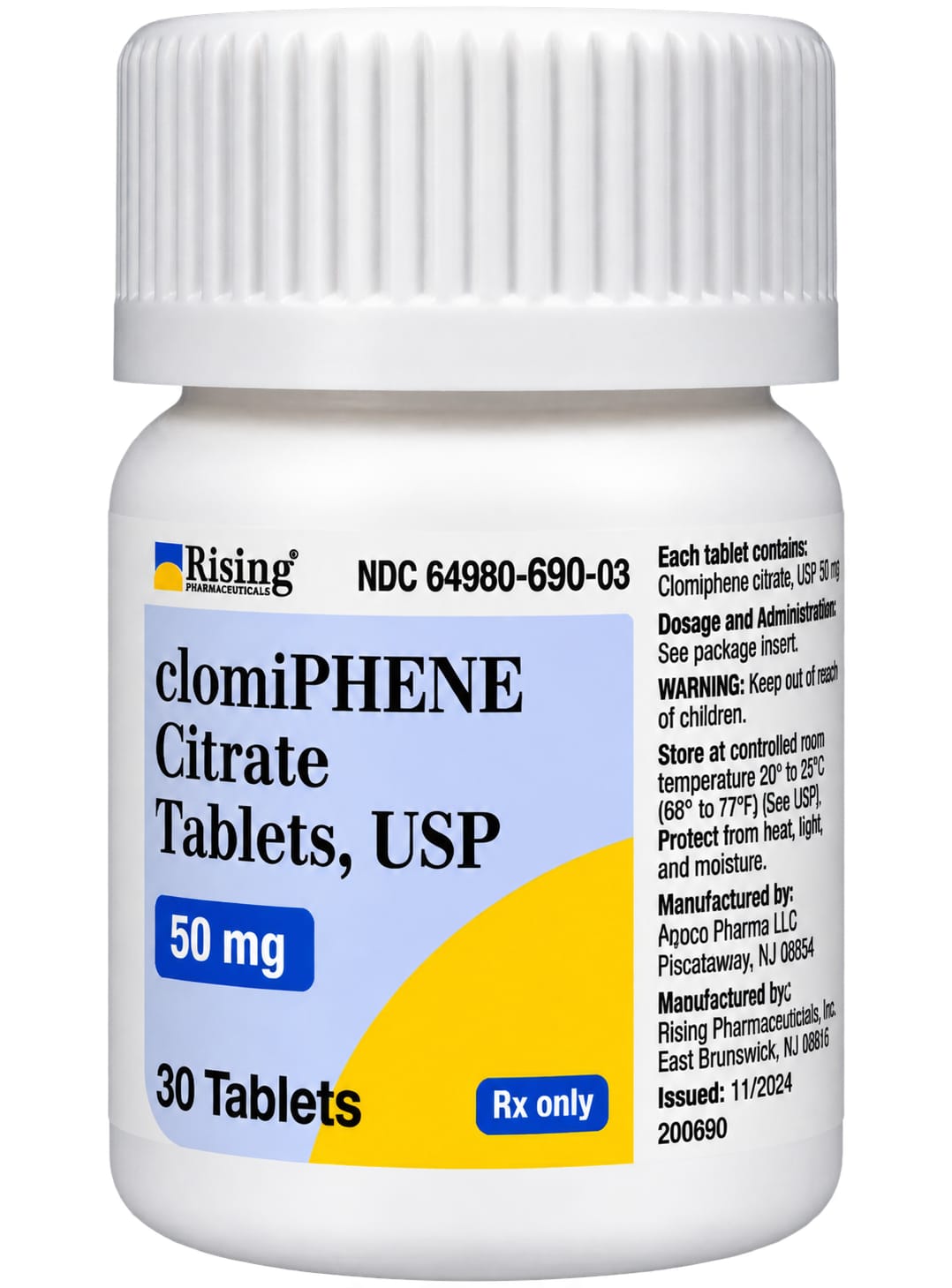
Clomiphene Citrate Tablet (generic name: clomiphene citrate) is a synthetic ovulation stimulant belonging to the selective estrogen receptor modulator class. It is a non-steroidal fertility medicine taken by mouth to help women who are not ovulating normally release eggs so they can try to become pregnant. It works by prompting the pituitary gland to release hormones that stimulate the ovary to develop and release an egg. It is typically taken once daily for 5 days per treatment cycle, as prescribed by a doctor.
What is Clomiphene Citrate Tablet
Clomiphene is a non-steroidal fertility medicine taken by mouth. It is used to help women who are not ovulating normally to release eggs so they can try to become pregnant.
Clomiphene Citrate Tablet uses
- Treating ovulatory dysfunction (not ovulating) in women who want to become pregnant
- Used in women with polycystic ovary syndrome (PCOS) and other causes of anovulation such as post-oral-contraceptive amenorrhea, amenorrhea-galactorrhea syndrome, and psychogenic amenorrhea
- Sometimes used off-label to treat male infertility and low testosterone (secondary hypogonadism)
Benefits of Clomiphene Citrate Tablet
- Ovulation Stimulation: Helps stimulate the release of eggs in women who have difficulty ovulating.
- Fertility Support: Helps improve chances of pregnancy in certain cases of infertility.
- Hormone Regulation: Encourages the body to increase natural reproductive hormone activity.
- PCOS Management Support: May help women with polycystic ovary syndrome (PCOS) who have irregular ovulation.
How Clomiphene Citrate Tablet works
Clomiphene works like estrogen. It blocks estrogen's usual feedback signal to the brain, which causes the pituitary gland to release more hormones (gonadotropins). These hormones stimulate the ovary to develop and release an egg.
Clomiphene Citrate Tablet dosage
Take by mouth, swallowing the tablet whole with a glass of water. It is usually taken once a day for 5 days, generally starting on or about day 5 of the menstrual cycle. Take it at about the same time each day to help you remember. Do not take more tablets or for a longer time than your doctor has prescribed. If you feel the medicine is not working, do not change the dose yourself — ask your doctor.
You will need a pelvic exam before each treatment cycle, and you should have sex at the time you are expected to ovulate, usually several days after finishing the tablets. Follow your doctor's instructions on ovulation testing or temperature charting to time intercourse. Treatment is generally not continued beyond about six cycles.
| Age group | Dose |
|---|---|
| Under 18 Years | Not recommended unless prescribed by a specialist |
| Adults (18–44 Years) | 50 mg once daily for 5 days (cycle-based treatment) |
| Adults (45+ Years) | Use based on fertility evaluation and specialist advice |
| Men (Adults) | Dose varies based on fertility goals and medical assessment |
Available forms and strengths
- Tablet (50 mg, scored)
Side effects of Clomiphene Citrate Tablet
Common
- Hot flashes/flushing
- Abdominal or pelvic discomfort, bloating, or distention
- Nausea or vomiting
- Breast tenderness or discomfort
- Headache
- Abnormal uterine bleeding or spotting
- Mood changes, dizziness, fatigue, insomnia
- Weight gain
- Hair loss (with prolonged use)
Serious
- Ovarian hyperstimulation syndrome (OHSS): abdominal pain, bloating, nausea, vomiting, diarrhea, rapid weight gain, little or no urination, trouble breathing, rapid heart rate
- Visual disturbances: blurred vision, spots, flashes, increased light sensitivity — may be prolonged or irreversible
- Severe pelvic or abdominal pain, or enlargement in the pelvic area (possible ovarian cyst)
- Signs of a stroke: numbness, weakness or paralysis on one side, slurred speech, sudden vision changes, confusion
- Liver problems (yellowing of skin or eyes)
- Severe or sudden headaches
- Symptoms of pancreatitis: severe upper abdominal pain radiating to the back, swollen tender abdomen, nausea, vomiting, fever, fast heart rate
- Signs of a serious allergic reaction: hives, difficulty breathing, swelling of face, lips, tongue, or throat
- Mental illness such as psychosis
- Increased risk of ovarian tumor with prolonged use
Warnings and precautions
- Clomiphene must not be used during pregnancy. It does not provide any benefit if you are already pregnant, and animal studies have shown it can cause fetal harm.
- It isn't known for certain if clomiphene passes into breast milk, but caution is advised because many drugs do pass into milk. Clomiphene may also reduce milk production.
- There is no specific dosing guidance for people with kidney problems, and prolonged use of clomiphene may harm the kidneys.
- Clomiphene should not be used by people with liver disease or a history of liver problems. Your liver function should be checked before starting treatment.
- Clomiphene can cause blurred vision or other visual disturbances, which can make driving or operating machinery more dangerous, especially in changing light conditions.
- Clomiphene can cause ovarian hyperstimulation syndrome (OHSS), which can worsen quickly and become a medical emergency, sometimes within 24 hours.
- Taking clomiphene greatly increases the chance of having twins or other multiple babies, which carries higher risks for both mother and babies.
- Using clomiphene for a long time may raise the risk of developing an ovarian tumor.
- Clomiphene should not be used in people who have or have had liver disease, unexplained abnormal vaginal bleeding, an ovarian cyst not related to PCOS, uncontrolled thyroid or adrenal disease, a pituitary or brain tumor, or in those who are pregnant.
- Treatment is usually not recommended beyond about 6 cycles because long-term safety of continued use hasn't been firmly established.
- Clomiphene should be used cautiously in people with uterine fibroids because it may cause the fibroids to grow larger.
Storage
- Keep out of the reach and sight of children
- Store in the original container between 15 to 30ºC
- Store away from moisture, heat, and light
- Do not flush unneeded medication down the toilet; use a medicine take-back program
When to see a doctor
- Get emergency help right away if you have signs of an allergic reaction, such as hives, trouble breathing, or swelling of your face, lips, tongue, or throat.
- Call your doctor right away if you notice signs of ovarian hyperstimulation syndrome, such as stomach pain, bloating, nausea, vomiting, diarrhea, rapid weight gain, little or no urination, or trouble breathing.
- Stop taking clomiphene and contact your doctor immediately if you experience pelvic pain or pressure, vision problems, seeing flashes of light or floaters, increased eye sensitivity to light, or heavy vaginal bleeding.
- If you have any visual symptoms while on clomiphene, stop taking it and get a full eye exam right away.
- If you experience vision problems, pain or swelling in the abdomen, or vomiting, stop the medication and seek medical advice.
Alternatives
- Letrozole
- Gonadotropin Injections
- Follitropin Alfa
Watch the video
FAQs
What is Clomiphene Citrate Tablet used for?
It is used to treat ovulatory dysfunction in women who want to become pregnant, including those with PCOS and other causes of anovulation. It is sometimes used off-label for male infertility and low testosterone.
How is Clomiphene Citrate Tablet taken?
It is taken by mouth once daily for 5 days per cycle, usually starting on or about day 5 of the menstrual cycle, with treatment generally not continued beyond about six cycles.
What are the common side effects of Clomiphene Citrate Tablet?
Common side effects include hot flashes, abdominal or pelvic discomfort, bloating, nausea or vomiting, breast tenderness, headache, abnormal uterine bleeding, mood changes, dizziness, fatigue, insomnia, and weight gain.
Can Clomiphene Citrate Tablet cause serious side effects?
Yes, serious effects include ovarian hyperstimulation syndrome, visual disturbances, severe pelvic pain, signs of stroke, liver problems, pancreatitis symptoms, allergic reactions, and increased risk of ovarian tumor with prolonged use.
Is Clomiphene Citrate Tablet safe during pregnancy?
No, it must not be used during pregnancy as it provides no benefit once pregnant and animal studies have shown it can cause fetal harm.
General information, not medical advice
Your prescriber and the leaflet in your pack know your situation. This page does not.
- Follow your prescriber and the leaflet
- Don't start, stop, or change a dose on your own
- Doses and warnings differ by country and product
Sources
- https://www.ncbi.nlm.nih.gov/books/NBK559292/
- https://www.drugs.com/clomiphene.html
- https://medlineplus.gov/druginfo/meds/a682704.html
- CLOMID Product Monograph, sanofi-aventis Canada Inc.
- CLOMID FDA Label, sanofi-aventis U.S. LLC
- Clomiphene Citrate Therapy Patient Information, Fertility Fusion, WWL Teaching Hospitals NHS Foundation Trust
Video
Related medicines

Injectafer Injection: Uses, Dosage, Side Effects, Precautions and Alternates
Iron products
Injectafer (ferric carboxymaltose) treats iron deficiency anemia and heart failure-related iron deficiency via IV. Learn uses, dosage, side effects, and

Gliclazide Tablet: Uses, Dosage, Side Effects, Precautions and Alternates
Sulfonylurea (hypoglycemic/antidiabetic agent)
Gliclazide Tablet is a sulfonylurea for type 2 diabetes that boosts insulin release. Learn about dosage, side effects, warnings, and precautions.