
Safety
General information, not medical advice
Your prescriber and the leaflet in your pack know your situation. This page does not.
- Follow your prescriber and the leaflet
- Don't start, stop, or change a dose on your own
- Doses and warnings differ by country and product
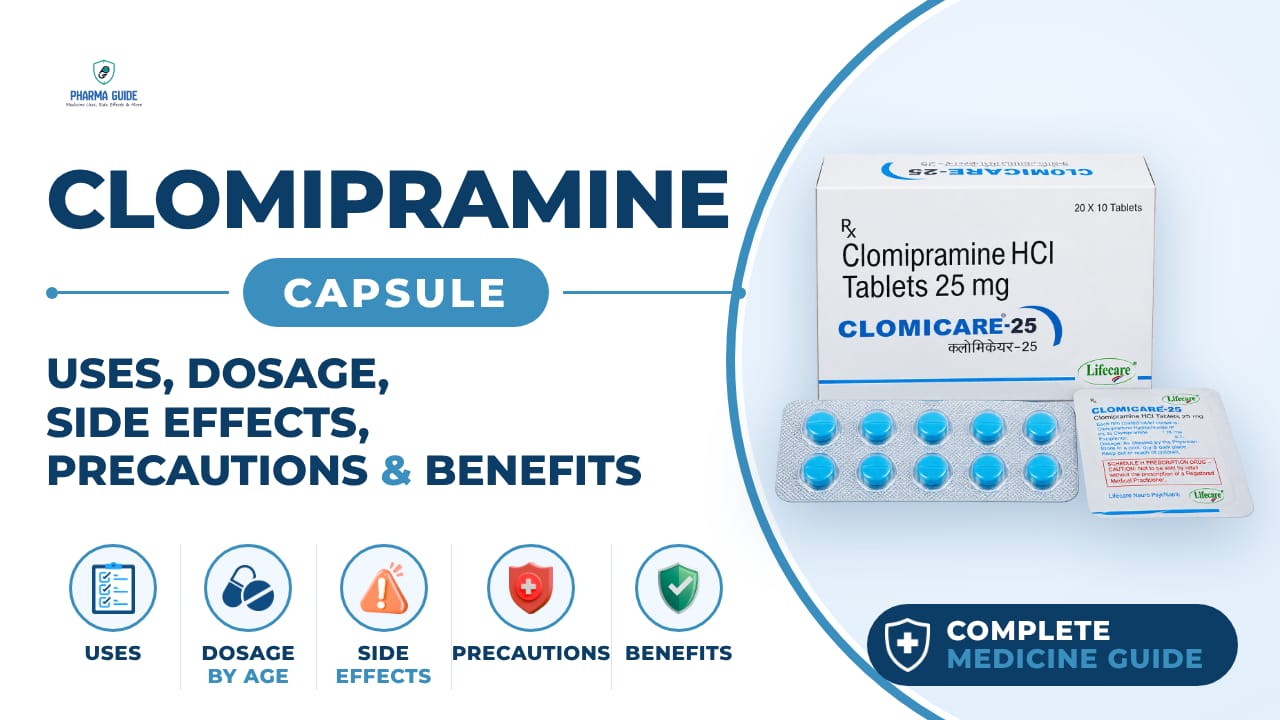
Clomipramine Capsule: Uses, Dosage, Side Effects, Precautions and Alternates
| Generic name | Clomipramine hydrochloride |
|---|---|
| Drug class | Tricyclic antidepressant |
| Forms | Capsule, Tablet |
Quick overview
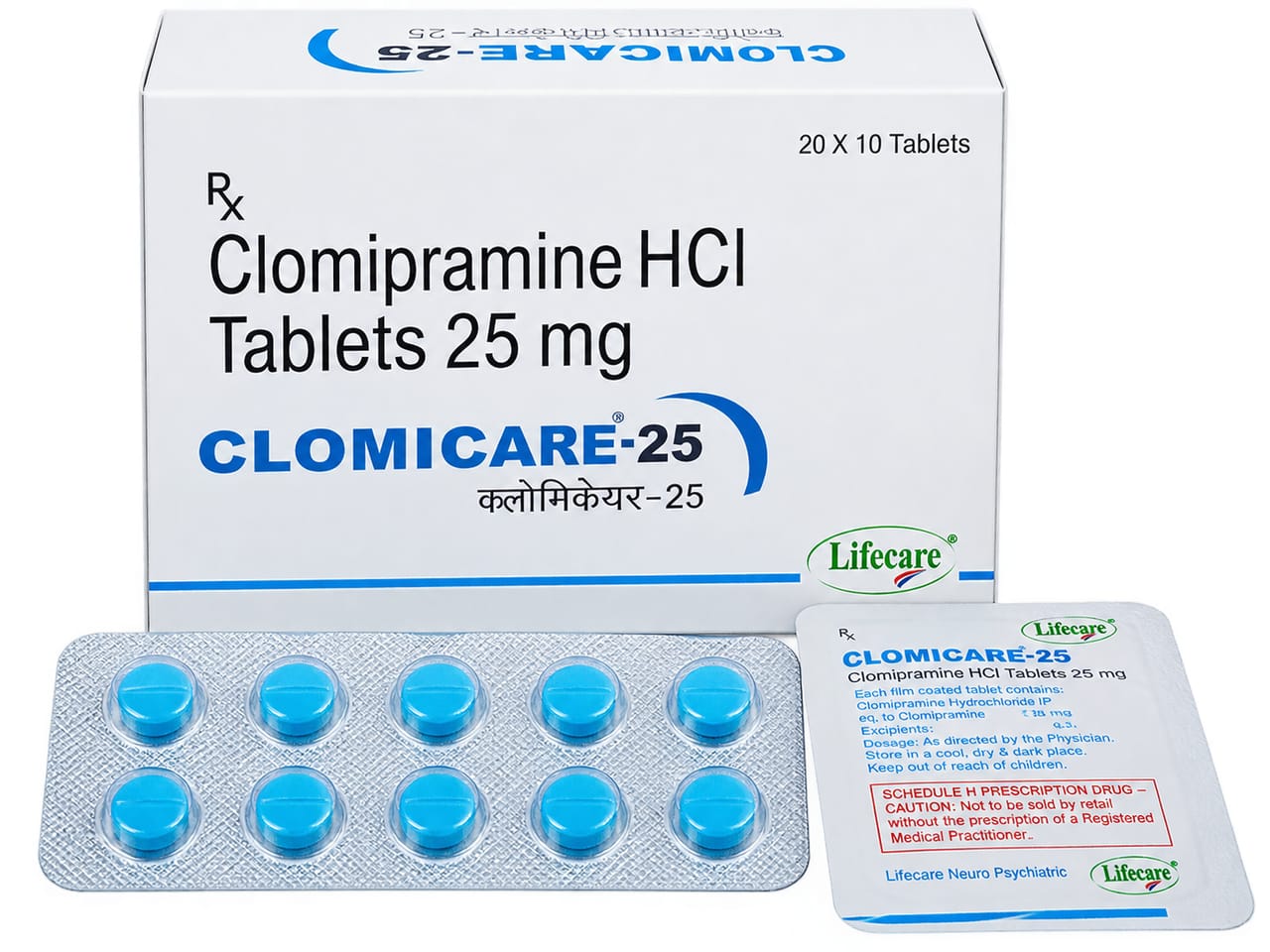
Clomipramine Capsule (clomipramine hydrochloride) is a tricyclic antidepressant used to treat obsessive-compulsive disorder (OCD) and depression, and in some settings for phobias and cataplexy linked to narcolepsy. It works by increasing serotonin and noradrenaline levels in the brain. It is available as a capsule and tablet, and should be used exactly as prescribed due to important warnings around mental health changes, heart effects, and drug interactions.
What is Clomipramine Capsule
Clomipramine is a tricyclic antidepressant used to treat obsessive-compulsive disorder and depression. It is also used for other conditions such as phobias and muscle weakness linked to narcolepsy, depending on where it is prescribed.
Clomipramine Capsule uses
- Obsessive-compulsive disorder (OCD) in adults and children aged 10 and older
- Depression
- Obsessions, compulsions, and phobias in adults
- Muscle weakness (cataplexy) in people with narcolepsy
Benefits of Clomipramine Capsule
- May help reduce unwanted repeated thoughts and behaviors in OCD
- May help relieve symptoms of depression such as low mood, poor sleep, and low energy
- Has a mild calming effect that may help ease anxiety that often comes with depression
How Clomipramine Capsule works
Clomipramine increases the levels of two natural brain chemicals, serotonin and noradrenaline, which helps improve mood and reduce obsessive-compulsive symptoms.
Clomipramine Capsule dosage
Clomipramine is taken by mouth as a capsule or tablet, following your doctor's instructions exactly. At the start of treatment, it may be taken several times a day with meals, then usually changed to a single dose at bedtime once your body adjusts. It can be taken with or without food; taking it with food may help reduce stomach upset. Tablets should be swallowed whole with water and should not be broken, chewed, or crushed. If you have trouble swallowing capsules, the contents can be opened and mixed with soft food like applesauce or pudding, then swallowed without chewing.
Continue taking the medicine even if you feel well, and do not stop suddenly without talking to your doctor, since stopping abruptly can cause withdrawal symptoms. If you forget a dose, take it as soon as you remember, unless it is almost time for the next dose — in that case skip the missed dose and do not double up. Lower starting doses are generally used in elderly patients.
| Age group | Dose |
|---|---|
| Under 18 years | Not recommended |
| 18–64 years | 25 mg, once/day |
| 65+ years | 25 mg, once/day |
Available forms and strengths
- Capsule
- Tablet
Side effects of Clomipramine Capsule
Common
- Drowsiness
- Dry mouth
- Nausea
- Vomiting
- Diarrhea
- Constipation
- Nervousness
- Decreased sexual ability
- Decreased memory or concentration
- Headache
- Stuffy nose
- Change in appetite or weight
- Sweating
- Hot flashes
- Weight gain
- Dizziness
- Shaking/tremor
- Yawning
Serious
- Uncontrollable shaking of a part of the body
- Seizures
- Fast, irregular, or pounding heartbeat
- Difficulty urinating or loss of bladder control
- Believing things that are not true
- Hallucinations
- Severe muscle stiffness
- Unusual tiredness or weakness
- Sore throat, fever, and other signs of infection
- Difficulty breathing or fast breathing
- Eye pain, vision changes, or swelling/redness around the eye (possible angle-closure glaucoma)
- Serotonin syndrome (fever, sweating, muscle twitching, confusion, fast heartbeat)
- Signs of a serious skin reaction (DRESS): fever, severe rash, peeling skin, swollen lymph glands, yellow skin or eyes
Warnings and precautions
- A small number of children, teenagers, and young adults who took antidepressants like clomipramine in studies became suicidal. This medicine is not normally used in children under 18.
- Your mental health may change in unexpected ways, including becoming suicidal, especially at the start of treatment or when your dose changes.
- Serious and sometimes fatal heart problems, including rapid heartbeat, heart rhythm problems, heart attack, or stroke have been reported with this medicine.
- This medicine must not be combined with MAOI medicines (including the antibiotic linezolid or the dye methylene blue) because of a risk of a serious, sometimes fatal reaction.
- This medicine can increase the risk of seizures, especially in people with a history of seizures or other risk factors.
- Do not stop taking this medicine suddenly, as this can cause withdrawal symptoms like dizziness, nausea, headache, and irritability. Your dose should be lowered gradually under your doctor's guidance.
- Clomipramine should generally not be used during pregnancy unless your doctor decides the benefits outweigh the risks. Babies born to mothers who took it may have withdrawal symptoms after birth.
- Breastfeeding is not recommended while taking clomipramine, because the medicine passes into breast milk and could affect your baby.
- Clomipramine should not be used in people with severe kidney damage, and should be prescribed cautiously if there is any kidney impairment.
- Clomipramine should not be used in people with existing liver damage, and liver function should be monitored during treatment.
- Alcohol can increase the drowsiness caused by this medicine, so caution is advised when drinking while taking clomipramine.
- This medicine can cause drowsiness, dizziness, or blurred vision, so you should be careful driving or using machines until you know how it affects you.
Storage
- Keep this medication in the container it came in, tightly closed, and out of reach of children.
- Store it at room temperature and away from excess heat and moisture (not in the bathroom).
- Dispose of unneeded medications in a way so that pets, children, and other people cannot take them. Do not flush this medication down the toilet. Use a medicine take-back program.
When to see a doctor
- Get medical help right away if you have thoughts of harming or killing yourself at any time.
- Call your doctor right away if you notice new or worsening depression, extreme worry, agitation, panic attacks, trouble sleeping, aggressive behavior, irritability, or severe restlessness.
- Seek emergency medical treatment right away if you have eye pain, vision changes such as seeing colored rings around lights, or swelling or redness in or around the eye, which could signal a serious eye problem.
- Get emergency help if you or someone else has collapsed, had a seizure, has trouble breathing, or cannot be woken up after taking too much of this medicine.
- Call your doctor straight away or go to the emergency department if you notice signs of an allergic reaction, irregular or fast heartbeat, severe dizziness, confusion, hallucinations, fainting, seizures, or yellowing of the skin or eyes.
Alternatives
- Paroxetine
- Fluoxetine
- Sertraline
Watch the video
FAQs
What is Clomipramine Capsule used for?
It is used to treat obsessive-compulsive disorder (OCD) in adults and children 10 and older, depression, obsessions, compulsions and phobias in adults, and cataplexy (muscle weakness) linked to narcolepsy.
How does Clomipramine Capsule work?
It increases levels of serotonin and noradrenaline, natural brain chemicals, which helps improve mood and reduce obsessive-compulsive symptoms.
What is the usual dose of Clomipramine Capsule?
For adults aged 18-64 and those 65 and older, the typical dose is 25 mg once a day. It is not recommended for use in people under 18 years old.
What are the common side effects of Clomipramine Capsule?
Common side effects include drowsiness, dry mouth, nausea, vomiting, diarrhea, constipation, nervousness, decreased sexual ability, headache, stuffy nose, weight changes, sweating, dizziness, and tremor.
Can I drink alcohol while taking Clomipramine Capsule?
Alcohol can increase the drowsiness caused by this medicine, so caution is advised when drinking while taking clomipramine.
General information, not medical advice
Your prescriber and the leaflet in your pack know your situation. This page does not.
- Follow your prescriber and the leaflet
- Don't start, stop, or change a dose on your own
- Doses and warnings differ by country and product
Sources
Video
Related medicines
Tryptomer Tablet: Uses, Dosage, Side Effects, Precautions and Alternates
Tricyclic antidepressant
Tryptomer Tablet (Amitriptyline) treats depression, nerve pain, migraine, and tension headaches. Learn about its uses, dosage, side effects, and precautions.

Norpramin Tablet: Uses, Dosage, Side Effects, Precautions and Alternates
Tricyclic antidepressant
Norpramin Tablet (desipramine) treats depression by restoring brain chemical balance. Learn uses, dosage, side effects, warnings, and precautions.