
Safety
General information, not medical advice
Your prescriber and the leaflet in your pack know your situation. This page does not.
- Follow your prescriber and the leaflet
- Don't start, stop, or change a dose on your own
- Doses and warnings differ by country and product
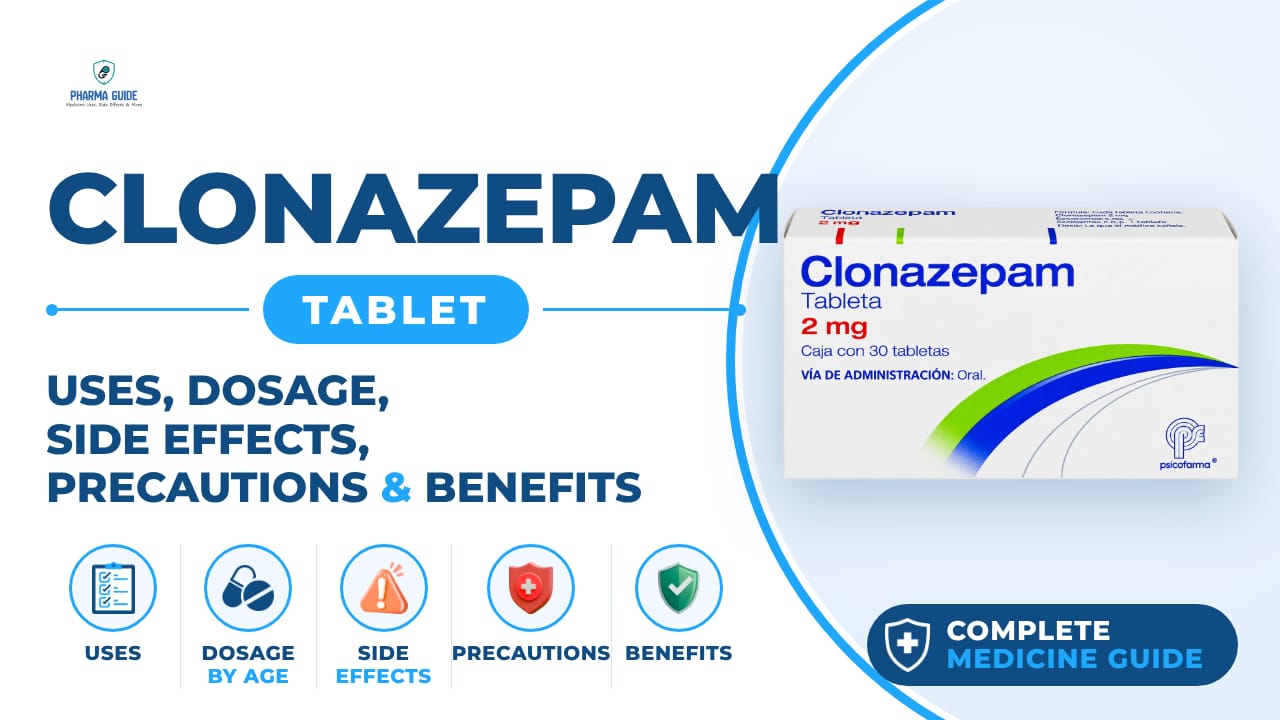
Clonazepam Tablet: Uses, Dosage, Side Effects, Precautions and Alternates
| Generic name | Clonazepam |
|---|---|
| Drug class | Benzodiazepine (anticonvulsant / anti-anxiety agent) |
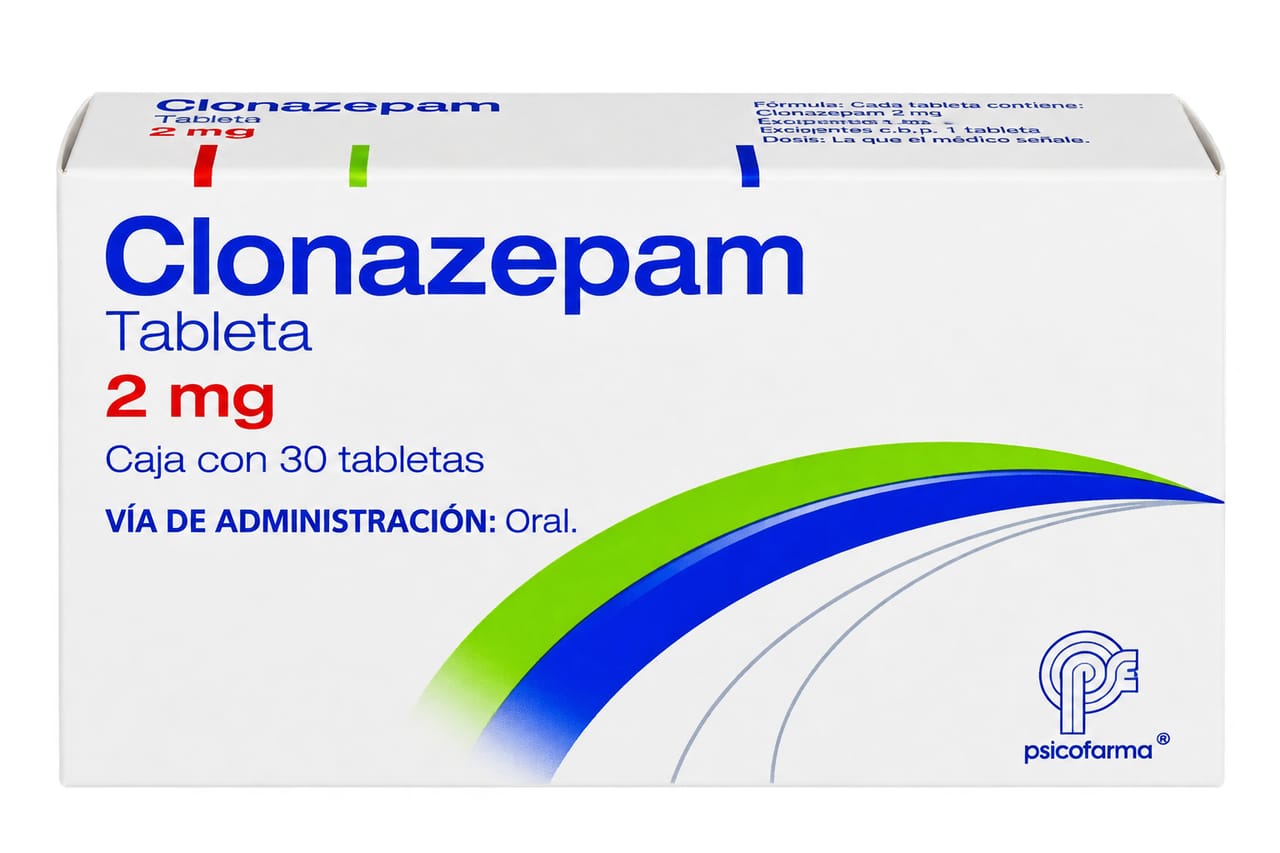
| Forms | Oral tablet, Oral disintegrating (dissolving) tablet, Oral solution |
Quick overview
Clonazepam Tablet (generic name clonazepam) is a prescription benzodiazepine used to treat panic disorder in adults and certain seizure disorders. It is also known by the brand name Klonopin and is a controlled substance because it can be habit-forming. It is available as regular tablets, orally disintegrating tablets, and an oral solution, and works by calming nerve activity in the brain.
What is Clonazepam Tablet
Clonazepam is a prescription medicine that belongs to a group of drugs called benzodiazepines. It is available as regular tablets and as tablets that dissolve quickly in the mouth. It is also known by the brand name Klonopin. It is a controlled substance because it can be habit-forming.
Clonazepam Tablet uses
- Treats panic disorder in adults
- Treats certain seizure disorders, including absence seizures (petit mal), myoclonic seizures, akinetic seizures, and Lennox-Gastaut syndrome
- Used sometimes with other medicines as part of combination therapy for seizures
Benefits of Clonazepam Tablet
- Reduces the number of panic attacks a person has
- Reduces the number of seizures a person has
- Makes any seizures that do occur less severe
How Clonazepam Tablet works
Clonazepam increases the activity of a brain chemical called GABA, which calms nerve activity in the brain and nervous system. This helps reduce panic attacks and seizures.
Clonazepam Tablet dosage
Clonazepam can be taken with or without food. Take it at the same time(s) every day as directed by your doctor. Swallow tablets whole with water, or the tablet can be cut, crushed, or broken in half if needed. For the orally disintegrating tablet, use dry hands to peel back the foil, place the tablet in the mouth right away, and let it dissolve; it can be swallowed with or without liquid. Do not push the disintegrating tablet through the foil.
Your doctor will usually start with a low dose and increase it gradually over time. The daily dose is often split into two or three smaller doses spread evenly through the day; if doses are not equal, take the larger dose at bedtime.
Do not stop taking this medicine suddenly or change your dose without talking to your doctor, since this can cause seizures to return or withdrawal symptoms. If you miss a dose, take it as soon as you remember, unless it is almost time for your next dose—in that case, skip the missed dose and continue your normal schedule; never take two doses at once. Older adults may be started on a lower dose or different schedule because their kidneys may process the drug more slowly.
| Age group | Dose |
|---|---|
| Under 18 Years | Dose depends on condition; use only under medical supervision |
| Adults (18–64 Years) | Usually 0.25–1 mg/day initially; may be adjusted based on condition |
| Older Adults (65+ years) | Usually lower starting dose (0.25 mg/day); adjusted carefully |
Available forms and strengths
- Oral tablet
- Oral disintegrating (dissolving) tablet
- Oral solution
Side effects of Clonazepam Tablet
Common
- Drowsiness
- Dizziness and light-headedness
- Problems with walking and coordination
- Fatigue/feeling tired
- Problems with memory or concentration
- Muscle weakness
- Increased saliva production
- Depression
Serious
- Depressed mood or thoughts of suicide/self-harm
- Seizures, especially if the drug is stopped too quickly or the person already has a seizure disorder
- Severe allergic reaction: trouble breathing, swelling of the throat, face, lips, or tongue
- Severe drowsiness, slowed or difficult breathing, coma, or death, especially when combined with opioids
- Unusual behavior such as aggression, agitation, hostility, or hallucinations
- Falls and fractures, especially in elderly patients or those taking other sedatives
- Signs of liver or blood problems, such as easy bruising, tiredness, or nosebleeds (monitored with blood tests)
- Withdrawal symptoms if the drug is stopped suddenly, including anxiety, tremor, sweating, confusion, and in severe cases hallucinations or numbness/tingling
Warnings and precautions
- Using clonazepam together with opioid medicines (like codeine, hydrocodone, or tramadol) can cause severe drowsiness, slowed or stopped breathing, coma, and death.
- Taking clonazepam, even exactly as prescribed, can lead to physical dependence. Stopping suddenly can cause dangerous, even life-threatening withdrawal symptoms.
- This medicine can be misused, which increases the risk of overdose and death.
- Never stop taking clonazepam suddenly without talking to your doctor first, as this can cause seizures to return or trigger withdrawal.
- This medicine can cause new or worsening mental health and behavior problems, including unusual excitement, aggression, hallucinations, or other behavior changes.
- There is an increased risk of falls and broken bones with this medicine, especially in elderly people and those also taking other sedatives, including alcohol.
- People with acute narrow-angle glaucoma should not take this drug, as it can make the condition worse.
- Do not take this medicine again if you have ever had an allergic reaction to it, as doing so could be fatal.
- Clonazepam should not be used during pregnancy unless the doctor says it's necessary, because it can harm the unborn baby. Tell your doctor right away if you become pregnant while taking this medicine.
- Clonazepam passes into breast milk and can affect a nursing baby. Talk to your doctor about whether to stop breastfeeding or stop the medicine.
- People with kidney problems should be cautious, as the drug's breakdown products are removed by the kidneys and could build up.
- People with severe liver disease should not take clonazepam, and those with mild to moderate liver problems should be given the lowest possible dose, since the drug may build up in the body and could worsen liver-related brain problems.
- Do not drink alcohol while taking clonazepam. Alcohol can increase sedative effects, causing severe drowsiness, poor coordination, and in rare cases, coma or death.
- This medicine can slow your reactions and make you drowsy or dizzy. Do not drive or operate machinery until you know how the medicine affects you, especially in the first few days of treatment.
Storage
- Store between 59°F and 86°F (15°C and 30°C)
- Do not store in moist or damp areas such as bathrooms
- Keep the medicine out of the sight and reach of children
- Keep in the container it came in, tightly closed
- Dispose of unneeded medication through a medicine take-back program rather than throwing it in household trash or flushing it
When to see a doctor
- Get emergency help right away if you have signs of a severe allergic reaction, such as trouble breathing or swelling of the throat, tongue, face, or lips.
- Call your doctor right away or seek emergency care if you have unusual dizziness, extreme sleepiness, slowed or difficult breathing, or become unresponsive.
- Contact your doctor immediately if you have thoughts of harming or killing yourself, or notice new or worsening depression or unusual mood changes.
- Seek emergency medical attention if you or someone else has taken too much of this medicine, even if there are no symptoms yet.
- Get medical help right away if breathing becomes noisy, difficult, or uneven, or if the skin turns blue, as this can signal dangerous breathing problems.
- Watch infants and small children taking this medicine closely, since they could develop breathing problems, coughing, or choking from too much saliva.
Alternatives
- Diazepam
- Alprazolam
- Hydroxyzine
Watch the video
FAQs
What is Clonazepam Tablet used for?
It is used to treat panic disorder in adults and certain seizure disorders, including absence, myoclonic, and akinetic seizures, and Lennox-Gastaut syndrome, sometimes as part of combination therapy.
How does Clonazepam Tablet work?
It increases the activity of a brain chemical called GABA, which calms nerve activity in the brain and nervous system, helping reduce panic attacks and seizures.
What is the typical dosage of Clonazepam Tablet for adults?
Adults 18–64 years usually start at 0.25–1 mg/day, which may be adjusted based on condition, while older adults usually start at a lower dose of 0.25 mg/day, adjusted carefully.
Can I drink alcohol while taking Clonazepam Tablet?
No, alcohol should be avoided because it can increase sedative effects, causing severe drowsiness, poor coordination, and in rare cases, coma or death.
What are the serious side effects of Clonazepam Tablet?
Serious side effects include depressed mood or suicidal thoughts, seizures if stopped too quickly, severe allergic reactions, severe drowsiness or breathing problems especially with opioids, unusual behavior, falls and fractures, and withdrawal symptoms if stopped suddenly.
General information, not medical advice
Your prescriber and the leaflet in your pack know your situation. This page does not.
- Follow your prescriber and the leaflet
- Don't start, stop, or change a dose on your own
- Doses and warnings differ by country and product
Sources
- https://www.medicalnewstoday.com/articles/clonazepam-oral-tablet#take-as-directed
- https://medlineplus.gov/druginfo/meds/a682279.html
- Teva Canada Limited Product Monograph for TEVA-CLONAZEPAM, Date of Revision: February 5, 2019
- Clonazepam Thame 0.5mg/5ml and 2mg/5ml Oral Solution Package Leaflet, Thame Laboratories, revised 06/2023
- Clonazepam Neuraxpharm 0.5 mg, 1 mg, 2 mg tablets Package Leaflet, Neuraxpharm UK Limited, revised February 2026
- https://www.buzzrx.com/blog/is-ashwagandha-safe (not used - unrelated to clonazepam)
Video
Related medicines

Injectafer Injection: Uses, Dosage, Side Effects, Precautions and Alternates
Iron products
Injectafer (ferric carboxymaltose) treats iron deficiency anemia and heart failure-related iron deficiency via IV. Learn uses, dosage, side effects, and

Gliclazide Tablet: Uses, Dosage, Side Effects, Precautions and Alternates
Sulfonylurea (hypoglycemic/antidiabetic agent)
Gliclazide Tablet is a sulfonylurea for type 2 diabetes that boosts insulin release. Learn about dosage, side effects, warnings, and precautions.