
Safety
General information, not medical advice
Your prescriber and the leaflet in your pack know your situation. This page does not.
- Follow your prescriber and the leaflet
- Don't start, stop, or change a dose on your own
- Doses and warnings differ by country and product
Clonidine Tablet: Uses, Dosage, Side Effects, Precautions and Alternates
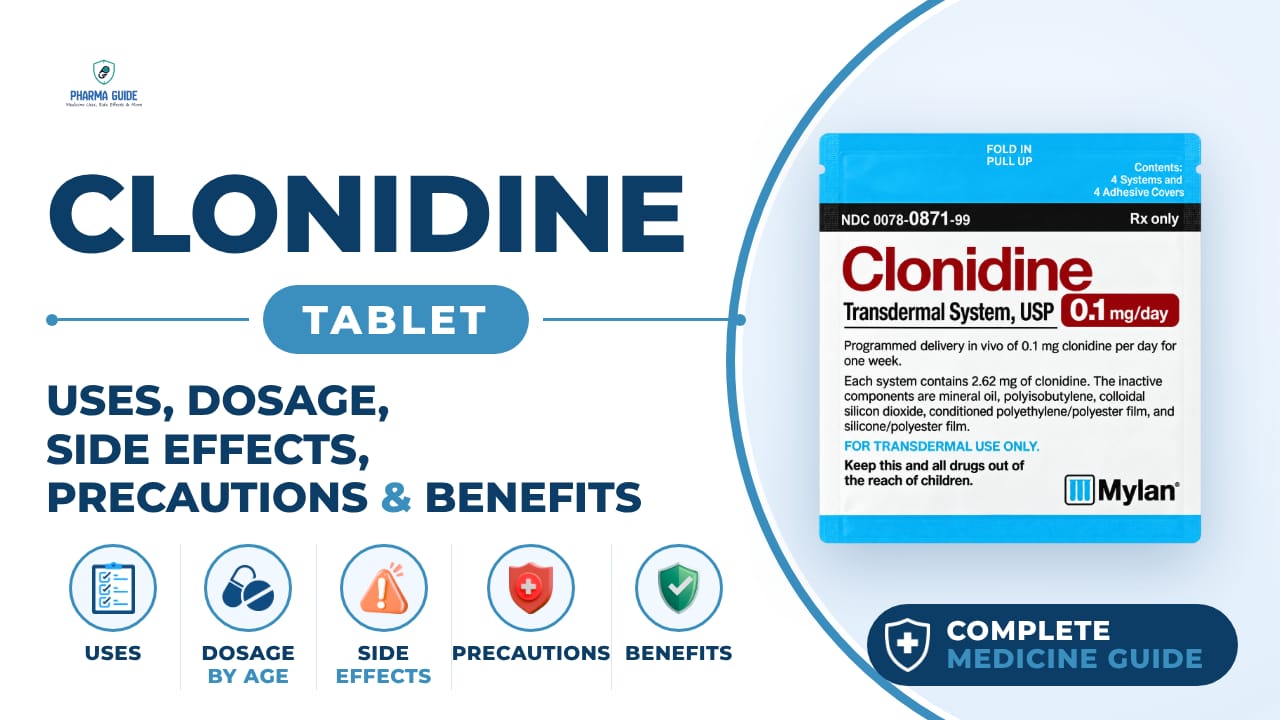
| Generic name | Clonidine Hydrochloride |
|---|---|
| Drug class | Centrally acting alpha-adrenergic agonist |
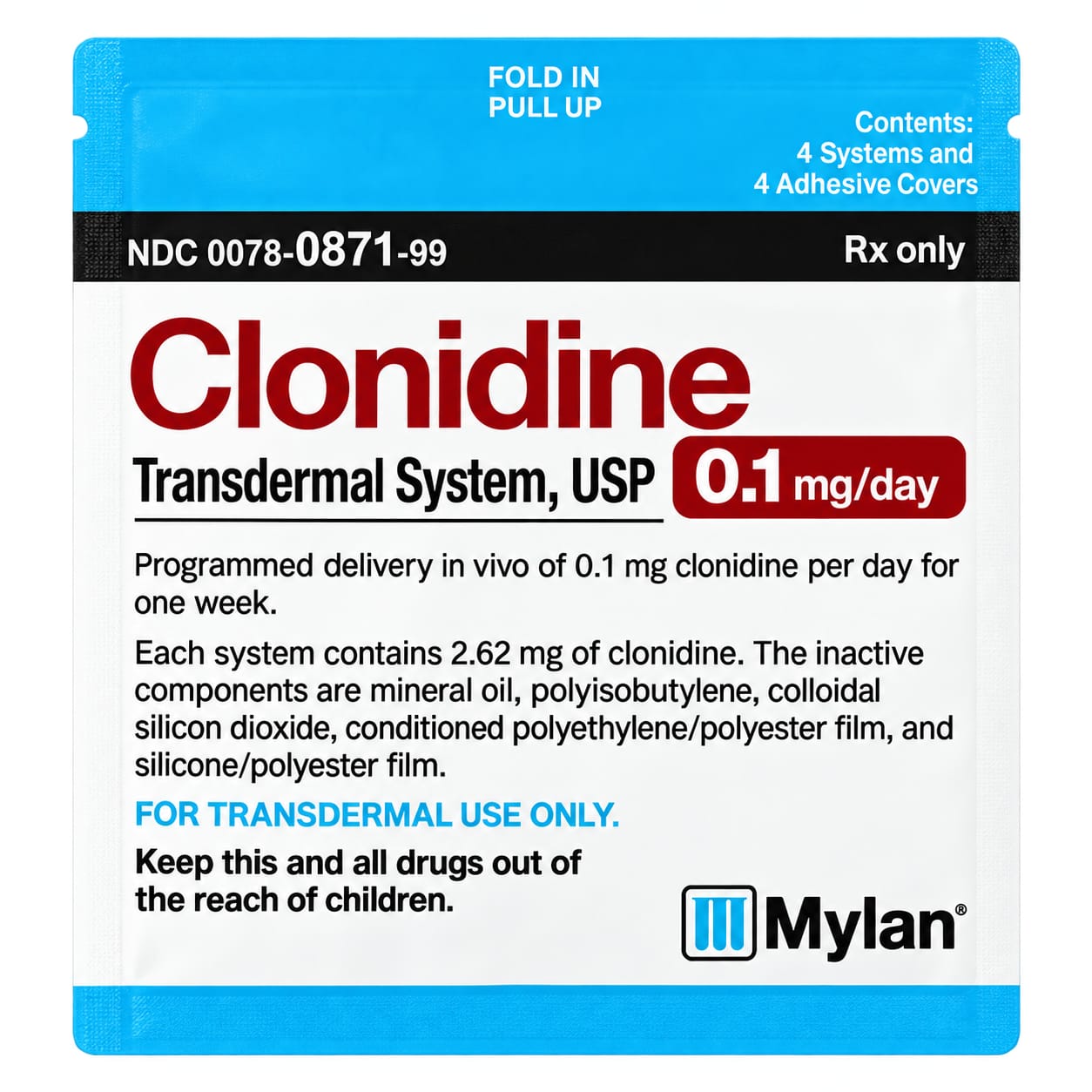
| Forms | Extended-release tablet, Immediate-release tablet, Transdermal patch |
Quick overview
Clonidine Tablet (generic name: Clonidine Hydrochloride) is a centrally acting alpha-adrenergic agonist available as regular tablets, extended-release tablets, and a skin patch. It is used mainly to treat high blood pressure and attention-deficit hyperactivity disorder (ADHD), and is also used for menopausal hot flushes. It works by acting on alpha-adrenergic receptors in the brain to lower nervous system activity that controls blood pressure.
What is Clonidine Tablet
Clonidine is a prescription medicine available as regular tablets, extended-release tablets, and a skin patch. It is used mainly to treat high blood pressure and attention-deficit hyperactivity disorder (ADHD), and is also used for menopausal hot flushes.
Clonidine Tablet uses
- Treatment of attention deficit hyperactivity disorder (ADHD), alone or together with stimulant medicines (extended-release tablets)
- Treatment of high blood pressure (immediate-release tablets)
- Relief of menopausal hot flushes in women who cannot or do not want to use hormone therapy (0.025 mg tablets)
Benefits of Clonidine Tablet
- Helps lower blood pressure
- Reduces excessive sympathetic nervous-system activity
- May help control certain ADHD symptoms when prescribed for that purpose
- Can reduce hyperactivity and impulsivity in appropriate patients
- May improve attention when used as part of clinician-supervised ADHD treatment
How Clonidine Tablet works
Clonidine acts on receptors in the brain called alpha-adrenergic receptors. This lowers the activity of the nervous system that controls blood pressure, which relaxes blood vessels and slows the heart rate.
Clonidine Tablet dosage
Take clonidine at the times your doctor tells you, usually twice a day (morning and bedtime) for the extended-release ADHD tablets. It can be taken with or without food. Swallow extended-release tablets whole; do not crush, chew, or break them, because this changes how the drug is released. Do not switch between different clonidine products without talking to your doctor, since they are absorbed differently. If you miss a dose, skip it and take your next dose at the regular time; do not take two doses together. Do not stop taking clonidine suddenly without talking to your doctor, since this can cause a rapid rise in blood pressure. For the menopausal flushing tablets, swallow the tablet whole with water.
| Age group | Dose |
|---|---|
| 18–64 years | 0.1 mg twice daily initially |
Available forms and strengths
- Extended-release tablet
- Immediate-release tablet
- Transdermal patch
- 0.025 mg tablets (used for menopausal hot flushes)
Side effects of Clonidine Tablet
Common
- Sleepiness/drowsiness
- Tiredness/fatigue
- Irritability
- Trouble sleeping (insomnia)
- Nightmares
- Constipation
- Dry mouth
- Decreased appetite
- Dizziness
- Headache
- Nausea
Serious
- Low blood pressure and low heart rate
- Fainting (syncope)
- Severe allergic reaction (generalized rash, hives, swelling of face/lips/tongue/throat)
- Irregular or very slow heartbeat, heart block
- Rebound high blood pressure after suddenly stopping the medicine
- Hallucinations
- Severe sedation, floppiness, or breathing problems in breastfed infants
Warnings and precautions
- Clonidine can cause low blood pressure, a slow heart rate, and fainting, especially in people with heart or blood vessel disease. Your doctor should check your heart rate and blood pressure before you start and regularly during treatment.
- Suddenly stopping clonidine can cause a dangerous rebound rise in blood pressure along with headache, fast heartbeat, nervousness, and other symptoms. Your dose must be lowered gradually when stopping.
- Clonidine can cause sleepiness and sedation, which may be worse if combined with other drugs that cause drowsiness.
- Clonidine may worsen certain heart rhythm problems, especially in people taking other medicines that slow the heart.
- Do not take clonidine if you have had an allergic reaction to it before, such as rash, hives, or swelling.
- Long experience with clonidine in pregnant women has not shown a clear link to birth defects or pregnancy problems, but animal studies showed some risks. Talk to your doctor if you are pregnant or planning to become pregnant, since this medicine should only be used if clearly needed.
- Clonidine passes into breast milk. Most breastfed babies have not had problems, but watch for signs of excess sleepiness, floppiness, or breathing problems in the infant, and tell your doctor right away if these occur.
- If you have kidney problems, your doctor needs to adjust your dose carefully and monitor you closely, since the amount of clonidine removed from the body is affected by kidney function.
- Avoid drinking alcohol while taking clonidine, since it can make sleepiness and dizziness worse.
- Clonidine can make you sleepy or dizzy. Do not drive, operate heavy machinery, or do other dangerous activities until you know how this medicine affects you.
Storage
- Store at 20° to 25°C (68°-77°F); excursions permitted to 15° to 30°C (59° to 86°F)
- Do not use if blister is torn or broken
- Keep clonidine and all medicines out of the reach of children
- Protect tablets from moisture
When to see a doctor
- Get immediate medical attention if you develop signs of an allergic reaction such as rash, hives, or swelling of the face, lips, tongue, or throat.
- If you think you or someone else has taken too much clonidine, get emergency medical help or contact poison control right away, even if there are no symptoms yet.
- Tell your doctor right away if a breastfed infant shows signs of excess sleepiness, poor muscle tone, or breathing problems.
- Seek medical help if you feel a rapid rise in blood pressure, severe headache, nervousness or a fast heartbeat after stopping the medicine, as this can signal a dangerous rebound effect.
Alternatives
- Guanfacine
- Amlodipine
- Lisinopril
Watch the video
FAQs
What is Clonidine Tablet used for?
It is used mainly to treat high blood pressure and ADHD (with extended-release tablets, alone or with stimulants), and also to relieve menopausal hot flushes in women who cannot or do not want hormone therapy.
How does Clonidine Tablet work?
It acts on alpha-adrenergic receptors in the brain, lowering nervous system activity that controls blood pressure, which relaxes blood vessels and slows the heart rate.
Can I stop taking Clonidine Tablet suddenly?
No, you should not stop suddenly without talking to your doctor, since this can cause a dangerous rebound rise in blood pressure along with headache, fast heartbeat, and nervousness. The dose must be lowered gradually.
What are the common side effects of Clonidine Tablet?
Common side effects include sleepiness, tiredness, irritability, insomnia, nightmares, constipation, dry mouth, decreased appetite, dizziness, headache, and nausea.
Is it safe to take Clonidine Tablet while breastfeeding?
Clonidine passes into breast milk, and while most breastfed babies have not had problems, you should watch for signs of excess sleepiness, floppiness, or breathing problems in the infant and tell your doctor right away if these occur.
General information, not medical advice
Your prescriber and the leaflet in your pack know your situation. This page does not.
- Follow your prescriber and the leaflet
- Don't start, stop, or change a dose on your own
- Doses and warnings differ by country and product
Sources
- American Health Packaging / Ajanta Pharma USA Inc. Clonidine Hydrochloride Extended-Release Tablets Prescribing Information, Revised 6/2024 (DailyMed)
- Sivem Pharmaceuticals ULC. CLONIDINE Product Monograph, Date of Preparation JUL 28, 2023
- GoodRx. Clonidine - What Is? (goodrx.com)
Video
Related medicines

Injectafer Injection: Uses, Dosage, Side Effects, Precautions and Alternates
Iron products
Injectafer (ferric carboxymaltose) treats iron deficiency anemia and heart failure-related iron deficiency via IV. Learn uses, dosage, side effects, and

Gliclazide Tablet: Uses, Dosage, Side Effects, Precautions and Alternates
Sulfonylurea (hypoglycemic/antidiabetic agent)
Gliclazide Tablet is a sulfonylurea for type 2 diabetes that boosts insulin release. Learn about dosage, side effects, warnings, and precautions.