
Safety
General information, not medical advice
Your prescriber and the leaflet in your pack know your situation. This page does not.
- Follow your prescriber and the leaflet
- Don't start, stop, or change a dose on your own
- Doses and warnings differ by country and product
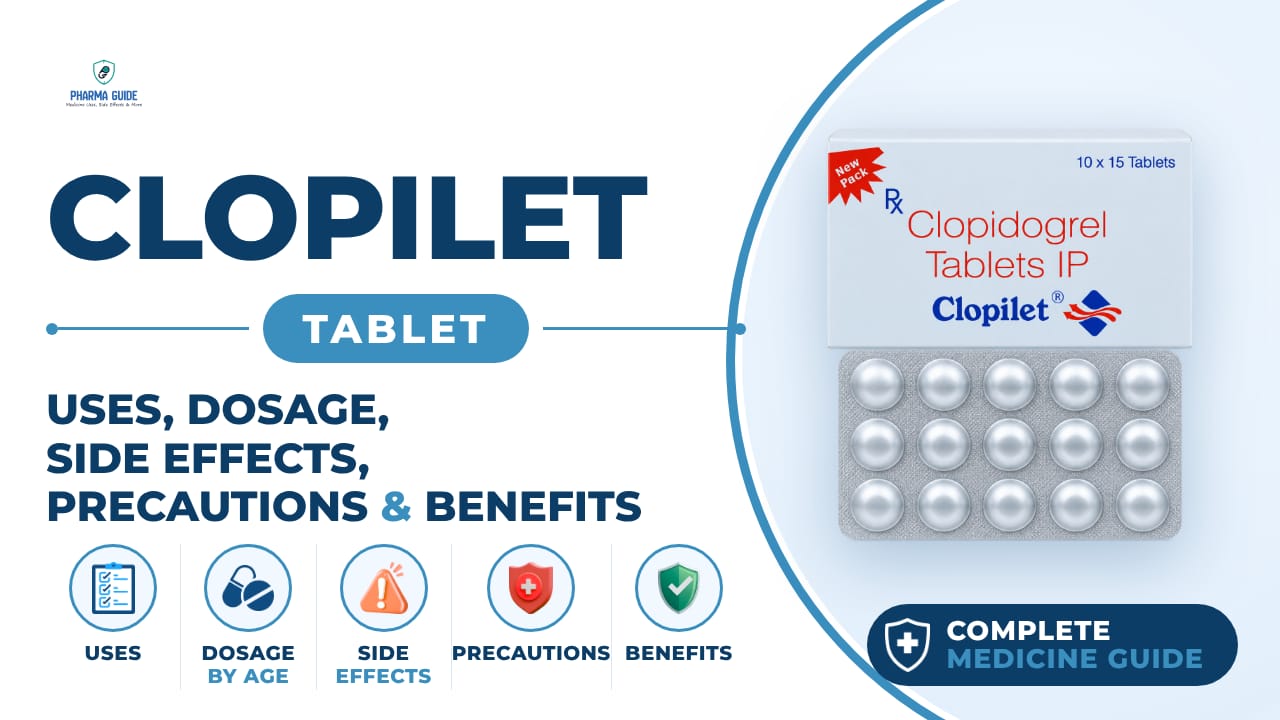
Clopilet Tablet: Uses, Dosage, Side Effects, Precautions and Alternates
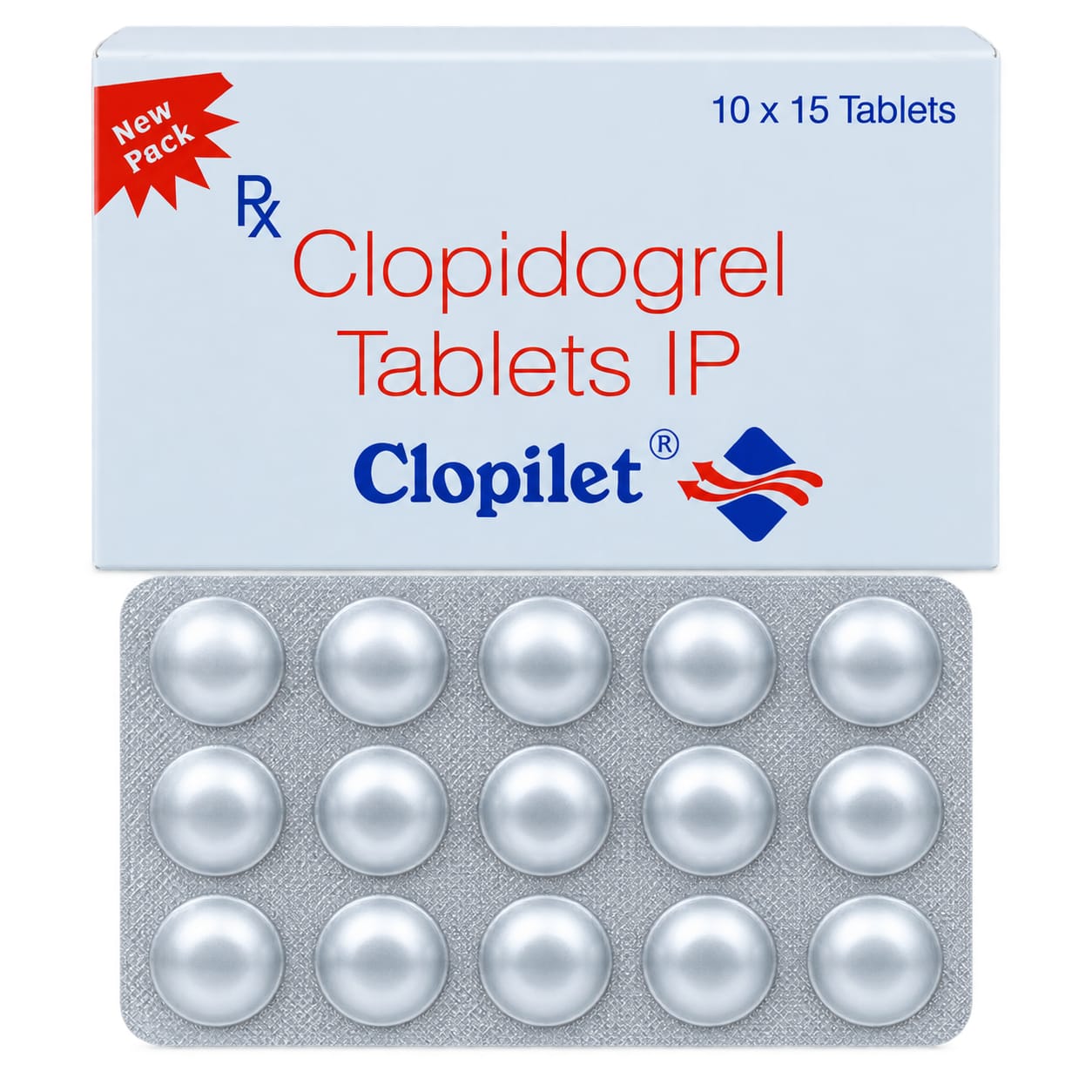
| Generic name | Clopidogrel |
|---|---|
| Drug class | Antiplatelet agent (blood thinner) |
| Forms | Tablet |
Quick overview
Clopilet Tablet contains clopidogrel, an antiplatelet agent (blood thinner). It is a prescription medicine used to help prevent harmful blood clots in people with heart and blood vessel problems, such as after a heart attack, stroke, or stent placement. It works by stopping platelets from sticking together, which keeps blood flowing smoothly through the arteries.
What is Clopilet Tablet
Clopilet Tablet is a prescription blood-thinning medicine that contains clopidogrel. It is used to help prevent harmful blood clots in people with heart and blood vessel problems, such as after a heart attack, stroke, or stent placement.
Clopilet Tablet uses
- Prevention of heart attack and stroke
- Peripheral arterial disease
- Prevents blood clots in patients with acute coronary syndrome (ACS)
- Used after angioplasty or stent placement
- Management of peripheral arterial disease
- Reduction of risk of heart attacks and strokes in high-risk patients
- Prevention of clot formation in patients with coronary artery disease
- Stroke
- Blood Clotting Disorders
- Peripheral Vascular Disease
Benefits of Clopilet Tablet
- Helps prevent life-threatening blood clots
- Reduces the chances of heart attack or stroke
- Improves blood flow in arteries
- Essential after heart-related surgeries or stent placement
- Can be used long-term under medical supervision
How Clopilet Tablet works
Clopidogrel stops platelets (blood cells involved in clotting) from sticking together. This keeps blood flowing smoothly through the arteries and lowers the chance of a clot blocking blood flow to the heart or brain.
Clopilet Tablet dosage
Clopilet Tablet can be taken with or without food, though taking it with food may help prevent stomach upset. Swallow the tablet whole with water; do not chew, crush, or break it. Try to take it at the same time every day to help you remember. Do not stop taking this medicine without talking to your doctor, even if you feel better.
If you miss a dose, take it as soon as you remember, but skip it if it is almost time for your next dose — do not double up. This medicine is not recommended for use in children and adolescents below 18 years of age. Older patients may need closer monitoring for bleeding.
| Age group | Dose |
|---|---|
| Under 18 Years | Use only if prescribed by a healthcare professional |
| Adults (18–64 Years) | 75 mg once daily (as prescribed) |
| Older Adults (65+ Years) | 75 mg once daily; dose adjustment based on health condition |
Available forms and strengths
- Tablet
Side effects of Clopilet Tablet
Common
- Chest Pain
- Headache
- Dizziness
- Tiredness
- Taste change
- Stomach discomfort
- White patches in the mouth or on the tongue
- Redness of skin
- Diarrhoea
- Loss of appetite
- Joint pain
- Bleeding from nose
- Bleeding or bruising easily
- Nosebleeds or bleeding gums
- Stomach upset or pain
- Diarrhea or constipation
- Heavier periods
- Bruises
- Indigestion or Heartburn
Serious
- Easy bruising
- Increased bleeding or longer bleeding time
- Nosebleeds
- Headache
- Dizziness
- Stomach discomfort
Warnings and precautions
- Do not take this medicine if you have a bleeding disorder, active bleeding, a stomach ulcer, or bleeding inside the brain, as it can make bleeding worse.
- Stopping this medicine suddenly can raise your risk of heart problems, so it should not be stopped without your doctor's advice. If treatment must pause for surgery, it should be restarted as soon as possible.
- If you cut or injure yourself while on this medicine, it may take longer than usual for the bleeding to stop.
- Tell your doctor or dentist that you are taking this medicine before any surgery or dental treatment, since it may need to be stopped temporarily.
- This medicine is not recommended for children and teenagers under 18, as its safety in this age group has not been established.
- Avoid this medicine if you are allergic to it or its ingredients, and avoid it if you have severe liver disease, stomach ulcers, brain bleeding, or a bleeding disorder like hemophilia.
- This medicine is usually not recommended during pregnancy because it may harm the baby. Tell your doctor if you are pregnant or planning pregnancy so they can decide if it is safe for you or suggest another option.
- It is best to avoid this medicine while breastfeeding, as it is not known if it passes into breast milk. Your doctor may suggest a safer alternative if needed.
- People with kidney problems should use this medicine with caution, as it may build up in the body and could worsen kidney damage. Your doctor may need to monitor your kidney function.
- This medicine is processed by the liver, so people with liver problems may be at higher risk of bleeding or worsening liver function. Your doctor may need to monitor you closely and adjust your dose.
- It's best to be cautious with alcohol while taking this medicine, since drinking too much can increase the risk of stomach bleeding or ulcers. Talk to your doctor before drinking alcohol.
- This medicine is generally safe to take before driving or using machines, as it does not usually cause drowsiness, though people can react differently.
Storage
- Store below 30°C
- Store at room temperature (15-25°C)
- Protect it from light and moisture
- Keep out of the reach of children
- Do not use this medicine after the expiry date has passed
When to see a doctor
- Get medical help right away if you notice blood in your urine or stools, a severe headache, or changes in your vision.
- Seek immediate medical attention if you have signs of an allergic reaction like skin rash, itching or swelling of the face, tongue, or throat, severe dizziness, or trouble breathing.
- If you think you or someone else has taken too much of this medicine, get emergency medical help right away. Signs of overdose include nausea, vomiting, stomach pain, drowsiness, and bleeding.
Alternatives
- Aspirin
- Prasugrel
- Dipyridamole
Watch the video
FAQs
What is Clopilet Tablet used for?
Clopilet Tablet is used to prevent harmful blood clots in people with heart and blood vessel problems, such as after a heart attack, stroke, stent placement, or angioplasty. It is also used for acute coronary syndrome and peripheral arterial disease.
How does Clopilet Tablet work?
Clopilet Tablet contains clopidogrel, which stops platelets from sticking together, keeping blood flowing smoothly through the arteries and lowering the chance of a clot blocking blood flow to the heart or brain.
What is the dosage of Clopilet Tablet for adults?
Adults aged 18-64 years are typically prescribed 75 mg once daily, as directed by their doctor. Older adults (65+) may also take 75 mg once daily, with dose adjustment based on their health condition.
What are the common side effects of Clopilet Tablet?
Common side effects include chest pain, headache, dizziness, tiredness, taste change, stomach discomfort, diarrhoea, bleeding or bruising easily, nosebleeds or bleeding gums, and indigestion or heartburn.
Can Clopilet Tablet be taken during pregnancy?
Clopilet Tablet is usually not recommended during pregnancy because it may harm the baby. You should tell your doctor if you are pregnant or planning pregnancy so they can decide if it is safe or suggest another option.
General information, not medical advice
Your prescriber and the leaflet in your pack know your situation. This page does not.
- Follow your prescriber and the leaflet
- Don't start, stop, or change a dose on your own
- Doses and warnings differ by country and product
Sources
- myupchar.com
- practo.com
- truemeds.in
- medwiki (unspecified domain)
- zeelabpharmacy.com
- kauverymeds.com
Video
Related medicines

Injectafer Injection: Uses, Dosage, Side Effects, Precautions and Alternates
Iron products
Injectafer (ferric carboxymaltose) treats iron deficiency anemia and heart failure-related iron deficiency via IV. Learn uses, dosage, side effects, and

Gliclazide Tablet: Uses, Dosage, Side Effects, Precautions and Alternates
Sulfonylurea (hypoglycemic/antidiabetic agent)
Gliclazide Tablet is a sulfonylurea for type 2 diabetes that boosts insulin release. Learn about dosage, side effects, warnings, and precautions.