
Safety
General information, not medical advice
Your prescriber and the leaflet in your pack know your situation. This page does not.
- Follow your prescriber and the leaflet
- Don't start, stop, or change a dose on your own
- Doses and warnings differ by country and product
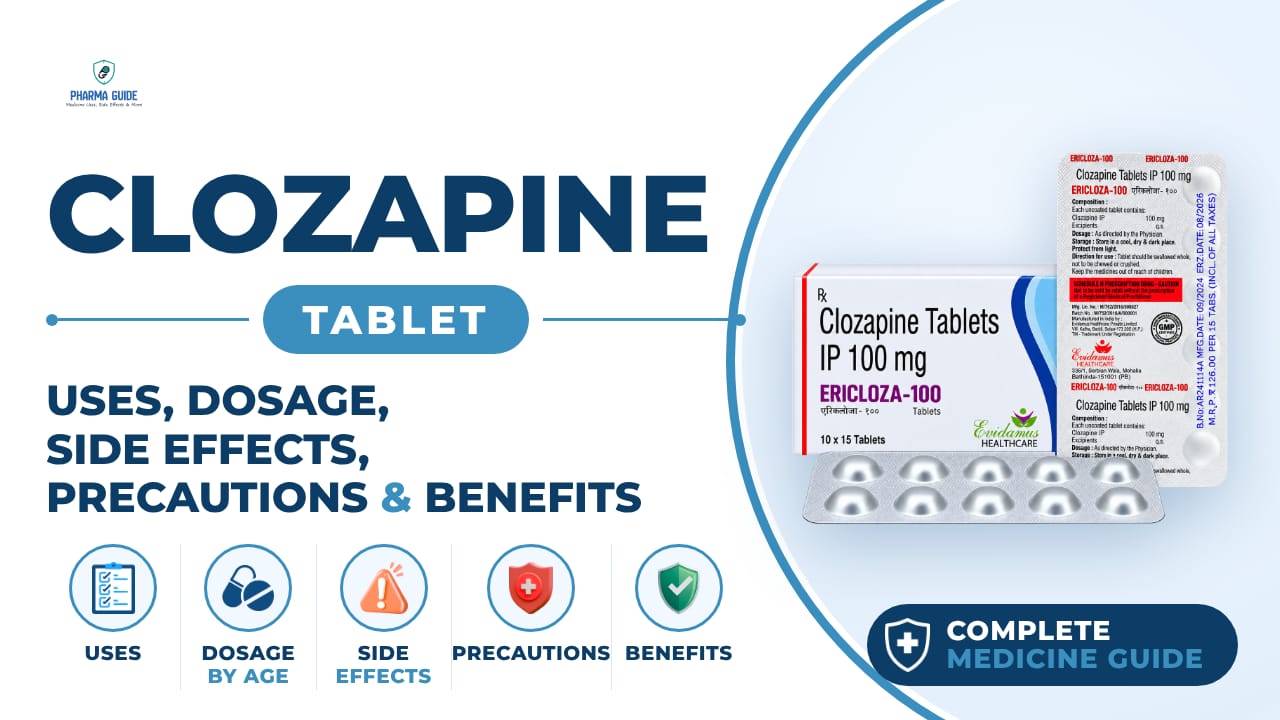
Clozapine Tablet: Uses, Dosage, Side Effects, Precautions and Alternates
| Generic name | Clozapine |
|---|---|
| Drug class | Atypical (second-generation) antipsychotic |
| Forms | Tablet, Orally disintegrating tablet, Oral suspension (liquid) |
Quick overview
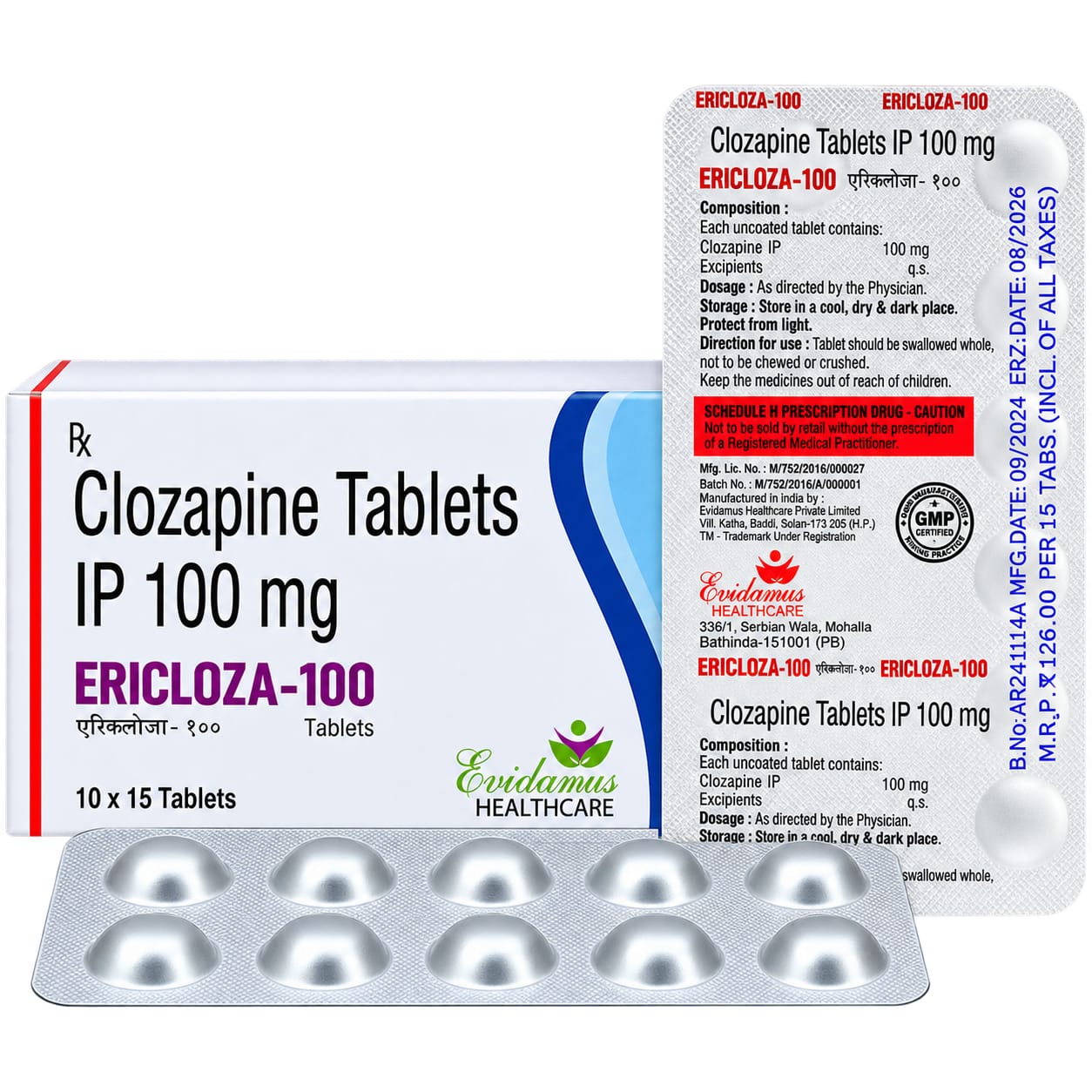
Clozapine Tablet, with the generic name Clozapine, is an atypical (second-generation) antipsychotic taken by mouth. It is used to treat schizophrenia in adults who have not responded well to other treatments and to lower the risk of repeated suicidal behavior in people with schizophrenia or schizoaffective disorder. It requires regular blood tests to monitor white blood cell counts and careful use under a doctor's guidance.
What is Clozapine Tablet
Clozapine is an antipsychotic medicine used to treat schizophrenia in people who have not improved with other treatments. It is taken by mouth.
Clozapine Tablet uses
- Treats schizophrenia in adults who have not responded well to at least two other antipsychotic medications
- Lowers the risk of repeated suicidal behavior in people with schizophrenia or schizoaffective disorder
Benefits of Clozapine Tablet
- Can reduce symptoms such as hallucinations and delusions, as well as lack of motivation or emotional expression
- Carries a lower risk of severe movement-related side effects compared with older antipsychotics
How Clozapine Tablet works
Clozapine works by changing the balance of certain natural brain chemicals, including dopamine and serotonin, which help regulate mood and thinking.
Clozapine Tablet dosage
Take by mouth with a glass of water, following the directions on your prescription label. It can be taken with or without food. Take your doses at regular intervals and do not take it more often than directed.
If using the tablet that dissolves in the mouth, do not open the package until you are ready to take it, then let it dissolve on your tongue; you can chew or swallow as it melts. If using the liquid form, shake it well before each use and measure the dose with the provided dosing syringe, not a kitchen spoon.
Drink plenty of fluids while taking this medicine to help prevent constipation. Do not suddenly stop taking this medicine; your dose may need to be lowered gradually under your care team's guidance. Special care may be needed in children; talk with your care team.
If you miss doses for more than a day or two, contact your care team before restarting, as you may need to restart at a lower dose.
| Age group | Dose |
|---|---|
| Under 18 years | No established routine pediatric dose; specialist-directed only |
| 18–64 years | Usually starts at 12.5 mg once or twice daily, then increased gradually |
| 65–74 years | Usually starts at 12.5 mg once daily, with slower titration |
| 75 years and older | Very cautious individualized dosing, generally starting at 12.5 mg once daily or less frequently depending on tolerance |
Available forms and strengths
- Tablet
- Orally disintegrating tablet
- Oral suspension (liquid)
Side effects of Clozapine Tablet
Common
- Drowsiness or sedation and tiredness
- Dizziness or lightheadedness, especially when standing up
- Increased saliva or drooling
- Constipation
- Weight gain and increased appetite
- Fast heartbeat
- Mild tremors or shaking
- Headache
- Nausea
- Dry mouth
- Vision problems
- Fever and increased sweating
Serious
- Dangerous drop in white blood cells, increasing risk of serious or fatal infection
- Severe constipation or slowed bowel movement that can lead to blockage or other bowel complications
- Heart muscle inflammation (myocarditis) or changes in heart rhythm
- Seizures, especially at higher doses
- High blood sugar or new diabetes
- Neuroleptic malignant syndrome - high fever, stiff muscles, confusion, fast or irregular heartbeat
- Serious skin reactions with rash, blistering, or peeling skin
- Liver injury - yellowing skin or eyes, dark urine, pale stools, severe tiredness
- Blood clots - leg swelling or pain, chest pain, shortness of breath
- Uncontrolled movements, muscle stiffness, or tremors (extrapyramidal symptoms or tardive dyskinesia)
- Stroke symptoms - sudden numbness, confusion, trouble speaking or walking
- Trouble passing urine
- Allergic reaction - rash, hives, swelling of face, lips, tongue, or throat
Warnings and precautions
- This medicine can cause a dangerous drop in white blood cells, so regular blood tests are required to check your blood counts throughout treatment.
- This medicine is not approved for treating behavioral problems related to dementia in older adults, as it increases the risk of stroke and death in this group.
- This medicine can increase the risk of seizures, especially at higher doses.
- This medicine can cause serious heart problems. Get medical help right away for chest pain, trouble breathing, fast or pounding heartbeats, or sudden dizziness.
- Untreated constipation from this medicine can lead to serious bowel problems, hospitalization, or death.
- Do not stop taking this medicine suddenly without talking to your doctor, as your illness could return or you could have withdrawal-like symptoms.
- Tell your doctor right away if you become pregnant. Taking this medicine in the last three months of pregnancy may cause breathing, feeding, or withdrawal problems in the newborn. Do not stop taking it without medical advice.
- Breastfeeding is not recommended while taking this medicine.
- People with kidney disease should use this medicine with caution, as its effects may be stronger because the body removes it more slowly.
- People with liver disease should use this medicine with caution, since the body may remove it more slowly, increasing its effects. Watch for signs of liver injury such as yellowing skin or eyes, dark urine, or loss of appetite.
- Do not drink alcohol while taking this medicine, as it can cause dangerous side effects or even death.
- This medicine may affect your coordination, reaction time, or judgment. Avoid driving or operating machinery until you know how it affects you.
Storage
- Keep out of the reach of children
- Store at room temperature below 30 degrees C (86 degrees F)
- Throw away any unused medication after the expiration date
- Do not refrigerate or freeze the oral liquid
- Throw away any unused liquid 100 days after opening the bottle for the first time
- Store away from heat, moisture, and direct light
When to see a doctor
- Get emergency help for signs of an allergic reaction, such as hives, trouble breathing, or swelling of the face or throat, or for a severe skin reaction with fever, sore throat, burning eyes, or skin pain with blistering and peeling.
- Call your doctor right away if you have signs of infection such as fever, flu-like symptoms, extreme weakness, mouth or skin sores, new or worsening cough, or pain when urinating.
- Call your doctor at once for uncontrolled muscle movements in the face, a seizure, severe constipation, dry or hard bowel movements, or painful gas.
- Seek help right away for signs of a serious heart problem, such as chest pain, fast or pounding heartbeats, fluttering in the chest, slow heartbeats, shortness of breath, or sudden dizziness.
- Seek help right away for signs of liver problems, including loss of appetite, upper right belly pain, tiredness, itching, dark urine, clay-colored stools, or yellowing of the skin or eyes.
- Seek help right away for a severe nervous system reaction with very stiff muscles, high fever, sweating, confusion, fast or uneven heartbeats, tremors, or feeling like you might pass out.
- Seek help right away for signs of a blood clot in the lung, such as chest pain, sudden cough, wheezing, rapid breathing, or coughing up blood.
- Tell your doctor right away if you are having fewer than three bowel movements a week, since untreated constipation can become serious.
Alternatives
- Aripiprazole
- Quetiapine
- Risperidone
- Olanzapine
Watch the video
FAQs
What is Clozapine Tablet used for?
It treats schizophrenia in adults who have not responded well to at least two other antipsychotic medications and lowers the risk of repeated suicidal behavior in people with schizophrenia or schizoaffective disorder.
How does Clozapine Tablet work?
It works by changing the balance of certain natural brain chemicals, including dopamine and serotonin, which help regulate mood and thinking.
Why are regular blood tests needed with Clozapine Tablet?
This medicine can cause a dangerous drop in white blood cells, so regular blood tests are required to check your blood counts throughout treatment, as this increases the risk of serious or fatal infection.
Can I stop taking Clozapine Tablet suddenly?
No, you should not stop taking this medicine suddenly without talking to your doctor, as your illness could return or you could have withdrawal-like symptoms; your dose may need to be lowered gradually under your care team's guidance.
What are the common side effects of Clozapine Tablet?
Common side effects include drowsiness, dizziness, increased saliva, constipation, weight gain, fast heartbeat, mild tremors, headache, nausea, dry mouth, vision problems, and fever with increased sweating.
General information, not medical advice
Your prescriber and the leaflet in your pack know your situation. This page does not.
- Follow your prescriber and the leaflet
- Don't start, stop, or change a dose on your own
- Doses and warnings differ by country and product
Sources
Video
Related medicines
Sizopin Tablet: Uses, Dosage, Side Effects, Precautions and Alternates
Atypical (second-generation) antipsychotic
Sizopin Tablet (Clozapine) treats schizophrenia unresponsive to other drugs. Learn uses, dosage, side effects, blood test requirements, and warnings.

Injectafer Injection: Uses, Dosage, Side Effects, Precautions and Alternates
Iron products
Injectafer (ferric carboxymaltose) treats iron deficiency anemia and heart failure-related iron deficiency via IV. Learn uses, dosage, side effects, and