
Safety
General information, not medical advice
Your prescriber and the leaflet in your pack know your situation. This page does not.
- Follow your prescriber and the leaflet
- Don't start, stop, or change a dose on your own
- Doses and warnings differ by country and product
Sizopin Tablet: Uses, Dosage, Side Effects, Precautions and Alternates
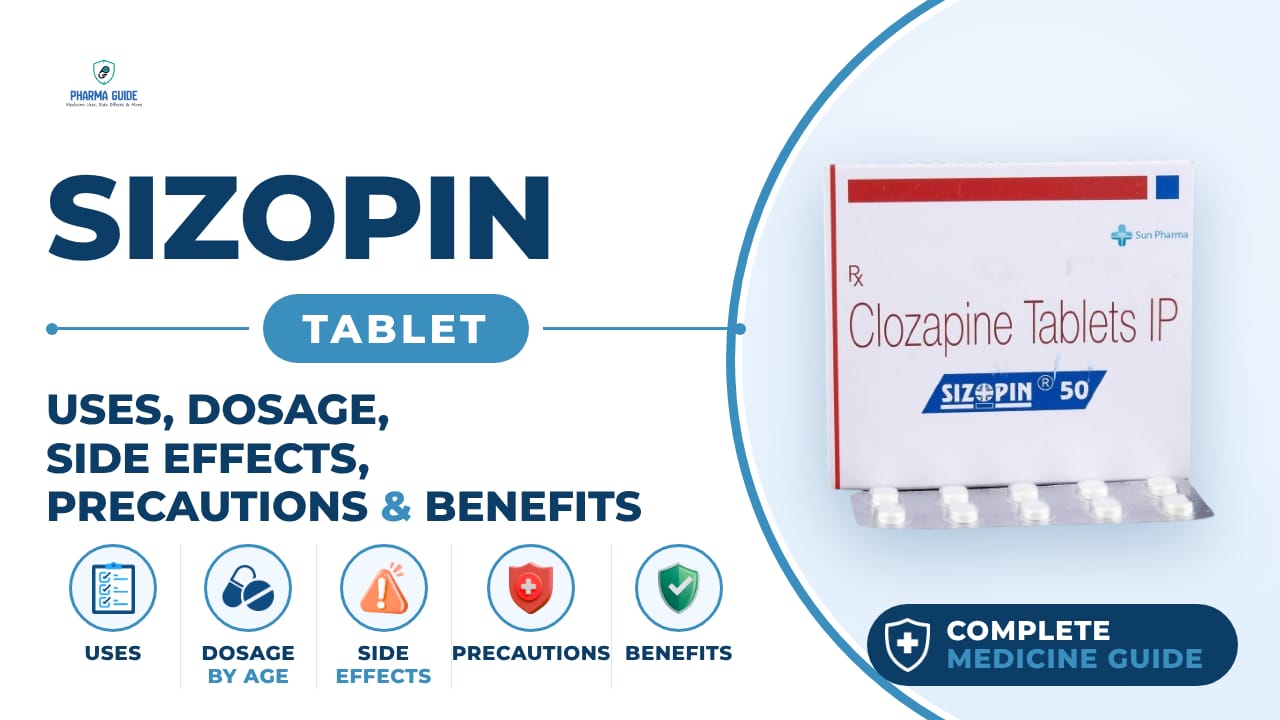
| Generic name | Clozapine |
|---|---|
| Drug class | Atypical (second-generation) antipsychotic |
| Forms | Tablet, Dispersible Tablet |
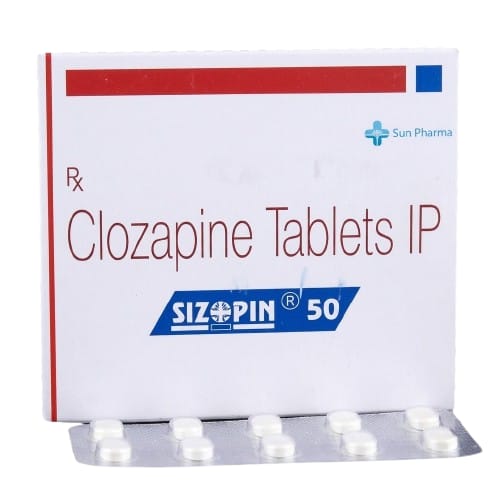
Quick overview
Sizopin Tablet contains Clozapine, an atypical (second-generation) antipsychotic. It is used for schizophrenia that has not responded well to other treatments, and it requires regular blood tests during treatment because of a rare but serious risk to white blood cells. It works by blocking dopamine receptors in the brain to help improve thoughts, feelings, and behavior.
What is Sizopin Tablet
Sizopin is an antipsychotic medicine that contains Clozapine. It is used for schizophrenia that has not responded well to other treatments, and it requires regular blood tests during treatment because of a rare but serious risk to white blood cells.
Sizopin Tablet uses
- Schizophrenia, especially when at least two other antipsychotic medicines have not worked well or caused severe side effects
- Reducing the risk of repeated suicidal behavior in people with schizophrenia or schizoaffective disorder
- Psychotic disorders linked to Parkinson's disease when standard treatments have not worked
Benefits of Sizopin Tablet
- Helps restore chemical imbalances in the brain linked to schizophrenia
- Improves thoughts, feelings, and behavior
- Can enhance quality of life for people with schizophrenia
How Sizopin Tablet works
Sizopin works by blocking dopamine receptors in the brain, which reduces dopamine activity and helps improve thoughts, feelings, and behavior in people with schizophrenia and related psychotic disorders.
Sizopin Tablet dosage
Sizopin can be taken with or without food, as directed by your doctor. Swallow the tablet whole with water; do not break, chew, or crush it. If using a dispersible tablet, mix it in water as directed on the label and drink it right away. If using a mouth-dissolving or orally disintegrating tablet, let it dissolve in your mouth without chewing. Try to take it at the same time every day to keep a steady level of medicine in your body.
Do not stop taking this medicine suddenly without talking to your doctor, since this can cause symptoms to return or other withdrawal effects. If you miss a dose, take it as soon as you remember, but skip it if it is almost time for your next dose — do not take two doses together. Sizopin is not recommended for children or teens younger than 16 years and should be used carefully in elderly patients under a doctor's supervision.
| Age group | Dose |
|---|---|
| Under 16 years | Not recommended |
| 16–18 years | 12.5–25 mg, 1–2 times/day |
| 18–60 years | 25–50 mg, 1–2 times/day initially |
| 60+ years | 12.5 mg, 1–2 times/day initially |
Available forms and strengths
- Tablet
- Dispersible Tablet
Side effects of Sizopin Tablet
Common
- Dry mouth
- Nausea
- Vomiting
- Loss of appetite
- Constipation
- Drowsiness
- Dizziness
- Increased saliva production
- Tiredness
- Headache
- Fever
- Changes in sweating
- Trembling or tremor
- Stiffness of limbs
- Restlessness
- Problems with coordination
- Slurred speech
- Blurred vision
- Weight gain
- Fast heartbeat
- High blood pressure
- Fainting or light-headedness when standing up
Serious
- Severe drop in white blood cells (agranulocytosis/neutropenia), with fever, weakness, or signs of infection
- Seizures
- Signs of neuroleptic malignant syndrome such as high fever and rigid muscles
- Severe constipation or signs of bowel obstruction
- Fast or irregular heartbeat, chest pain, or breathlessness (possible heart problems like myocarditis)
- Signs of liver problems such as yellowing of skin/eyes, severe weakness, or abdominal pain
- Signs of severe allergic reaction such as swelling of face, lips, tongue, or throat, rash, or difficulty breathing
- Signs of blood clots such as swelling, pain, or redness in the leg
- Uncontrolled blood sugar symptoms such as excessive thirst, urination, or confusion
Warnings and precautions
- This medicine can cause a severe, potentially fatal drop in white blood cells, so regular blood tests are required before and throughout treatment.
- Stopping this medicine suddenly can cause your symptoms to come back and may cause withdrawal effects, so your doctor will usually reduce the dose gradually.
- This medicine is not approved for elderly people with dementia-related psychosis because it can increase the risk of death.
- This medicine can cause severe constipation that in rare cases can progress to bowel obstruction, which can be life-threatening.
- This medicine can rarely cause serious heart problems such as myocarditis, which can be fatal, usually within the first two months of treatment.
- This medicine should not be used by people allergic to clozapine, or those with uncontrolled epilepsy, severe drowsiness, certain heart diseases, severe kidney or liver disease, or bone marrow disorders.
- This medicine must only be used as part of a monitoring program that requires regular blood tests; it should never be used outside of this program.
- This medicine should be used in pregnancy only if clearly necessary, and only after discussing the risks and benefits with your doctor. It is not recommended while breastfeeding because it can pass into breast milk.
- This medicine should be used carefully in people with kidney problems, and is not recommended for those with severe kidney disease. It is not recommended for people with serious liver disease or jaundice, and should be used cautiously with regular liver tests in those with other liver conditions.
- Avoid alcohol while taking this medicine, as it can increase the risk of side effects like dizziness and drowsiness. Do not drive or use machinery if you feel dizzy, tired, drowsy, or faint after taking this medicine.
Storage
- Store at room temperature (below 30°C), away from light and moisture
- Keep out of reach of children
When to see a doctor
- Get emergency help right away if you have signs of a severe allergic reaction, such as skin rash, hives, or swelling of the face, tongue, or throat, severe dizziness, or trouble breathing.
- Contact your doctor immediately if you develop fever, sore throat, or signs of infection, which could mean your white blood cell count has dropped.
- Seek medical help immediately if you have chest pain, a fast heartbeat, or shortness of breath, as these could be signs of a heart problem.
- Get medical help right away if you have severe constipation, abdominal pain or bloating, or cannot pass stool or gas, as this could mean a bowel blockage.
- Seek emergency care if you have a seizure or if you faint or feel severely dizzy.
- Stop the medicine and contact your doctor immediately if you notice signs of neuroleptic malignant syndrome, such as a sudden rapid rise in body temperature and rigid muscles, which may lead to unconsciousness.
- If you think someone has taken too much of this medicine, treat it as a medical emergency and get immediate medical attention or go to the nearest hospital.
Alternatives
- Clomach
- Alkepin ODT
- Lozapin
Watch the video
FAQs
What is Sizopin Tablet used for?
Sizopin is used for schizophrenia that has not responded well to other treatments, reducing repeated suicidal behavior in schizophrenia or schizoaffective disorder, and psychotic disorders linked to Parkinson's disease when standard treatments have not worked.
How does Sizopin Tablet work?
Sizopin contains Clozapine, which works by blocking dopamine receptors in the brain, reducing dopamine activity and helping improve thoughts, feelings, and behavior.
Why does Sizopin Tablet require regular blood tests?
Sizopin can cause a severe, potentially fatal drop in white blood cells, so regular blood tests are required before and throughout treatment, and it must only be used as part of a monitoring program.
What are the common side effects of Sizopin Tablet?
Common side effects include dry mouth, nausea, vomiting, loss of appetite, constipation, drowsiness, dizziness, increased saliva, tiredness, headache, weight gain, fast heartbeat, and fainting or light-headedness when standing up.
Can Sizopin Tablet be stopped suddenly?
No, stopping Sizopin suddenly without talking to your doctor can cause symptoms to return or cause withdrawal effects, so the dose is usually reduced gradually.
General information, not medical advice
Your prescriber and the leaflet in your pack know your situation. This page does not.
- Follow your prescriber and the leaflet
- Don't start, stop, or change a dose on your own
- Doses and warnings differ by country and product
Sources
Video
Related medicines
Clozapine Tablet: Uses, Dosage, Side Effects, Precautions and Alternates
Atypical (second-generation) antipsychotic
Clozapine Tablet treats hard-to-manage schizophrenia and lowers suicidal behavior risk. Learn dosage, side effects, warnings, and monitoring needs.

Injectafer Injection: Uses, Dosage, Side Effects, Precautions and Alternates
Iron products
Injectafer (ferric carboxymaltose) treats iron deficiency anemia and heart failure-related iron deficiency via IV. Learn uses, dosage, side effects, and