
Safety
General information, not medical advice
Your prescriber and the leaflet in your pack know your situation. This page does not.
- Follow your prescriber and the leaflet
- Don't start, stop, or change a dose on your own
- Doses and warnings differ by country and product
Clozaril Tablet: Uses, Dosage, Side Effects, Precautions and Alternates
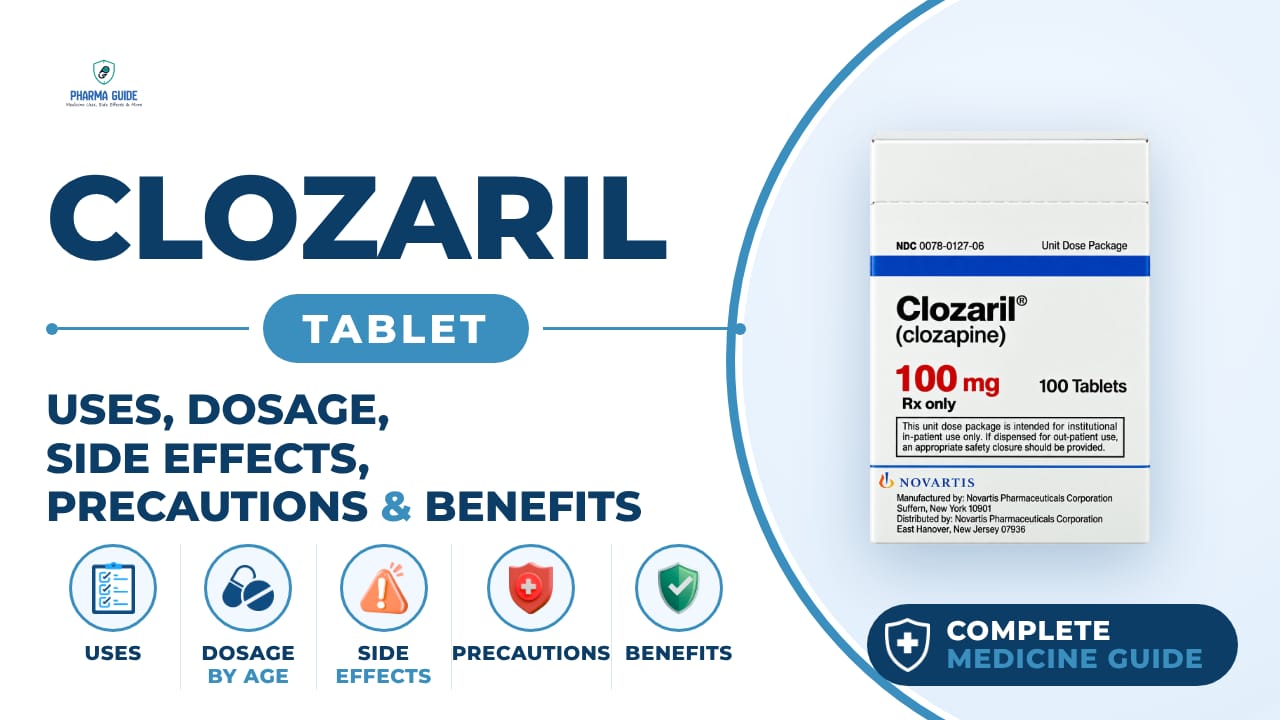
| Generic name | Clozapine |
|---|---|
| Drug class | Atypical antipsychotic (second-generation antipsychotic) |
| Forms | Tablet |
Quick overview
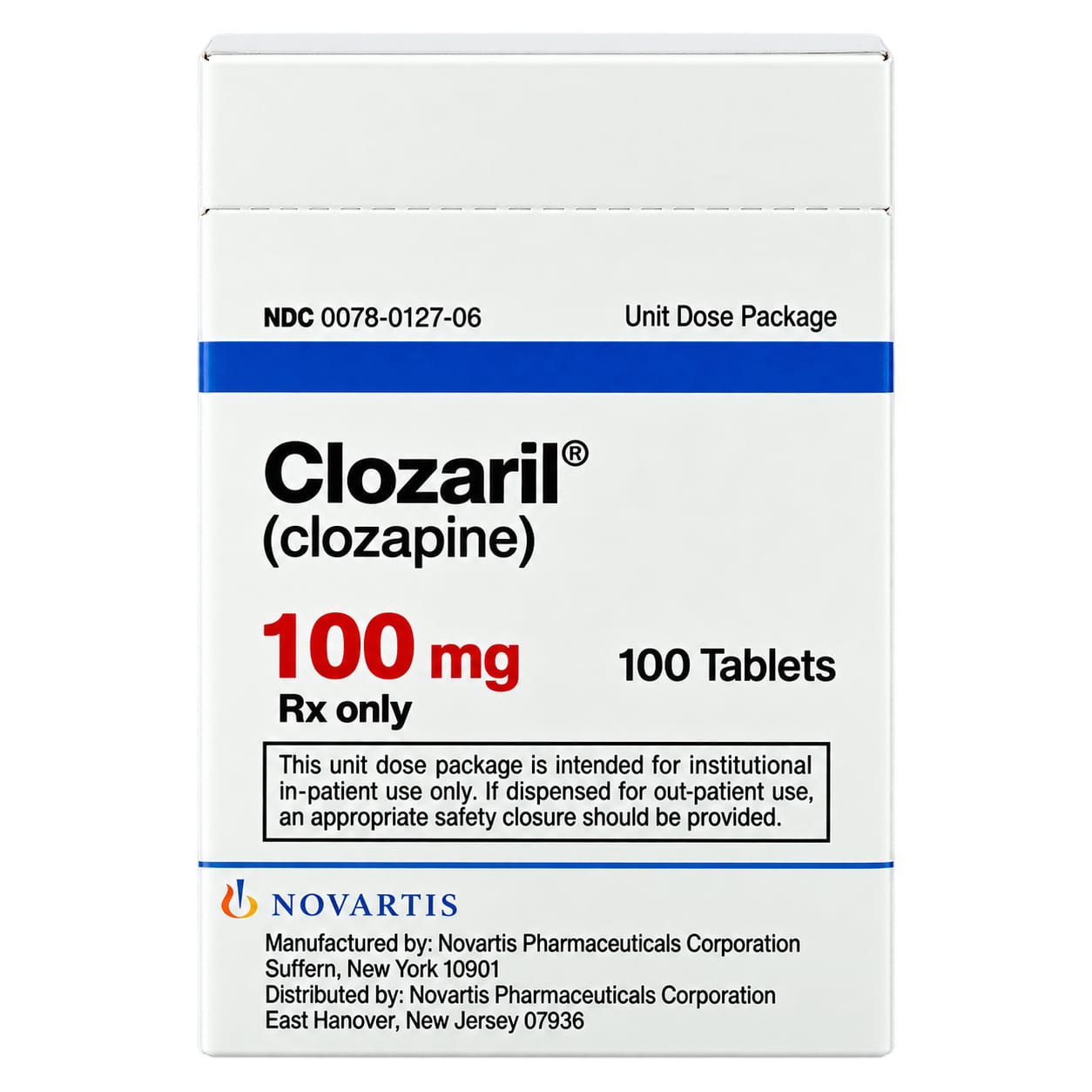
Clozaril is an antipsychotic tablet that contains clozapine, used to treat severe schizophrenia that has not improved with other treatments. It may help reduce hallucinations, delusions, and disorganized thinking, and can lower the risk of repeated suicidal behavior in people with schizophrenia or schizoaffective disorder. This medicine requires careful dosing and monitoring, and it should never be stopped suddenly.
What is Clozaril Tablet
Clozaril is an antipsychotic medicine that contains the active ingredient clozapine. It belongs to the atypical antipsychotic (second-generation antipsychotic) drug class. It is used to treat severe schizophrenia that has not improved with other treatments.
Clozaril Tablet uses
- Treats severe schizophrenia in adults who have not responded well to at least two other antipsychotic medicines, or who could not tolerate them because of severe side effects
- Reduces the risk of repeated suicidal behavior in people with schizophrenia or schizoaffective disorder
- Used for severe thought, emotional, and behavioral problems in people with Parkinson's disease when other treatments have failed
Benefits of Clozaril Tablet
- May improve hallucinations, delusions, and disorganized thinking
- May reduce lack of motivation and other negative symptoms of schizophrenia
- Can lower the risk of suicidal behavior in people with schizophrenia
- May lead to improved stability and better quality of life when other medicines have not worked
How Clozaril Tablet works
Clozaril works by balancing the levels of dopamine and serotonin in the brain, chemicals that help regulate mood and thinking.
Clozaril Tablet dosage
Take Clozaril by mouth with a full glass of water. It can be taken with or without food. Take your doses at about the same time each day, and do not take more often than directed.
Do not stop taking this medicine suddenly; your doctor will need to lower your dose gradually if you need to stop. If you stop for more than a couple of days, contact your care team before restarting, since the dose may need to be reduced.
Special care may be needed when used in children; talk to your care team about this. Your doctor may recommend a laxative — use only the type your doctor suggests.
| Age group | Dose |
|---|---|
| Under 18 years | No established routine pediatric dosage; specialist-directed only |
| 18–64 years | Usually starts at 12.5 mg once or twice daily; gradually increased by the prescriber |
| 65–74 years | Usually starts at 12.5 mg once daily, with slower titration |
| 75 years and older | Very cautious individualized dosing, generally beginning with a low dose |
Available forms and strengths
- Tablet
Side effects of Clozaril Tablet
Common
- Drowsiness, sedation, tiredness, or dizziness
- Constipation
- Increased salivation or dry mouth
- Rapid heartbeat
- Weight gain and changes in blood sugar or lipids
- Low blood pressure upon standing, causing lightheadedness or fainting
- Headache
- Tremor
- Nausea
- Vision problems
- Fever and increased sweating
Serious
- Agranulocytosis or severe drop in white blood cells, which lowers your ability to fight infection
- Myocarditis (inflammation of the heart muscle)
- Seizures, especially at higher doses
- Severe bowel problems, including severe constipation, fecal impaction, or bowel blockage
- Neuroleptic malignant syndrome — high fever, severe muscle stiffness, and confusion
- Serious skin reactions with fever, rash, and blistering or peeling skin
- Signs of infection such as fever, sore throat, mouth ulcers, or flu-like symptoms
- Liver injury — yellowing skin or eyes, dark urine, loss of appetite
- Blood clots — leg pain or swelling, chest pain, shortness of breath
- Stroke symptoms — sudden numbness, trouble speaking, loss of balance
- Uncontrolled movements, muscle stiffness, or tremors (extrapyramidal symptoms)
- Trouble passing urine
Warnings and precautions
- This medicine can slow down or block movement in the intestines, causing severe constipation or bowel blockage, which can lead to serious or fatal outcomes. Report any changes in bowel habits right away.
- This medicine may cause myocarditis, a serious and potentially fatal inflammation of the heart muscle.
- Never stop taking this medicine suddenly, as this can cause your condition to worsen or trigger a severe reaction. Your dose should be lowered gradually under medical supervision.
- This medicine can lower your white blood cell count, making infections more dangerous. Regular blood tests are required to monitor for this.
- This medicine is not approved for older adults with dementia-related psychosis and may increase the risk of death in this group.
- High doses or long-term use can cause a serious movement disorder that may not go away, especially in women and older adults.
- Tell your doctor right away if you become pregnant while taking this medicine. Taking antipsychotics late in pregnancy may cause breathing, feeding, or withdrawal problems in the newborn. Do not stop taking Clozaril without your doctor's advice.
- This medicine can pass into breast milk and may harm your baby. Talk to your doctor about the best way to feed your baby if you are taking this medicine.
- Tell your doctor if you have kidney disease before starting this medicine, as it may affect how the medicine should be used.
- Tell your doctor if you have liver disease. Severe liver disease is a reason not to take this medicine.
- Do not drink alcohol while taking this medicine. It can increase drowsiness and dizziness and may cause dangerous side effects.
- This medicine may affect your coordination, reaction time, and judgment. Do not drive or use machinery until you know how it affects you.
Storage
- Store at room temperature below 30 degrees C (86 degrees F)
- Keep tablets in their original pack until it is time to take them
- Store in a cool, dry place away from moisture, heat, or sunlight; do not store in the bathroom or in a car
- Keep out of the reach of children
- Throw away any unused medication after the expiration date
- If no longer needed or expired, take it to a pharmacy for safe disposal
When to see a doctor
- Get emergency help for signs of an allergic reaction, such as hives, trouble breathing, or swelling of the face, lips, tongue, or throat.
- Call your doctor right away if you have signs of infection such as fever, flu-like symptoms, extreme weakness, mouth sores, or a sore throat.
- Seek emergency care for chest pain, fast or pounding heartbeat, shortness of breath, swelling in the feet or legs, or sudden dizziness, which may be signs of a heart problem.
- Call your doctor immediately if you have a high fever, stiff muscles, sweating, confusion, or a fast or uneven heartbeat, which can be signs of a serious nervous system reaction.
- Tell your doctor right away if you are having fewer than 3 bowel movements per week, as untreated constipation can lead to serious complications.
- Seek urgent medical attention if you think you or someone else has taken too much of this medicine, even if there are no symptoms.
- Call your doctor straight away if you develop a fever, signs of infection, or changes in your bowel movements, or if you become pregnant.
Alternatives
- Aripiprazole
- Quetiapine
- Risperidone
- Olanzapine
Watch the video
FAQs
What is Clozaril Tablet used for?
Clozaril is used to treat severe schizophrenia in adults who have not responded well to at least two other antipsychotic medicines, or who could not tolerate them. It also reduces the risk of repeated suicidal behavior in people with schizophrenia or schizoaffective disorder, and is used for severe thought, emotional, and behavioral problems in people with Parkinson's disease when other treatments have failed.
How does Clozaril Tablet work?
Clozaril works by balancing the levels of dopamine and serotonin in the brain, chemicals that help regulate mood and thinking.
Can I stop taking Clozaril suddenly?
No, you should never stop taking Clozaril suddenly, as this can cause your condition to worsen or trigger a severe reaction. Your doctor will need to lower your dose gradually. If you stop for more than a couple of days, contact your care team before restarting since the dose may need to be reduced.
What are the serious side effects of Clozaril Tablet?
Serious side effects include agranulocytosis (severe drop in white blood cells), myocarditis, seizures, severe bowel problems, neuroleptic malignant syndrome, serious skin reactions, liver injury, blood clots, stroke symptoms, and uncontrolled movements or muscle stiffness.
What is the starting dose of Clozaril for adults?
For adults aged 18–64 years, Clozaril usually starts at 12.5 mg once or twice daily, with the dose gradually increased by the prescriber.
General information, not medical advice
Your prescriber and the leaflet in your pack know your situation. This page does not.
- Follow your prescriber and the leaflet
- Don't start, stop, or change a dose on your own
- Doses and warnings differ by country and product
Sources
Video
Related medicines

Geodon Capsule: Uses, Dosage, Side Effects, Precautions and Alternates
atypical antipsychotic (second-generation antipsychotic)
Geodon (ziprasidone) is a prescription antipsychotic for schizophrenia and bipolar disorder. Learn how it works, dosage, side effects, and warnings.

Iloperidone Tablet: Uses, Dosage, Side Effects, Precautions and Alternates
Atypical antipsychotic (Second-Generation Antipsychotic)
Iloperidone Tablet treats schizophrenia in adults by reducing hallucinations and delusions. Learn dosage, side effects, warnings, and precautions.