
Safety
General information, not medical advice
Your prescriber and the leaflet in your pack know your situation. This page does not.
- Follow your prescriber and the leaflet
- Don't start, stop, or change a dose on your own
- Doses and warnings differ by country and product
Co-trimoxazole Tablet: Uses, Dosage, Side Effects, Precautions and Alternates
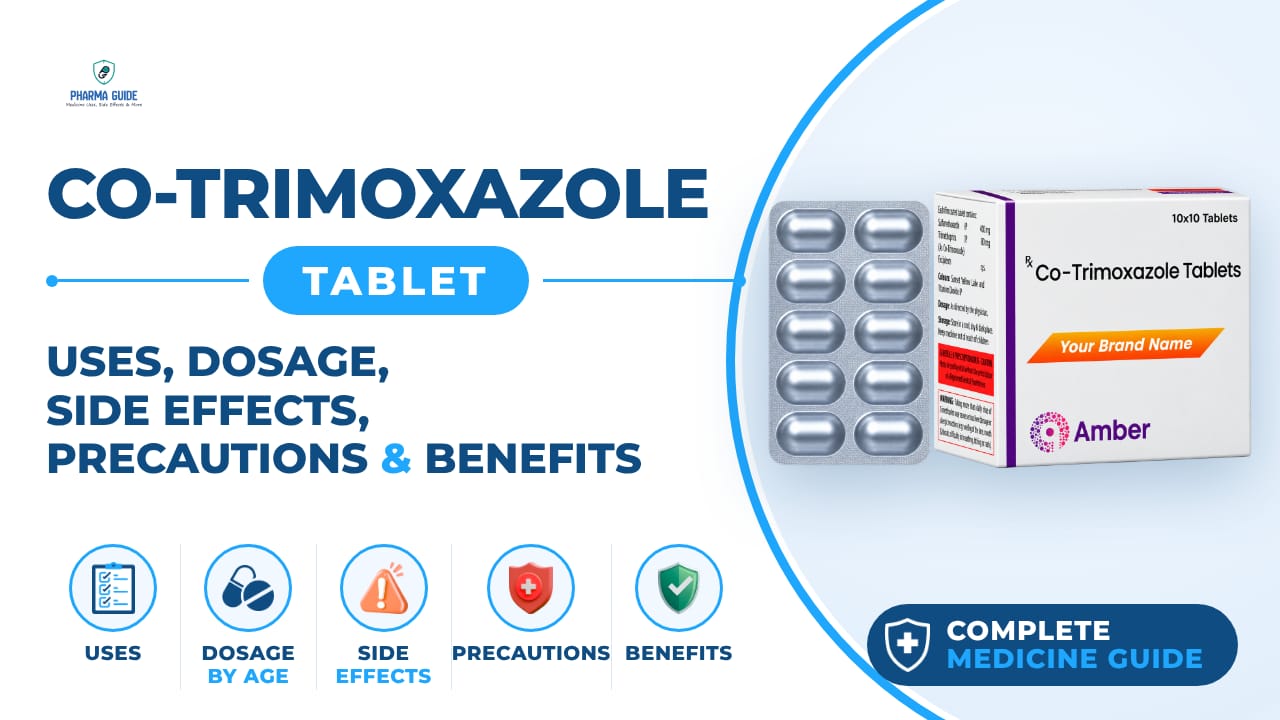
| Generic name | Sulfamethoxazole and Trimethoprim |
|---|---|
| Drug class | Sulfonamide antibiotic |
| Forms | Tablet, Suspension (liquid), Injection |
Quick overview
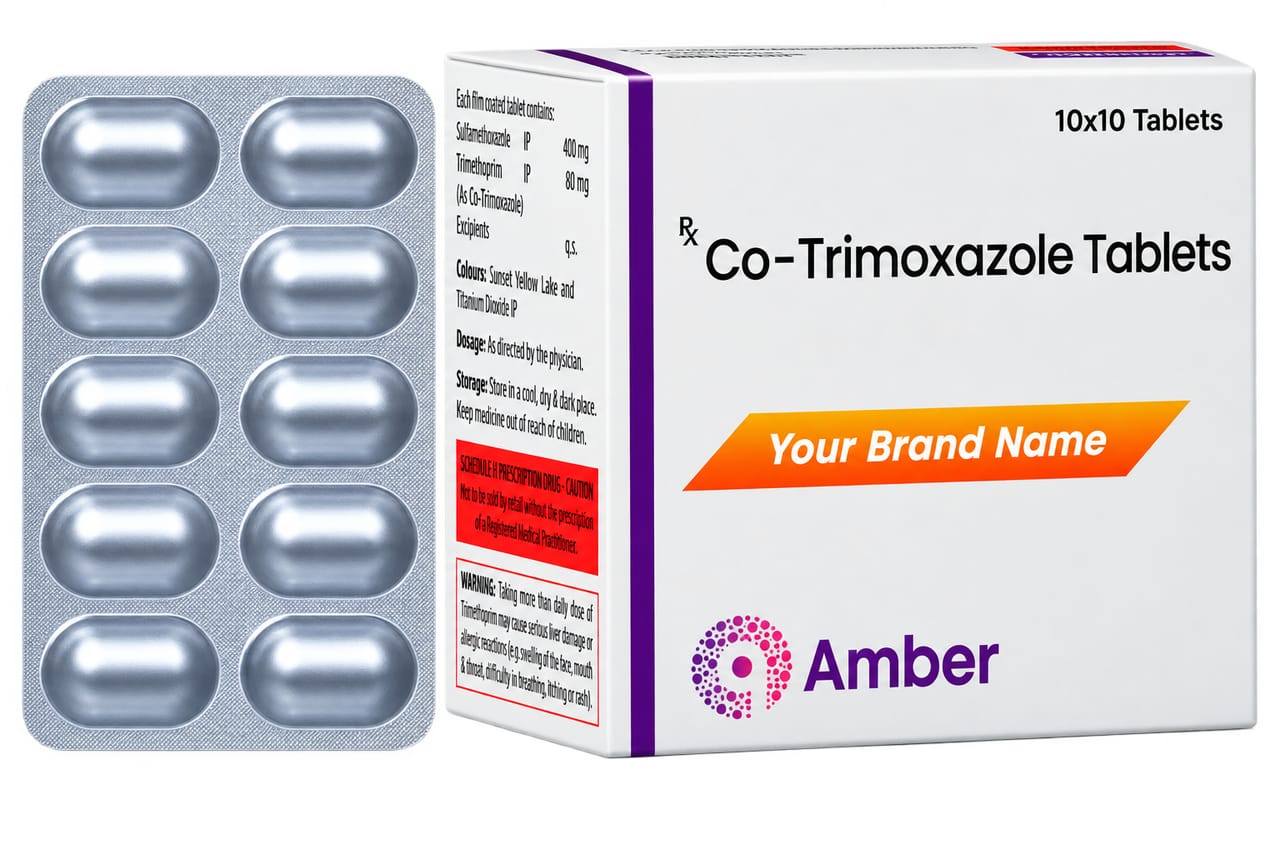
Co-trimoxazole Tablet, also known as Sulfamethoxazole and Trimethoprim, is a sulfonamide antibiotic used to treat a range of bacterial infections, including urinary tract infections, respiratory tract infections, and pneumonia caused by Pneumocystis jiroveci. It combines two antibiotics that work together to stop bacterial growth. It is available as a tablet, suspension, and injection, and should be used exactly as prescribed by a doctor.
What is Co-trimoxazole Tablet
Co-trimoxazole is a type of antibiotic used to treat infections caused by certain bacteria. It is a combination of two different antibiotics called trimethoprim and sulfamethoxazole.
Co-trimoxazole Tablet uses
- Treats certain bacterial infections
- Treats travelers' diarrhea
- Treats acute otitis media (ear infection)
- Treats chronic and current urinary tract infections
- Treats prostatitis
- Treats respiratory tract infections
- Treats gastrointestinal infections
- Treats brucellosis
- Treats cholera
- Treats plague
- Treats pneumonia caused by Pneumocystis jiroveci (PJP)
- Treats toxoplasmosis
- Used to help prevent infections, including PJP pneumonia, in people with weakened immune systems
Benefits of Co-trimoxazole Tablet
- Stops the growth of bacteria, helping clear the infection
- Can be used to prevent certain infections in people at higher risk
How Co-trimoxazole Tablet works
Co-trimoxazole combines two antibiotics that each block a different step bacteria need to make folic acid, which they need to grow. Together they stop bacteria from making DNA, which kills the bacteria and helps prevent resistance.
Co-trimoxazole Tablet dosage
Take co-trimoxazole by mouth at around the same time(s) every day. Take it exactly as directed by your doctor; do not take more, less, or more often than prescribed. You should start to feel better within the first few days; call your doctor if symptoms do not improve or get worse. Shake the liquid form well before each use to mix the medicine evenly. Finish the full prescription even if you feel better, so the infection is fully treated and bacteria do not become resistant.
Co-trimoxazole is usually taken twice a day, about 12 hours apart, for example in the morning and evening. You may wish to take it with food to reduce the chance of an upset stomach. If you miss a dose, take it as soon as you remember, unless it is almost time for your next dose—then skip the missed dose and continue your regular schedule; do not double up. Continue your normal diet unless your doctor tells you otherwise, and drink plenty of fluids during treatment.
| Age group | Dose |
|---|---|
| Under 2 months | Contraindicated |
| 2 months–11 years | TMP 4 mg/kg + SMX 20 mg/kg every 12 hours for many infections |
| 12–17 years | Usually TMP 160 mg + SMX 800 mg every 12 hours |
| 18–64 years | Usually 160/800 mg every 12 hours |
| 65+ years | Adult dose may be used; adjust for kidney function |
Available forms and strengths
- Tablet
- Suspension (liquid)
- Injection
Side effects of Co-trimoxazole Tablet
Common
- Nausea
- Vomiting
- Loss of appetite
- Diarrhea
- Thrush (mouth or vaginal)
- Rash
Serious
- Rash, itching, redness, peeling, or blistering of skin
- Sore throat
- Loss of consciousness
- Fever or chills
- Severe diarrhea (watery or bloody stools), with or without fever and stomach cramps, which may occur up to 2 months or more after treatment
- Shortness of breath, cough, or difficulty breathing
- Unusual bruising or bleeding, red or purple skin discolorations
- Fever, rash, yellowing of skin and eyes, abdominal tenderness, nausea, vomiting, diarrhea, and swollen lymph nodes
- Difficulty breathing or shortness of breath (allergic reaction)
- Swelling of face, mouth, tongue, and throat causing difficulty swallowing
- Chest pain
- Fainting
- Feeling very tired along with sore throat, fever, or unexplained bruising/bleeding (signs of bone marrow problems)
Warnings and precautions
- Tell your doctor if you are pregnant or plan to become pregnant. Co-trimoxazole can harm an unborn baby, and it should not be taken during the first trimester of pregnancy.
- Tell your doctor if you are breast-feeding before taking this medicine.
- Tell your doctor if you have or have had liver or kidney disease, as your doctor may tell you not to take co-trimoxazole. People with severe kidney problems should only take it if specifically advised by their doctor.
- Tell your doctor if you have or have had liver disease; your doctor may tell you not to take co-trimoxazole.
- Avoid unnecessary or prolonged sun exposure and wear protective clothing, sunglasses, and sunscreen, since this medicine can make your skin more sensitive to sunlight.
- Do not take this medicine if you are allergic to sulfamethoxazole, trimethoprim, or co-trimoxazole.
- Do not take this medicine if you have porphyria, a rare blood problem that can affect the skin and nervous system.
- Do not take this medicine together with methotrexate, as the combination can be dangerous, unless your doctor has specifically told you to.
- Only take co-trimoxazole if your doctor specifically advises it if you have a history of bleeding or bruising problems, severe liver or kidney problems, G6PD deficiency, or a tendency toward folate deficiency.
Storage
- Keep this medication in the container it came in, tightly closed, and out of reach of children.
- Store it at room temperature and away from excess heat and moisture (not in the bathroom).
- Place the medication in a safe location – one that is up and away and out of their sight and reach.
- Dispose of unneeded medications in a way so that pets, children, and other people cannot take them.
- Do not flush this medication down the toilet.
- Use a medicine take-back program. Talk to your pharmacist about take-back programs in your community.
When to see a doctor
- Call your doctor immediately or seek emergency care if you notice a skin rash, itching, redness, peeling or blistering of the skin, sore throat, loss of consciousness, fever or chills, severe or bloody diarrhea, shortness of breath or difficulty breathing, unusual bruising or bleeding, or yellowing of the skin and eyes.
- Stop taking co-trimoxazole and get medical help right away if you have signs of an allergic reaction, such as difficulty breathing, swelling of the face, mouth, tongue, or throat, chest pain, a red skin rash, or fainting.
- Stop taking co-trimoxazole and tell your doctor if you notice a sore throat, unexplained bruising or bleeding, fever, or feeling very tired, as these could be signs your bone marrow is not working properly; you will likely need urgent blood tests.
Alternatives
- Amoxicillin-Clavulanate
- Cephalexin
- Cefuroxime
- Cefixime
- Cefpodoxime
- Doxycycline
- Clindamycin
Watch the video
FAQs
What is Co-trimoxazole Tablet used for?
It treats bacterial infections such as UTIs, respiratory tract infections, ear infections, traveler's diarrhea, prostatitis, cholera, plague, brucellosis, toxoplasmosis, and pneumonia caused by Pneumocystis jiroveci. It can also help prevent infections in people with weakened immune systems.
How is Co-trimoxazole Tablet taken?
It is taken by mouth, usually twice a day about 12 hours apart, with or without food (food may reduce stomach upset). Take it exactly as prescribed and finish the full course even if you feel better.
What should I do if I miss a dose?
Take the missed dose as soon as you remember, unless it is almost time for your next dose. In that case, skip the missed dose and continue your regular schedule without doubling up.
What are the common side effects of Co-trimoxazole Tablet?
Common side effects include nausea, vomiting, loss of appetite, diarrhea, thrush, and rash.
Can Co-trimoxazole Tablet be taken during pregnancy?
It can harm an unborn baby and should not be taken during the first trimester of pregnancy. Tell your doctor if you are pregnant or planning to become pregnant.
General information, not medical advice
Your prescriber and the leaflet in your pack know your situation. This page does not.
- Follow your prescriber and the leaflet
- Don't start, stop, or change a dose on your own
- Doses and warnings differ by country and product
Sources
Video
Related medicines

Injectafer Injection: Uses, Dosage, Side Effects, Precautions and Alternates
Iron products
Injectafer (ferric carboxymaltose) treats iron deficiency anemia and heart failure-related iron deficiency via IV. Learn uses, dosage, side effects, and

Gliclazide Tablet: Uses, Dosage, Side Effects, Precautions and Alternates
Sulfonylurea (hypoglycemic/antidiabetic agent)
Gliclazide Tablet is a sulfonylurea for type 2 diabetes that boosts insulin release. Learn about dosage, side effects, warnings, and precautions.