
Safety
General information, not medical advice
Your prescriber and the leaflet in your pack know your situation. This page does not.
- Follow your prescriber and the leaflet
- Don't start, stop, or change a dose on your own
- Doses and warnings differ by country and product
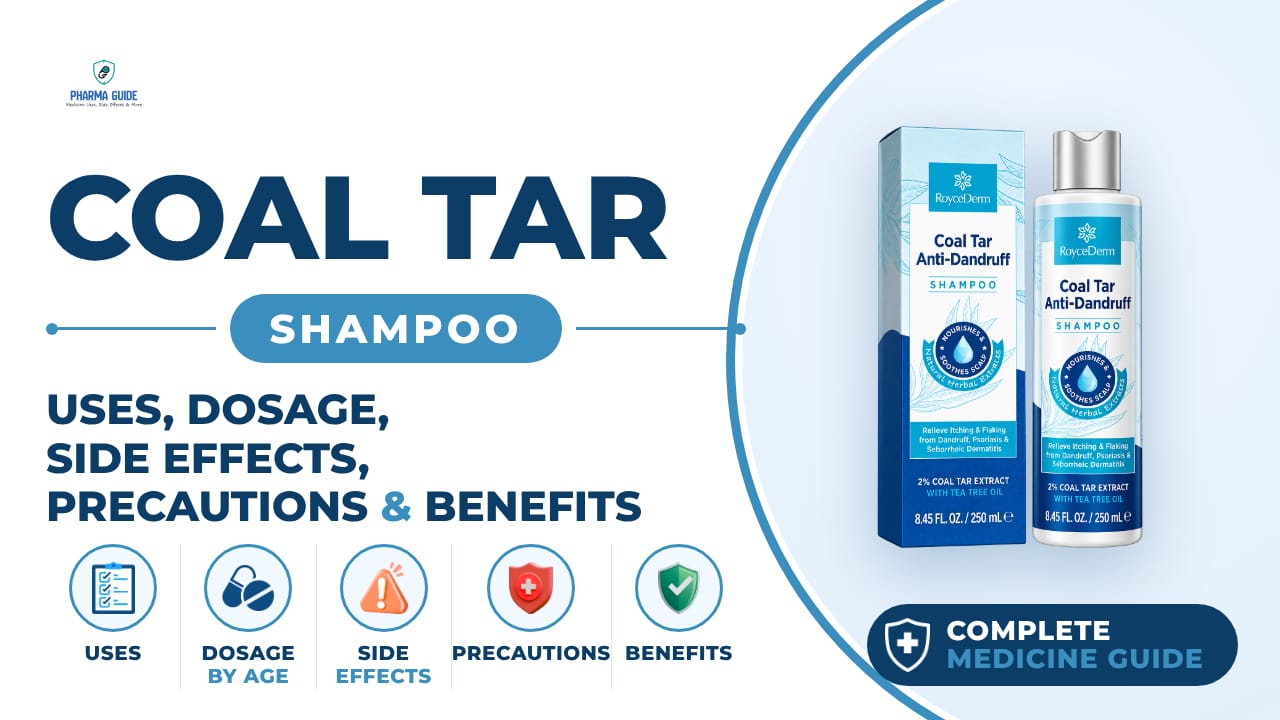
Coal Tar Shampoo: Uses, Dosage, Side Effects, Precautions and Alternates
| Generic name | coal tar, coal tar topical |
|---|---|
| Drug class | keratolytic agent |
| Forms | Cream, Gel, Liquid, Ointment, Soap, Shampoo |
Quick overview
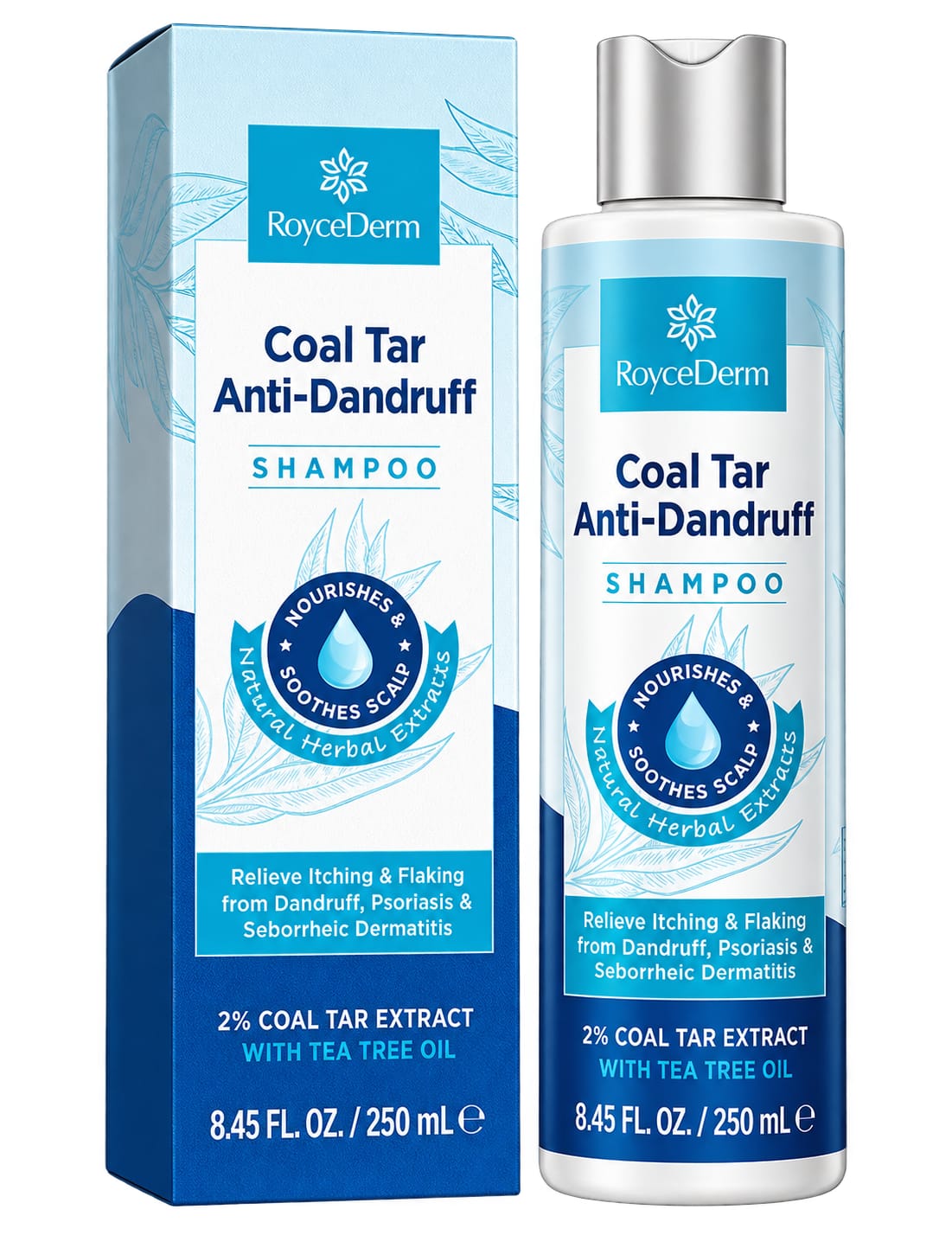
Coal tar shampoo is an over-the-counter keratolytic agent applied to the scalp to help manage dandruff, scalp psoriasis, and seborrheic dermatitis, including cradle cap in children 2 years and older. It works by slowing the rapid growth of skin cells that causes scaling and may have mild antiseptic effects. Common effects include stinging, sun sensitivity, and discoloration of skin, hair, or fabric. It should be used as directed on the product label or as prescribed by a doctor or pharmacist.
What is Coal Tar Shampoo
Coal tar shampoo is a medicated over-the-counter treatment applied to the scalp to help with dandruff, psoriasis, and seborrheic dermatitis.
Coal Tar Shampoo uses
- Dandruff
- Scalp psoriasis
- Seborrheic dermatitis (including cradle cap in children 2 years and older)
- Skin itching, scaling, flaking, redness, and irritation from these conditions
Benefits of Coal Tar Shampoo
- Slows down the rapid growth of skin cells that causes thick scales
- Relieves chronic itching, flaking, inflammation, and irritation on the scalp
- Helps the outer layer of skin shed naturally
- May have mild antiseptic effects that help limit growth of bacteria or other germs
How Coal Tar Shampoo works
Coal tar helps by slowing down the fast growth of skin cells that causes scaling and irritation in conditions like psoriasis. It may also have mild antiseptic effects that help limit bacteria or other germs that can make skin conditions worse.
Coal Tar Shampoo dosage
Apply to wet hair and scalp, lather for several minutes, then rinse thoroughly and repeat. How often you use it depends on how severe your condition is, ranging from a couple of times a week to once a day. For children 2 years and older, use it the same way as adults; safety and effectiveness have not been established for children under 2 years.
Some products should be shaken well before each use. Some products should be massaged into the affected area or left on for several minutes, so check the product label. Avoid getting it in your eyes; if this happens, rinse well with water. Avoid using on cuts, broken skin, or large areas of the body unless your health care provider tells you to. Talk to your health care provider before using it for a long time or in the genital, rectal, or groin area.
| Age group | Dose |
|---|---|
| Under 12 years | Use only with guidance from a doctor or pharmacist; pediatric directions vary by product |
| 12–17 years | Common OTC directions are to use at least twice weekly, or as directed by a healthcare professional |
| 18–64 years | Usually used at least twice weekly, or as directed by a doctor |
| 65–74 years | Generally follows adult directions; use according to scalp condition and product label |
Available forms and strengths
- Cream
- Gel
- Liquid
- Ointment
- Soap
- Shampoo
Side effects of Coal Tar Shampoo
Common
- Stinging or burning where applied
- Sensitivity to sunlight (photosensitivity)
- Red or swollen hair follicles (folliculitis)
- Skin peeling
- Discoloration or staining of skin, hair, or fabric
Serious
- Severe allergic reaction with breathing problems or wheezing
- Racing heart
- Fever or general ill feeling
- Swollen lymph nodes
- Swelling of the face, lips, mouth, tongue, or throat
- Trouble swallowing or throat tightness
- Itching or skin rash
- Hives
- Nausea or vomiting
- Dizziness, feeling lightheaded, or fainting
- Stomach cramps
- Joint pain
Warnings and precautions
- Do not use coal tar if you are allergic to it or to any of the ingredients in the specific product.
- Coal tar can make your skin more sensitive to sunlight, sunlamps, and tanning beds for up to 24 hours after use, which can cause severe sunburn, blisters, and swelling. Wear sunscreen, a hat, and protective clothing if you need to be in the sun.
- Coal tar used on the hair or scalp may rarely change hair color, especially in people with light-colored hair. It may also stain or discolor clothing or skin.
- Coal tar is for use on the skin or scalp only. Avoid getting it in your eyes, on broken or inflamed skin, or near fire or flame since it may be flammable.
- Keep coal tar out of the reach of children.
- It is not known if coal tar is safe during pregnancy or if it could harm an unborn baby. Tell your health care provider if you are pregnant or planning to become pregnant before using it.
- It is not known if coal tar passes into breast milk. Tell your health care provider if you are breastfeeding, and if you use it, keep your baby's skin from touching the areas where you applied it.
- Coal tar shampoo should not be used by people with impaired kidney function.
- It is not known whether drinking alcohol affects coal tar.
- Coal tar shampoo does not normally affect driving.
Storage
- Store coal tar according to the package labeling
- Some products may be flammable
- If you have questions about how to store your product, ask your pharmacist
- Keep out of reach of children
When to see a doctor
- Stop using coal tar and contact your health care provider if your skin condition does not improve or gets worse.
- Get help right away if you have signs of a serious allergic reaction, such as breathing problems, racing heart, fever, swelling of the face or throat, trouble swallowing, hives, dizziness, or stomach cramps.
- If someone uses too much coal tar, get medical help right away or contact a poison control center.
- See a doctor if your scalp condition does not improve after 4 to 6 weeks of using coal tar shampoo.
Alternatives
- Ketoconazole shampoo
- Selenium sulfide shampoo
- Zinc pyrithione shampoo
- Salicylic acid shampoo
Watch the video
FAQs
What is Coal Tar Shampoo used for?
It is used to treat dandruff, scalp psoriasis, and seborrheic dermatitis, including cradle cap in children 2 years and older, along with related itching, scaling, flaking, and redness.
How does Coal Tar Shampoo work?
It slows down the rapid growth of skin cells that causes scaling and irritation, and may have mild antiseptic effects that help limit bacteria or other germs.
How should Coal Tar Shampoo be used?
Apply to wet hair and scalp, lather for several minutes, then rinse thoroughly and repeat. Frequency ranges from a couple of times a week to once a day depending on severity, as directed on the label or by a doctor.
What are the common side effects of Coal Tar Shampoo?
Common side effects include stinging or burning where applied, sensitivity to sunlight, red or swollen hair follicles, skin peeling, and discoloration of skin, hair, or fabric.
Can children use Coal Tar Shampoo?
It can be used in children 2 years and older the same way as adults, but safety and effectiveness have not been established for children under 2 years.
General information, not medical advice
Your prescriber and the leaflet in your pack know your situation. This page does not.
- Follow your prescriber and the leaflet
- Don't start, stop, or change a dose on your own
- Doses and warnings differ by country and product
Sources
Video
Related medicines

Injectafer Injection: Uses, Dosage, Side Effects, Precautions and Alternates
Iron products
Injectafer (ferric carboxymaltose) treats iron deficiency anemia and heart failure-related iron deficiency via IV. Learn uses, dosage, side effects, and

Gliclazide Tablet: Uses, Dosage, Side Effects, Precautions and Alternates
Sulfonylurea (hypoglycemic/antidiabetic agent)
Gliclazide Tablet is a sulfonylurea for type 2 diabetes that boosts insulin release. Learn about dosage, side effects, warnings, and precautions.