
Safety
General information, not medical advice
Your prescriber and the leaflet in your pack know your situation. This page does not.
- Follow your prescriber and the leaflet
- Don't start, stop, or change a dose on your own
- Doses and warnings differ by country and product
Coartem Tablet: Uses, Dosage, Side Effects, Precautions and Alternates
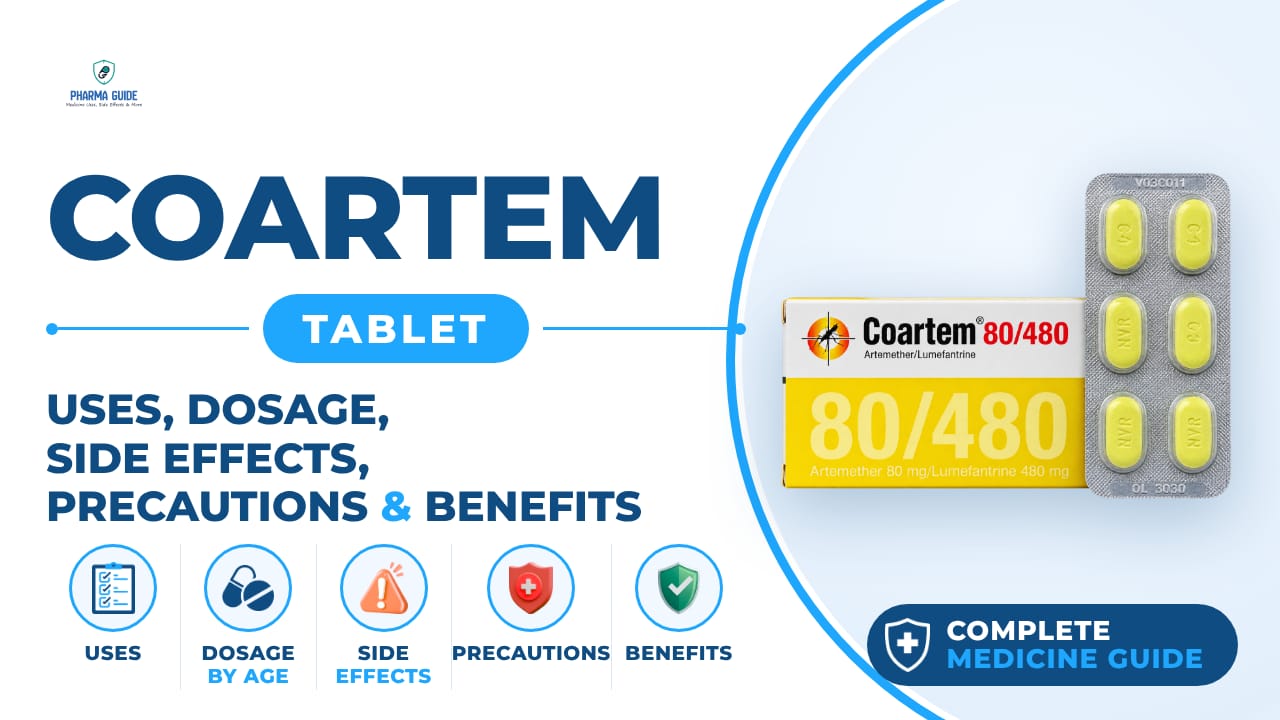
| Generic name | Artemether and lumefantrine |
|---|---|
| Drug class | Antimalarial combination |
| Forms | Tablet, Dispersible tablet |
Quick overview
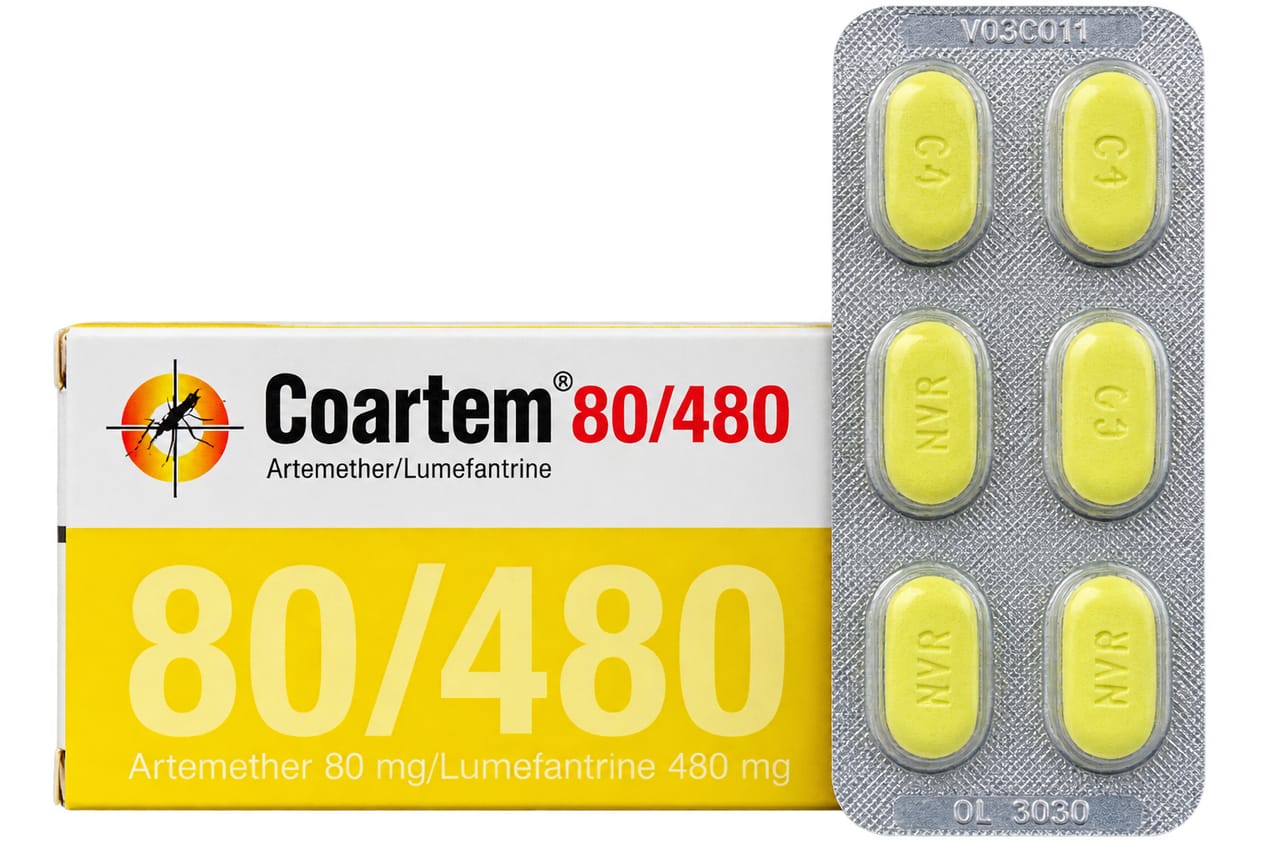
Coartem Tablet contains artemether and lumefantrine, an antimalarial combination medicine used to treat non-severe, uncomplicated malaria caused by Plasmodium falciparum, including mixed infections involving this parasite. It works by attacking the malaria parasite while it is inside red blood cells, stopping it from growing. Coartem is not used to prevent malaria and is not intended for severe or complicated cases.
What is Coartem Tablet
Coartem contains a combination of artemether and lumefantrine, two anti-malaria medicines that work together to interfere with the growth of malaria parasites in red blood cells. Malaria is caused by parasites that enter the body through a mosquito bite. It is common in areas such as Africa, South America, and Southern Asia.
Coartem Tablet uses
- Treatment of non-severe (acute, uncomplicated) malaria caused by Plasmodium falciparum or mixed infections including P. falciparum
- Not for preventing malaria
- Not for severe or complicated malaria
Benefits of Coartem Tablet
- Treats acute, uncomplicated malaria, including infections that may be resistant to other antimalarial medicines
How Coartem Tablet works
Coartem works by attacking the malaria parasite while it is inside red blood cells. It blocks the parasite from turning a toxic substance from broken-down blood into a harmless one, which stops the parasite from growing.
Coartem Tablet dosage
Take Coartem with food, milk, pudding, oatmeal, or broth to help your body absorb the medicine. The tablet may be crushed and mixed with a small amount of water for easier swallowing, or mixed with infant formula for children. Start eating normally as soon as possible once you can tolerate food, since this helps the medicine work better.
If you vomit within about an hour of taking a dose, take another dose; if vomiting continues or you cannot eat, contact your doctor. Keep taking the full course even if you feel better after the first few doses.
Dispersible tablets should be fully dissolved in a small amount of water and given right away; rinse the glass with a little more water and give that to the patient too.
Take doses on schedule: an initial dose, another dose 8 hours later, then twice daily (morning and evening) for the next two days.
If you miss a dose, take it as soon as you remember unless it is almost time for the next dose, in which case skip the missed one; do not double up.
| Age group | Dose |
|---|---|
| Under 2 months | Not established |
| 2 months–5 years | 1–3 tablets per dose, depending on weight |
| 6–11 years | 1–3 tablets per dose, depending on weight |
| 12–15 years | 3 tablets per dose if 25–<35 kg; 4 tablets if ≥35 kg |
| Adults ≥16 years | 4 tablets per dose |
Available forms and strengths
- Tablet
- Dispersible tablet
Side effects of Coartem Tablet
Common
- Headache
- Dizziness
- Fever, chills
- Cough
- Feeling weak or tired
- Stiffness or pain in muscles and joints
- Vomiting
- Loss of appetite
- Abdominal or stomach pain
- Sore throat
- Stuffy or runny nose
Serious
- Worsening malaria symptoms
- Severe vomiting, loss of appetite, or being unable to eat
- Fast or pounding heartbeats
- A light-headed feeling, like you might pass out
- Any skin rash, even mild
- Fever, chills, body aches, severe headache, or flu symptoms after finishing all doses
- Signs of allergic reaction: hives, fast heart rate, difficult breathing, swelling of face, lips, tongue, or throat
- Unusual bleeding or bruising
- Heart rhythm changes such as fast, irregular, or pounding heartbeat
Warnings and precautions
- Do not take Coartem if you are allergic to artemether or lumefantrine. Serious drug interactions can happen with certain medicines. Tell your doctor about all medicines you use, especially carbamazepine, phenytoin, rifampin, or St. John's wort.
- This medicine can affect heart rhythm, causing a condition called QT prolongation, which may lead to fainting or serious heart problems. Avoid grapefruit and grapefruit juice while taking this medicine, since it can increase side effects.
- Coartem may make hormonal birth control (pills, injections, implants, patches, rings) less effective. Use a barrier method like condoms during treatment.
- Tell your doctor if you have heart disease, long QT syndrome (in you or your family), liver or kidney disease, or low potassium or magnesium levels, as these can increase risk with this medicine.
- Coartem tablets should not be given to children weighing less than about 11 pounds. Do not use other antimalarial medicines at the same time unless your doctor tells you to, since combining them can increase the chance of serious side effects.
- It is not known whether Coartem will harm an unborn baby. Coartem should not be used in the first three months of pregnancy if other effective antimalarial medicines are available, but it should not be withheld in life-threatening situations. Tell your doctor if you are pregnant or plan to become pregnant.
- Breastfeeding women should not take Coartem. Because the medicine stays in the body a long time, breastfeeding should not restart for about 4 weeks after treatment unless the benefits outweigh the risks.
- No dose change is usually needed for kidney problems, but tell your doctor if you have severe kidney disease. Caution is needed if you have severe liver disease, as the medicine may build up in your body more than usual.
Storage
- Store at room temperature away from moisture and heat
- Keep out of the reach of children
- Do not keep outdated medicine or medicine no longer needed
- Ask your healthcare professional how you should dispose of any medicine you do not use
- Store the medicine in a closed container at room temperature, away from heat, moisture, and direct light. Keep from freezing
- Store the medicine in the original package with the container tightly closed
When to see a doctor
- Get emergency help right away if you have signs of an allergic reaction: hives, fast heart rate, difficulty breathing, or swelling of your face, lips, tongue, or throat
- Call your doctor right away if you have worsening malaria symptoms, severe vomiting, loss of appetite or inability to eat, fast or pounding heartbeats, a light-headed feeling like you might faint, or any skin rash, even if mild
- Call your doctor if fever, chills, body aches, severe headache, or flu-like symptoms return after you finish all your doses
- Call your doctor right away if you notice fast, pounding, or irregular heartbeats, which could be a sign of a heart rhythm problem
- If you vomit within an hour of taking a dose, take another dose; if vomiting continues or you cannot eat, call your doctor
- If you think you have taken too much of this medicine, seek emergency medical attention right away
Alternatives
- Coartem Baby
- Plaquenil
- Malarone
- Quinidine
- Quinine
- Atovaquone
- Hydroxychloroquine
Watch the video
FAQs
What is Coartem Tablet used for?
Coartem is used to treat non-severe, uncomplicated malaria caused by Plasmodium falciparum, including mixed infections involving this parasite. It is not used to prevent malaria or treat severe or complicated cases.
How does Coartem Tablet work?
Coartem works by attacking the malaria parasite while it is inside red blood cells. It blocks the parasite from turning a toxic substance from broken-down blood into a harmless one, which stops the parasite from growing.
How should Coartem Tablet be taken?
Take Coartem with food, milk, pudding, oatmeal, or broth to help absorption. Doses are given on a schedule: an initial dose, another dose 8 hours later, then twice daily for the next two days. Keep taking the full course even if you feel better after a few doses.
What should I do if I vomit after taking a dose of Coartem?
If you vomit within about an hour of taking a dose, take another dose. If vomiting continues or you cannot eat, contact your doctor.
Can Coartem Tablet affect birth control?
Yes, Coartem may make hormonal birth control such as pills, injections, implants, patches, or rings less effective. A barrier method like condoms should be used during treatment.
General information, not medical advice
Your prescriber and the leaflet in your pack know your situation. This page does not.
- Follow your prescriber and the leaflet
- Don't start, stop, or change a dose on your own
- Doses and warnings differ by country and product
Sources
Video
Related medicines

Injectafer Injection: Uses, Dosage, Side Effects, Precautions and Alternates
Iron products
Injectafer (ferric carboxymaltose) treats iron deficiency anemia and heart failure-related iron deficiency via IV. Learn uses, dosage, side effects, and

Gliclazide Tablet: Uses, Dosage, Side Effects, Precautions and Alternates
Sulfonylurea (hypoglycemic/antidiabetic agent)
Gliclazide Tablet is a sulfonylurea for type 2 diabetes that boosts insulin release. Learn about dosage, side effects, warnings, and precautions.