
Safety
General information, not medical advice
Your prescriber and the leaflet in your pack know your situation. This page does not.
- Follow your prescriber and the leaflet
- Don't start, stop, or change a dose on your own
- Doses and warnings differ by country and product
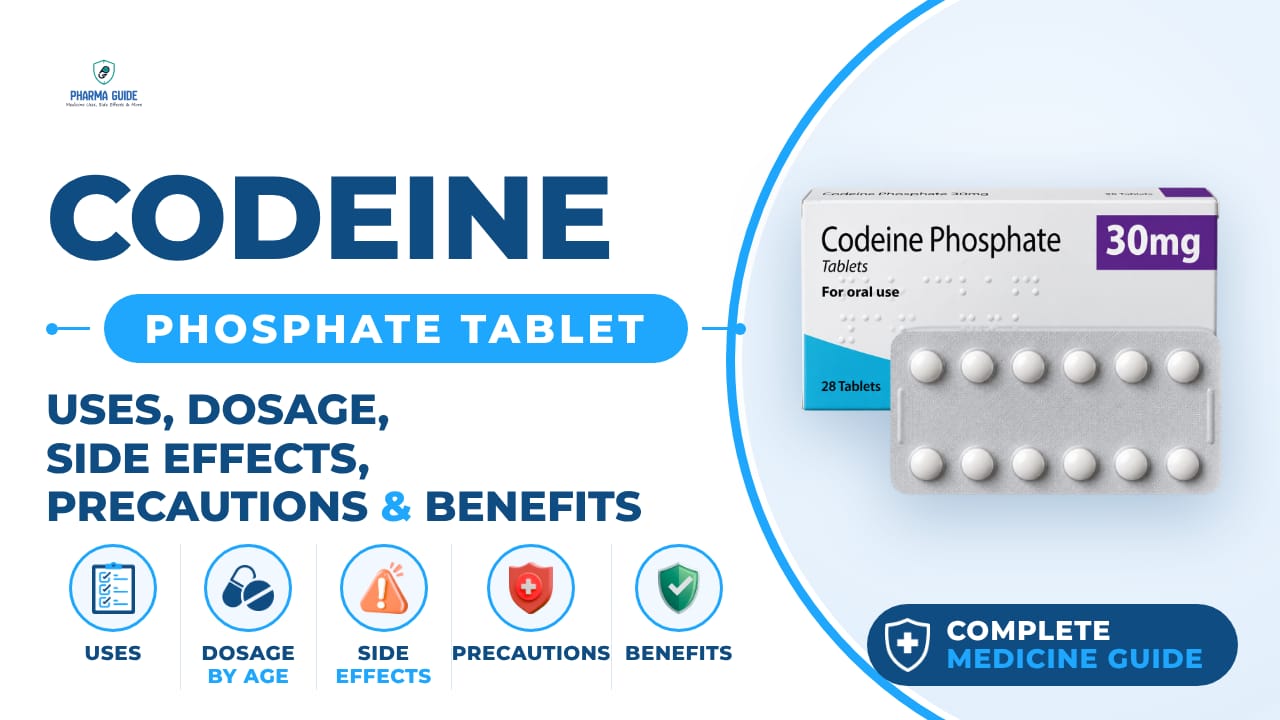
Codeine Phosphate Tablet: Uses, Dosage, Side Effects, Precautions and Alternates
| Generic name | codeine phosphate |
|---|---|
| Drug class | opioid analgesic (opioid painkiller) |
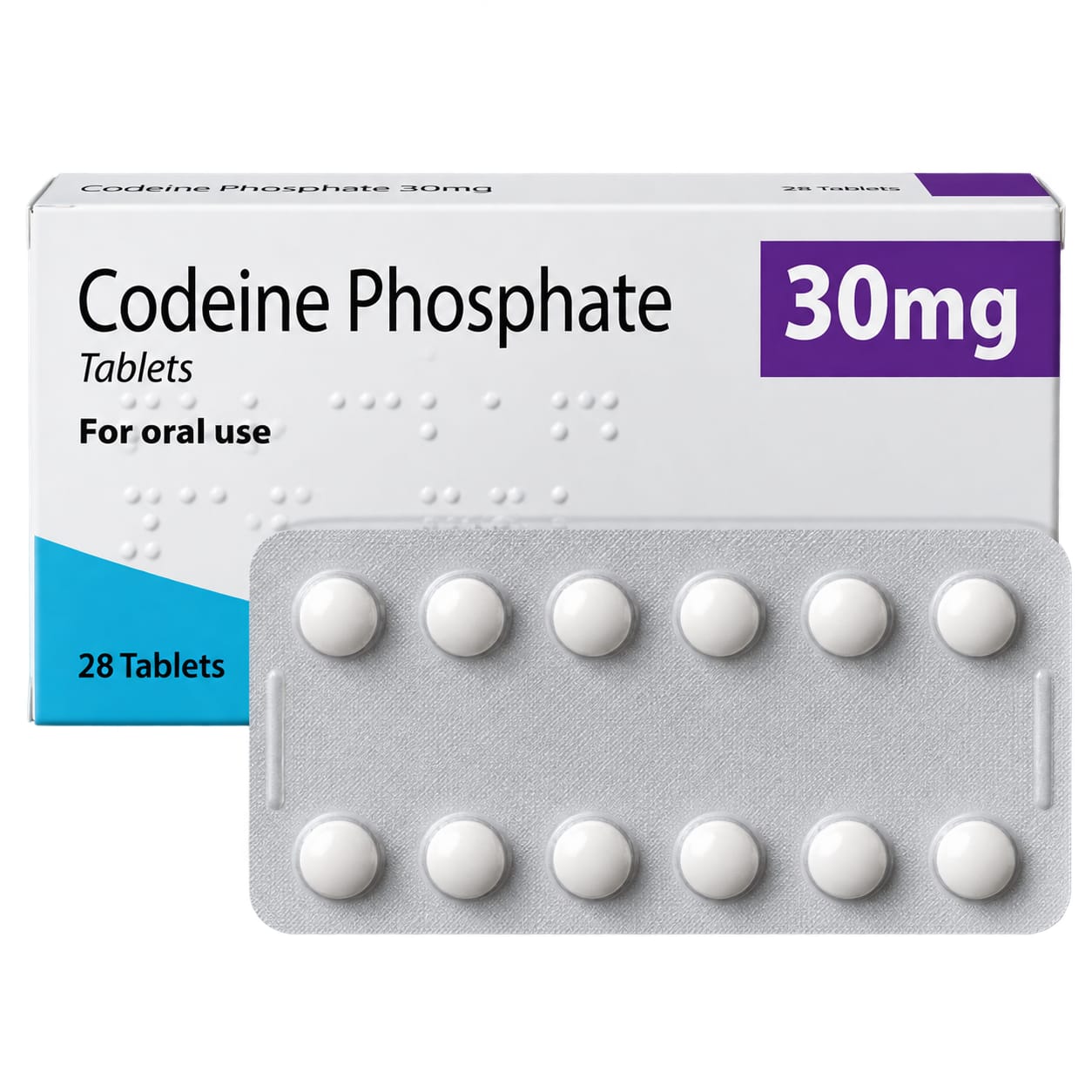
| Forms | Oral tablet (15 mg, 30 mg, and 60 mg strengths), Oral solution (liquid) |
Quick overview
Codeine phosphate is an opioid analgesic available only with a prescription. It is used to relieve mild to moderate pain, suppress a dry or painful cough, and treat diarrhoea. It can cause addiction and withdrawal symptoms if stopped suddenly, so it must be taken exactly as prescribed.
What is Codeine Phosphate Tablet
Codeine is a type of strong painkiller called an opioid. It contains codeine, which can cause addiction, and you can get withdrawal symptoms if you stop taking it suddenly. It is only available with a prescription.
Codeine Phosphate Tablet uses
- Relieves mild to moderate pain, for example after an operation or an injury
- Often used when other painkillers such as paracetamol and ibuprofen have not worked
- Suppresses a dry or painful cough
- Treats diarrhoea
Benefits of Codeine Phosphate Tablet
- Helps relieve pain when other painkillers have not worked
- Can help control a dry or painful cough
- Can help treat diarrhoea
How Codeine Phosphate Tablet works
Codeine attaches to specific receptors in the body to reduce the feeling of pain. In the liver, codeine is changed into morphine, which is the substance that produces pain relief.
Codeine Phosphate Tablet dosage
Swallow the tablets whole with half a glass of water. You can take it with or without food. Take it exactly as prescribed by your doctor and follow any special instructions on the label. If you have a blister pack, press the tablet through the foil and do not remove it until you are ready to take it.
This medicine should not be taken for more than 3 days. If the pain does not improve after 3 days, talk to your doctor. Do not stop taking it suddenly. Your doctor will gradually reduce your dose over weeks or months to lower the chance of withdrawal symptoms.
If you miss a dose, take it as soon as you remember, unless it is nearly time for your next dose. Never take a double dose to make up for a missed one.
| Age group | Dose |
|---|---|
| Under 12 years | Do not use codeine |
| 12–17 years | Generally not recommended, particularly for pain, unless specifically prescribed after individual assessment |
| 18–64 years | Dose depends on the indication and tablet strength; commonly 15–60 mg every 4–6 hours as needed |
| 65+ years | Usually start with a lower dose and increase cautiously, under medical supervision |
Available forms and strengths
- Oral tablet (15 mg, 30 mg, and 60 mg strengths)
- Oral solution (liquid)
Side effects of Codeine Phosphate Tablet
Common
- Drowsiness, sleepiness, or tiredness
- Feeling sick (nausea) or being sick (vomiting)
- Constipation
- Sweating
Serious
- Severe allergic reaction with swelling of the face, lips, tongue or throat and difficulty swallowing or breathing
- Slow, weak or shallow breathing
- Unusual heartbeat or palpitations
- Low blood pressure causing confusion, blurred vision, weakness, lightheadedness or dizziness
- Signs of too much morphine being produced: slow or shallow breathing, confusion, sleepiness, small pupils, feeling or being sick, constipation, lack of appetite
- Physical and psychological dependence (addiction)
- Increased sensitivity to pain
- Seizures
Warnings and precautions
- This medicine contains codeine, an opioid, which can cause addiction. You can get withdrawal symptoms if you stop taking it suddenly. Do not stop taking this medicine suddenly; your doctor will gradually reduce your dose to keep withdrawal effects to a minimum.
- Codeine should not be used in any child younger than 12 years of age due to the risk of severe breathing problems, or in a child under 18 after surgery to remove tonsils or adenoids for obstructive sleep apnoea.
- Misusing codeine or taking higher or more frequent doses can increase the risk of addiction and can lead to overdose or death. Take it exactly as prescribed and do not give it to anyone else.
- Codeine can cause slow or shallow breathing. Some people change codeine into morphine very quickly and can get serious side effects. Stop the medicine and seek immediate medical advice if you notice slow or shallow breathing, confusion, sleepiness, small pupils, feeling or being sick, constipation, or lack of appetite.
- Do not take codeine if you are pregnant or think you might be pregnant unless you have discussed this with your doctor and the benefits are considered to outweigh the risk to the baby. If used regularly during pregnancy, your baby may become dependent and have withdrawal symptoms after birth.
- Do not take codeine while you are breastfeeding, because codeine and morphine pass into breast milk and will affect your baby.
- Tell your doctor if you have kidney problems or liver problems, as you may need a reduced dose.
- Do not drink alcohol while taking codeine. Alcohol increases the effects of codeine and can make you very sleepy.
- You may feel drowsy and confused and may develop blurred or double vision. Do not drive or operate machinery until you know how this medicine affects you. It may be an offence to drive if your ability to drive safely is affected.
Storage
- Do not store above 25°C.
- Store in the original package or container to protect from light.
- Do not transfer the tablets to another container.
- Keep out of the sight and reach of children.
- Do not use if the tablets show signs of discolouration.
- Do not use after the expiry date stated on the carton. The expiry date refers to the last day of that month.
- Do not keep tablets you no longer need unless your doctor tells you to; give them back to the pharmacist.
- Do not dispose of medicines via wastewater or household waste. Ask your pharmacist how to dispose of medicines no longer required.
When to see a doctor
- Get medical help right away if you or someone else has taken too much codeine. Taking an extra dose can be dangerous. Bring the packet, leaflet and any remaining medicine with you.
- Tell your doctor or nurse immediately if you have a severe allergic reaction, such as swelling of the face, lips, tongue or throat with difficulty swallowing or breathing.
- Stop taking this medicine and seek immediate medical advice if you have slow or shallow breathing, confusion, sleepiness, small pupils, feeling or being sick, constipation, or lack of appetite.
- Contact your doctor if you notice signs of addiction, such as needing the medicine for longer than advised, feeling you need more than the recommended dose, using it for reasons other than prescribed, or feeling unwell when you stop and better when you take it again.
Alternatives
- Paracetamol (Acetaminophen)
- Ibuprofen
- Naproxen
- Diclofenac
- Tramadol
- Tapentadol
Watch the video
FAQs
What is Codeine Phosphate Tablet used for?
It is used to relieve mild to moderate pain, suppress a dry or painful cough, and treat diarrhoea, often when other painkillers like paracetamol and ibuprofen have not worked.
How does Codeine Phosphate Tablet work?
Codeine attaches to specific receptors in the body to reduce the feeling of pain. In the liver, it is changed into morphine, which produces the pain-relieving effect.
How long can I take Codeine Phosphate Tablet?
This medicine should not be taken for more than 3 days. If the pain does not improve after 3 days, talk to your doctor, and do not stop taking it suddenly.
Can children take Codeine Phosphate Tablet?
No, codeine should not be used in any child younger than 12 years due to the risk of severe breathing problems, and it is generally not recommended for ages 12-17 unless specifically prescribed after individual assessment.
Can I drink alcohol while taking Codeine Phosphate Tablet?
No, you should not drink alcohol while taking codeine, as alcohol increases the effects of codeine and can make you very sleepy.
General information, not medical advice
Your prescriber and the leaflet in your pack know your situation. This page does not.
- Follow your prescriber and the leaflet
- Don't start, stop, or change a dose on your own
- Doses and warnings differ by country and product
Sources
- https://www.webmd.com/drugs/codeine#interactions
- https://www.nhs.uk/medicines/codeine/
- Package leaflet: Information for the user - Codeine Phosphate Tablets (Wockhardt UK Ltd / Pinewood Laboratories Ltd)
Video
Related medicines

Injectafer Injection: Uses, Dosage, Side Effects, Precautions and Alternates
Iron products
Injectafer (ferric carboxymaltose) treats iron deficiency anemia and heart failure-related iron deficiency via IV. Learn uses, dosage, side effects, and

Gliclazide Tablet: Uses, Dosage, Side Effects, Precautions and Alternates
Sulfonylurea (hypoglycemic/antidiabetic agent)
Gliclazide Tablet is a sulfonylurea for type 2 diabetes that boosts insulin release. Learn about dosage, side effects, warnings, and precautions.