
Safety
General information, not medical advice
Your prescriber and the leaflet in your pack know your situation. This page does not.
- Follow your prescriber and the leaflet
- Don't start, stop, or change a dose on your own
- Doses and warnings differ by country and product
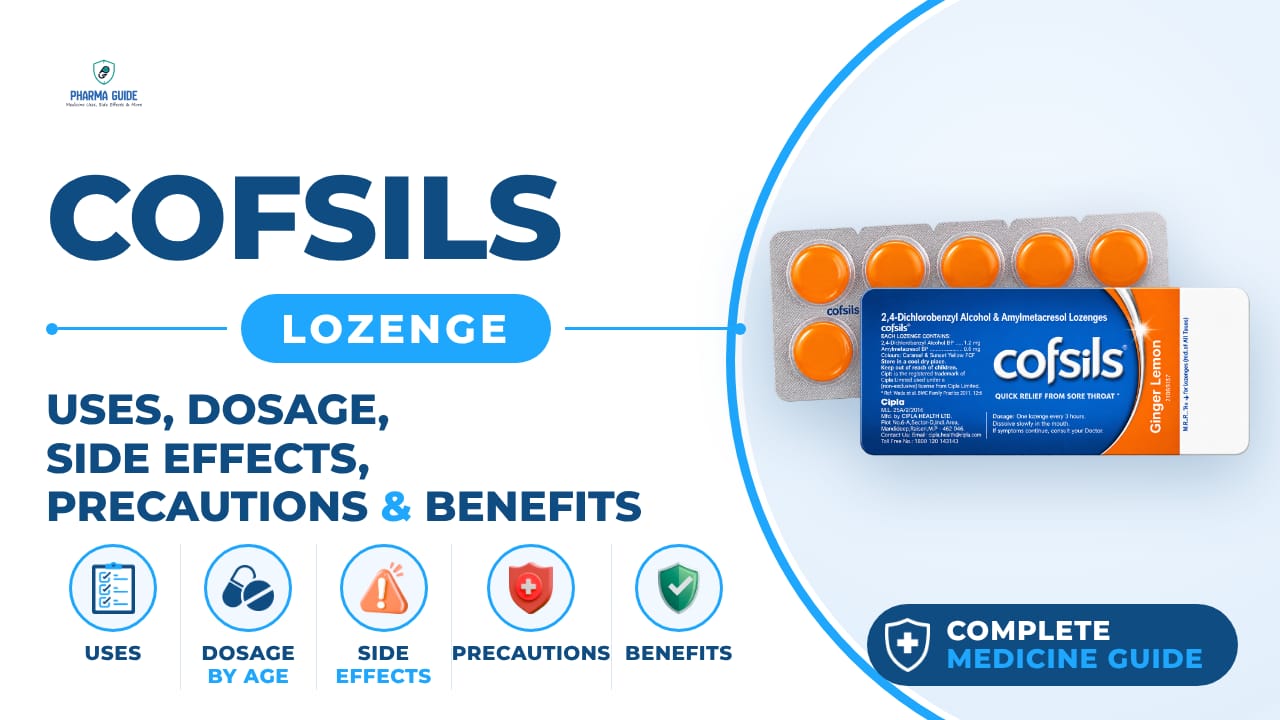
Cofsils Lozenge: Uses, Dosage, Side Effects, Precautions and Alternates
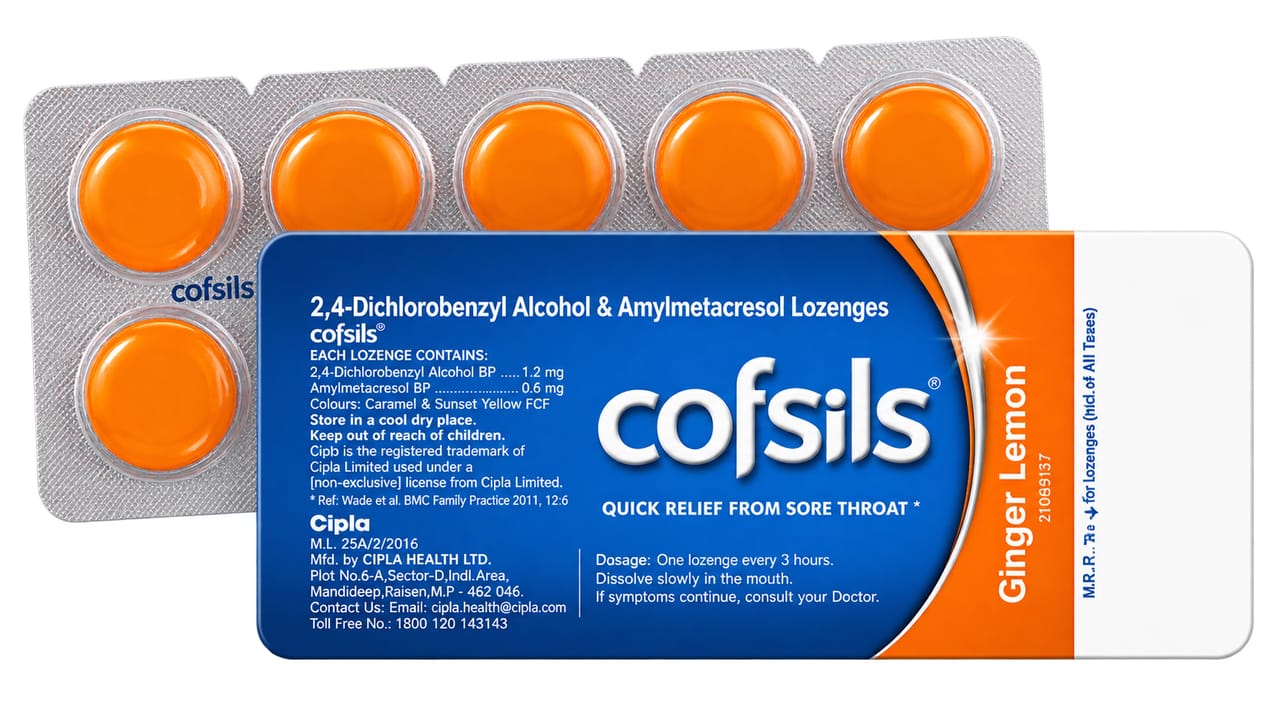
| Generic name | 2,4-Dichlorobenzyl Alcohol + Amylmetacresol |
|---|---|
| Drug class | Throat antiseptic/local anaesthetic lozenge |
| Forms | Lozenge |
Quick overview
Cofsils Lozenge contains 2,4-Dichlorobenzyl Alcohol and Amylmetacresol, used to relieve sore throat, throat irritation, cough, and discomfort associated with the common cold or minor throat infections. It works as a local anaesthetic and antiseptic that numbs the throat, reduces bacteria, and helps fight throat infections. The lozenge is dissolved slowly in the mouth and should be used as directed on the pack or by a doctor.
What is Cofsils Lozenge
Cofsils Lozenges Tablet Orange is used to provide relief from sore throat, throat irritation, cough, and discomfort associated with the common cold or minor throat infections.
Cofsils Lozenge uses
- Sore throat
- Cough
- Throat irritation
- Dryness and hoarseness
- Common cold
Benefits of Cofsils Lozenge
- Helps provide quick relief from sore throat within 5 minutes
- Helps offer antiviral action to combat throat infections
- Helps deliver antibacterial effects to reduce bacterial presence
- Helps provide temporary pain relief
- Helps soothe throat discomfort and irritation
- Convenient for on-the-go use
How Cofsils Lozenge works
The lozenge contains 2,4-Dichlorobenzyl Alcohol, a mild local anaesthetic and antiseptic that numbs the throat and reduces bacteria, along with Amylmetacresol, an antiviral and antibacterial agent that helps fight throat infections and soothe discomfort.
Cofsils Lozenge dosage
Dissolve the lozenge slowly in the mouth. If symptoms continue, consult your doctor. Do not exceed the recommended dose.
| Age group | Dose |
|---|---|
| Under 6 years | Generally not recommended due to choking risk |
| 6–11 years | 1 lozenge every 2–3 hours when appropriate; follow pack directions |
| 12–17 years | 1 lozenge every 2–3 hours |
| 18–64 years | 1 lozenge every 2–3 hours |
| 65+ years | Usually the same adult dose |
Available forms and strengths
- Lozenge
Side effects of Cofsils Lozenge
Common
- Mouth or throat irritation/discomfort
- Burning or soreness of the tongue/mouth
- Stomach discomfort, especially if too many are taken
Serious
- Allergic reaction – rash, itching, or hives
- Swelling of the face, lips, tongue, or throat
- Difficulty breathing or swallowing — seek urgent medical help
Warnings and precautions
- Read the label carefully before use.
- Discontinue use and consult your physician if you have any side effects.
- This product is not meant to diagnose, treat, cure, or prevent any disease.
- Use with caution during pregnancy and preferably after medical advice. The manufacturer states it may be used during pregnancy, but clinical data on its active ingredients are limited.
- Consult a doctor before use while breastfeeding. It is not known whether the active ingredients pass into breast milk.
- No specific dose adjustment is generally listed for standard short-term lozenge use, but people with severe kidney disease should seek medical advice.
- No specific dose adjustment is generally listed for liver conditions, but use cautiously and consult a doctor in severe liver disease.
- No clinically significant interaction with alcohol is known, but alcohol can irritate a sore throat, so limiting it is advisable.
- This medicine is generally safe for driving. These ingredients have no or negligible effect on the ability to drive or operate machinery.
Storage
- Store in a cool dry place.
- Keep away from direct sunlight.
- Keep out of the reach of children.
When to see a doctor
Get medical attention if symptoms persist or get worse.
Alternatives
- Hexylresorcinol Lozenges
- Menthol Lozenges
- Benzocaine Lozenges
- Strepsils Lozenges
Watch the video
FAQs
What is Cofsils Lozenge used for?
It is used to relieve sore throat, throat irritation, cough, dryness, hoarseness, and discomfort associated with the common cold or minor throat infections.
How does Cofsils Lozenge work?
It contains 2,4-Dichlorobenzyl Alcohol, a mild local anaesthetic and antiseptic that numbs the throat and reduces bacteria, along with Amylmetacresol, an antiviral and antibacterial agent that helps fight throat infections and soothe discomfort.
What is the dosage for Cofsils Lozenge?
Dissolve the lozenge slowly in the mouth, generally 1 lozenge every 2–3 hours for those aged 6 and above, following pack directions. It is generally not recommended for children under 6 due to choking risk. Do not exceed the recommended dose, and consult your doctor if symptoms continue.
What are the side effects of Cofsils Lozenge?
Common side effects include mouth or throat irritation, burning or soreness of the tongue or mouth, and stomach discomfort if too many are taken. Serious effects can include allergic reactions like rash or swelling of the face, lips, tongue, or throat, and difficulty breathing or swallowing, which need urgent medical help.
Can Cofsils Lozenge be used during pregnancy or breastfeeding?
It should be used with caution during pregnancy, preferably after medical advice, as clinical data on its active ingredients are limited. A doctor should also be consulted before use while breastfeeding, since it is not known whether the active ingredients pass into breast milk.
General information, not medical advice
Your prescriber and the leaflet in your pack know your situation. This page does not.
- Follow your prescriber and the leaflet
- Don't start, stop, or change a dose on your own
- Doses and warnings differ by country and product
Sources
Video
Related medicines

Injectafer Injection: Uses, Dosage, Side Effects, Precautions and Alternates
Iron products
Injectafer (ferric carboxymaltose) treats iron deficiency anemia and heart failure-related iron deficiency via IV. Learn uses, dosage, side effects, and

Gliclazide Tablet: Uses, Dosage, Side Effects, Precautions and Alternates
Sulfonylurea (hypoglycemic/antidiabetic agent)
Gliclazide Tablet is a sulfonylurea for type 2 diabetes that boosts insulin release. Learn about dosage, side effects, warnings, and precautions.