
Safety
General information, not medical advice
Your prescriber and the leaflet in your pack know your situation. This page does not.
- Follow your prescriber and the leaflet
- Don't start, stop, or change a dose on your own
- Doses and warnings differ by country and product
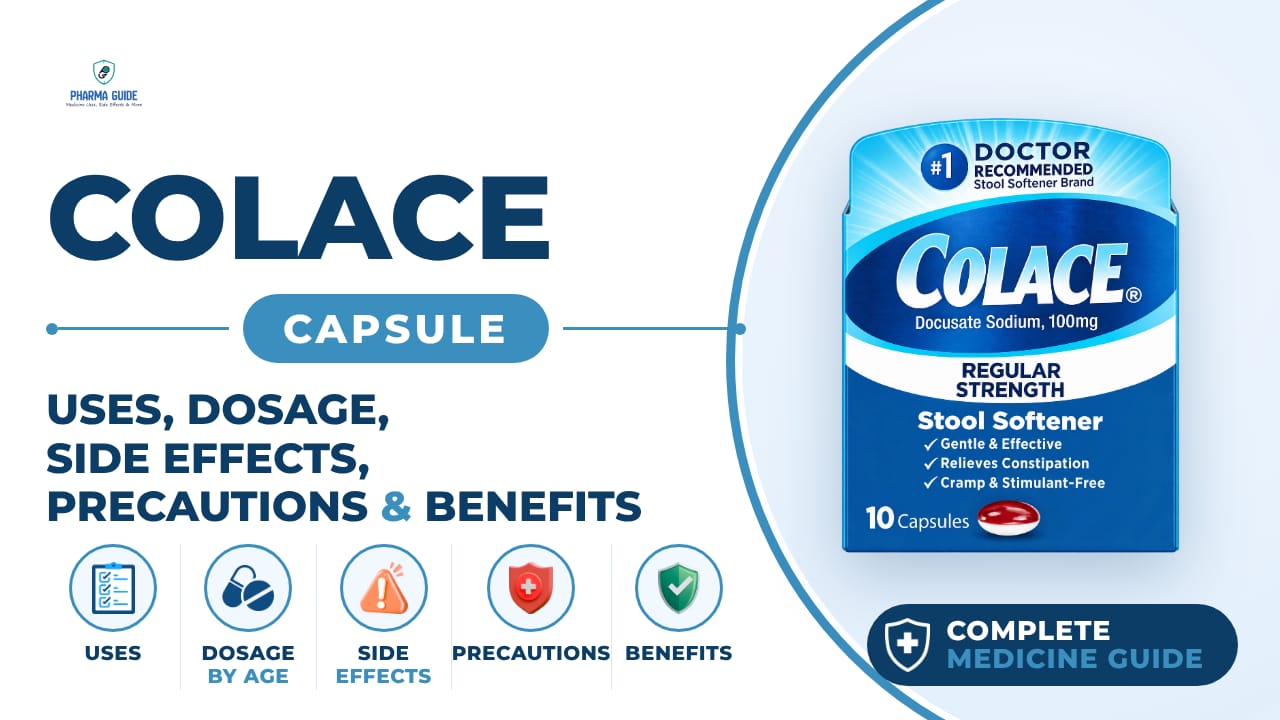
Colace Capsule: Uses, Dosage, Side Effects, Precautions and Alternates
| Generic name | Docusate (docusate sodium) |
|---|---|
| Drug class | Laxative (stool softener) |
| Forms | Oral tablets, Oral capsules, Oral liquid, Rectal enema, Soft gel capsules, Gummies, Soft chews |
Quick overview
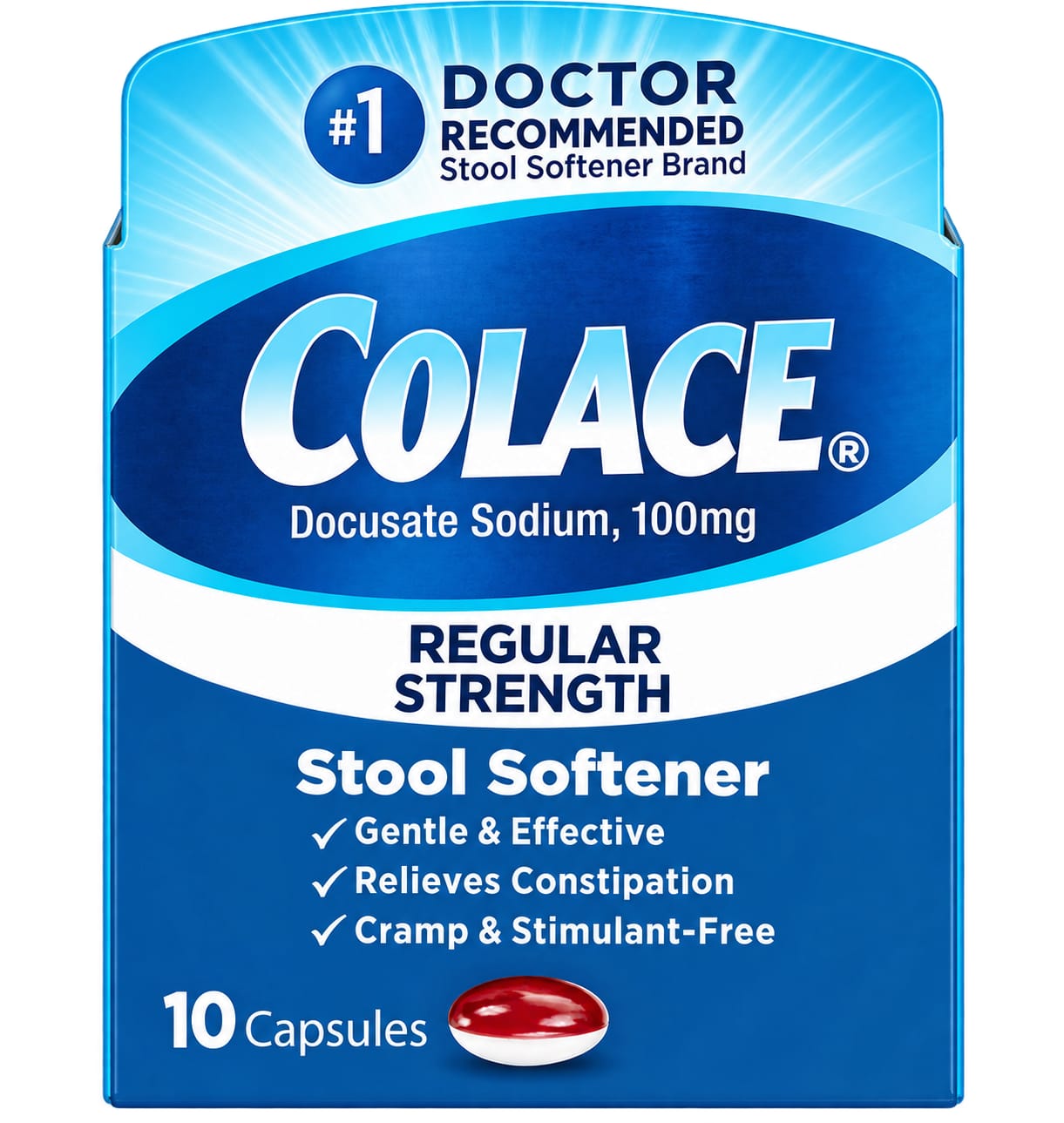
Colace Capsule contains docusate (docusate sodium), a laxative classified as a stool softener. It is used to treat or prevent occasional constipation by softening stool and making bowel movements easier to pass. Colace is generally meant for short-term, occasional use and is available in several forms and strengths.
What is Colace Capsule
Colace is a stool softener. It makes bowel movements softer and easier to pass. It is used to treat or prevent occasional constipation.
Colace Capsule uses
- Treats or prevents occasional constipation
- Reduces pain or rectal damage caused by hard stools or straining during bowel movements
Benefits of Colace Capsule
- Constipation Relief: Softens hard stools and makes them easier to pass.
- Stool Softening: Allows water and fat to enter the stool.
- Gentle Bowel Support: Generally works more gently than stimulant laxatives.
- Straining Reduction: May be useful when avoiding straining is important.
- Bowel Movement Support: Helps relieve occasional constipation.
How Colace Capsule works
Docusate lets more water and fat mix into the stool, which softens it and makes it easier to pass.
Colace Capsule dosage
Take Colace with a full glass of water and drink plenty of liquids while using this medicine. It can be taken as a single daily dose or split into smaller doses spread through the day. Shake the liquid form well before each dose. Liquid can be mixed into milk or fruit juice to make it easier to take. If using chewable gummies or soft chews, chew fully before swallowing, and follow a gummy dose with a full glass of liquid.
Colace is only meant for occasional, short-term use; check with your healthcare provider if you need it for more than one week. Follow the directions on the product label or from your healthcare provider, since forms and strengths vary. For children, check the product label before giving it, as not all forms are approved for children under 12.
| Age group | Dose |
|---|---|
| 2–11 Years | 25–100 mg/day, divided as directed |
| 12–17 Years | 50–200 mg/day, divided as directed |
| Adults (18+ Years) | 50–300 mg/day, usually divided into 1–4 doses |
Available forms and strengths
- Oral tablets
- Oral capsules
- Oral liquid
- Rectal enema
- Soft gel capsules
- Gummies
- Soft chews
Side effects of Colace Capsule
Common
- Stomach pain or cramps
- Diarrhea
- Nausea
- Gas
Serious
- Rectal bleeding
- No bowel movement after using a laxative
- Needing to use a stool softener for more than 1 week
- Rash
Warnings and precautions
- Do not use Colace if you have a blockage in your intestines.
- Do not use Colace if you are sick with nausea, vomiting, or severe stomach pain.
- Do not use docusate together with mineral oil unless your doctor tells you to.
- Do not use this medicine for longer than 1 week unless your doctor tells you to, since overusing a stool softener can cause serious medical problems.
- Ask a doctor before using this medicine if you have stomach pain, nausea, vomiting, or a sudden change in bowel habits lasting more than 2 weeks.
- Ask your doctor before using this medicine if you are pregnant or breastfeeding. No routine dose adjustment is generally required for kidney disease, but inform your doctor about it. No routine dose adjustment is generally required for liver disease, but tell your doctor about significant liver disease.
Storage
- Store at room temperature away from moisture, light, and heat
- Do not freeze liquid medicine
- Keep out of the reach of children and pets
- Store at room temperature between 15 and 30 degrees C (59 and 86 degrees F)
- Throw away any unused medication after the expiration date
When to see a doctor
- Get emergency medical help if you have signs of an allergic reaction such as hives, difficulty breathing, or swelling of your face, lips, tongue, or throat.
- Stop using the medicine and call your doctor right away if you have rectal bleeding, no bowel movement after using a laxative, need to use a stool softener for more than 1 week, or develop a rash.
- If you take too much Colace, seek emergency medical attention or contact poison control.
Alternatives
- Polyethylene Glycol (PEG)
- Lactulose
- Psyllium
- Senna
Watch the video
FAQs
What is Colace Capsule used for
Colace is used to treat or prevent occasional constipation and to reduce pain or rectal damage caused by hard stools or straining during bowel movements.
How does Colace Capsule work
Docusate lets more water and fat mix into the stool, which softens it and makes it easier to pass.
How long can I take Colace Capsule
Colace is only meant for occasional, short-term use; you should check with your healthcare provider if you need it for more than one week.
What are the common side effects of Colace Capsule
Common side effects include stomach pain or cramps, diarrhea, nausea, and gas.
Can I use Colace Capsule with mineral oil
No, you should not use docusate together with mineral oil unless your doctor tells you to.
General information, not medical advice
Your prescriber and the leaflet in your pack know your situation. This page does not.
- Follow your prescriber and the leaflet
- Don't start, stop, or change a dose on your own
- Doses and warnings differ by country and product
Sources
Video
Related medicines

Injectafer Injection: Uses, Dosage, Side Effects, Precautions and Alternates
Iron products
Injectafer (ferric carboxymaltose) treats iron deficiency anemia and heart failure-related iron deficiency via IV. Learn uses, dosage, side effects, and

Gliclazide Tablet: Uses, Dosage, Side Effects, Precautions and Alternates
Sulfonylurea (hypoglycemic/antidiabetic agent)
Gliclazide Tablet is a sulfonylurea for type 2 diabetes that boosts insulin release. Learn about dosage, side effects, warnings, and precautions.